On 27 November 1981, the day after Thanksgiving, Rangaswamy Srinivasan brought leftovers into IBM Research. He managed fundamental photochemical research at the Thomas J. Watson Research Center, and with colleagues James Wynne and Samuel Blum he picked out a piece of cartilage from a turkey leg and shot it with an ultraviolet laser, according to IBM's history of the work. The laser made a clean cut. There was no burn.
That small test raises a fair question for anyone in eye care: how did a lab experiment on turkey become the basis of LASIK?
Why IBM had an excimer laser in the first place
Srinivasan was a photochemist, and IBM used photochemistry in photolithography for making chips. In 1980 he found that the excimer laser could photoetch polymers, making clean holes pulse by pulse without any chemical development step, as IBM Research recounted in 2021. Wynne, a physicist who managed the laser physics and chemistry group, had bought an excimer laser for his team.
Wynne later explained the leap in an interview with the IPO Education Foundation. The bond absorbing the light in plastic, the peptide bond, is also present in tissue. So the group tried it on themselves first, irradiating their own fingernails and hair. They were afraid to try it on skin.
The turkey test
Why turkey? Joint cartilage offered a smooth surface similar to many human tissues, and it was uniform enough to make any collateral damage easy to see. Earlier ideas had included butterfly wings and goldfish tails, Wynne later told an Optical Society interviewer, as IBM recounts.
The laser was an argon fluoride (ArF) excimer at a wavelength of 193 nm. In Wynne's own account, Srinivasan and Blum spent the next week or two running more careful tests on the cartilage. Wynne then repeated the experiment with a short-pulse green laser, a Q-switched, frequency doubled Nd:YAG. That laser burned and charred the sample. "That for me was the moment of discovery," he said.
Srinivasan named the effect ablative photodecomposition. The ultraviolet pulses break chemical bonds and remove a thin layer of tissue at a much lower temperature, and the vaporized material moves rapidly away, carrying the heat with it.
From a patent on tissue to a tool for the cornea
Srinivasan and Wynne signed the invention disclosure on 31 December 1981, and Blum signed on 4 January 1982. The patent, US 4,784,135, "Far ultraviolet surgical and dental procedures", was first filed on 9 December 1982 and granted on 15 November 1988. Its claims cover wavelengths below 200 nm. Wynne has noted that the claims covered all human and animal tissue, but the examples never mentioned eyes.
The science press was not immediately convinced. Science rejected the paper after a referee worried the laser might cause cancer, and it ran in Laser Focus instead. Srinivasan gave an invited talk at CLEO in Baltimore in May 1983.
Ophthalmologist Stephen Trokel of Columbia then brought enucleated calf eyes to the Watson lab on 20 July 1983. With Srinivasan and technical assistant Bodil Braren, he made clean corneal incisions. Their December 1983 paper in the American Journal of Ophthalmology reported that 1 J/cm2 removed corneal tissue to a depth of about 1 micron, with no thermal damage to nearby tissue.
Francis L'Esperance Jr., also at Columbia, filed the first patent application on reshaping the front of the cornea with the excimer laser, the procedure later called PRK, according to Wynne's history chapter for Optica. A sighted person was first treated in 1988. In 1990, Ioannis Pallikaris and colleagues at the University of Crete described laser in situ keratomileusis in a rabbit model: a microkeratome cuts a flap, then the excimer laser ablates the exposed stromal bed. That is the core of LASIK, which the FDA describes as permanently reshaping the cornea under a hinged flap.
Approval and scale
On 20 October 1995, the FDA approved Summit Technology's excimer laser for PRK to treat nearsightedness, the first such approval for that condition. LASIK approvals followed later in the 1990s; the FDA keeps a list of lasers approved for LASIK.
Estimates of how many people have been treated vary by source. IBM's heritage page says more than 20 million patients. Wynne said in 2016 that about 33 million people worldwide had been treated, in about 59 million procedures. IBM Research put the figure at some 60 million people in 2021.
IBM licensed the patent, then sold it to LaserSight in 1997 for about $15 million, Wynne said. LaserSight later sold it to Alcon, and it expired in 2005.
The medal, and the third scientist
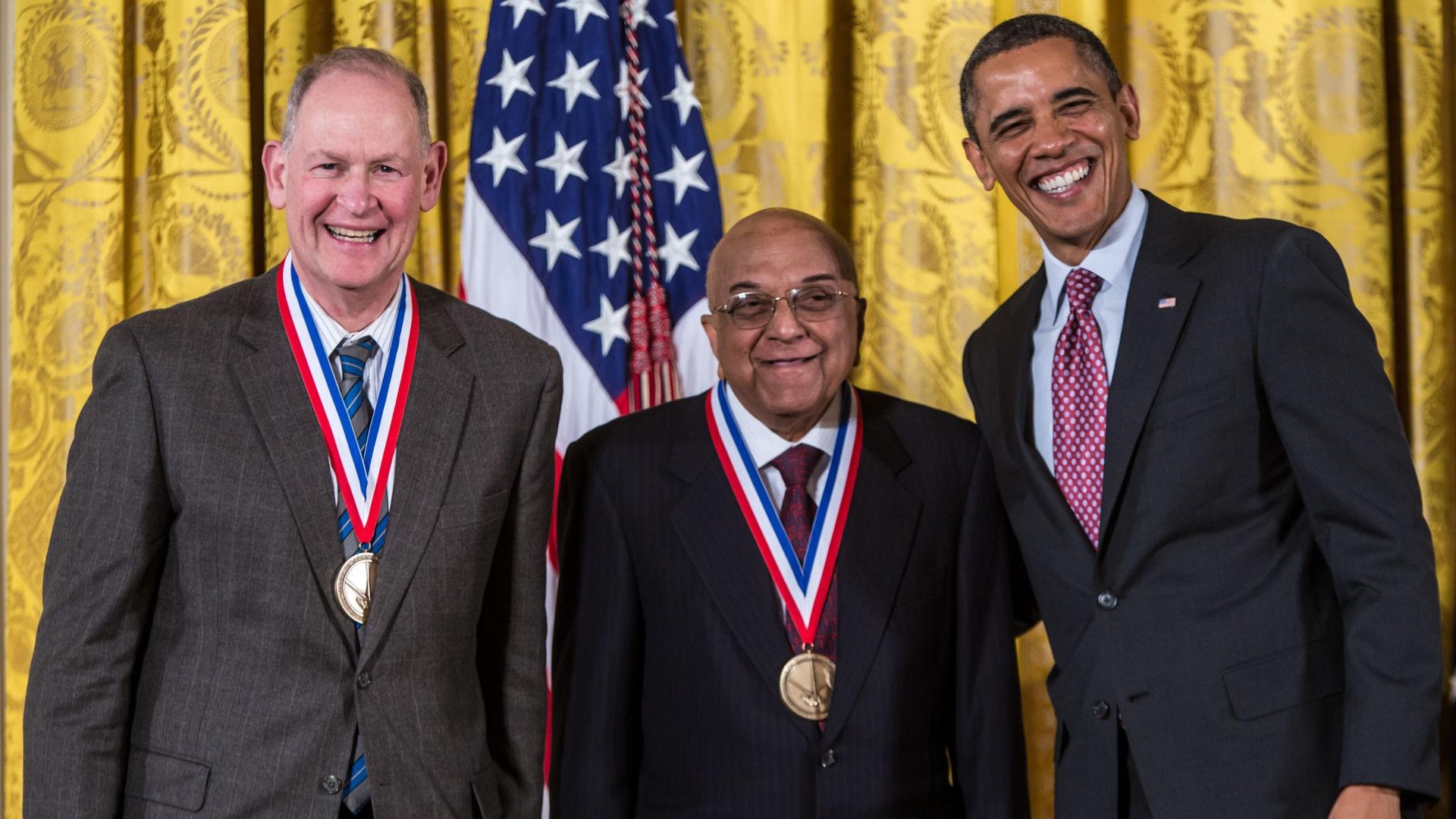
The three were named for the 2012 National Medal of Technology and Innovation. The citation reads: "For the pioneering discovery of excimer laser ablative photodecomposition of human and animal tissue, laying the foundation for PRK and LASIK, laser refractive surgical techniques that have revolutionized vision enhancement." President Barack Obama presented it to Wynne and Srinivasan at the White House on 1 February 2013, IBM announced. At the ceremony, Wynne's daughter asked the President if he knew anyone who had had laser eye surgery. "Yes, Michelle," he answered, according to IBM.
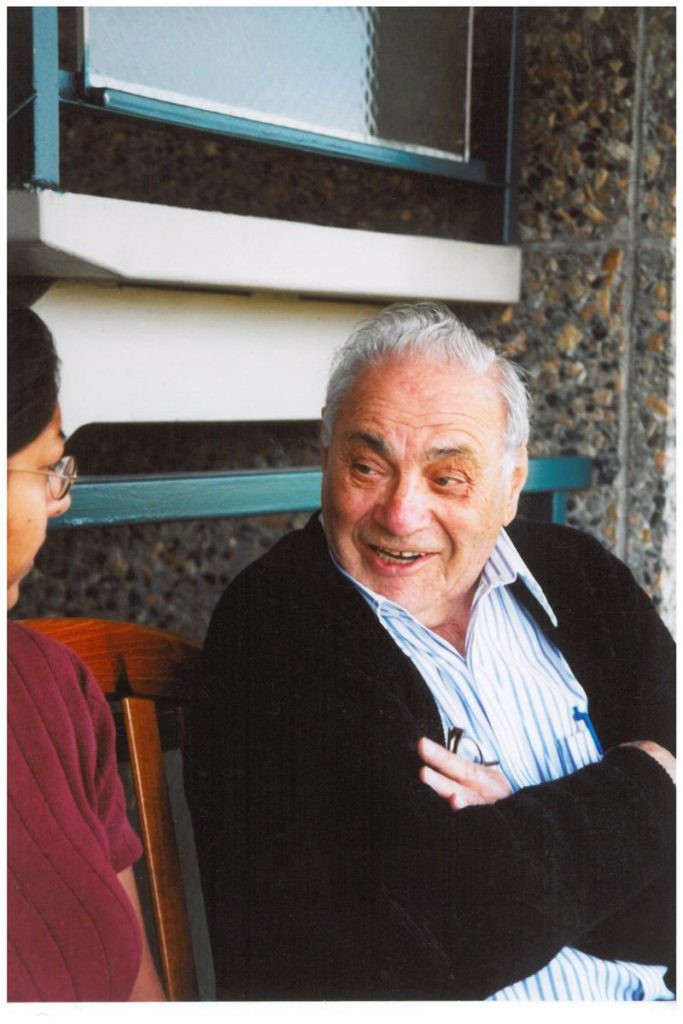
Blum died on 9 January 2013, aged 92, and was honored posthumously. A chemist with a Rutgers PhD, he had served in the US Navy and spent 31 years at IBM Watson, according to the National Inventors Hall of Fame. All three were inducted there in 2002, and they shared the 2013 Russ Prize from the National Academy of Engineering.
What patients should still know
The FDA lists the risks plainly. Some patients lose lines of vision that glasses or surgery cannot correct. Some develop glare, halos or double vision that affect night vision. Some develop severe dry eye that may be permanent. You may still need glasses.
The PROWL studies, led by the FDA and run from 2011 to 2014 with 262 Navy personnel and 312 civilians, found new visual symptoms at three months in 43% and 46% of participants. Dissatisfaction with vision ran from 1% to 4%, and with the surgery from 1% to 2%, the authors reported in JAMA Ophthalmology. They call for counseling about possible new symptoms before surgery.
For clinicians and builders who follow the field, see our ophthalmologists to follow on LinkedIn and the ophthalmology Who to Follow page. For another eye technology story, read about Science Corporation's PRIMA vision restoration implant.
Wynne has kept working with the same laser. IBM Research reports he is studying ArF excimer lasers to remove burned, dead tissue without harming healthy tissue, with a pilot study published in Burns in 2018. Forty-five years after a plate of leftovers, the question is still the same one: how to cut cleanly without burning what is left.