It has been a notable year for vision science. On 5 October 2026 the 2026 Nobel Prize in Physiology or Medicine went to Karl Deisseroth, Peter Hegemann and Georg Nagel for their discoveries concerning light-gated ion channels and optogenetics, and the Nobel Assembly noted that researchers are using the method in attempts to restore sight. Surgeons at Rambam Health Care Campus in Haifa implanted the first 3D-bio-printed corneal implant in a human in October 2025. It replaces the endothelium, the inner cell layer that keeps the cornea clear, rather than the whole cornea, and it is part of a Phase 1 safety trial: by October 2026 five patients had received it, with 15 planned. And in a phase 1 trial reported in NEJM, an optogenetic gene therapy used with camera goggles improved light sensitivity in 7 of 10 people blind from advanced retinitis pigmentosa, and 4 of the 8 who completed behavioural tests got better at detecting or locating objects. They still could not read or recognise faces.
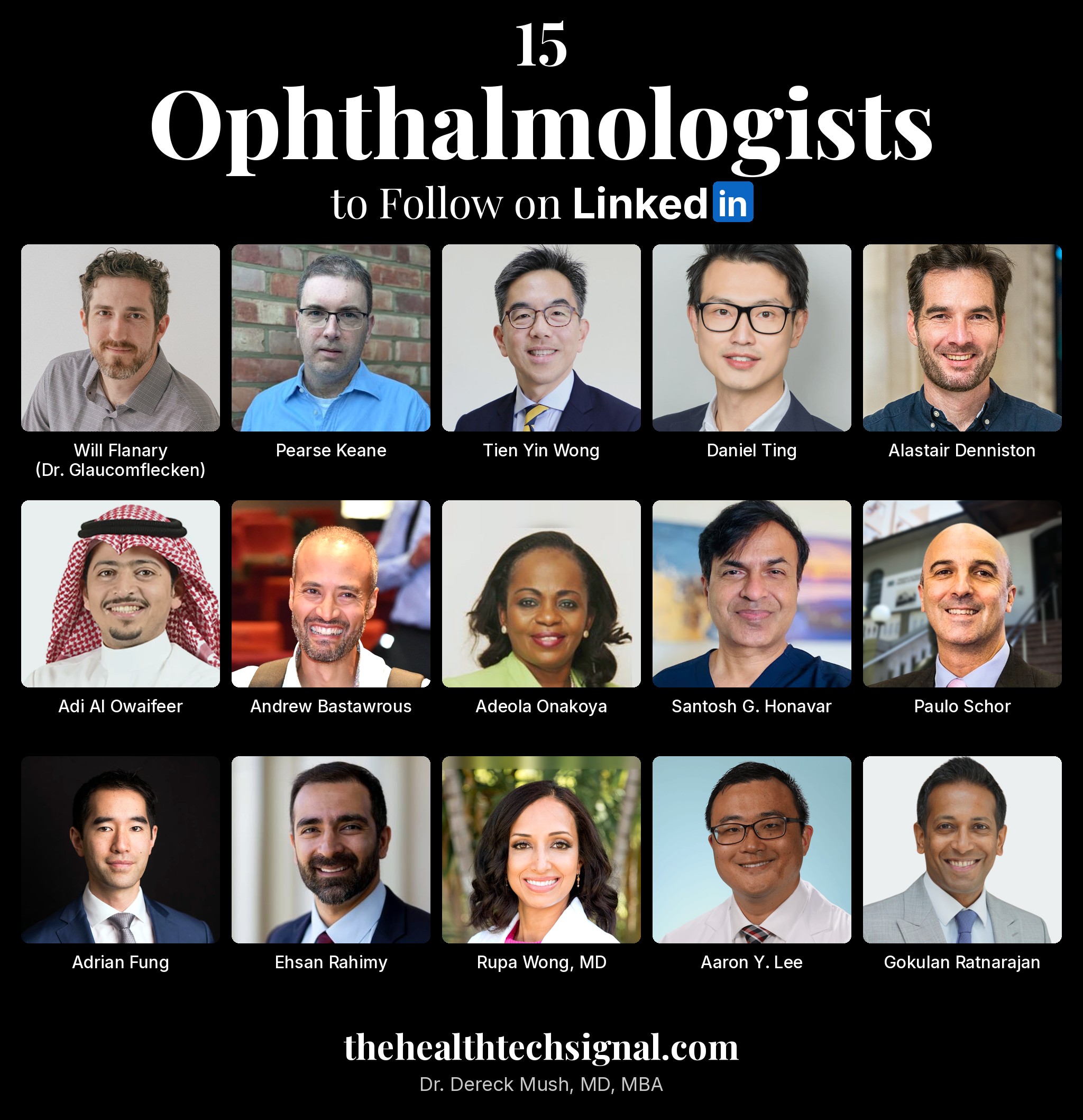
Some of the people moving the field forward share their work on LinkedIn. Here are 15 ophthalmologists worth having in your feed. For a related story on retinal implants, see our newsletter on Science Corp and the PRIMA vision implant.
How this list was selected
This is an editorial shortlist for professional discovery, not a ranking. Each person has been active on LinkedIn in roughly the last three months. The facts in each profile come from institutional and other public sources linked under each entry, and the reasons to follow are our editorial view. The numbering follows the order of our LinkedIn post and does not imply any hierarchy. Sources were reviewed on 24 November 2026. LinkedIn may ask you to sign in.
1. Will Flanary
Comprehensive ophthalmology and medical comedy
Will Flanary is a board-certified comprehensive ophthalmologist at Eye Health Northwest in Portland. Online he is known as Dr. Glaucomflecken, a creator of medical comedy on social media.
He started writing for the Gomer Blog in 2015 and now makes satirical sketch videos about life as a doctor and the US healthcare system. He also appears in our Top 100 Most Influential.
Why follow: Flanary turns the frustrations of clinical work and healthcare administration into sketches that clinicians recognise and patients understand.
Follow Will Flanary on LinkedIn
Sources: Dr. Glaucomflecken, about | Eye Health Northwest profile
2. Pearse Keane
Retinal AI and foundation models
Pearse Keane is Professor of Artificial Medical Intelligence at the UCL Institute of Ophthalmology, a consultant ophthalmologist at Moorfields Eye Hospital and director of the INSIGHT health data research hub. In 2016 he initiated the Moorfields collaboration with Google DeepMind, with first results published in Nature Medicine in August 2018.
He led RETFound, published in Nature in 2023, the first foundation model in ophthalmology. It was trained on 1.6 million retinal images and released open source. Keane has said that label efficiency could open AI to rarer conditions such as uveitis and inherited retinal disease.
Why follow: Keane is one of the clearest voices on how retinal AI moves from research datasets into clinical use.
Follow Pearse Keane on LinkedIn
Sources: UCL profile | UCL news on RETFound | RETFound in Nature | The Ophthalmologist interview
3. Tien Yin Wong
National screening programmes and retinal research
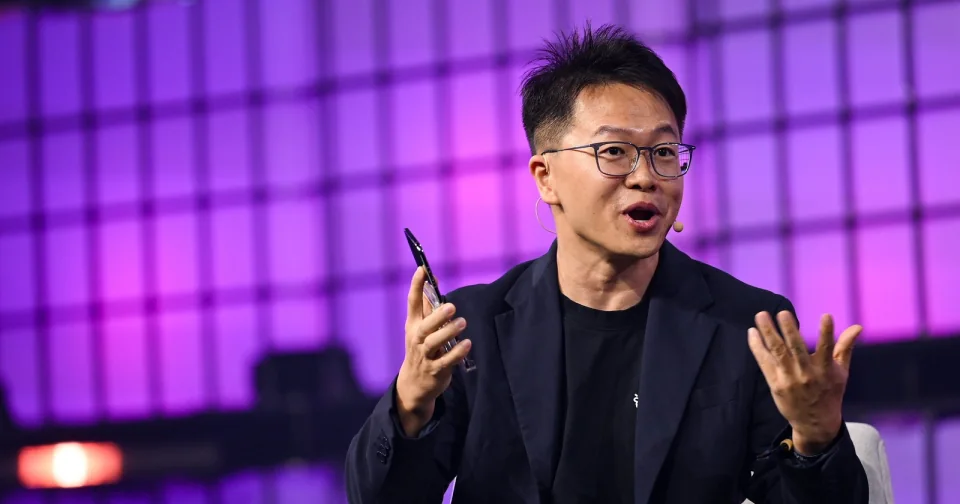
Tien Yin Wong is Founding Head and Chair Professor of Tsinghua Medicine at Tsinghua University in Beijing, appointed in 2022. From 2014 to 2021 he was Arthur Lim Professor and Medical Director of the Singapore National Eye Centre.
From 2010 he set up Singapore's national telemedicine screening programme for diabetic retinopathy, and he co-founded plano and EyRIS. He is a practising retinal specialist, and the Singapore National Eye Centre credits him with more than 1,700 peer-reviewed papers.
Why follow: Wong has taken retinal screening from research into a national programme, which makes him a useful guide on scale.
Follow Tien Yin Wong on LinkedIn
Sources: Tsinghua Medicine profile | Singapore National Eye Centre profile
4. Daniel Ting
Health system AI and reporting standards
Daniel Ting is a senior consultant vitreoretinal surgeon at the Singapore National Eye Centre, where he is also Chief Data and Digital Officer. He directs the SingHealth AI Office, heads AI and Digital Innovation at the Singapore Eye Research Institute, and is an Adjunct Clinical Associate Professor and Innovation Mentor at Stanford.
He has been involved in the international AI reporting guidelines STARD-AI, QUADAS-AI and DECIDE-AI. His research covers deep learning, large language models and privacy-preserving AI.
Why follow: Ting connects model development with the standards used to report and judge it, inside a working health system.
Follow Daniel Ting on LinkedIn
Sources: Singapore National Eye Centre profile | DealStreetAsia speaker profile
5. Alastair Denniston
Regulation and evaluation of AI in health
Alastair Denniston is Professor of Regulatory Science and Innovation at the University of Birmingham and an Honorary Consultant Ophthalmologist at University Hospitals Birmingham. He directs CERSI-AI, the UK Centre of Excellence for Regulatory Science in AI and Digital HealthTech.
He chairs the MHRA's National Commission on the Regulation of AI in Healthcare and leads the AI and Digital Health Group, which focuses on the evaluation, regulation and implementation of AI health technology.
Why follow: For anyone building or buying clinical AI, Denniston is a direct line to how regulators are thinking.
Follow Alastair Denniston on LinkedIn
Sources: University of Birmingham profile
6. Adi Al Owaifeer
Glaucoma and national AI screening in Saudi Arabia
Adi Al Owaifeer is a glaucoma consultant and associate professor of ophthalmology at the College of Medicine, King Faisal University, and consultant of innovation at King Khaled Eye Specialist Hospital and Research Center.
He chairs EYENAI, the Saudi national screening programme for diabetic retinopathy using AI, and has published more than 40 peer-reviewed papers. He is speaking at EPOMEC 2026 in Dubai.
Why follow: Al Owaifeer offers a view of AI screening run as national policy in the Gulf, alongside daily glaucoma practice.
Follow Adi Al Owaifeer on LinkedIn
Sources: EPOMEC 2026 speaker profile
7. Andrew Bastawrous
Smartphone eye testing and global eye health
Andrew Bastawrous is an ophthalmologist, Professor in Global Eye Health at the London School of Hygiene and Tropical Medicine, and co-founder and CEO of Peek Vision. He also co-founded the Vision Catalyst Fund. He spent two years in Kenya leading an eye disease study and the development of Peek.
In 2023 Peek's smartphone vision test was used in programmes reaching over a quarter of a million people per month. He was appointed OBE in the 2023 King's Birthday Honours. A pair of glasses changed his own life at the age of twelve.
Why follow: Bastawrous shows what it takes to turn a simple test into eye care that reaches people at scale.
Follow Andrew Bastawrous on LinkedIn
Sources: Peek Vision profile | Peek Vision OBE announcement
8. Adeola Onakoya
Glaucoma awareness and care in Nigeria
Adeola Onakoya is Professor of Ophthalmology at the College of Medicine, University of Lagos, and Honorary Consultant Ophthalmologist at Lagos University Teaching Hospital. In December 2023 she gave the university's inaugural lecture "Protecting and Preserving the 'Cables': The Race against Darkness", where she said glaucoma awareness in Nigeria is about 5%.
The International Agency for the Prevention of Blindness identified her in 2019 as chair of the Glaucoma Society of Nigeria. Her research includes glaucoma treatment adherence and quality of life among patients in Lagos.
Why follow: Onakoya brings the realities of glaucoma care in West Africa, where awareness itself is the first barrier.
Follow Adeola Onakoya on LinkedIn
Sources: University of Lagos lecture report | IAPB webinar | Adherence study
9. Santosh G. Honavar
Eye cancer, oculoplasty and ophthalmic publishing
Santosh G. Honavar is Director of Ocular Oncology and Oculoplasty at Centre for Sight in Hyderabad and Director of the National Retinoblastoma Foundation. He is Honorary General Secretary of the All India Ophthalmological Society.
He edits the Indian Journal of Ophthalmology and IJO Case Reports, which places him close to the research coming out of one of the largest ophthalmology communities in the world.
Why follow: Honavar combines specialist eye cancer care with an editor's view of new ophthalmic research.
Follow Santosh G. Honavar on LinkedIn
Sources: Santosh G. Honavar, Wikipedia
10. Paulo Schor
Innovation and research partnerships in Brazil
Paulo Schor is an ophthalmologist and surgeon and Associate Professor (Livre-Docente) at Escola Paulista de Medicina, UNIFESP. He manages Research Partnerships for Innovation at FAPESP and previously headed UNIFESP's ophthalmology department and directed its Innovation Agency.
Part of his doctorate was done at Harvard Medical School and MIT, and he was a visiting professor at MIT in 2012. He has been involved in 23 technology products and 9 patents, and he hosts the interview series "Além da Visão" on his site. He posts mainly in Portuguese.
Why follow: Schor links clinical ophthalmology with research funding and product development in Brazil.
Follow Paulo Schor on LinkedIn
Sources: FAPESP researcher profile | Paulo Schor website
11. Adrian Fung
Vitreoretinal surgery and clinical trials
Adrian Fung heads the Vitreoretinal Unit at Westmead Hospital in Sydney. He is a Clinical Professor at Macquarie University and a Clinical Associate Professor at the University of Sydney, with over 100 peer-reviewed papers.
He has been Principal Investigator on the Bionic Eye Project and on the Golden Geographic Atrophy and Velodrome Port Delivery System trials. He chairs the RANZCO Clinical Standards Committee, sits on the APVRS council and convenes the Ophthalmology Updates course.
Why follow: Fung is a good source on retinal trials and surgical standards in Australia and the Asia Pacific.
Follow Adrian Fung on LinkedIn
Sources: Macquarie University profile
12. Ehsan Rahimy
Retina practice and ophthalmic startups
Ehsan Rahimy is a vitreoretinal specialist at the Palo Alto Medical Foundation and an Adjunct Clinical Associate Professor at Stanford.
He advises early-stage companies in ophthalmology, telemedicine, AI and medtech, and he has co-authored work on AI in ophthalmology, including distributed validation of ophthalmic AI on real-world data.
Why follow: Rahimy sits where retina practice meets early-stage companies, useful for founders and investors in eye care.
Follow Ehsan Rahimy on LinkedIn
Sources: Stanford profile
13. Rupa Wong
Children's eyes and public education
Rupa Wong, MD, is a board-certified pediatric ophthalmologist and adult strabismus surgeon, and co-founder and managing partner of Honolulu Eye Clinic. She is trained in myopia management for children and is a clinical spokesperson for the American Academy of Ophthalmology.
She co-authored "Learning Strabismus Surgery, A Case-Based Approach" (2012). She is also a mother of three.
Why follow: Wong explains children's eye health, including myopia, in terms parents and clinicians can both use.
Sources: Dr. Rupa Wong, about | Honolulu Eye Clinic profile
14. Aaron Y. Lee
Retinal imaging AI and academic leadership
Aaron Y. Lee has been Arthur W. Stickle Distinguished Professor and Chair of the John F. Hardesty, MD Department of Ophthalmology and Visual Sciences at WashU Medicine since 1 September 2025, after a decade at the University of Washington.
He is a vitreoretinal surgeon with programming expertise. His work includes AI scoring of AMD severity, a severity score for macular telangiectasia type 2 and foundational AI models for retinal imaging, and he is a co-author on RETFound with Pearse Keane.
Why follow: Lee writes code as well as operating, which gives him a practical view of what retinal AI can and cannot do.
Follow Aaron Y. Lee on LinkedIn
Sources: WashU Medicine announcement | WashU physician profile | RETFound on PubMed
15. Gokulan Ratnarajan
Glaucoma and cataract surgery
Gokulan (Gok) Ratnarajan is a Consultant Ophthalmic Surgeon specialising in cataract, glaucoma and anterior segment reconstructive surgery, and Director of Glaucoma Services at Queen Victoria Hospital. He did his MD research at the UCL Institute of Ophthalmology and Moorfields.
He held fellowships in Oxford, at the Western Eye Hospital in London and in Toronto, where he learned glaucoma surgeries he later introduced in the UK. He explains how combining SLT and MIGS can reduce patients' dependence on eye drops.
Why follow: Ratnarajan is a clear guide to newer glaucoma procedures and what they mean for patients on daily drops.
Follow Gokulan Ratnarajan on LinkedIn
Sources: The UClinic profile | The McIndoe Centre profile
Build a feed around the questions you care about
For AI and imaging, start with Keane, Ting, Tien Yin Wong, Lee, Al Owaifeer and Denniston. For access and global eye health, follow Bastawrous, Onakoya, Honavar and Schor. For surgery and retina, look to Fung, Rahimy and Ratnarajan. For clinicians who explain medicine to the public, Flanary and Rupa Wong are good places to begin.
Browse more names in Ophthalmology: Who to Follow or the wider Who to Follow directory. If you follow heart medicine too, see our Top 25 Cardiologists to Follow on LinkedIn.
Did we miss someone?
This list is selective. If an ophthalmologist doing useful work belongs here, tell us through our contact form and we will consider them for future editions.