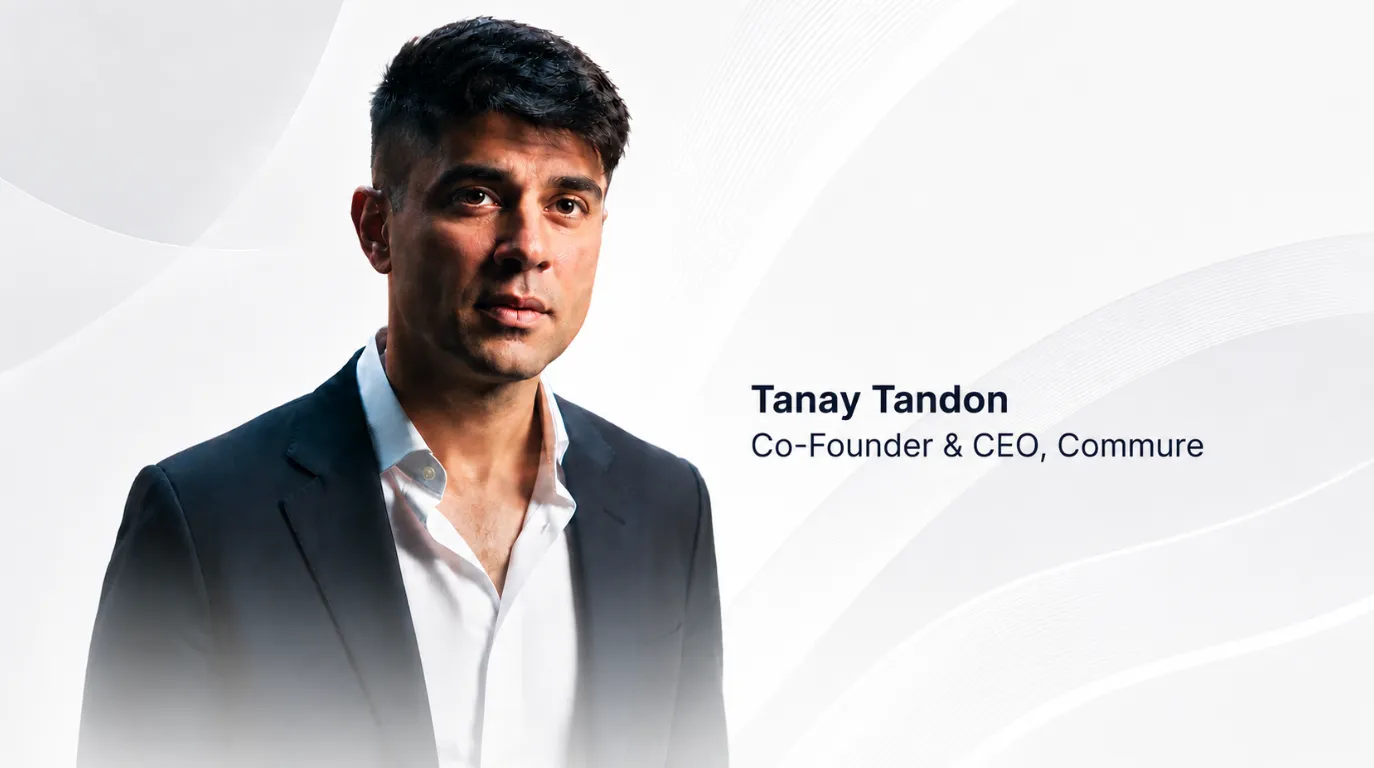
Good morning, HealthTech insiders. One in three patients prescribed a complex medication never gets their first dose. The drug was approved. The science was solid. The physician made the decision. Then the system swallowed it. Forus just raised $150M at a $3 billion valuation because it built AI agents to drag prescriptions all the way through to treatment, across every payer, pharmacy, and prior-authorization portal in the country.
Today's issue is about the gap between what the science can do and what actually reaches patients. Rentosertib, an AI-designed drug, published data yesterday showing it reversed biological aging markers in six independent tests. Adventist Health finished its $500M Epic migration, uniting 27 hospitals on a single record. And GenHealth.ai raised $16.5M to put AI agents to work on the billing and admin layer that sits between a clinical decision and a paid claim. The infrastructure gap is being closed, one layer at a time.
Privacy-first email. Built for real protection.
Proton Mail offers what others won’t:
End-to-end encryption by default
Zero access to your data
Open-source and independently audited
Based in Switzerland with strong privacy laws
Free to start, no ads
We don’t scan your emails. We don’t sell your data. And we don’t make you dig through settings to find basic security. Proton is built for people who want control, not compromise.
Simple, secure, and free.
CLINICAL AI
In today's Signal:
Forus raises $150M at a $3B valuation: AI agents that give every prescription a case manager so one-in-three patients actually start treatment
Rentosertib's Phase IIa data in Nature Biotechnology: six independent aging clocks all show 3-4 years of biological age reversal in IPF patients
Adventist Health's $500M Epic go-live completes: 27 hospitals, 440+ clinics, one connected record, and Oracle Health loses another major system
GenHealth.ai raises $16.5M Series A to automate the medical back office end-to-end with AI agents inside existing EHR and payer systems
Quick Hits: Definitive Healthcare names new CEO on day take-private bid lands; 14 federal agencies express interest in FEHRM; Sword/Headspace closes Sept 14
LATEST DEVELOPMENTS
AGENTIC AI
1. The AI case manager for every prescription in America just tripled its valuation in four months.

The signal: Forus raised $150M in Series C at a $3B valuation, led by Bain Capital Ventures, with every existing institutional investor returning. The platform gives each prescription its own AI agent that navigates insurance, prior authorization, financial assistance, and pharmacy logistics, free for providers and patients.
The details:
One in three patients prescribed high-cost or complex therapies never receives their first dose. Forus CEO Sahir Jaggi built the platform to close that gap: AI agents work inside provider workflows and handle all case management after the clinical decision is made. Family Allergy & Asthma reports prior authorization turnaround went from 7+ days to a median 1.1 days. DOCS Dermatology says 80% more patients got their medication.
Now used by providers across all 50 states, covering 85% of U.S. residential ZIP codes. More than a third of providers nationally have adopted Forus in its first specialty. It works with 9 of the top 15 global biopharma companies. The Series C, just four months after a Series B that valued the company at $1B, brings total funding past $300M.
Investors include Thrive Capital, General Catalyst, Accel, Redpoint, and SV Angel. Every existing institutional investor returned for this round, per Bain Capital Ventures general partner Kevin Zhang.
Why it matters: This is what it looks like when the access layer gets properly funded. The algorithm was never the bottleneck, the tangle of payer portals, fax lines, and patient financial situations was. A $3B valuation for a company that still charges providers nothing to use means the biopharma and data economics are large enough to carry the whole thing. That changes the investment case for the entire prescription-access category.
PHARMA & AI
2. An AI designed this drug from scratch. Yesterday it showed six independent aging clocks all pointing younger.

The signal: Insilico Medicine's rentosertib, an AI-discovered-and-designed drug for idiopathic pulmonary fibrosis (a fatal lung scarring disease with a median survival of 3-4 years), published secondary Phase IIa data in Nature Biotechnology showing that six independently built proteomic aging clocks all detected measurable biological age reversal in treated patients. CEO Alex Zhavoronkov presented the results at the Nature 'Redefining Healthcare in the Age of AI' conference at Sorbonne University in Paris on September 8.
The details:
42 IPF patients had blood samples tracked over 12 weeks. Six aging clocks, developed separately by teams at Harvard Medical School, Oxford, Peking University, and Insilico, all showed reduced predicted biological age in treated groups versus placebo. Effect averaged 3-4 years of reversal on most clocks, up to 6 years on one. These clocks share neither features nor training data.
Rentosertib is the first drug candidate where both the target and the molecule were discovered and designed by AI: Insilico's PandaOmics platform identified the TNIK target, and Chemistry42 generated the molecule. Target to clinical candidate took 18 months. The drug entered Phase III in China on July 7, 2026. Phase III targets 320 patients over 52 weeks, measuring lung function.
Key caveat from the authors: this trial cannot yet separate genuine aging slowdown from the effect of treating a diseased lung. Nobel laureate Michael Levitt said the inter-clock agreement convinces him the effect is real, but named a healthy-volunteer trial as the next required experiment. framework prioritizes continuous remote sensor data to replace intermittent site visits with automated endpoint verification.
Why it matters: This is the first published clinical evidence that an entirely AI-designed drug candidate can move aging biomarkers in a prospective trial. The science is uncertain but the framework it establishes (embedding aging clocks as secondary endpoints inside disease trials) is the part that matters for the industry. Every pharma team running a longevity program just got a published methodology template.
EHR PLATFORMS
3. Adventist Health just put 27 hospitals on one record. Oracle Health lost another major system.

Caption: Source: Adventist Health newsroom, adventisthealth.org
The signal: Adventist Health completed its $500M go-live on Epic, uniting 27 hospitals and more than 440 clinics in California, Oregon, and Hawaii under a single connected health record. The health system had announced its move away from Oracle Health in August 2024. As of today, the migration is live system-wide.
The details:
Adventist Health processes about 5 million patient encounters and 3 million clinic visits per year. Previously, patient information was spread across separate systems. The Epic go-live means care teams anywhere in the network see the full patient record in one place. Patients get a single MyChart account for the entire system. CIO Jennifer Stemmler led the integration; CEO Kerry Heinrich described it as a mission decision, not just an IT project.
The $500M investment was funded partly through $1B in tax-exempt bonds from California's Health Facilities Financing Authority. It replaces multiple legacy EMRs, including Cerner (now Oracle Health). At Adventist's scale (28 hospitals, hundreds of clinics), this is the definition of a whole-platform bet.
Context: Oracle Health's market share at large U.S. health systems has fallen to approximately 27% versus Epic's 48%. Vandalia Health (reported September 1) is also switching from Oracle to Epic. 14 federal agencies expressed interest today in joining the Federal EHR Modernization program, which runs Oracle Health at the VA. The VA has 14 of 164 hospitals live after six years. are heavily favoring companies building full clinical operating layers over narrow, single-feature AI wrappers.
Why it matters: When a 27-hospital system bets $500M on a platform switch, it is a market statement, not just an IT project. Oracle Health's decline from Cerner is accelerating: the VA, Vandalia, and now Adventist are three very different data points pointing the same way. The EHR market is consolidating around Epic faster than most predicted three years ago.
QUICK HITS
💰 FOLLOW THE MONEY
The deals: Forus $150M Series C at $3B (Bain Capital Ventures lead; Thrive Capital, General Catalyst, Accel reinvesting). GenHealth.ai $16.5M Series A (Flare Capital Partners lead; Craft Ventures, Obvious Ventures, Eniac). Definitive Healthcare receives non-binding $1.02/share take-private offer from Advent International; Clay Ritchey (ex-Verato CEO) starts as CEO September 8. Thyme Care $125M Series E at $2B+ (Morgan Health lead; CVS Health Ventures, Humana, a16z Bio + Health), announced September 2. Norbert Health $14M Series A (Cardinal Group lead; Exor Seeds, CareIT, Datadog and Noom founders) for robotic nursing assistants in skilled nursing facilities, announced September 1.
The pattern: The infrastructure layer is where the capital is concentrating. Forus fixes prescription access. GenHealth.ai fixes billing and prior authorization. Definitive Healthcare is being taken private to retool around AI on top of its healthcare data moat. These are not clinical-algorithm bets; they are bets on owning the plumbing that determines whether a clinical decision actually reaches the patient. One quiet week does not make a trend, but this week's pattern is hard to miss: growth-stage HealthTech capital is routing to operational infrastructure, not to new diagnostic AI features.
🩺 THE CLINICIAN’S SIGNAL
On Forus: The prior-authorization reduction data (7+ days to 1.1 days median) is the number clinicians actually care about. The question worth watching is whether Forus's position inside the prescription workflow gives biopharma companies visibility into which physicians are hesitating to prescribe new therapies and why, that data has real commercial value beyond the access use case, and it raises questions about what is being shared with pharma partners.
On rentosertib's aging clock data: The clinical implication is not that this drug reverses aging. It is that proteomic aging clocks have now been validated as meaningful secondary endpoints in a controlled drug trial. Clinicians evaluating future longevity-adjacent clinical trial protocols now have a published methodology to benchmark against. This matters for how IRBs and regulatory agencies will respond to geroscience endpoints in future submissions.
On Adventist Health's Epic migration: A 27-hospital, 440-clinic go-live completing without a public clinical incident is notable. Epic migrations at this scale routinely produce short-term operating deficits; Adventist will report Q3 financials under the new system. The governance model for how clinicians were trained and onboarded is worth watching as a template for other large-system migrations still underway.
🛠️ Trending HealthTech AI Tools & Startups
Forus (forus.com): AI prescription-access agents embedded in provider workflows, navigating insurance, prior auth, and pharmacy from prescription to first dose across all 50 states. Free for providers and patients.
GenHealth Large Medical Model: Foundation model trained on 140M patient claims and clinical histories. Powers AI agents for intake, eligibility, prior auth, billing, and denials inside existing EHR and payer systems. Providers paid 30%+ more.
Insilico Chemistry42 + PandaOmics: The generative AI drug design and target discovery pipeline behind rentosertib. First system to take a drug from AI-discovered target through AI-designed molecule to Phase III. Aging clock embedding now published in Nature Biotechnology.
Definitive Healthcare AI Platform (upcoming): New CEO Clay Ritchey joining to launch an AI-powered commercial intelligence platform combining Definitive's proprietary healthcare datasets with conversational AI and workflow automation. Nordisk & AWS: Partnered to deploy agentic AI frameworks across multi-target drug discovery pipelines.
Forus: Founded by Sahir Jaggi; $150M Series C, $3B valuation, $300M+ total. AI prescription-access network in all 50 states, targeting every doctor's office in the country.
GenHealth.ai: Co-founded by Ricky Sahu (ex-1upHealth, CareJourney); $16.5M Series A, $30M total. AI agents for the full medical back office inside existing systems. Customers report replacing outsourced billing teams five times GenHealth's size.
Norbert Health: CEO Alex Winter; $14M Series A, $19M total. Physical AI control system giving standard mobile robots clinical nursing skills: contactless vitals, assessments, EHR documentation. 96% patient acceptance in skilled nursing facilities.
Thyme Care: Co-founders Robin Shah and Dr. Bobby Green; CEO Brad Diephuis; $125M Series E, $2B+ valuation, profitable. Oncology navigation for 10.5M patients, $7B oncology spend managed. Forming Thyme Companies for broader oncology ecosystem plays.
📣 Highlights: Events, Lists & Deep Dives
📖 Trending Deep Dive: The prescription access gap: how AI is finally closing the one-in-three problem in complex therapy delivery https://thehealthtechsignal.com/p/ai-prescription-access-infrastructure-forus
🏆 HealthTech List: Top 10 AI drug discovery companies redefining pharmaceutical development in 2026 https://thehealthtechsignal.com/p/top-10-ai-drug-discovery-companies-2026
🔬 Diagnostic Tech: Proteomic aging clocks as clinical trial endpoints: what the rentosertib data means for longevity medicine https://thehealthtechsignal.com/p/proteomic-aging-clocks-clinical-trials
📅 Industry Calendar: CHIME Innovation Summit (Sept 16-18, Kansas City) | HLTH 2026 (Oct 19-22, Las Vegas) | AHA Health Tech Competition Final (Nov 9, Chicago) https://thehealthtechsignal.com/events
That's it for today!
Forus, GenHealth.ai, Adventist Health's Epic go-live, three very different moves that share one thesis. Getting care to patients is not purely a scientific problem anymore. The science got good. The infrastructure gap is what is being solved now. The capital flowing to prescription access, billing automation, and EHR consolidation is telling you exactly where the next five years of HealthTech value creation is going to compound. That is the signal I am watching this week.
Reply to this issue and tell me: which piece of the infrastructure gap do you think is most underinvested right now?
How did we do today? |
See you tomorrow,
Dr. Dereck Mush, MD, MBA
The HealthTech Signal is independently funded. Sponsorships help us invest in better reporting, research, and a stronger newsletter for our readers. Want to reach HealthTech founders & executives while supporting the Signal? Get in touch.
Was this email forwarded to you? Sign up here.
Until tomorrow,
The HealthTech Signal