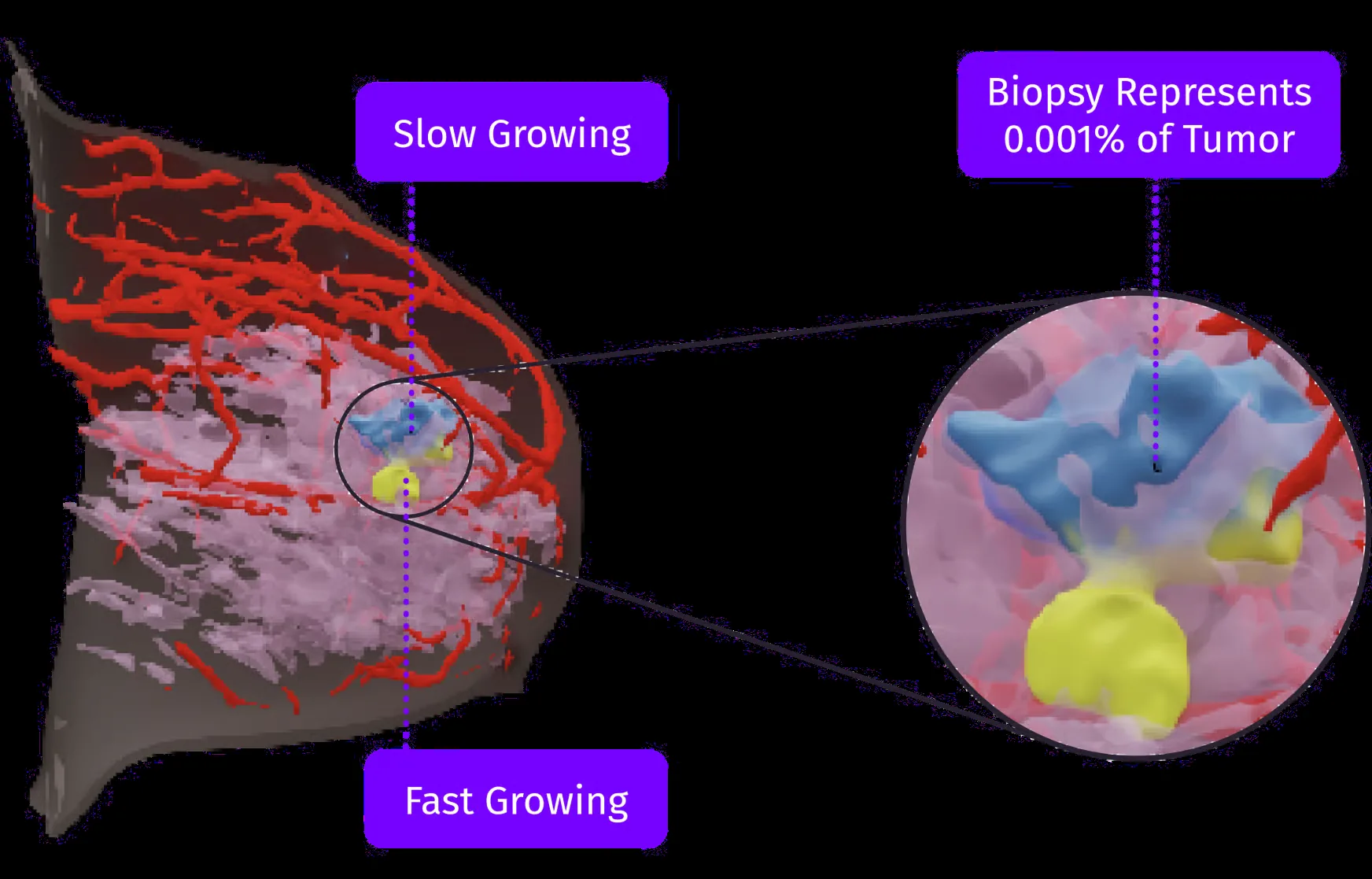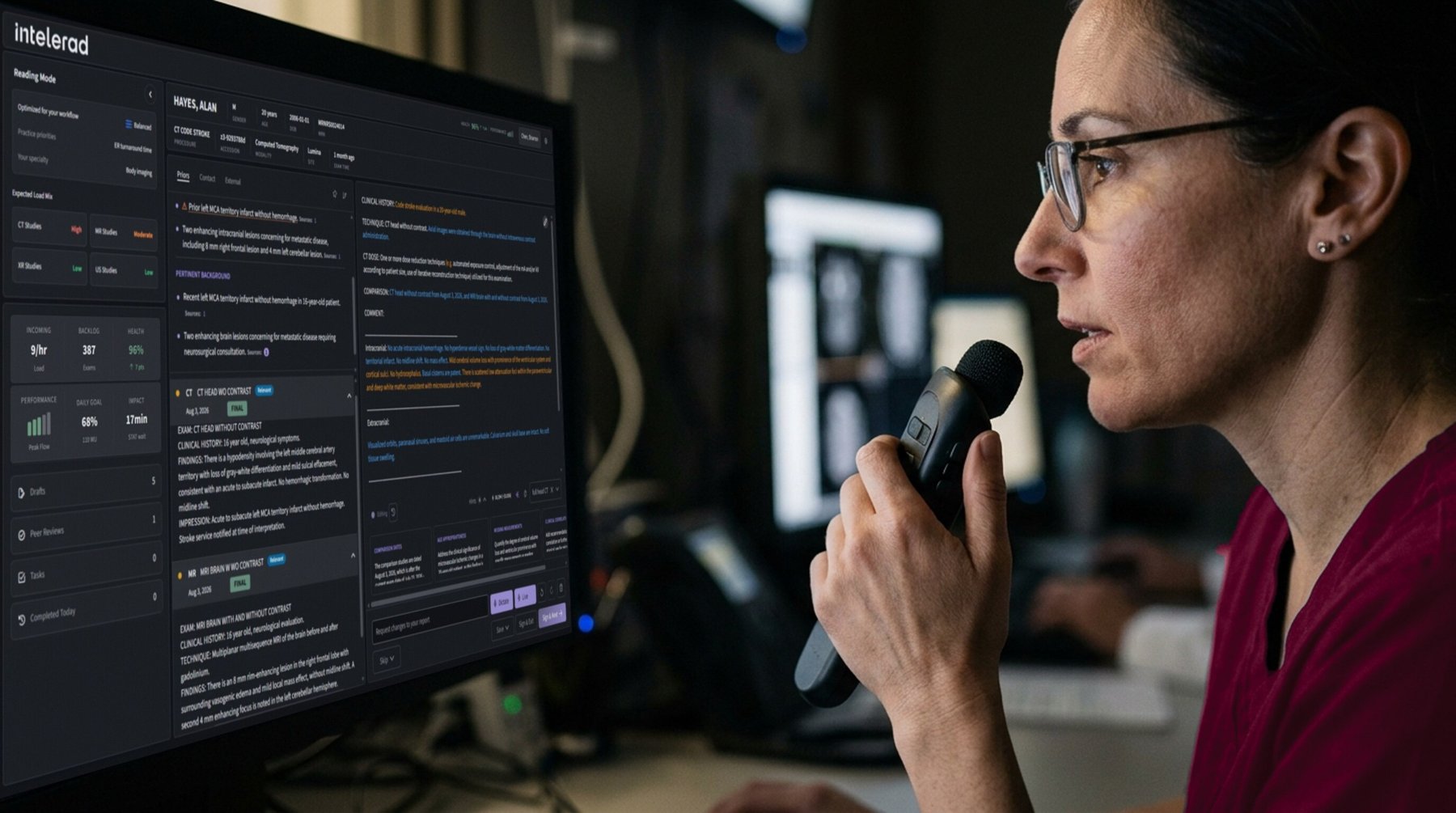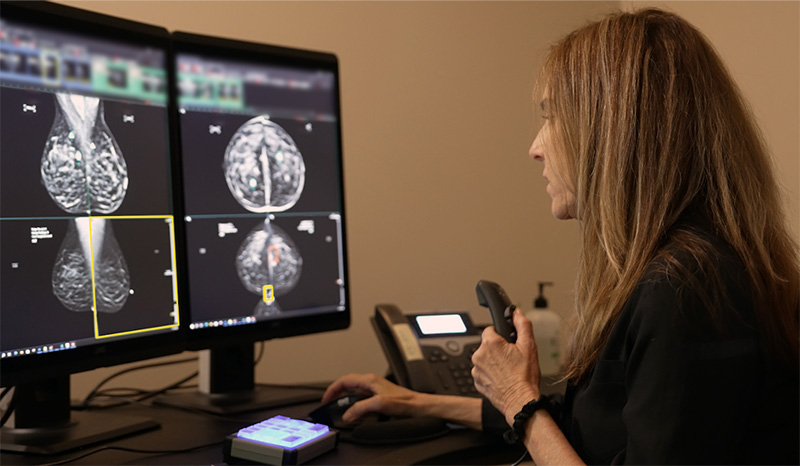
A 47-year-old woman has her routine 3D mammogram on a Tuesday morning. The radiologist sees nothing suspicious, the letter says normal, and she is told to come back in a year or two. What neither of them knows is whether her breast tissue looks like the tissue of women who go on to develop cancer within five years. Until now, the only way to estimate that in most U.S. clinics was a questionnaire about family history, age at first period and prior biopsies, filled in unevenly, if at all.
On November 24, DeepHealth said the FDA had cleared Mammo Risk, software that reads the same mammogram and estimates three, four and five-year breast cancer risk. The company calls it the first FDA-cleared image-based risk prediction for 3D mammography. If the evidence holds, the mammogram becomes two tests in one: a check for cancer today and a forecast of risk tomorrow.
The scan most women already get could become the entry point for risk-based screening. Whether it does depends less on the algorithm than on who pays for the follow-up imaging it triggers.
In This Deep Dive
- Why this matters now
- What actually happened
- The obvious read versus the deeper signal
- Historical playbook
- The world forming around image-based risk
- Category map and taxonomy
- Evidence Ladder
- Regulation, coding and guidelines
- Capital flows and bottom-up economics
- The HealthTech Investor's Signal
- Counter-thesis
- Forward Intelligence
- The Bottom Line for Health System Leaders and Investors
Why this matters now
Screening policy in the U.S. is still built mostly around age. The U.S. Preventive Services Task Force recommends screening mammography every two years for women aged 40 to 74, a Grade B recommendation finalised on April 30, 2024. Risk models exist, but they depend on detailed patient history and are applied inconsistently.
The modality has also shifted. DeepHealth's release, citing FDA statistics, says 3D mammography (digital breast tomosynthesis) is now available at more than 90% of U.S. mammography facilities. A risk tool built for 3D images can therefore reach most screening sites without new hardware.
And the stakes are large. The release cites the American Cancer Society's estimate that 321,910 U.S. women will be diagnosed with invasive breast cancer in 2026, and National Cancer Institute data showing five-year relative survival approaching 100% when cancer is found early, against 34% once it has spread to distant parts of the body.
What actually happened
- The clearance: FDA 510(k) clearance K262709 for Mammo Risk, dated November 23, 2026 in the release's references and announced November 24.
- The output: Three, four and five-year breast cancer risk from a 3D mammogram, including combined 3D and 2D workflows, using images from a completed exam with no extra scan.
- The training and study: AI trained on 220,000 studies, and an independent multicentre pivotal study of more than 65,000 screening mammograms at 10 U.S. sites, with consistent performance across subgroups including Black women and women with dense breasts, according to the company.
- The earlier generation: DeepHealth's previous image-based technology predicts risk up to two years ahead and is CE marked in Europe. In a Karolinska-led study in Science Translational Medicine, drawing on more than 154,000 U.S. women having 3D mammography, it showed an estimated 2.4-fold sensitivity versus the Tyrer-Cuzick model when selecting the highest-risk 12% of women for supplemental screening.
- The rollout: Mammo Risk is commercially available in the U.S. now, joins DeepHealth's Radiology AI Suite, and will be built into RadNet's Enhanced Breast Cancer Detection program in the coming months. DeepHealth will show it at RSNA 2026, booth 1329.

The obvious read versus the deeper signal
The obvious read: Another FDA-cleared breast AI product from a company that already sells several, timed for RSNA.
The deeper signal: This clearance moves AI from detection to forecasting, and it sits inside a company that runs a large network of outpatient imaging centres. RadNet can generate the scores, act on them with supplemental MRI or ultrasound in its own sites, and collect outcome data at scale. That loop, if it works, is a stronger moat than the model itself.
Historical playbook
Risk-based screening is not a new idea. Clinical models such as Tyrer-Cuzick have long combined family history, reproductive factors and breast density to estimate risk, and guidelines already suggest supplemental imaging for women at high risk. The weakness has been the inputs: questionnaires are time-consuming, often incomplete and rarely updated.
Breast density was the first image-derived risk factor to reach policy. Many U.S. states passed density notification laws, and density became part of routine reporting. Image-based AI takes the next step: instead of a single density category, the model reads patterns across the whole image that correlate with later cancer.
The regulatory path opened in 2025. On May 30, 2025, the FDA granted De Novo authorization to Clairity for Clairity Breast, a model that outputs a five-year probability of breast cancer from four standard 2D screening views on supported Hologic systems. That created a device category. DeepHealth's 510(k) for 3D images follows in that category, extending image-based risk to the modality most U.S. sites now use.
The world forming around image-based risk
Three groups now compete to own breast cancer risk. Imaging AI vendors such as DeepHealth and Clairity read the mammogram itself. Genomic and polygenic companies estimate inherited risk; on November 24, PolyCypher Health launched Priora, which combines polygenic risk scores with personal health information to estimate risk for 15 conditions including breast cancer, while stating that its estimates are informational and not clinically validated. And traditional questionnaire models remain embedded in EHR workflows.
These approaches are more complementary than competitive. An image-based score captures what the breast looks like now. A polygenic score captures inherited predisposition. A history model captures family and reproductive factors. The practical question for health systems is which score triggers which action, and who explains a high score to a patient who was told her mammogram was normal.
Category map and taxonomy
Image-based and adjacent breast cancer risk approaches, by mechanism. Entries are limited to verified public information.
| Player or approach | Modality | Physical / commercial target | Clinical maturity | Regulatory pathway | Strategic moat | Key limitation |
|---|---|---|---|---|---|---|
| DeepHealth Mammo Risk | 3D mammography (DBT), including 3D/2D | 3 to 5-year risk for screened women | FDA 510(k) cleared Nov 2026; pivotal study of 65,000+ exams | 510(k), K262709 | RadNet imaging network and outcome data; multi-vendor | Accuracy figures not yet published |
| DeepHealth earlier risk technology (from iCAD) | 2D and 3D mammography | Up to 2-year risk | Peer-reviewed STM study; CE marked | CE mark in Europe | Published comparison against Tyrer-Cuzick | Short horizon; not FDA cleared in this form |
| Clairity Breast | 2D mammography, four standard views | 5-year risk | FDA De Novo May 2025 | De Novo, DEN240047 | First authorised image-based risk device | Limited to supported Hologic 2D systems |
| Questionnaire models (e.g. Tyrer-Cuzick) | Patient history and density | Lifetime and 10-year risk | Long clinical use | Not a device | Embedded in guidelines and EHRs | Depends on complete patient history |
| PolyCypher Health Priora | Polygenic score plus health information | Risk for 15 conditions incl. breast cancer | Launched Nov 2026; not clinically validated per company | Not a medical service per company | Direct-to-consumer and clinic channel | Informational only |
Evidence Ladder
- Physics and signal: Plausible. Breast tissue patterns, including density, are established risk markers; AI extracts more of that signal from the image.
- Lab proof: Met for the earlier generation, with a peer-reviewed study in Science Translational Medicine on more than 154,000 women.
- Real-world performance: Partly met. DeepHealth reports a multicentre pivotal study of more than 65,000 exams at 10 U.S. sites; headline metrics are not yet public.
- Clinical validation: Not yet shown. No published trial shows that acting on Mammo Risk scores finds more early cancers or reduces late-stage disease.
- Reimbursement: Not met. A Category III CPT code arrives January 1, 2027 for tracking; it does not create payment.
Regulation, coding and guidelines
Mammo Risk is cleared through the 510(k) pathway, which means the FDA found it substantially equivalent to a legally marketed predicate. Clairity's De Novo in May 2025 created the classification for radiological software that predicts future breast cancer risk, so later products can follow by 510(k).
Coding is the bottleneck. The American Medical Association established a Category III CPT code, effective January 1, 2027, to track use of image-based breast cancer risk assessment technologies. Category III codes exist to collect data on emerging services; payers decide individually whether to pay, and many do not.
Guidelines lag too. The USPSTF's 2024 recommendation is age-based and found insufficient evidence on supplemental screening for women with dense breasts. Until guideline bodies recommend acting on image-derived risk scores, health systems that use them will be ahead of the evidence base.
Capital flows and bottom-up economics
RadNet's strategy explains the economics. DeepHealth acquired iCAD in July 2025, adding breast AI products and an installed base. RadNet's own centres provide a captive channel: Mammo Risk will be added to its Enhanced Breast Cancer Detection program in the coming months.
For a screening provider, the business case is not the risk score itself but what follows. A woman flagged as high risk may be offered supplemental MRI or ultrasound, which generates imaging revenue if covered, and patient loyalty if not. For payers, the case depends on whether earlier detection lowers treatment costs enough to offset more imaging.
No pricing was disclosed for Mammo Risk. Until the Category III code produces utilisation data and payers set policies, expect self-pay programmes and bundled offerings inside imaging networks to lead adoption.
Institutional hubs and buyer dynamics
The buyers are breast imaging leaders at outpatient imaging groups, hospital radiology departments and integrated delivery networks. Breast centres with high-risk clinics are natural early adopters because they already run MRI programmes and genetic counselling.
Primary care and OB-GYN matter too. A risk score reported with a normal mammogram creates a referral question that the radiologist alone cannot answer. Systems that wire the score into primary care workflows will get more value than those that leave it on a report.
📈 The HealthTech Investor's Signal
For investors, the clearance reinforces RadNet's model of owning both the imaging sites and the software that reads the images. The interesting metric is not the number of scores generated but conversion: how many high-risk women get supplemental imaging, how many cancers that finds, and who pays.
No stock picks. Watch for published pivotal study metrics, payer coverage decisions after January 2027, and any prospective study linking risk-guided screening to stage shift.
Counter-thesis
The counter-thesis is that risk prediction without a validated action can do harm. Telling a woman she is at elevated risk after a normal mammogram creates anxiety, may lead to more imaging and biopsies with false positives, and may not change outcomes if the extra screening does not find cancers earlier in a way that matters.
There is also a fairness question that cuts both ways. DeepHealth says performance was consistent across subgroups, including Black women and women with dense breasts, which would be a real improvement over some traditional models. But if supplemental imaging is self-pay, the women flagged as high risk who can afford follow-up will benefit most.
Forward Intelligence
- Whether DeepHealth publishes the pivotal study's discrimination and calibration metrics, including the RSNA 2026 podium on image-only risk.
- How many U.S. sites outside RadNet adopt Mammo Risk in its first year.
- Whether any commercial payer or Medicare Advantage plan covers image-based risk assessment once the Category III code takes effect on January 1, 2027.
- Whether a prospective study shows that acting on image-based risk scores improves cancer detection or stage at diagnosis.
- Whether guideline bodies begin to reference image-derived risk in screening recommendations.
The Bottom Line for Health System Leaders and Investors
What changed this week is that image-based risk prediction now has FDA clearance on the 3D mammograms most U.S. women receive. For breast imaging leaders, that makes risk-based screening operationally simpler: no questionnaire, no new scan, one more output from an exam already done.
What remains uncertain is everything downstream. The accuracy metrics are not yet public, guidelines are age-based, and the Category III code tracks use without paying for it. Leaders should pilot with clear protocols for what a high score triggers. Investors should watch conversion to supplemental imaging and payer coverage, not clearance counts.
Sources
- DeepHealth: DeepHealth Receives FDA Clearance for First AI to Predict Five-Year Breast Cancer Risk from 3D Mammograms (Nov 24, 2026) (Tier 1, primary)
- GlobeNewswire: the same DeepHealth release with references (Nov 24, 2026) (Tier 1, primary)
- DeepHealth: About and leadership (Tier 1, company)
- FDA: De Novo decision letter DEN240047, Clairity Allix5 (Clairity Breast) (Tier 1, regulator)
- RadNet: DeepHealth completes acquisition of iCAD (Jul 2025) (Tier 1, company)
- USPSTF: Breast Cancer Screening final recommendation (Apr 30, 2024) (Tier 1, guideline)
- Eriksson et al., A risk model for digital breast tomosynthesis to predict breast cancer and guide clinical care, Science Translational Medicine, 2022 (Tier 1, peer-reviewed)
- AMA: CPT Category III codes long descriptors (Tier 1, coding body)
- PolyCypher Health: Priora launch (Nov 24, 2026) (Tier 1, company)