A target discovery team at a large drugmaker has a familiar problem. Human genetics points to a gene that seems to matter in a disease, but the cell type where it matters most is hard to grow, expensive to test and slow to read out. The team can spend months running CRISPR knockdowns in that cell type, or it can ask a model to predict what will happen and only run the experiments that look promising.
That second option is what people mean by a virtual cell. On November 19, Illumina said its version had just beaten roughly 1,500 competitors in Arc Institute's 2026 Virtual Cell Challenge, using an algorithm called CellularAI trained on a dataset Illumina has been building all year. The result is a useful signal about where AI biology is heading. It is also easy to over-read, and this briefing separates the two.
The win is evidence that perturbation data at scale can beat simple baselines on unseen cells. It is not yet evidence that virtual cells find better drugs.
In This Deep Dive
- Why this matters now
- What actually happened
- The obvious read versus the deeper signal
- Historical playbook
- The world forming around virtual cell biology
- Category map and taxonomy
- Evidence Ladder
- Regulation: research tools, non-animal methods and AI in drug submissions
- Capital flows and bottom-up economics
- The HealthTech Investor's Signal
- Counter-thesis
- Forward Intelligence
- The Bottom Line for Pharma R&D Leaders and AI Biology Investors
Why this matters now
Drug discovery spends most of its money on programs that fail, and a large share of those failures trace back to the wrong target or the wrong biological context. Anything that improves the odds of picking a target that behaves as expected in the relevant human cell type is worth a great deal to pharma R&D budgets. Virtual cell models promise exactly that: a way to run many more experiments in silico than any lab can run at the bench.
The field has had a credibility problem, though. Illumina's own technical post says published perturbation models have struggled to beat a very simple baseline, the average expression across cells. In other words, many sophisticated models have not clearly outperformed doing almost nothing. A public challenge scored on hidden data generated by a neutral host is one of the few ways to test claims on equal terms, which is why this result matters more than a company benchmark would.
Timing also matters. Regulators in the United States have spent the past few years opening the door to non-animal methods in drug development, and pharma companies have been signing AI discovery deals at a steady pace. A dataset that is large, standardized and owned by a single supplier changes the economics of building these models, and that is the part investors should watch.
Tier (A) for the challenge result, task and dataset description, taken from Illumina's release and technical post. Tier (B) for the importance to R&D productivity, which is our interpretation.
What actually happened
- The result: Illumina's BioInsight AI Lab won the 2026 Virtual Cell Challenge, hosted by Arc Institute. Results were scored against hidden experimental data generated by Arc, and Illumina says its predictions most closely matched validated results across a range of biologically meaningful metrics.
- The task: Teams had to predict knockdown responses in cell lines their models had not seen, working only from each cell's unperturbed state. That is a test of generalization to new biological contexts, not of memorizing known responses.
- The data: The Billion Cell Atlas captures how individual cells respond to CRISPR-based genetic changes across more than 200 disease-relevant cell lines. Illumina's technical post says the team has sequenced over 500 million single cells since the atlas was announced in January 2026, with billions more planned, spanning cardiovascular, immune, neuro, renal and other systems.
- The model and release: CellularAI predicts transcriptome-wide responses to genetic perturbations in unseen cell types. Illumina released an open-source initial version and says hypotheses can be tested through direct CRISPR capture in its Single Cell Preparation workflow.
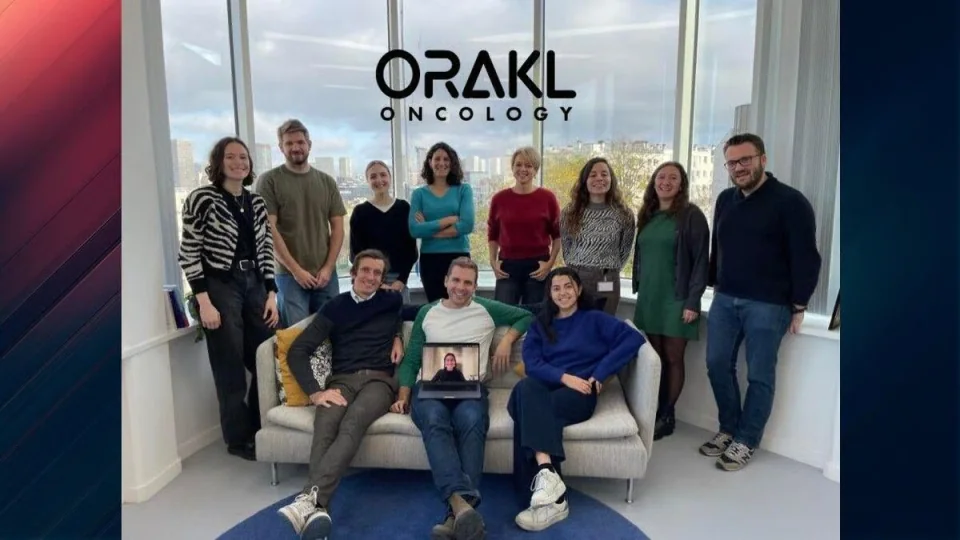
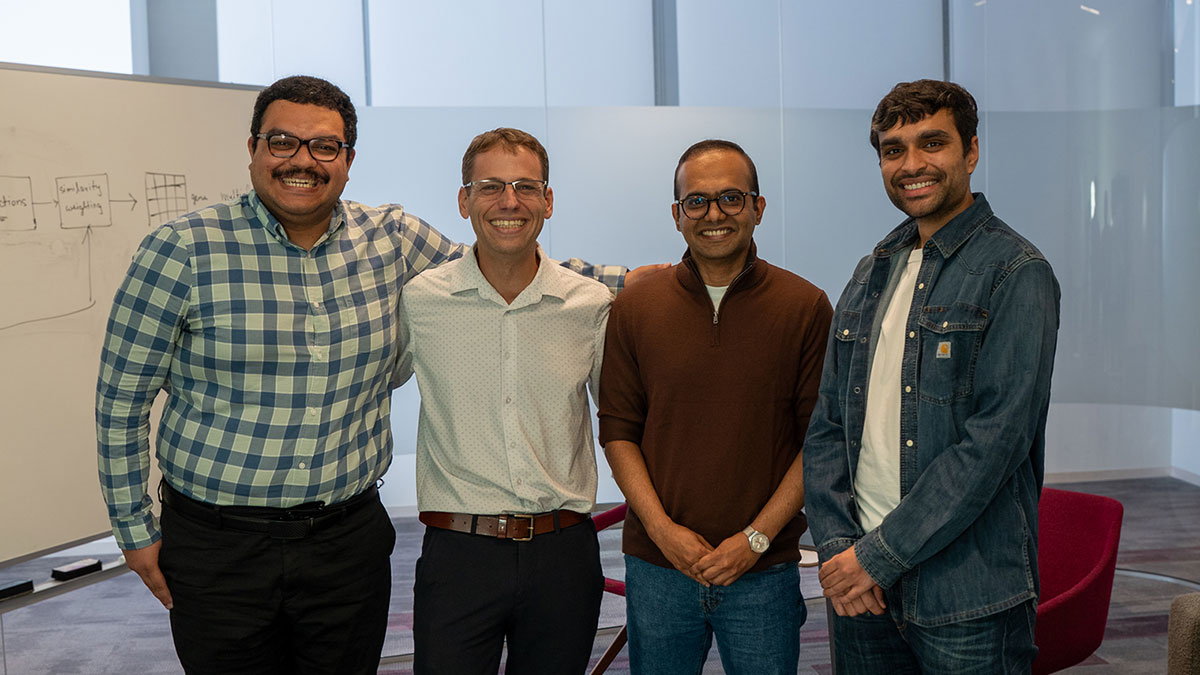
- The people: The lab is run by Kyle Farh, MD, PhD, vice president of artificial intelligence. The winning team included Kishore Jaganathan, PhD, Eyal Ben-David, PhD, Atreyo Pal, PhD, and Aniketh Janardhan Reddy, PhD. Rami Mehio, senior vice president and general manager of BioInsight, is quoted in the release.
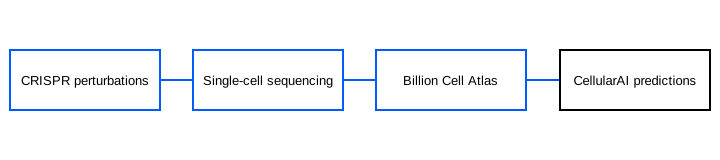
Tier (A). All facts above are from Illumina's November 19 release and technical post. Arc Institute generated the hidden test data.
The obvious read versus the deeper signal
The obvious read: An AI lab won a competition, so Illumina now has a leading virtual cell model, and drug discovery just got faster.
The deeper signal: The more important asset is the data, not the model. Illumina chose to open-source an initial version of CellularAI while keeping the atlas inside a consortium with pharma partners. That is a classic platform move: give away the method, monetize the input. The win is a demonstration that the atlas has the breadth to help models generalize to new cell types, which is what consortium members are paying to access. It also positions Illumina, whose core business is selling sequencers and reagents, as a supplier of biological training data, a market where every additional cell sequenced also consumes Illumina's own products.
Tier (B) interpretation, based on the structure Illumina describes: open-source algorithm, consortium-built dataset.

Historical playbook
Pooled CRISPR screens with single-cell readouts, known as Perturb-seq, were first described in 2016 and scaled to genome-wide experiments in the early 2020s. Each step lowered the cost of asking what happens to a cell's whole transcriptome when one gene is switched off, and each produced larger public datasets for modelers to learn from.
The pattern resembles protein structure prediction. For years, models improved slowly because training data were limited and benchmarks were inconsistent. A shared, blind competition and a large curated dataset changed that, and the field moved quickly from academic progress to commercial drug design companies. Virtual cell advocates hope perturbation biology follows the same path. The difference is that cell responses depend heavily on context, so a model that works in one cell line may fail in another, which is exactly what the challenge's unseen cell line design was built to test.
There is also a commercial precedent in genomics itself. Population sequencing projects built in consortia with pharma partners have produced datasets that drug developers paid to access and that shaped target selection for years. Illumina appears to be applying a similar consortium model to functional perturbation data.
The world forming around virtual cell biology
Several groups are building large single-cell and perturbation datasets, including non-profit institutes, philanthropic science organizations, AI-first biotechs and tool makers. Arc Institute hosts the challenge and has released its own models and data. Phenomics companies have built image-based maps of cellular responses. Tool makers sell the instruments and chemistry that generate the data.
Pharma sits on both sides. Drugmakers fund consortia, sign discovery deals with AI companies and also build internal capabilities. For a large company, a consortium seat is a way to get early access to a dataset at a fraction of the cost of generating it alone, while keeping the option to build proprietary models on top.
The likely structure is a stack: data generators at the bottom, model builders in the middle, and drug programs at the top. Illumina's move suggests it wants to own the bottom layer and influence the middle through open-source code.