Ask a radiology department how many AI tools it runs and the honest answer is often: too few to matter, and too many to manage. Each algorithm has come with its own contract, security review, integration project and dashboard. That is why, after a decade of FDA clearances, many hospitals still use only a handful of imaging AI products.
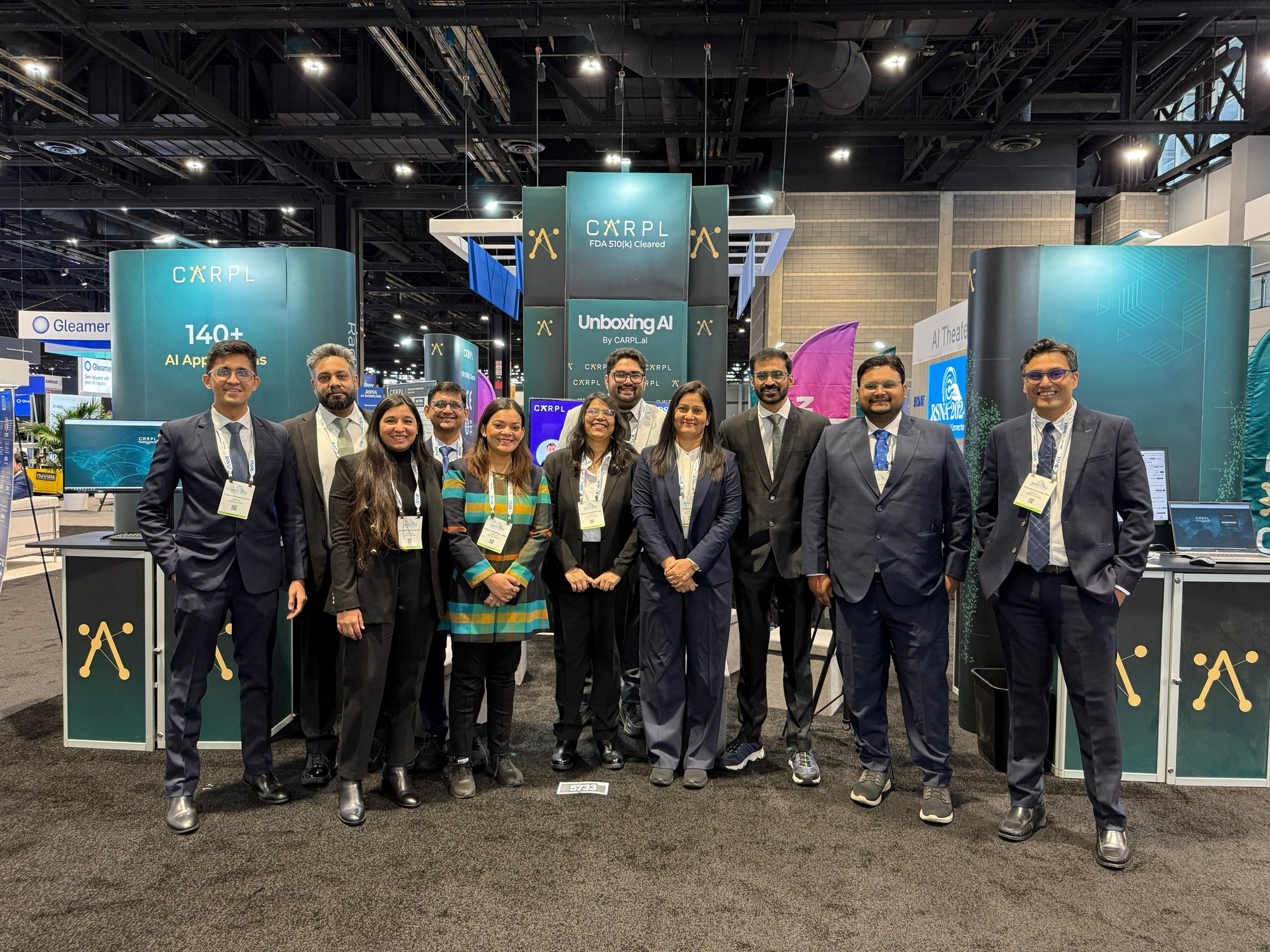
The week before RSNA brought two moves that point to a different model. On November 23, CARPL.ai said eligible Optum Enterprise Imaging customers in the U.S. can now reach more than 70 FDA-cleared AI apps through its platform. A day later, Fujifilm said its Synapse AI Marketplace includes an AI platform powered by CARPL, with access to more than 300 applications from more than 100 vendors. Last week we covered Allegheny Health Network choosing Ferrum Health to govern imaging AI across 16 hospitals. The pattern is clear: hospitals are starting to buy imaging AI the way they buy app stores, not apps.
The scarce resource in imaging AI is no longer algorithms. It is the plumbing, contracts and oversight that let a hospital use more than five of them.
In This Deep Dive
- Why this matters now
- What actually happened
- The obvious read versus the deeper signal
- Historical playbook
- The world forming around imaging AI orchestration
- Category map and taxonomy
- Evidence Ladder
- Regulation and oversight
- Capital flows and bottom-up economics
- The HealthTech Investor's Signal
- Counter-thesis
- Forward Intelligence
- The Bottom Line for Radiology Leaders and Investors
Why this matters now
Imaging AI supply has outrun hospital capacity to absorb it. Vendors have won hundreds of FDA clearances, mostly in radiology, but each one is a narrow tool: a fracture finder, a nodule detector, a stroke triage alert. A health system that wants broad coverage would need dozens of separate vendor relationships.
CARPL's own framing names the barrier directly: the cost and complexity of contracting with, integrating and managing multiple AI vendors. Its pitch is one platform for deployment, governance and monitoring, so a hospital can add or swap applications without rebuilding the environment.
Regulators and payers are also pushing toward oversight. Post-market monitoring, which we explored in our deep dive on NHS SENTINEL-AI, is easier when every algorithm runs through one layer that logs inputs, outputs and performance.
Tier A (fact) for CARPL's and Fujifilm's stated offerings. Tier B (interpretation) for the market implications.
What actually happened
- CARPL and Optum: On November 23, CARPL.ai announced expanded availability of its vendor-neutral AI platform to eligible Optum Enterprise Imaging customers in the U.S., beginning November 2026. Health systems can discover, deploy and monitor more than 70 FDA-cleared AI applications in radiology and cardiology workflows.
- What CARPL provides: Technology, marketplace access and an operational framework: centralised deployment, lifecycle governance and performance monitoring. It runs on premises, in private or public cloud, or hybrid.
- The CEO's case: Vidur Mahajan, CEO of CARPL.ai, said: "Secure, vendor-neutral infrastructure is what makes AI adoption work at scale," adding that the expansion reduces the need for separate contracts and integrations.
- Fujifilm's marketplace: On November 24, Fujifilm Healthcare Americas said its Synapse AI Marketplace, including an AI Platform powered by CARPL, lets organisations test, compare and validate multiple AI applications on their own data, with more than 300 applications from more than 100 third-party vendors.
- Fujifilm's own AI: Fujifilm will also show Lung Nodule AI for low-dose chest CT, an AI Echo Toolbar for echocardiography and intelligent worklists with generative reporting from partners including Radpair and Rad AI, at RSNA booth 4100.
Hospital PACS and worklist Orchestration platform Many vetted AI apps Results, monitoring, audit
Tier A (fact), as stated in the CARPL.ai and Fujifilm releases.
The obvious read versus the deeper signal
The obvious read: Two vendors announced distribution deals before a trade show.
The deeper signal: The deeper shift is where value sits in imaging AI. When the PACS and enterprise imaging vendors embed a neutral orchestration layer, individual algorithm makers lose direct control of the customer relationship, and the platform that holds governance and monitoring data gains it. For hospitals, it turns AI from a series of IT projects into a catalogue decision.
Tier B (interpretation).
Historical playbook
Radiology AI's first wave sold one algorithm at a time, often directly to radiology groups. Integration was bespoke, and many pilots never reached production because the IT cost exceeded the clinical gain of a single tool.
The second wave brought marketplaces from PACS vendors and independent platforms. CARPL's website lists partnerships with Intelerad and PaxeraHealth, and a collaboration with RadNet's DeepHealth on a control system for clinical AI performance and safety. Ferrum Health, which we covered last week, plays a similar role as an enterprise AI layer.
The third wave, visible this month, is distribution through the systems hospitals already run. Optum Enterprise Imaging and Fujifilm Synapse are installed bases. Putting a platform inside them shortens the path from contract to clinical use.
The world forming around imaging AI orchestration
Three types of players now compete for the orchestration layer: PACS and enterprise imaging vendors such as Fujifilm and Optum, independent vendor-neutral platforms such as CARPL and Ferrum, and the large imaging device makers that bundle AI with scanners and reading software, as GE HealthCare did with the tools we covered in our deep dive on report drafting AI.
The independents' argument is neutrality: a hospital can pick any approved algorithm and switch later. The incumbents' argument is integration: their platform already sits in the reading workflow. The CARPL deals with Optum and Fujifilm try to combine both.