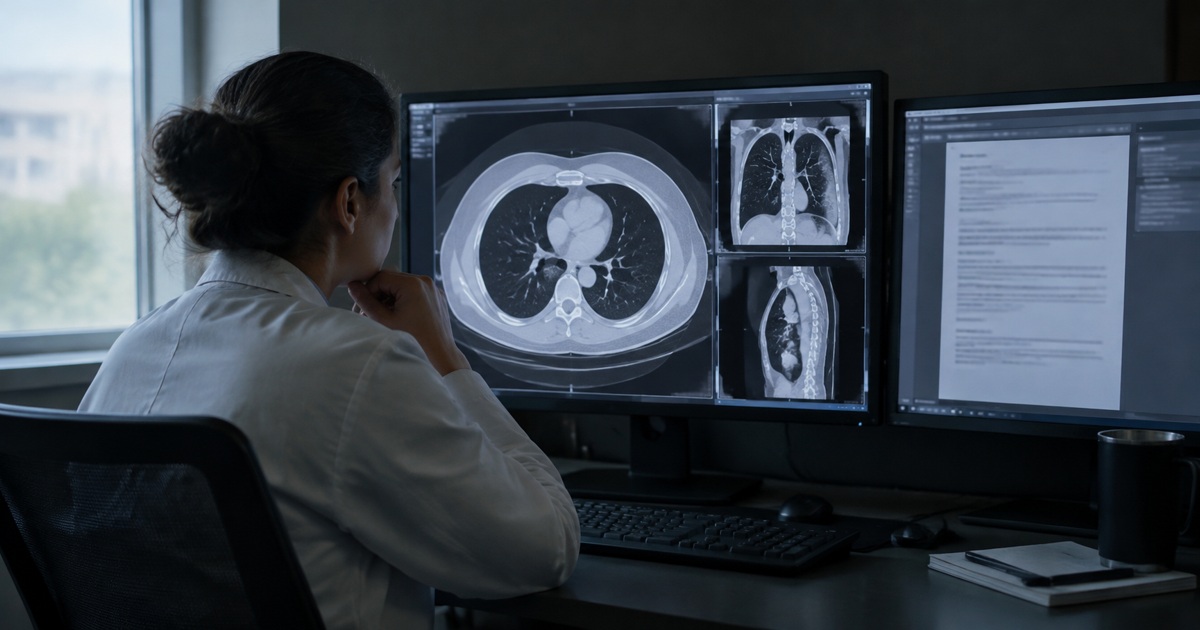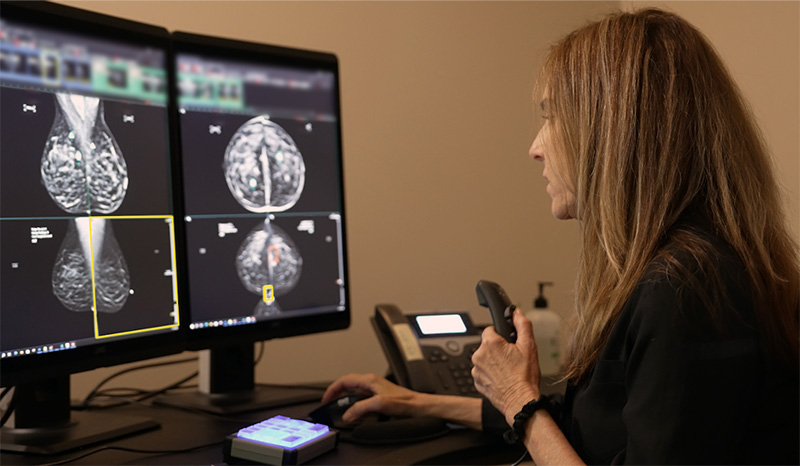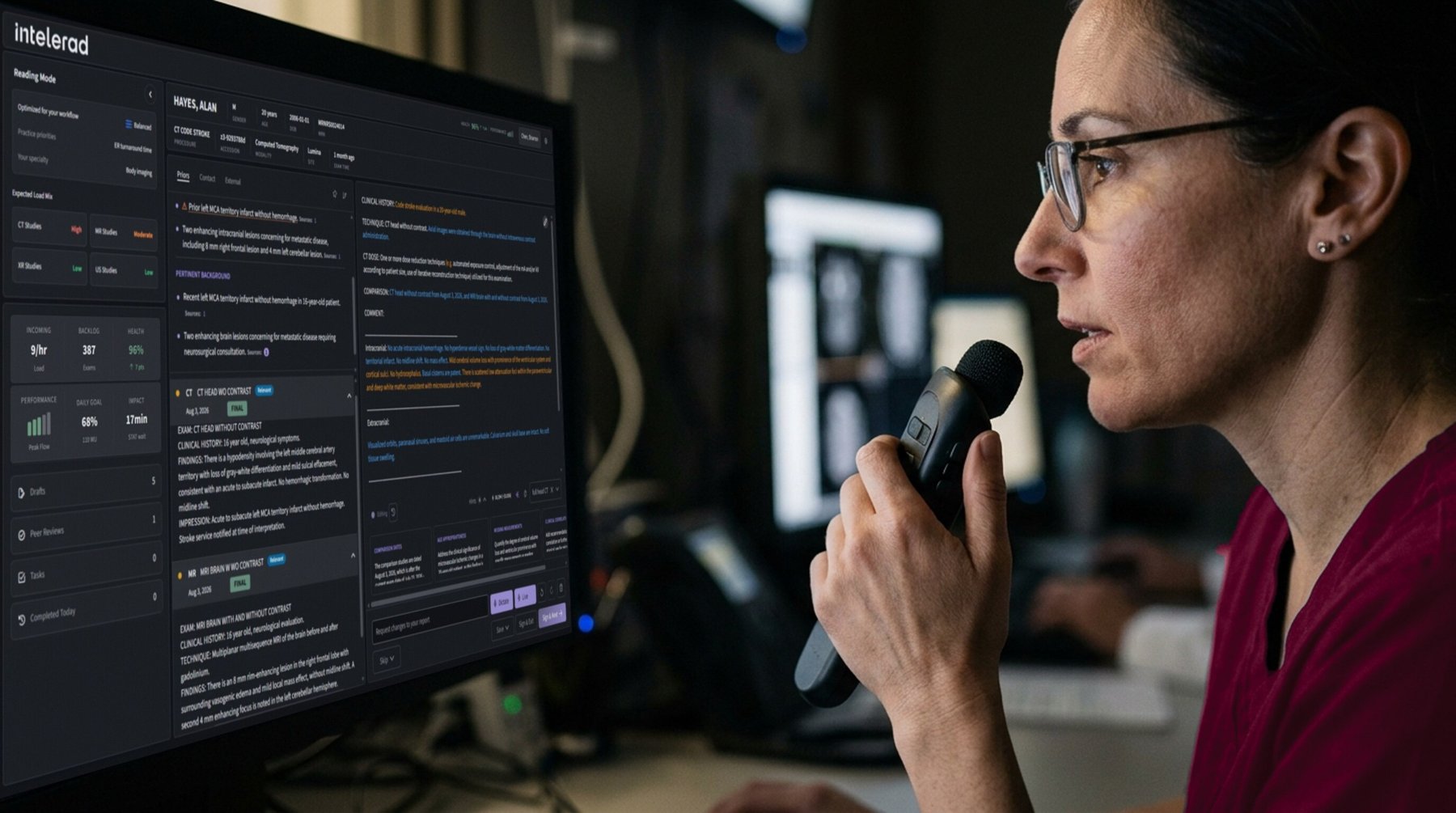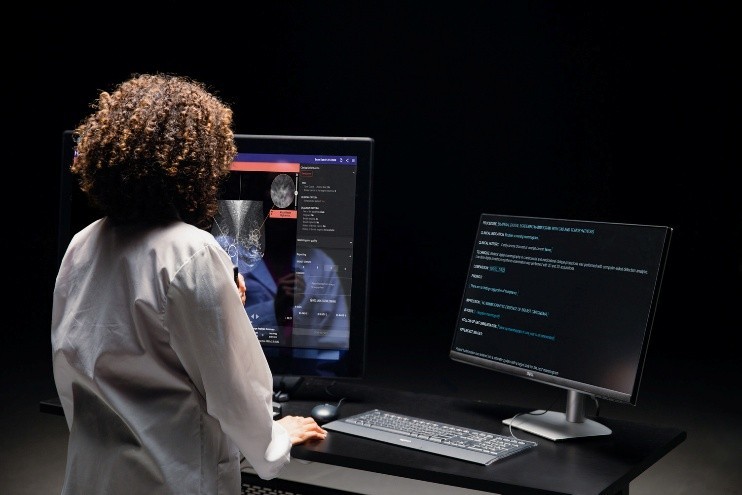
A breast imaging centre opens on a Monday morning with several hundred screening mammograms waiting. Almost all of them are normal. A handful contain cancer. Today, most radiologists read them roughly in the order they arrive. The question a new study asks is simple: what if AI decided which ones to read first?
That study, led by Dr. Manisha Bahl of Mass General Brigham and supported by Hologic, will be presented at RSNA in Chicago next week. It found that when 3D mammograms were ranked by an AI case score, the top fifth contained 62% of the cancers. This week we covered DeepHealth's FDA clearance for five-year risk prediction and the NHS EDITH trial of AI as a second reader. Triage is the third job breast AI is being asked to do, and it may be the one that changes the working day fastest.
Detection asks whether AI can find the cancer. Triage asks whether AI can change when a woman gets her answer.
In This Deep Dive
- Why this matters now
- What actually happened
- The obvious read versus the deeper signal
- Historical playbook
- The world forming around breast imaging AI
- Category map and taxonomy
- Evidence Ladder
- Regulation and oversight
- Capital flows and bottom-up economics
- The HealthTech Investor's Signal
- Counter-thesis
- Forward Intelligence
- The Bottom Line for Breast Imaging Leaders and Investors
Why this matters now
Breast screening volumes are rising while radiologist capacity is not. In the U.S., the USPSTF's April 2024 recommendation lowered the start of routine biennial screening from 50 to 40, and Hologic's claims analysis shows uptake among women aged 40 to 44 rose 4.2 percentage points between 2022 and 2024. More women screened means longer worklists.
Worklist order matters because delays compound. A suspicious screen read late in the day, or the next day, usually means the woman has gone home and must be called back for more imaging. Bahl's point is that if AI flags an exam early, the radiologist may be able to read it while the patient is still on site and arrange extra views immediately.
For health systems, that is a service and cost question as much as a clinical one. Fewer callbacks can mean less anxiety for patients, fewer missed follow-up appointments and better use of imaging slots.
Tier A (fact) for study figures and USPSTF timing as stated by Hologic. Tier B (interpretation) for the operational implications.
What actually happened
- The announcement: On November 27, Hologic said 12 studies featuring its technologies and research will be presented at RSNA 2026, the Radiological Society of North America annual meeting, in Chicago.
- The triage study: Researchers led by Manisha Bahl, MD, MPH, associate director of quality for breast imaging at Mass General Brigham and associate professor of radiology at Harvard Medical School, retrospectively reviewed 7,500 3D mammography screening exams performed between January 2016 and June 2019, including 600 cancers.
- The AI: Exams were analysed with Genius AI Detection 2.0, Hologic's breast cancer detection aid, which scores each suspicious lesion from 0 to 100 and combines them into an overall case score.
- The result: Cancers clustered at the top. The top 20% of exams by AI score included 62.0% of cancers. At a high-priority threshold of 65, 11.6% of exams were flagged and they contained 41.5% of cancers. Lower thresholds captured more cancers but required a larger share of the worklist to be reviewed as high priority.
- The uptake study: A Hologic analysis of the MarketScan claims database covering more than 5.4 million commercially insured women aged 40 to 64 found screening rose in every age group from 2022 to 2024, most among women aged 40 to 44 (40.9% to 45.1%).
3D mammogram acquired AI case score 0 to 100 High scores read first Radiologist reads and decides
Tier A (fact) as stated in Hologic's November 27 release. The studies are conference presentations; peer-reviewed publication may follow.
The obvious read versus the deeper signal
The obvious read: An AI vendor has a study showing its scores rank cancers near the top of a worklist.
The deeper signal: The deeper shift is that breast AI is being judged on workflow outcomes, not just accuracy. A triage tool succeeds if it shortens the time from scan to answer and cuts callbacks. That moves the buyer conversation from sensitivity tables to operations data, and it favours vendors that sit inside the acquisition and reading workflow.
Tier B (interpretation).
Historical playbook
Computer-aided detection arrived in mammography decades ago and taught the field a hard lesson: tools that mark too much get ignored, and accuracy on paper does not guarantee benefit in practice. Deep learning tools improved performance, and Europe moved first on prospective evidence, with large screening programmes testing AI as a second reader.
This week shows how quickly the use cases are multiplying. On November 23, the NHS opened recruitment for EDITH, a trial of nearly 700,000 women testing whether AI can replace one of two human readers. On November 24, DeepHealth won FDA clearance for Mammo Risk, which predicts three-, four- and five-year breast cancer risk from a 3D mammogram. On November 25, Pro Medicus said Visage Imaging won clearance for a concurrent mammography reading aid.
Triage sits between those uses. It does not replace a reader or predict future risk. It changes the order of work, which makes it easier to adopt but harder to prove valuable, because the benefit shows up in time and logistics rather than in cancers found.
The world forming around breast imaging AI
Breast AI is splitting into distinct jobs: detection aids that mark suspicious areas, second readers that replace a human read, risk models that inform future screening, and triage that orders the worklist. Many vendors offer more than one, and buyers increasingly want a single platform rather than separate tools.
Evidence expectations are diverging by job. Second-reader claims need large prospective trials like EDITH. Risk prediction needs long follow-up. Triage needs operational studies showing faster diagnosis without harm. Hologic's RSNA programme also includes a prospective multicentre study comparing AI as a reading aid with AI triaging, a sign the field knows retrospective ranking is only the first step.