A patient calls a specialty clinic at 8:05 on a Monday morning to move an appointment, ask about a refill and check whether a referral arrived. The line is busy, the hold music loops, and by the time a scheduler answers, the patient has already called a competitor. For most health systems the phone is still the main front door, and it is staffed by the people who are hardest to hire and quickest to leave.
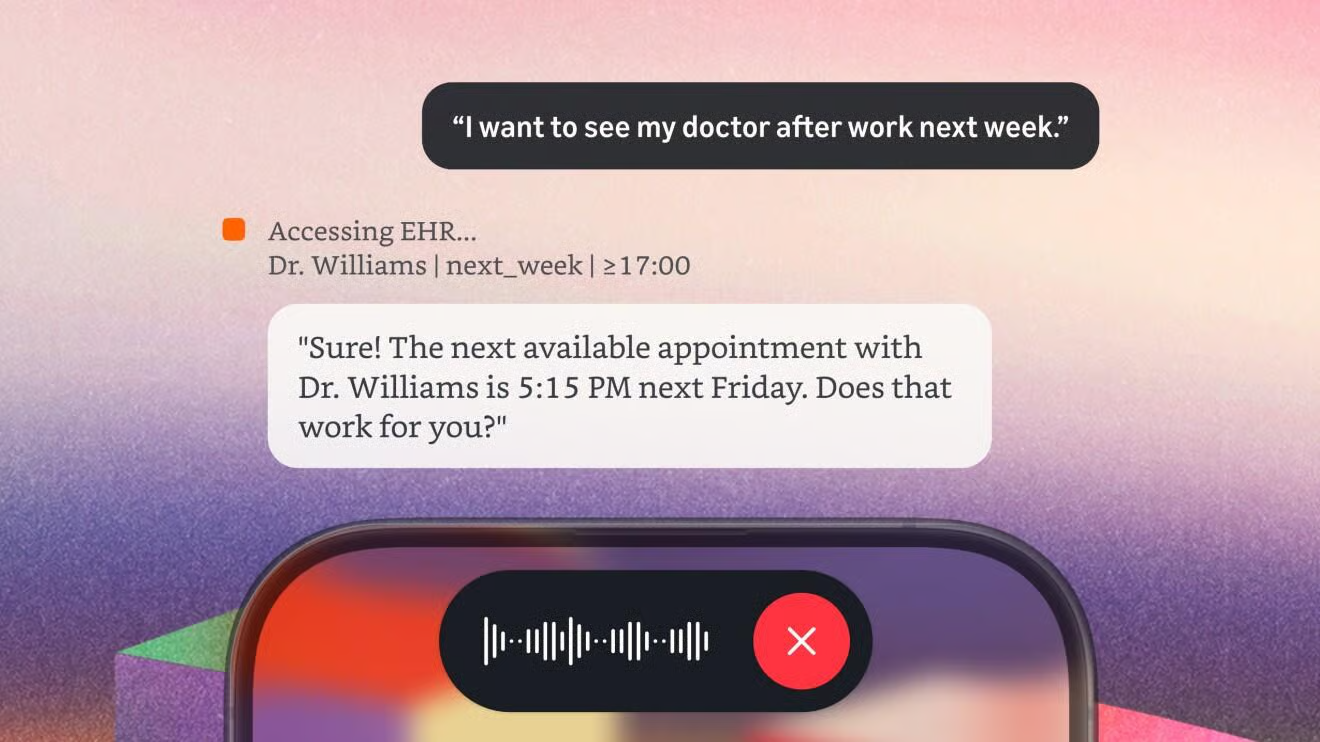
On November 23, Innovaccer said it had integrated Grok Voice into its Gravity Voice AI agents. The announcement is a model swap on the surface, but it says more about where the patient access market is going: voice agents are being judged less on how human they sound and more on whether they finish the task, inside the record, without creating new risk.
The voice is becoming a commodity. The record, the workflow and the escalation path are what buyers are really paying for.
In This Deep Dive
- Why this matters now
- What actually happened
- The obvious read versus the deeper signal
- Historical playbook
- The world forming around healthcare voice agents
- Category map and taxonomy
- Evidence Ladder
- Regulation: calls, privacy, disclosures and prior authorization
- Capital flows and bottom-up economics
- The HealthTech Investor's Signal
- Counter-thesis
- Forward Intelligence
- The Bottom Line for Health System Leaders and Investors
Why this matters now
Three things are converging. First, frontier speech models now offer full speech-to-speech conversation with low latency and tool use, which is what Innovaccer's release says Grok Voice provides: sub-second time to first audio, native tool use, more than 25 languages and HIPAA eligibility with a business associate agreement available.
Second, the volume is already there. Innovaccer says patient voice interactions on its platform grew from roughly 250,000 to more than 5 million in six months. Assort Health, a specialty-practice voice agent company, says it is built on 190 million specialty patient interactions. Sempre Health says it has handled more than 1.3 million patient support calls over a decade.
Third, buyers are under pressure to do more with the same staff. Innovaccer frames its pitch around that constraint: autonomous agents for work that should not require a human, and a clean escalation path for work that should.
What actually happened
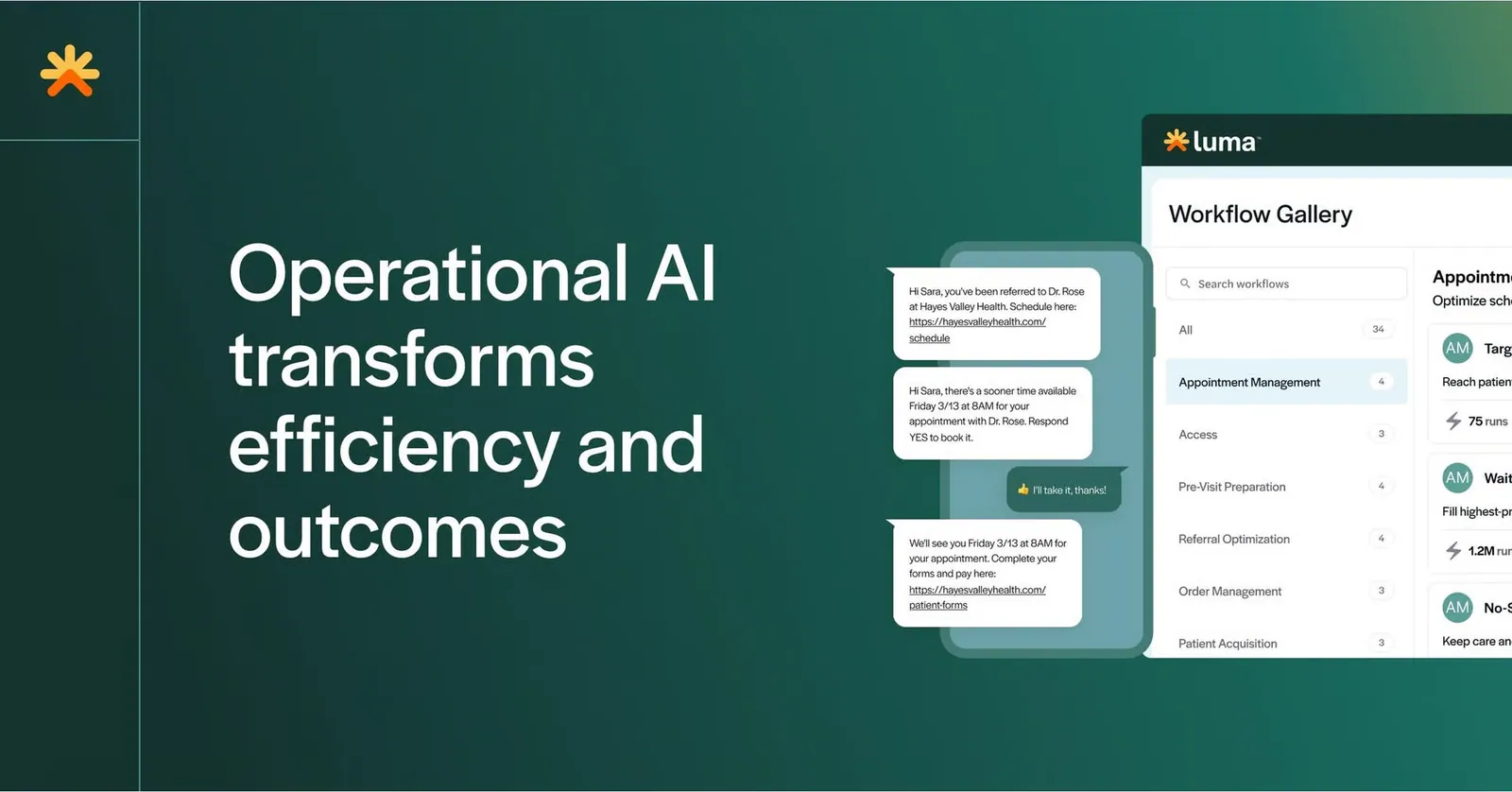
- The integration: Innovaccer added Grok Voice to Gravity Voice AI, its voice agent product for health systems, payers and care teams. The release says the agent with Grok Voice capabilities is available now.
- The use cases: Patient access and contact centre work (scheduling, rescheduling, referrals, prior authorizations, cancellations, routing), administrative work (refills, reminders, intake, follow-up), chronic care management check-ins and post-discharge follow-up, and quality gap closure outreach.
- The split: Innovaccer says software should handle the large majority of administrative conversations such as scheduling and refills, while clinical conversations keep a human in the loop.
- The roadmap: Innovaccer says it will later bring Grok models via API over unified healthcare data, with healthcare-specific training and evaluation on the joint roadmap after voice is live.
- The claims: More booked appointments, tripled referral intake and 90% lower documentation time per case, all company-reported.

The obvious read versus the deeper signal
The obvious read: A large health data company has plugged a frontier voice model into its call agents, so patient calls will soon be answered by software that sounds like a person.
The deeper signal: The model is the most replaceable part of the stack. What makes a call agent useful is whether it can read the right record, write back to the scheduling and referral systems, follow each organization's protocols and hand off cleanly when a call turns clinical. Innovaccer is betting that owning the unified patient record and the workflow layer matters more than owning the voice, and that it can swap models as they improve.
Historical playbook
Patient access automation has moved in waves. Interactive voice response trees came first and were widely disliked because they forced callers into menus. Online self-scheduling and patient portals followed, which moved some volume off the phone but left the hardest calls, the ones with exceptions, on it.
The current wave uses conversational AI that can hold an open conversation and act on systems. Sempre Health's history is a useful marker: it says it began automating pharmacy calls in 2018, received a patent in 2020 for navigating pharmacy phone trees, and by 2024 had AI agents holding full conversations with pharmacy staff. That is a six-year path from scripted automation to open conversation in one narrow workflow.
The lesson from earlier waves is that adoption followed reliability on the boring cases, not brilliance on the hard ones. Health systems kept the tools that worked every time on scheduling and dropped the ones that failed unpredictably.
The world forming around healthcare voice agents
The category now has at least three business models. Platform vendors such as Innovaccer sell voice as one module on a broader data and workflow platform. Specialists such as Assort Health sell an AI agents platform for the patient journey, and say they integrate natively with Epic and Athena. Managed service companies such as Sempre Health run the service on the customer's behalf and say they are accountable for results rather than selling a tool to configure.
Capital is flowing in. Assort raised $120 million at a $1.2 billion valuation in June 2026 and says it has raised more than $222 million in total. Innovaccer is positioning voice inside its broader Healthcare Autonomy Platform and names Orlando Health, Adventist HealthCare and Banner Health among organizations that trust it, although the release does not say which of them use voice agents.
The demand side is not only providers. Sempre's Atlas targets pharmaceutical hubs, health plans and PBMs, where the calls are about enrollment, benefits checks and prior authorization. That matters because the payer and pharmacy side of the call is often the slowest part of getting a patient onto therapy.
Category map and taxonomy
The table compares three approaches named in the sources with the staffed call centre baseline. Descriptions reflect company statements on the dates cited.
| Player or approach | Modality | Physical / commercial target | Clinical maturity | Regulatory pathway | Strategic moat | Key limitation |
|---|---|---|---|---|---|---|
| Innovaccer Gravity Voice AI with Grok Voice | Speech-to-speech agent on a unified patient record | Health systems, payers, care teams | Live; volume claims company-reported | Not a regulated device for administrative use | Own data and workflow platform | No independent outcome audit published |
| Assort Health | AI agents for the specialty patient journey | Multi-site practices, specialty groups, health systems | Live; company claims 5% appointment lift | Not a regulated device for administrative use | Specialty workflow model and EHR integrations | Claims not independently verified |
| Sempre Health Atlas | Managed AI voice service | Drugmakers, health plans, PBMs | Launched Nov 16, 2026; built on own program | Not a regulated device for administrative use | Relationships with 19 plans and PBMs, call data | Narrower use cases; new as a product |
| Staffed call centre (baseline) | Human schedulers and nurses | All | Standard practice | Not applicable | Judgment and empathy | Hiring, turnover and hold times |
Evidence Ladder
- Technical: The model can understand callers through noise, accents and interruptions and keep a multi-step workflow straight. Grok Voice claims cover this rung.
- Integration: The agent reads and writes to scheduling, referral and refill systems without manual rework. Innovaccer's unified record is its claim here.
- Operational: Completion rates by call type, escalation accuracy, abandoned calls and average handle time, measured at named sites against a baseline. Not yet published.
- Safety: Rates of missed urgent symptoms, wrong-patient actions and complaints on clinical calls, with human review of a sample. Not yet published.
- Financial: Measured staff time released, appointments filled and referral leakage reduced, audited by the customer. Not yet published.
Regulation: calls, privacy, disclosures and prior authorization
Automated calls in the United States sit under the Telephone Consumer Protection Act. In February 2024 the FCC ruled (FCC 24-17) that AI-generated voices count as an artificial or prerecorded voice under the TCPA, which means outbound calls that use them need the same consent as robocalls. Health systems running outbound reminders, follow-up or care gap campaigns should confirm their consent records cover AI voices, and apply the TCPA's healthcare exemptions only where they fit.
Privacy rules apply because the agent handles protected health information. A vendor that processes PHI for a covered entity is a business associate and needs a business associate agreement under HIPAA. Innovaccer's release says Grok Voice is HIPAA-eligible with a BAA available, which addresses the model layer. Buyers still need to check data retention, call recording and model training terms in each contract.
Some states require disclosure. California's Health and Safety Code section 1339.75, added by AB 3030, requires health facilities and practices that use generative AI to create patient communications about clinical information to include a disclaimer and instructions for reaching a human, unless a licensed provider reviews the message first. Voice agents that discuss clinical information with California patients fall into that scope.
Prior authorization is changing on the payer side. CMS's Interoperability and Prior Authorization Final Rule (CMS-0057-F) requires impacted payers to send decisions within 72 hours for expedited requests and seven calendar days for standard ones from January 2026, and to build prior authorization APIs by January 2027. As those APIs arrive, some calls that agents now place to payers may move to direct system connections.
Capital flows and bottom-up economics
The economics of voice agents rest on substitution and recovery. Substitution is staff time released from routine calls. Recovery is revenue that would otherwise be lost: unfilled appointment slots, referrals that leak to other systems and patients who give up on hold. Vendors tend to lead with recovery because it is larger and easier to attribute.
A simple illustrative model shows why. If a health system handles a large volume of calls a month and a meaningful share are routine scheduling and refill requests, every percentage point of calls completed without a human frees staff hours, and every appointment filled from a call that would have been abandoned adds visit revenue. The model is illustrative, not a vendor figure; the inputs must come from each system's own call data.
Pricing in the category is rarely disclosed. Innovaccer did not publish a price. Buyers should ask whether contracts charge per minute, per completed task or per seat, because each structure rewards different behaviour. Per-task pricing aligns best with outcomes but needs an agreed definition of completed.
Institutional hubs and buyer dynamics
The buyer inside a health system is usually patient access or the contact centre, with IT, compliance and nursing involved for clinical calls. Integrated data platforms have an advantage when the CIO already owns the relationship. Specialists have an advantage when a service line, such as orthopaedics or ophthalmology, wants a fast deployment.
On the payer and pharmacy side, the buyers are hub service providers, plan member services and PBM operations. Sempre's pitch is that these organizations do not want another tool to manage; they want calls handled. That managed service model shifts risk to the vendor but also concentrates it.
📈 The HealthTech Investor's Signal
For investors the question is where value accrues as speech models improve and get cheaper. If the voice layer commoditizes, value moves to companies that own proprietary interaction data, deep system integration and accountability for outcomes. Innovaccer's choice to plug in an external model and focus on the record supports that view. Assort's emphasis on a specialty model built on 190 million interactions is a bet that domain data is a moat too.
No stock picks. Watch for disclosed per-task pricing, published completion and escalation rates, and customer renewals as the signals that separate durable vendors from demos.
Counter-thesis
The counter-thesis is that patients do not want to talk to software about their health, and that a few bad calls will set the category back. A voice agent that mishandles a chest pain call or books the wrong patient creates harm that no efficiency gain offsets. Health systems may also find that the hard calls, the ones with exceptions, are most of the cost, and that agents mainly handle calls that self-scheduling already handled.
There is also concentration risk. If one vendor runs scheduling, referrals, refills and outreach across a system, a model change or outage touches every patient interaction at once. Buyers should treat model swaps, like the one Innovaccer announced, as change events that need regression testing.
Forward Intelligence
- Whether Innovaccer names health systems using Grok Voice and publishes completion and escalation rates by call type.
- Whether any health system publishes a before-and-after audit of call abandonment, hold time and patient complaints after deploying a voice agent.
- Whether payers build CMS-0057-F prior authorization APIs on time in January 2027, which would shift some agent-to-payer calls to direct system connections.
- Whether state laws beyond California add disclosure rules for AI voices in patient communication.
- Whether pricing in the category moves from per minute to per completed task.
The Bottom Line for Health System Leaders and Investors
What changed this week is that a large health data platform put a frontier voice model inside agents that already handle millions of patient calls. The market signal is that the voice is now a replaceable component, and that the vendors who own the record, the workflow and the escalation path will compete on finished tasks.
What remains uncertain is evidence. Health system leaders should ask for audited completion and escalation rates, consent records that cover AI voices, and regression testing for every model change. Investors should treat the 5 million interactions and the outcome figures as company claims until customers publish their own numbers.
Sources
- Innovaccer: Innovaccer Expands Gravity Voice AI with Grok Voice for Autonomous Patient Engagement (Nov 23, 2026) (Tier 1, primary)
- Innovaccer: Voice AI agents product page (Tier 1, company)
- Assort Health: Assort Health Raises $120 Million Series C (Jun 24, 2026, corrected release) (Tier 1, company)
- Sempre Health: Sempre Health Launches Atlas, an AI Voice Service for Life Science Hubs, Payers, and PBMs (Nov 16, 2026) (Tier 1, company)
- FCC Declaratory Ruling FCC 24-17 on AI-generated voices under the Telephone Consumer Protection Act (Feb 8, 2024) (Tier 1, regulator)
- CMS: Interoperability and Prior Authorization Final Rule (CMS-0057-F) fact sheet (Tier 1, regulator)
- HHS: Sample business associate agreement provisions under HIPAA (Tier 1, regulator)
- California Health and Safety Code section 1339.75 (AB 3030, generative AI patient communications) (Tier 1, statute)