A cardiologist at a large academic hospital has a question that only a decade of patients can answer: which of the people who came in with a minor rhythm abnormality ten years ago went on to have a cardiac arrest, and what did their records look like before it happened? The answers already exist inside the hospital. They are spread across free-text notes, ECG waveforms, imaging archives, lab systems and biobank freezers, in formats that were never designed to be read together. Turning them into something a researcher can query is slow, expensive and full of privacy risk.
That is the problem nference and Cedars-Sinai say they will solve together. On November 20, the two announced a long-term collaboration to build a secure research platform on more than a decade of records from over 5 million patients. Below we set out what was agreed, how this kind of deal works, who earns and who carries the risk, which rules apply, and what health system leaders and investors should ask before treating it as a template.
The free story is a research partnership. The world around it is a quiet contest over who builds, runs and profits from the data inside academic medical centers.
In This Deep Dive
- Why this matters now
- What actually happened
- The obvious read versus the deeper signal
- Historical playbook
- The world forming around health system research data
- Category map and taxonomy
- Evidence Ladder
- Regulation: HIPAA de-identification, research oversight and the European comparison
- Capital flows and bottom-up economics
- The HealthTech Investor's Signal
- Counter-thesis
- Forward Intelligence
- The Bottom Line for Health System Research Leaders and Health Data Investors
Why this matters now
Health systems are sitting on the most detailed longitudinal record of human disease that exists, and most of it is unusable for research in its raw form. Notes are unstructured, imaging and waveforms sit in separate archives, and every query that touches identifiable data raises consent and privacy questions. Large language models and multimodal AI have changed the cost of reading that material, which is why academic medical centers are now signing multi-year infrastructure deals rather than one-off data projects.
At the same time, the buyers of research-grade real-world data have multiplied. Drug developers use it for trial design, safety studies and evidence for regulators and payers, and AI developers need it to train and validate models. A platform that can turn a health system's records into curated, de-identified, multimodal research data is therefore valuable to the institution, to its investigators and to industry partners at once. Each of those groups has different interests in how the platform is governed.
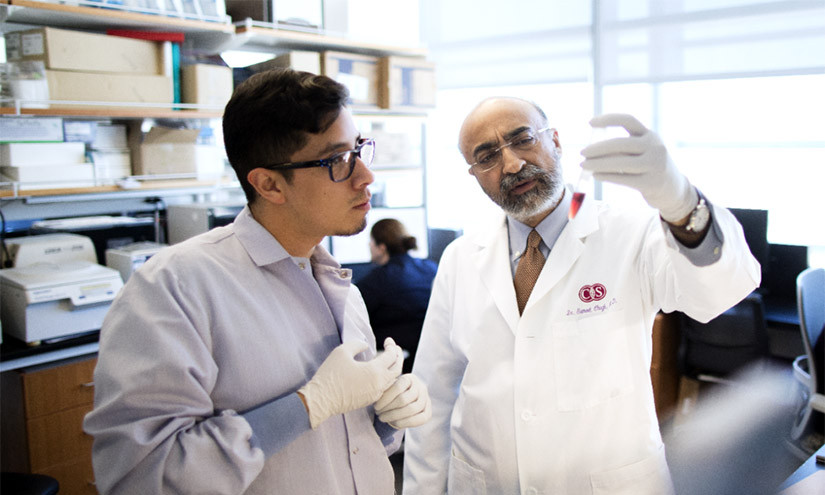
Cedars-Sinai is also a meaningful signal on its own. It created the role of vice dean and chief artificial intelligence health research officer in 2025, appointing Sumeet Chugh, MD, a heart rhythm researcher, to oversee the translation of AI research into clinical trials and patient care, according to its newsroom. This deal is one of the first visible outputs of that strategy.
Certainty: (A) deal terms and the Cedars-Sinai appointment are from the nference release and the Cedars-Sinai newsroom; (B) the description of buyer demand is our interpretation.
What actually happened
- The agreement: nference announced a long-term strategic collaboration with Cedars-Sinai to establish a secure platform that will help investigators analyze de-identified and multimodal clinical data. The release is datelined Los Angeles and Cambridge, Massachusetts, November 20, 2026.
- The data: More than a decade of longitudinal records from over 5 million patients, with frequent refreshes as routine care continues. Modalities named: clinical notes, laboratory results, medications, diagnostic reports, radiology and pathology imaging, genomic information, patient-consented biospecimens, electrophysiology waveforms, vitals and flowsheets. nference calls the result a living knowledge kernel.
- The technology: nference will architect the platform using its federated software, which it says protects patient privacy, harmonizes multimodal data and supports longitudinal curation with physician adjudication.
- The uses: Investigator-led studies, grant-funded research, education, quality improvement and collaboration with life science industry partners, plus a foundation for Cedars-Sinai researchers and affiliated innovators to develop and evaluate new AI models, with potential to inform drug discovery, clinical trial design and future diagnostics.
- The people: Sumeet Chugh, MD, vice dean and chief artificial intelligence health research officer at Cedars-Sinai, said he expects the collaboration to give clinicians and scientists new ways to learn from the collective experience of patient care and help validate scientific hypotheses. Venky Soundararajan, Ph.D., described in the release as founder and co-CEO of nference (the company's site lists him as co-founder and chief scientific officer), described the goal as a foundation for whole-body spatial intelligence.

Certainty: (A) every item above is from the nference release of November 20, 2026, the Cedars-Sinai newsroom or nference's own site. Financial terms, contract length and launch date were not disclosed.
The obvious read versus the deeper signal
The obvious read: A well-known AI company signed another hospital partner. On this reading, the news is a customer win for nference and a modernization project for Cedars-Sinai, and the right response is to wait for studies.
The deeper signal: The more important point is the operating model. In this arrangement the health system keeps the records and the governance, and a vendor builds and runs the machinery that turns them into research-ready data across many institutions. nference lists long-term partnerships of this kind with Mayo Clinic, Duke Health, Vanderbilt University Medical Center, Emory Healthcare, Banner Health, Mercy Health and Rush University System for Health. Adding Cedars-Sinai extends a network in which each partner's data stays local but the curation methods, software and, potentially, industry relationships are shared. Whoever controls that layer shapes what research gets done, who can access it and how the value is split.
Certainty: (B) evidence-based interpretation; the partnership list is from nference's release, but the terms of each partnership are not public.
Historical playbook
The closest precedent is nference's own history with Mayo Clinic, the first name on its partner list. That relationship showed the pattern that later deals have followed: a vendor embeds its de-identification and curation tools inside an academic center, the center keeps control of the data, and the output supports both internal research and industry collaborations. nference's site also shows the other half of the model, venture creation. It lists Anumana, which develops AI for electrocardiograms, and Pramana, a digital pathology company it says is now part of Evident, as companies built on its platform.
The wider lesson from health data businesses is that the data rarely becomes the moat on its own. The durable advantage has tended to come from curation quality, from the trust of the institutions that hold the data and from the workflows that keep the data refreshed. Projects that tried to move hospital data into a single central repository have repeatedly run into consent, governance and public trust problems. Federated designs, where analysis travels to the data rather than the other way round, are a direct response to that history.
The world forming around health system research data
Several credible actors are moving in the same direction from different starting points. Health systems have formed their own data company in Truveta, which pools de-identified records from member systems. Epic offers Cosmos, a de-identified dataset drawn from Epic customer organizations that opt in. TriNetX runs a federated network of healthcare organizations that is widely used for trial feasibility and real-world studies. Large academic centers such as Mayo Clinic have built their own data platforms and partner programs. nference's approach sits between these: a vendor that operates inside each institution rather than pooling records in one place.
On the demand side, nference itself shows how the data is used. Its site describes a collaboration with Novo Nordisk on cardiometabolic disease and a federated program it calls the Metabolic Agentic Intelligence Atlas, or MAIA, which it says draws on the de-identified care patterns of over 30 million patients to study GLP-1, GIP and other incretin therapies. That is the kind of question life science companies will pay to answer, and it is why the phrase collaboration with life science industry partners in the Cedars-Sinai release matters.