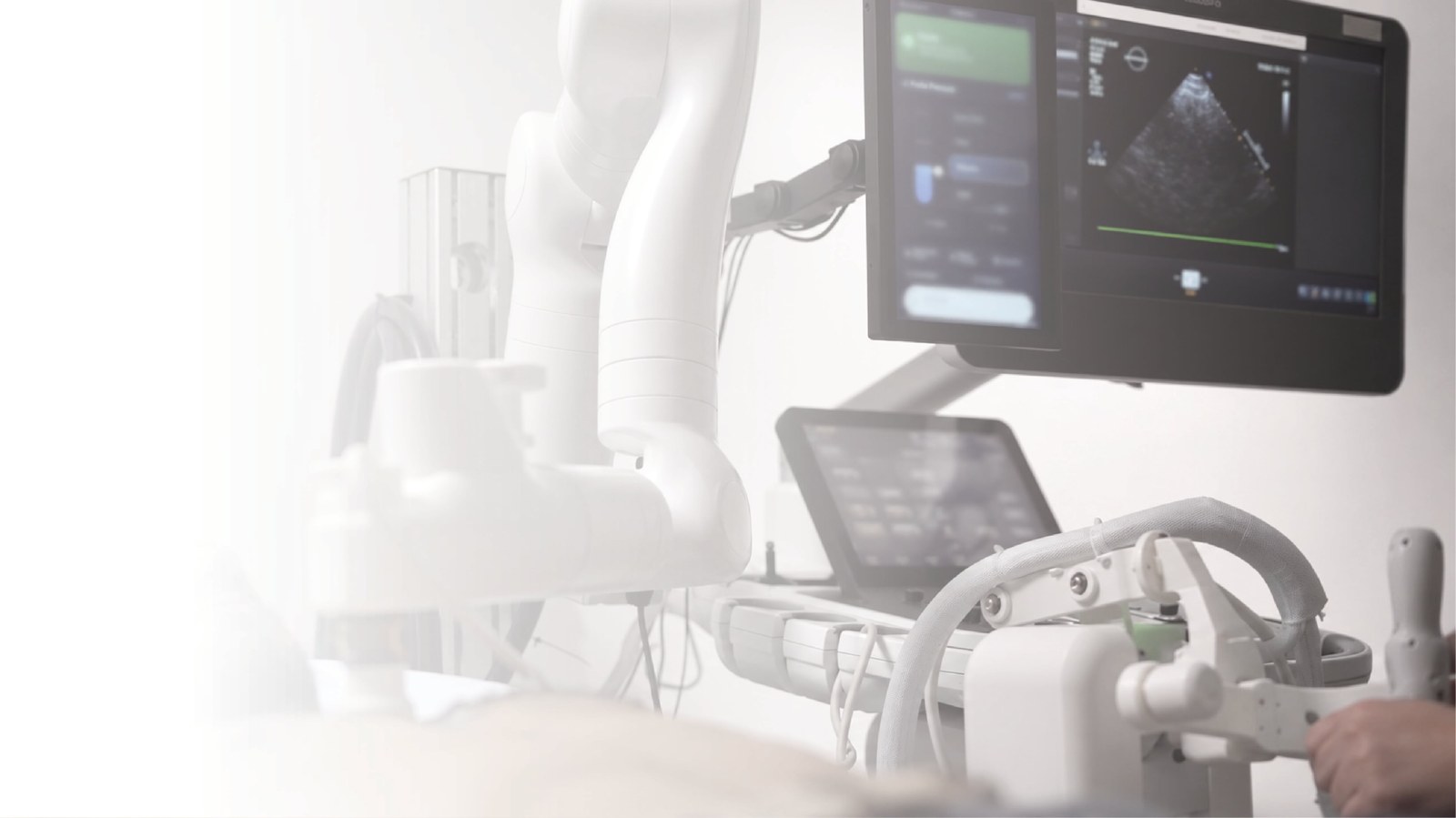
An echocardiogram can take most of an hour. For much of it, the sonographer leans across the patient with an arm extended, pressing the transducer into the chest at a fixed angle while adjusting settings with the other hand. Do that several times a day for twenty years and the shoulder, neck and wrist pay for it. When an experienced sonographer cuts back hours, the echo lab loses capacity that takes years to rebuild.
On November 23, Apricity Robotics announced a $16.1 million Series A to finish a robot that takes over the physical part of the job. The robot holds and moves the probe; the sonographer directs the scan and makes the clinical calls. It is a narrow idea, and that is what makes it interesting.
Apricity is not trying to replace the sonographer. It is trying to keep the sonographer in the job.
In This Deep Dive
- Why this matters now
- What actually happened
- The obvious read versus the deeper signal
- Historical playbook
- The world forming around ultrasound capacity
- Category map and taxonomy
- Evidence Ladder
- Regulation: device classification, the FDA pathway and AI features
- Capital flows and bottom-up economics
- The HealthTech Investor's Signal
- Counter-thesis
- Forward Intelligence
- The Bottom Line for Imaging Leaders and Investors
Why this matters now
Ultrasound is the most hands-on modality in imaging, as Apricity's founder put it, and it is growing. Apricity cites U.S. ultrasound exam volume growth of 55% between 2011 and 2021 against 44% growth in the number of sonographers. It also cites a 2024 study that estimated 75.8% of sonographers have experienced work-related musculoskeletal disorders.
The consequences reach beyond staffing. Apricity's release points out that an unfilled sonographer position can leave an exam room idle and lengthen waits, and that differences in technique between sonographers show up as variation in image quality and measurements. A system that holds the probe steadily could, in principle, make acquisition more repeatable.
The investor list matters too. Orlando Health Ventures and University Hospitals Ventures are the venture arms of health systems that run echo labs, which makes them both investors and likely early customers.
What actually happened
- The round: $16.1 million Series A led by JumpStart Ventures, with private funds advised by The O.H.I.O. Fund, Orlando Health Ventures, JobsOhio Ventures, University Hospitals Ventures and others. Total raised is $19.1 million including seed funding and National Science Foundation grants.
- The use of funds: Complete development of the Robotic Ultrasound Assistant hardware and software, including ergonomic, image-quality and AI capabilities; expand clinical evaluations with health system partners; support regulatory submissions; make key hires and build commercial infrastructure.
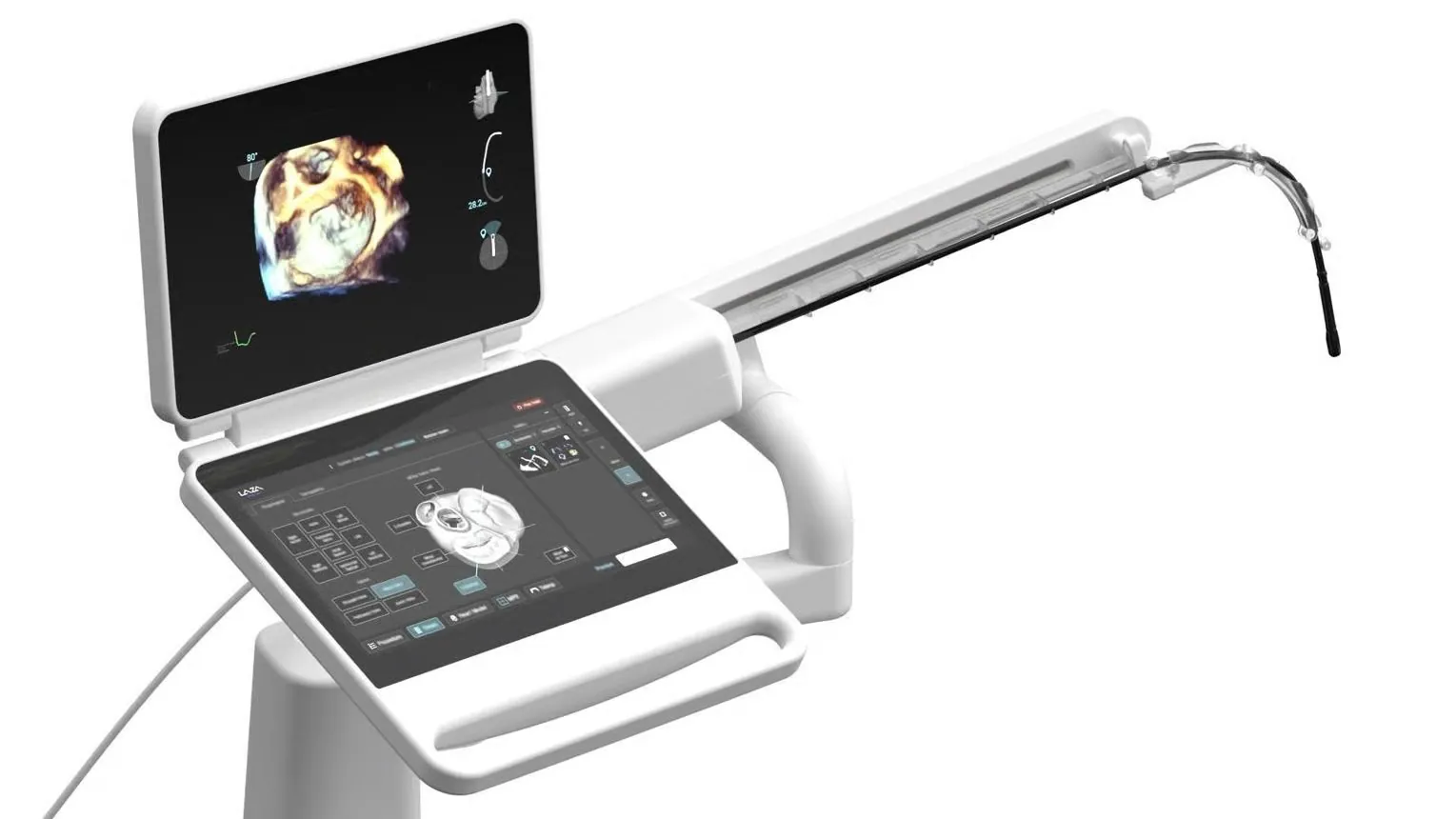
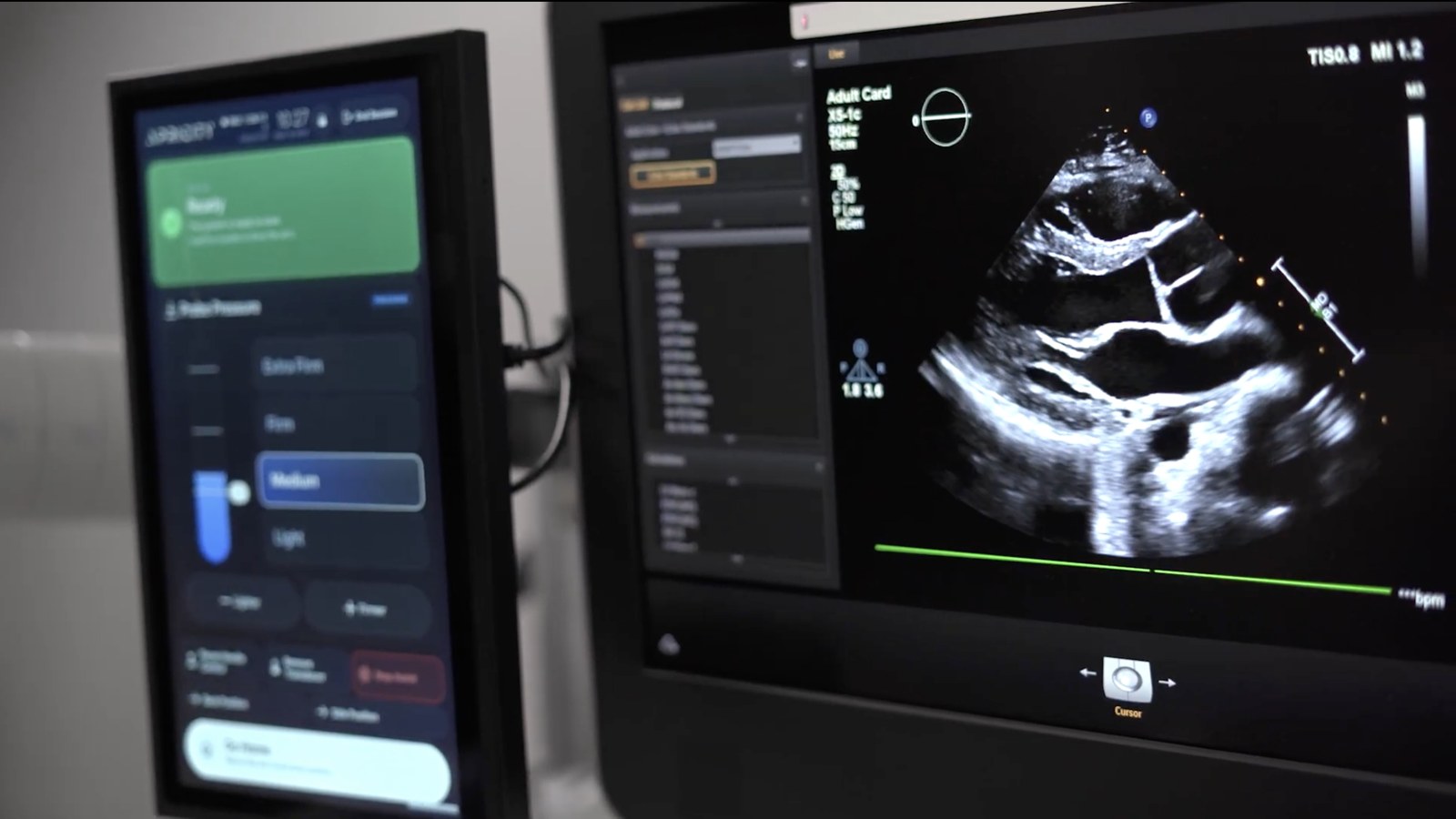
- The device: Mounts on existing ultrasound carts from any manufacturer, holds and manipulates the probe under the sonographer's direction, beginning with cardiac imaging. The website describes robotic assistance and intelligent view finding.
- The status: Investigational; not available for sale in the United States; not FDA-cleared, per the release and website.

The obvious read versus the deeper signal
The obvious read: Robots are coming for ultrasound, and imaging departments will soon run echo labs with fewer sonographers.
The deeper signal: The product is designed to keep the sonographer at the centre, so the near-term value is retention and consistency, not headcount reduction. That makes the business case harder to model, because the savings show up as fewer injuries, fewer departures and steadier image quality rather than fewer salaries. It also lowers the regulatory and clinical risk, because the human still makes every clinical decision.
Historical playbook
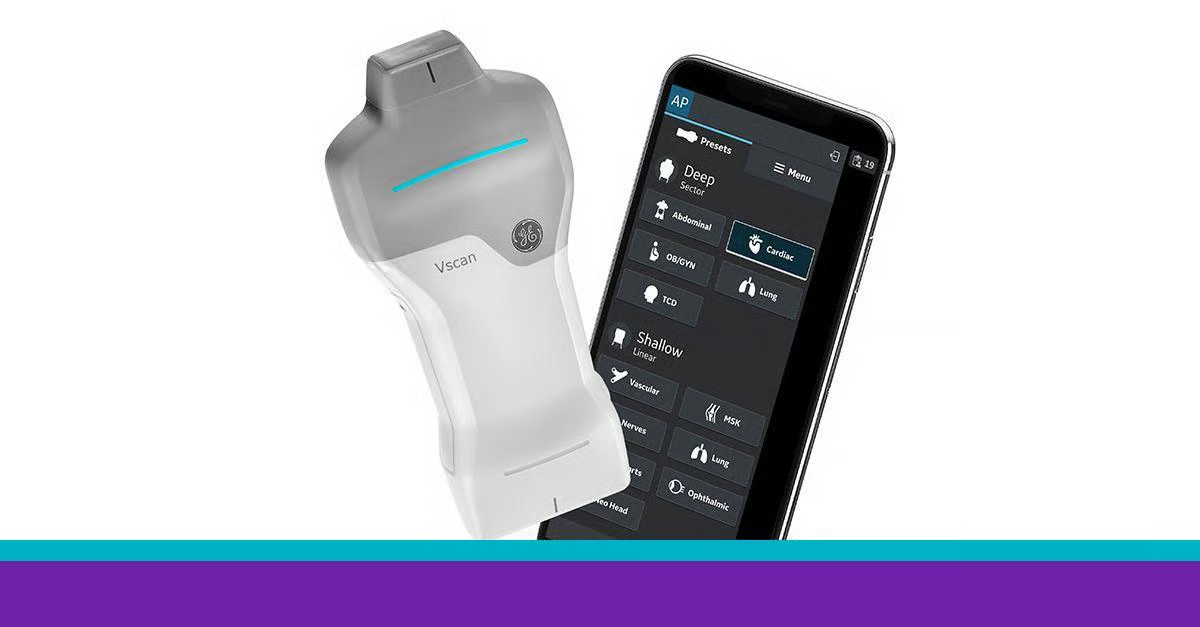
Efforts to widen ultrasound access have taken three broad routes. The first is making the device cheaper and smaller: handheld systems such as Butterfly Network's ultrasound-on-chip probes and Exo's silicon-based platform. The second is guiding less experienced users with software: in February 2020 the FDA authorized the first cardiac ultrasound software that uses AI to guide the user to capture diagnostic-quality images, through the De Novo pathway, for Caption Health's product.
The third route is robotics, which has mostly been explored for remote or tele-operated scanning. Apricity is taking a different robotic angle: the sonographer is in the room, and the robot replaces the sustained physical effort rather than the expert.
The history suggests each route solved a different constraint. Handhelds lowered cost, AI guidance lowered the skill barrier, and none removed the physical strain of long diagnostic exams on the specialists who do most of them.
The world forming around ultrasound capacity
The same week brought a second ultrasound access bet. On November 19, Exo announced an $11.6 million Gates Foundation grant to develop an affordable, multi-use handheld ultrasound system with on-device AI that guides acquisition and interpretation for frontline workers in low and middle-income countries. CEO Sandeep Akkaraju said the platform is designed for communities with limited access to imaging and specialist expertise.
Exo and Apricity address opposite ends of the same problem. Exo is trying to put ultrasound in places that have no sonographer. Apricity is trying to protect the sonographers that busy hospitals already have. Both reflect the fact that ultrasound demand is rising faster than the trained workforce.
AI is also spreading through imaging more broadly. Of the 1,610 devices on the FDA's AI-enabled device list (content current as of September 4, 2026), 1,228 sit in the radiology panel. Most of those are software that reads images. Apricity's bet is on the acquisition step, where the physical work happens.
Category map and taxonomy
The table compares Apricity with other approaches to ultrasound capacity named in the sources. Status is as reported on the dates cited.
| Player or approach | Modality | Physical / commercial target | Clinical maturity | Regulatory pathway | Strategic moat | Key limitation |
|---|---|---|---|---|---|---|
| Apricity Robotics (Robotic Ultrasound Assistant / SOLACE) | Robotic probe holder on existing carts | Hospital echo labs, starting with cardiac | Investigational; University Hospitals evaluation | Not yet submitted; pathway not disclosed | Cart-agnostic design, health system investors | No published clinical data yet |
| Exo handheld platform | Silicon ultrasound with on-device AI | Frontline workers, low and middle-income countries | Grant-funded development | Not stated for the new system | Silicon imaging hardware | New device still in development |
| AI acquisition guidance (Caption Health, FDA 2020) | Software guiding probe placement | Less experienced users | Authorized by FDA in 2020 | De Novo | First authorized in category | Does not remove physical strain |
| Manual scanning (baseline) | Sonographer holds probe | All settings | Standard practice | Not applicable | Expert skill and judgment | Injury rates and workforce supply |
Evidence Ladder
- Engineering: The robot holds the probe at the right pressure and angle, moves smoothly under direction and works across cart makers. This is what the Series A will finish.
- Usability: Sonographers can direct the robot without slowing the exam, and say it reduces strain. The University Hospitals study is the first test.
- Image quality: Images and measurements acquired with the robot match or beat manual scans, with less variation between operators.
- Safety and regulation: Safe force limits, fail-safes and an FDA marketing authorization for the intended use.
- Economics: Measured gains in throughput, fewer injuries and better retention that justify the capital and service cost to a hospital.
Regulation: device classification, the FDA pathway and AI features
Apricity's system is investigational and not cleared by the FDA. The release says the funding supports regulatory submissions but does not name a pathway. In general, a device that is substantially equivalent to a legally marketed predicate goes through a 510(k) premarket notification, while a novel low to moderate risk device without a predicate can use the De Novo classification request, as Caption Health's AI guidance software did in 2020.
Because the robot applies force to the patient through the probe, FDA review will focus on force limits, stability, emergency stops and the interaction between operator and machine. Any AI features for view finding or image quality, which Apricity's website mentions, will also be reviewed as device software functions.
Payment is unlikely to change. An echocardiogram is billed the same way whether a person or a robot holds the probe, so the return to a hospital must come from throughput, staff retention and avoided injury costs rather than a new code.
Capital flows and bottom-up economics
A $16.1 million Series A is sized to finish development and run early evaluations, not to launch commercially at scale. With $19.1 million raised in total, Apricity will likely need further capital for manufacturing, a commercial team and post-clearance studies. That is our inference; the company did not give a timeline.
The bottom-up economics for a hospital will rest on three inputs: how many more exams a lab can run per day if sonographers tire less, how many injury-related absences and departures are avoided, and the price and service cost of the robot. None of these is public yet. An illustrative model should be built from each lab's own volume, overtime and turnover data.
Investor mix is a signal. Two health system venture arms and Ohio economic development funds sit alongside JumpStart Ventures. That gives Apricity clinical partners for evidence and early sales, but strategic investors may also expect preferential terms.
Institutional hubs and buyer dynamics
The first buyers are likely to be large cardiac imaging departments with high echo volumes and staffing pressure, such as those run by the health system investors. The decision will involve the echo lab director, the imaging service line, biomedical engineering and occupational health.
Sonographer acceptance will decide adoption. A tool that sonographers see as protecting their careers will spread; one that they see as a step toward replacing them will meet resistance. Apricity's messaging is clearly aimed at the first reading.
📈 The HealthTech Investor's Signal
For investors, robotic ultrasound is an early category with a clear problem and unproven economics. The near-term milestones to price are the University Hospitals results, the regulatory submission and the first paid deployment. Exo's grant and the steady flow of imaging AI clearances show capital interest in ultrasound access more broadly.
No stock picks. Watch for published usability data, the regulatory pathway and any disclosed pricing as the signals that the category can move from pilots to purchases.
Counter-thesis
The counter-thesis is that hospitals will not buy capital equipment to solve an ergonomic problem when cheaper fixes exist: better scanning tables, support arms, shorter protocols, more staff and handheld devices for simpler exams. A robot also adds setup time, a service contract and a new failure mode in a busy lab.
There is also a clinical question. Expert sonographers adjust pressure and angle continuously in response to what they see. If a robot slows that feedback loop, image quality may drop on difficult patients, which are the cases where strain is highest.
Forward Intelligence
- Whether the University Hospitals study reports sonographer strain, exam time and image quality against manual scanning.
- When Apricity files with the FDA and which pathway it uses.
- Whether Orlando Health or University Hospitals commit to deployments beyond evaluation.
- Whether other ultrasound makers partner with or build competing probe-holding systems.
- How Exo's grant-funded handheld system progresses, as a measure of capital flowing to ultrasound access.
The Bottom Line for Imaging Leaders and Investors
What changed this week is that a robotic ultrasound company raised a Series A with two health system venture arms on the cap table, aimed at the physical strain that wears out sonographers. The market signal is that ultrasound capacity is now a funded problem from both ends: cheaper devices for places without sonographers and robotic help for places that have them.
What remains uncertain is evidence and economics. Imaging leaders should ask for usability, image quality and throughput data from the University Hospitals study before committing. Investors should treat the workforce figures as context and wait for the first clinical data and FDA submission to price the opportunity.
Sources
- Apricity Robotics: Apricity Announces $16.1 Million Series A Funding to Bring Robotic Assistance to Diagnostic Ultrasound (Nov 23, 2026) (Tier 1, primary)
- Apricity Robotics: SOLACE product site (Tier 1, company)
- Exo: Exo Receives $11.6 Million Grant to Expand Access to AI-Powered Ultrasound (Nov 19, 2026) (Tier 1, company)
- FDA: FDA authorizes marketing of first cardiac ultrasound software that uses artificial intelligence to guide user (Feb 7, 2020) (Tier 1, regulator)
- FDA: Artificial Intelligence-Enabled Medical Devices list (content current as of Sep 4, 2026) (Tier 1, regulator)
- FDA: Premarket Notification 510(k) (Tier 1, regulator)
- FDA: De Novo Classification Request (Tier 1, regulator)