Voice Is a Vital Sign Now? What DETECT-HF Proves and What It Does Not

Dr. Dereck Mush, MD, MBAThe Daily SignalNovember 9, 2026
PLUS: CMS Writes Software Payment and Remote Monitoring Guardrails Into the 2027 Rules

Good morning, HealthTech insiders. 24 days. That's how early a smartphone voice test flagged heart failure events in DETECT-HF, presented Sunday at the American Heart Association Scientific Sessions. But there's a catch: the study's sensitivity confidence interval fell just below its prespecified target.
The same meeting delivered OptimPacing, a trial stopped early after left bundle branch pacing outperformed conventional pacing. Meanwhile, CMS finalized its 2027 Medicare rules, giving medical software a dedicated payment category and remote monitoring providers more time to adapt.
Today's Signal is about three forces converging: clinical evidence, medical devices and reimbursement. The opportunity is growing, but so are the questions.
In today's Signal:
Voice AI: Cordio Medical's HearO detected 68.4% of first heart failure events in DETECT-HF, averaging 24.1 days of advance warning.
Medicare: CMS introduces Software as a Medical Service (SaMS), delays remote monitoring staffing restrictions until 2029 and cuts the non-APM conversion factor to $32.63.
Cardiac devices: OptimPacing stops early after left bundle branch pacing reduces the four-year primary outcome rate to 8.5%, versus 19.2% with conventional pacing.
Plus: Conflicting smartphone cardiac arrest results, Omada's raised revenue outlook and an EHR alert that nearly doubles heart failure prescribing.
We gave GPT-6 Astra the same job twice: analyze 100 sales calls and draft the follow-ups, once in Ask Attio and once in ChatGPT.
Ask Attio finished in 4 minutes 49 seconds. ChatGPT took 26 minutes 11 seconds, about 5.4 times as long.
The most ambitious GTM work requires more than frontier intelligence. It requires architecture that can put that intelligence to work at scale.
LATEST DEVELOPMENTS

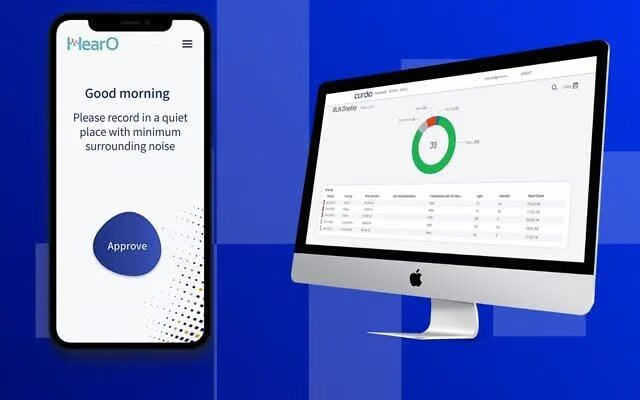
Cordio's HearO uses daily voice recordings to monitor heart failure. Image: Cordio Medical.
On November 8, investigators led by William T. Abraham, MD, presented DETECT-HF at the American Heart Association Scientific Sessions, with simultaneous publication in JACC: Heart Failure. The prospective, international, multicenter, single-arm, blinded study asked 563 patients with symptomatic chronic heart failure to record six prespecified sentences on their smartphones every day. Cordio Medical's HearO system analyzed the recordings, but the analysis did not influence care.
The details:
Detection: HearO identified 52 of 76 first heart failure events (68.4% sensitivity), averaging 24.1 days before presentation. However, its 95% confidence interval (58.0%-78.9%) missed the prespecified 60% lower-bound target.
Performance: The system generated 2.65 unexplained alerts per patient-year, achieved 85% daily adherence and scored 4.7-4.9/5 for usability, with no device-related adverse events.
Limitations: DETECT-HF measured detection, not hospitalization prevention. HearO holds FDA Breakthrough Device Designation but is not authorized for marketing.
The Signal: Voice monitoring offers a remarkably low-friction way to track patients. But early detection only matters if clinicians can intervene effectively. Cordio's next challenge is proving that responding to these alerts improves outcomes and deserves reimbursement.

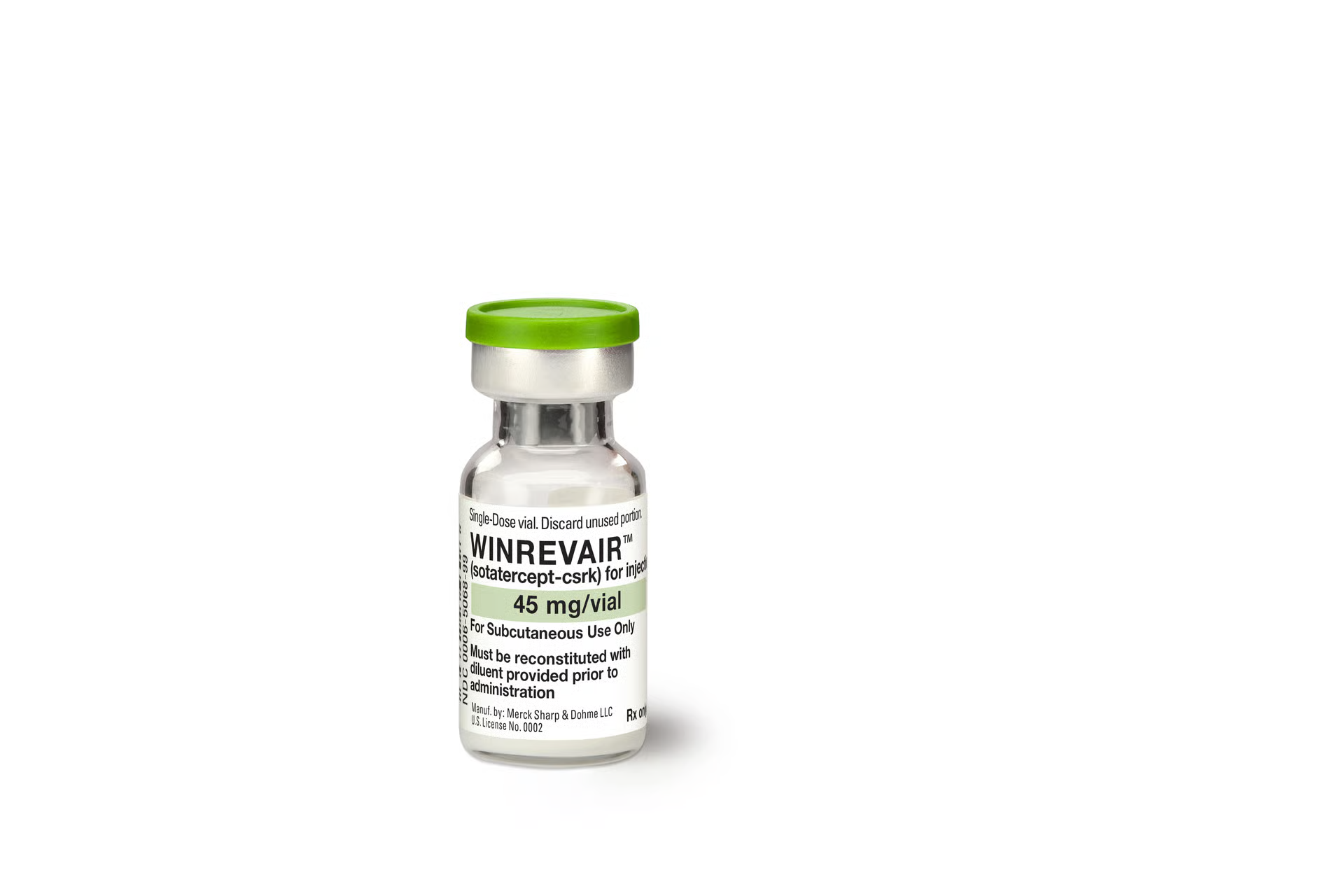
CMS introduces a dedicated Medicare payment category for medical software in 2027. Image: CMS.
CMS's finalized 2027 Medicare rules mark a significant shift for digital health reimbursement. Released November 4, the physician fee schedule and hospital outpatient rules introduce three important changes:
The details:
Software: A new Software as a Medical Service (SaMS) category and O1 payment indicator under OPPS, initially using rates aligned with 2026.
Remote monitoring: Contractor-staffing restrictions for RPM and RTM are delayed until January 1, 2029. Other requirements, including an initiating visit and established-patient limits for RTM, begin in 2027.
Physician payment: The non-APM conversion factor falls 2.31% to $32.63, while the qualifying APM factor drops to $32.95.
The Signal: Software now has a clearer place in Medicare reimbursement, although its long-term payment model remains unsettled. Remote monitoring vendors gain two years to adjust staffing arrangements, but other compliance changes arrive much sooner.

OptimPacing found fewer cardiac events with left bundle branch pacing. Illustration: © American Heart Association.
Presented November 8 at the AHA Scientific Sessions and published in NEJM, the OptimPacing trial compared left bundle branch pacing with conventional right ventricular pacing in heart block patients. The trial stopped early after showing superior outcomes.
The details:
Results: Among 702 patients across 17 centers, the four-year primary outcome occurred in 8.5% with left bundle branch pacing versus 19.2% with conventional pacing (HR 0.41).
Clinical benefit: Pacing-induced cardiomyopathy fell from 11.7% to zero, while heart failure hospitalizations were 1.5% versus 2.9%. Mortality remained similar (7.4% versus 7.7%).
Limitations: Early termination may overstate benefits, and the trial used a single lead type. Larger studies are needed before guideline changes.
The Signal: Conduction system pacing is strengthening its case for first-line use, particularly among patients requiring substantial pacing. Device manufacturers now face growing opportunities in specialized leads, delivery systems and clinician training. Broader evidence and updated guidelines remain the next hurdles.
QUICK HITS
DETECT-HF to an outcomes test: We're watching whether Cordio files with FDA on these data, whether a randomized trial tests clinician response to voice alerts, and how competing voice programs report results on the same endpoints. The decisive evidence is fewer hospitalizations, not earlier flags.
CMS 2027 rules in operation: We're watching OPPS comments through January 4, 2027, which HCPCS codes land in the new O1 status indicator, whether CMS clarifies the long-term SaMS payment method, and how remote monitoring vendors restructure contractor-staffed models ahead of January 1, 2029.
OptimPacing after publication: We're watching guideline committee responses to the 2023 recommendations, lead choices beyond the single lead type used in the trial, whether longer follow-up confirms the cardiomyopathy gap, and whether the survival numbers separate as events accrue.
The deals:
Granit: €5M funding round, including €3.5M in equity led by Seedcamp and €1.5M in non-dilutive funding, to scale AI agents automating healthcare administration.
Octo Health: $3.2M pre-seed round led by 3xP Global to expand its AI-powered personal health platform following its US beta launch.
Omada Health: Raised 2026 revenue guidance to $344M-$346M following strong quarterly growth.
The pattern: Capital is flowing toward AI-powered healthcare operations and scalable digital health platforms. With CMS introducing new software payment categories, investors are increasingly focused on solutions with measurable value and clearer reimbursement pathways.
HLTH USA 2026: November 15 to 18, 2026 · The Venetian Expo, Las Vegas, NV
The nearest large U.S. digital health gathering after this issue, useful for hearing how health systems, payers and AI vendors react to the new CMS software and monitoring rules.
ViVE 2027: March 14 to 17, 2027 · Music City Center, Nashville, TN
A U.S. health tech meeting on the other side of the CMS January 1 effective date, useful for early reads on how SaMS and remote monitoring policies shape buying.
Digital Health Rewired 2027: March 16 to 17, 2027 · Hall 2, The NEC, Birmingham, UK
The main UK and NHS-focused digital health event of the spring, for readers tracking how European health systems approach AI monitoring and remote care..
athenahealth Sage in athenaOne. On November 4, athenahealth expanded its AI assistant Sage, which has handled over 110,000 patient chart queries. New capabilities include payment posting (beta), value-based care analytics (alpha) and an AI clinical inbox in development.
Kontakt.io KIO Clinic. Launched November 4, KIO Clinic uses AI to track exam room utilization and patient flow without tagging patients. It also integrates staff safety and asset tracking to help clinics optimize capacity without expanding facilities.
Attuned Coverage. Launched November 5, this AI voice and chat platform simplifies Medicaid enrollment and renewals while allowing navigators to support multiple patients. OCHIN, serving over 47,000 clinicians, will be its first network partner. Applications receive human review before submission.
Octo Health. An AI-powered platform combining medical records, lab results and biomarkers into one health timeline. Launched its US beta on November 5 after raising $3.2 million in pre-seed funding led by 3xP Global. Testing starts at $149, with memberships from $9 monthly. Founded by CEO Catarina Kemper, the platform does not provide diagnoses.
Granit. Paris-based startup using AI agents to automate healthcare billing, claims and administrative tasks. Announced €5 million in funding on November 5, including €3.5 million led by Seedcamp. Founded in March 2026, it serves over 250 French healthcare organizations and claims up to 90% less time spent on administrative work.
HOPPR. Chicago-based medical imaging AI company that launched its FS MSK Whole-Body Narrative Model in beta on October 28. Trained on approximately 674,000 imaging studies, it generates draft findings for musculoskeletal X-rays. The developer-focused model is not FDA cleared or approved for diagnostic use.
Voice Is a Vital Sign Now? What DETECT-HF Proves and What It Does Not. How voice biomarkers compare with weight and other remote monitoring, how to read a confidence interval that missed its target, and where the evidence still has to go before a payer pays.
Software Gets a Payment Name: SaMS, RPM and the 2027 Medicare Rules. What the new SaMS status indicator and the 2029 staffing delay mean for digital health vendors, and the gaps CMS left open.
The Pacemaker Gets Physiological: OptimPacing and the Conduction System Race. What stopped early, what the trial shows about pacing-induced cardiomyopathy, and how device makers and guidelines will respond.
Which shift from this issue should HealthTech leaders prepare for first over the next year? |
A voice test that flags decompensation weeks early, a payment rule that finally names software, and a pacemaker technique that stopped a trial because it was working. None of those is a finished story. DETECT-HF did not clear its own sensitivity bar and cannot yet show that acting on alerts prevents hospitalization, SaMS is an interim policy, and OptimPacing improved heart failure outcomes more than survival in an early-stopped, single-lead trial.
The tension we are watching is whether evidence, payment and workflow can meet at the same patient. If your organization monitors heart failure, builds clinical software or implants pacemakers, which of those three is your team instrumented to test this quarter?
How did we do today? |
See you tomorrow,
Dr. Dereck Mush, MD, MBA
The HealthTech Signal is independently funded. Sponsorships help us invest in better reporting, research, and a stronger newsletter for our readers. Want to reach HealthTech founders & executives while supporting the Signal? Get in touch.
Was this email forwarded to you? Sign up here.
Until tomorrow,
The HealthTech Signal

Dr. Dereck Mush, MD, MBA

Dr. Dereck Mush, MD, MBAKeep exploring