A primary care physician finishes the last visit of the day and opens the inbox. There are lab results to explain, refill requests, a question about a rash that really needs a visit, and a message from a family member asking about a parent. None of this work is scheduled, most of it is not billed, and much of it lands after clinic hours.
On November 16, Commure announced that it had acquired Elaborate, a company built to take that inbox off clinicians. The deal is small in headline terms because no price was disclosed, but it points at a larger question: who gets to own the work that follows each visit, and how should hospitals test the software that claims to do it?
Note-taking was the first clinical workflow to be automated at scale. The inbox is the next one, and it has the harder safety problem.
In This Deep Dive
- Why this matters now
- What actually happened
- The obvious read versus the deeper signal
- Historical playbook
- The world forming around the clinician inbox
- Category map and taxonomy
- Evidence Ladder
- Regulation: information blocking, payment and AI disclosure
- Capital flows and bottom-up economics
- The HealthTech Investor's Signal
- Counter-thesis
- Forward Intelligence
- The Bottom Line for Health System Leaders and Investors
Why this matters now
Portal messaging has grown much faster than visits. A JAMA analysis of Epic Cosmos data covering about 8 billion encounters, more than 139 million active patients, more than 2,000 hospitals and 47,000 clinics found that patient-authored messages rose from 0.99 to 2.50 per active patient per year between 2020 and 2025. That is an increase of 153%. Over the same period office visits rose from 2.37 to 2.77 per patient, up 17%, and telephone encounters fell from 2.33 to 2.20, down 6%. Messages sent by clinicians and staff rose 24%, from 4.59 to 5.70.
Those numbers explain the commercial interest. A message is a unit of work with a clinician attached to it, and it arrives at a growth rate that staffing plans did not assume. Health systems have tried to manage it with message pools, triage nurses, and delayed release of results. Software that sorts and answers a share of the volume is an obvious next step.
It also matters for what a health system can safely automate. A refill request has a protocol. A message that says a patient feels dizzy does not. The value of any inbox product depends on how reliably it tells the two apart.
What actually happened
- The deal. Commure, which describes itself as the agentic platform for healthcare, acquired Elaborate on November 16. Terms were not disclosed. Elaborate is available today to health systems and practices on its own or alongside Commure's ambient documentation, coding and revenue cycle products.
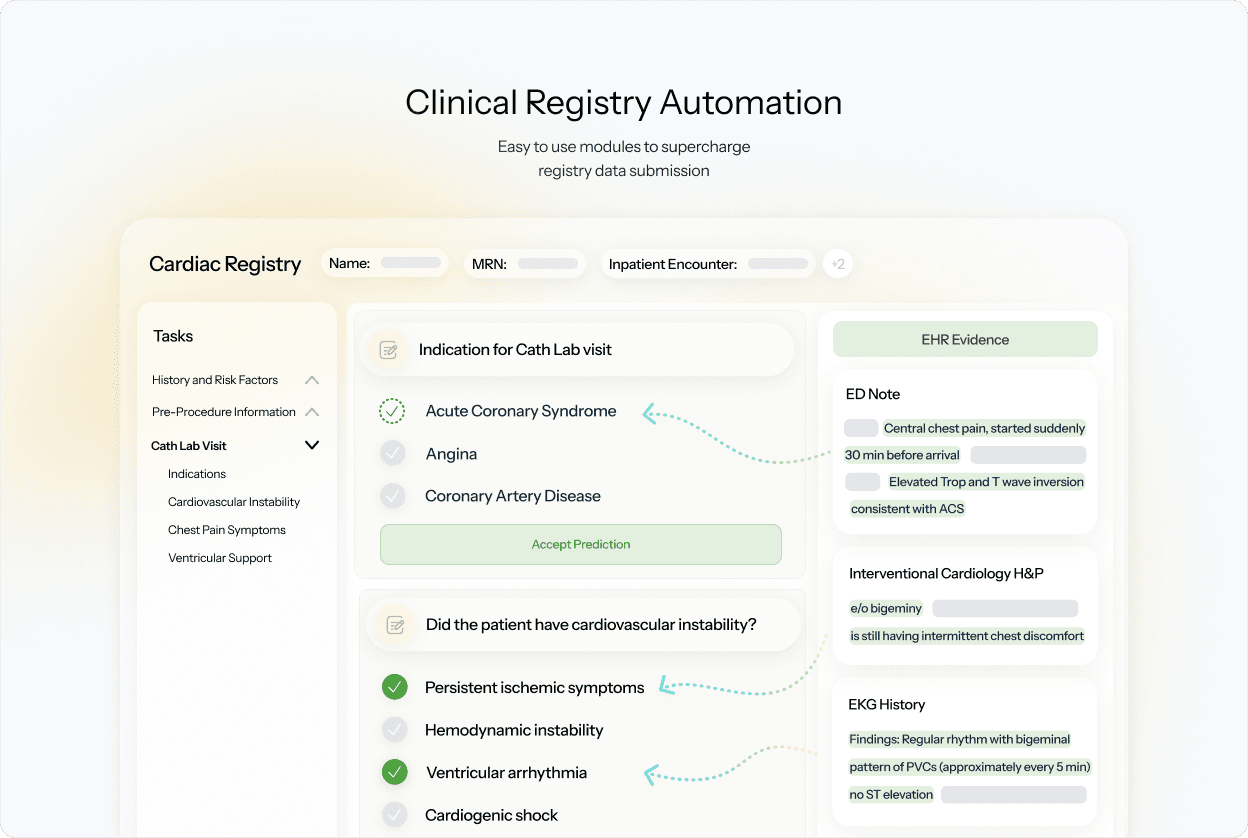
- The product. Elaborate works inside the EHR under protocols that each organization's clinicians control. Commure says it helps patients understand their care before they write in, routes arriving messages to the right member of the care team and automates key clinically informed workflows.
- The claims. Commure reports that health systems using Elaborate have seen up to 36% less time in the inbox, a 15% reduction in patient message volume and 97% clinician alignment with automation. The release does not name the systems or the measurement method.
- The positioning. Tanay Tandon, Commure's co-founder and CEO, said Commure runs tens of millions of appointments a year and that the combined agents can reach tens of thousands of active clinicians from day one. Nicole Bocskocsky, Elaborate's founder and CEO, said the team set out to cure the inbox.

The obvious read versus the deeper signal
The obvious read: Commure bought a feature to complete its suite of intake, calls, notes, coding and denials, and it will now sell the inbox as one more agent.
The deeper signal: The inbox sits between the visit and the next one, which means it is where documentation, access, billing and clinical risk meet. Whoever controls it controls a view of what patients actually ask, and a place to measure whether automation changes outcomes. That makes it strategic data as much as a time saver.

Historical playbook
Clinical documentation went through a similar sequence. First came dictation and templates, then scribes, then ambient AI that listens to the visit and drafts the note. Each step moved work from the clinician to a cheaper layer, and each step created a market for vendors that could prove time saved. The inbox is following the same path, with one difference. A note is written about a visit that already happened. A reply goes to a patient who is waiting for it.
Regulation and payment also shaped the inbox. The 21st Century Cures Act information blocking rules, which took effect on April 5, 2021, pushed health systems to release finalized test results to patients at the same time as clinicians, with narrow exceptions for individualized harm decisions. That change created more messages from patients who read results before anyone explained them. CMS had already begun paying in 2020 for patient-initiated online digital evaluation through codes 99421 to 99423, but those codes require clinician evaluation and do not cover scheduling or result delivery, so most inbox work remains unpaid.
The world forming around the clinician inbox
Several kinds of vendor now compete for the same minutes. EHR vendors offer built-in drafting and sorting tools. Ambient scribe companies are extending from the visit into the follow-up. Call center and portal agents handle access requests. Elaborate and Commure aim to sit in the middle with protocol-driven automation that clinicians configure.
Elaborate's own customer material shows how this sells. On February 2, 2026, Community Health Network announced an expanded partnership across more than 900 clinicians, framing the inbasket as one of healthcare's largest hidden cost centers. That is a systemwide, protocol-based pitch rather than a drafting tool for individual clinicians, and it is the model Commure now owns.
Category map and taxonomy
The table groups the main approaches to the clinician inbox by mechanism. Cells describe categories, not individual product claims, except where the company has published them.
| Player or approach | Modality | Physical / commercial target | Clinical maturity | Regulatory pathway | Strategic moat | Key limitation |
|---|---|---|---|---|---|---|
| Protocol-driven inbox automation (Elaborate, now Commure) | Rules and protocols set by clinicians, applied by software inside the EHR | Message volume and clinician inbox time | Company-reported reductions; no independent audit published | Workflow software; FDA oversight depends on whether it makes clinical decisions | Organization-specific protocols plus Commure distribution | Safety evidence is company-held |
| EHR-native drafting and sorting | Generative drafting of replies inside the EHR inbox | Clinician time per message | Varies by vendor and site | Part of EHR platform; state disclosure laws apply | Default placement in the clinician workflow | Clinician still reads and edits each draft |
| Ambient scribe extensions | Visit audio converted to notes, extended to follow-up tasks | Documentation and after-visit work | Widely piloted for notes; inbox use is newer | Workflow software; privacy and consent rules apply | Already inside the exam room | Inbox is outside their original data flow |
| Access and call center agents | Voice and chat agents for scheduling and routing | Front-door requests before they become messages | Deployed in access workflows | Telephone and consumer protection rules; disclosure laws | Integration with scheduling | Cannot answer clinical questions |
| Staffed message pools | Nurses and staff triage by hand | Safe handling of every message | Long-standing practice | Standard of care and state licensure | Clinical judgment | Expensive and hard to scale with volume |
Evidence Ladder
- 1. Mechanism. Does the product follow written protocols that clinicians approve, and can the health system see which rule fired for each message?
- 2. Local validation. Has it been tested on the buyer's own message mix, including the rare messages that signal real risk?
- 3. Workflow outcomes. Is there independent measurement of inbox time, after-hours work and message volume before and after go-live?
- 4. Safety. Are missed urgent messages, wrong routings and patient complaints tracked and reported, and who audits them?
- 5. Economics. Does saved time convert into capacity, such as more visits or less overtime, and is there a payment path for the work that remains?
Regulation: information blocking, payment and AI disclosure
Three rules shape the market. The information blocking regulations under the Cures Act mean results generally reach patients when they reach clinicians, which keeps message volume high. Medicare's online digital evaluation codes pay only for patient-initiated evaluation and management by a clinician, not for sorting or scheduling, so automation of unpaid work has no direct revenue offset. And California's AB 3030, in effect since January 1, 2025, requires health facilities, clinics and physician offices to disclose when generative AI produced patient communications containing clinical information, unless a licensed provider reviewed them.
The exemption for provider review is important for design. A product that drafts for clinician approval sits on one side of that line. A product that replies to patients on its own sits on the other and would need the disclosure. Other states are likely to follow with their own wording, so national vendors will need to configure disclosure by state.
Whether a given automation counts as a regulated medical device depends on its function. Software that only sorts and routes administrative content is treated differently from software that makes patient-specific clinical recommendations. The Commure release does not describe a regulatory status for Elaborate, and we have not assumed one.
Capital flows and bottom-up economics
Commure did not disclose a price, so nothing in the deal tells us what Elaborate was worth. The more useful economic frame is the buyer's. A message pool with staff time attached has a visible cost, and a reduction of 15% in message volume or up to 36% in inbox time would be material if it held across a large health system.
The sum is easy to illustrate with a labeled example. Suppose a clinic group receives 100,000 patient messages a year and automation prevents or absorbs 15% of them. That is 15,000 messages that no clinician or nurse has to handle. This is an illustrative calculation, not a reported result, and the saving depends on how long each message takes and who would have handled it.
Buyers should also ask where the vendor's revenue comes from. Commure sells ambient documentation, coding and revenue cycle products, and Elaborate is available alone or as an add-on. A health system that already buys Commure products may get the inbox as an extension. A system that does not will be asked to adopt a platform.
Institutional hubs and buyer dynamics
The first buyer is the chief medical information officer, who owns the clinician experience and the inbox policy. The second is the chief operating officer or ambulatory executive, who owns staffing and access. The third is compliance and legal, who will ask about AI disclosure, audit trails and patient safety reporting.
Elaborate had built relationships with systems such as Community Health Network before the deal. The continuity of those customers is the first practical test for Commure: whether they stay, expand and allow the results to be published.
The HealthTech Investor's Signal
Investors should read the deal as consolidation of agent categories under platform vendors. Intake, phones, notes, coding, denials and now the inbox are all being sold as agents on one data model. That favors companies with distribution into large health systems and puts pressure on single-feature startups. It does not tell us whether the inbox agent earns a separate budget line.
The watch items are customer retention, attach rates and published outcomes. No stock picks follow from one undisclosed acquisition.
Counter-thesis
The first objection is safety. An inbox contains messages that signal real harm, and a system tuned to reduce volume can miss them. The release reports 97% clinician alignment with automation, but alignment with an automated action is not the same as the rate of missed urgent messages.
The second objection is that reducing message volume may not reduce workload. If patients are helped before they write in, they may still call, and staff may shift to other tasks. Time saved on paper can disappear into other work unless the organization changes staffing or scheduling.
The third is that the inbox may be a symptom. Patients write because access is hard or results arrive without explanation. A tool that reduces messages without fixing the underlying access problem may only hide demand.
Forward Intelligence
- Whether Commure publishes named customer results or an independent evaluation of Elaborate's safety and time savings.
- How many Elaborate customers continue after the acquisition and whether Commure bundles the product into its ambient and revenue cycle contracts.
- State disclosure rules for AI-generated patient communications beyond California.
- Competing announcements from EHR vendors and ambient scribe companies extending into the inbox.
The Bottom Line for Health System Leaders and Investors
What changed this week is that a platform vendor with large appointment volume bought a specialist in the clinician inbox. The market signal is that the inbox is now a product category with its own buyers, and it will be sold both alone and as part of a bundle.
What remains uncertain is evidence. Health system leaders should ask for local validation, tracking of missed urgent messages and clear disclosure terms before adding any inbox automation. Investors should treat the 36%, 15% and 97% figures as company claims until independent data appears.
Sources
- Commure: Commure Acquires Elaborate to Cure the Clinician Inbox (Nov 16, 2026)
- Molina and Ross, JAMA: National Trends in Patient Messaging, The Growing Electronic Inbox (Jul 21, 2026), discussing Long et al.
- Elaborate: Community Health Network Expands Partnership Across 900+ Clinicians (Feb 2, 2026)
- CMS: Medicare telemedicine health care provider fact sheet (online digital evaluation codes)
- ONC: Information blocking FAQ on releasing test results through the patient portal
- California Health and Safety Code section 1339.75 (AB 3030, generative AI patient communications)