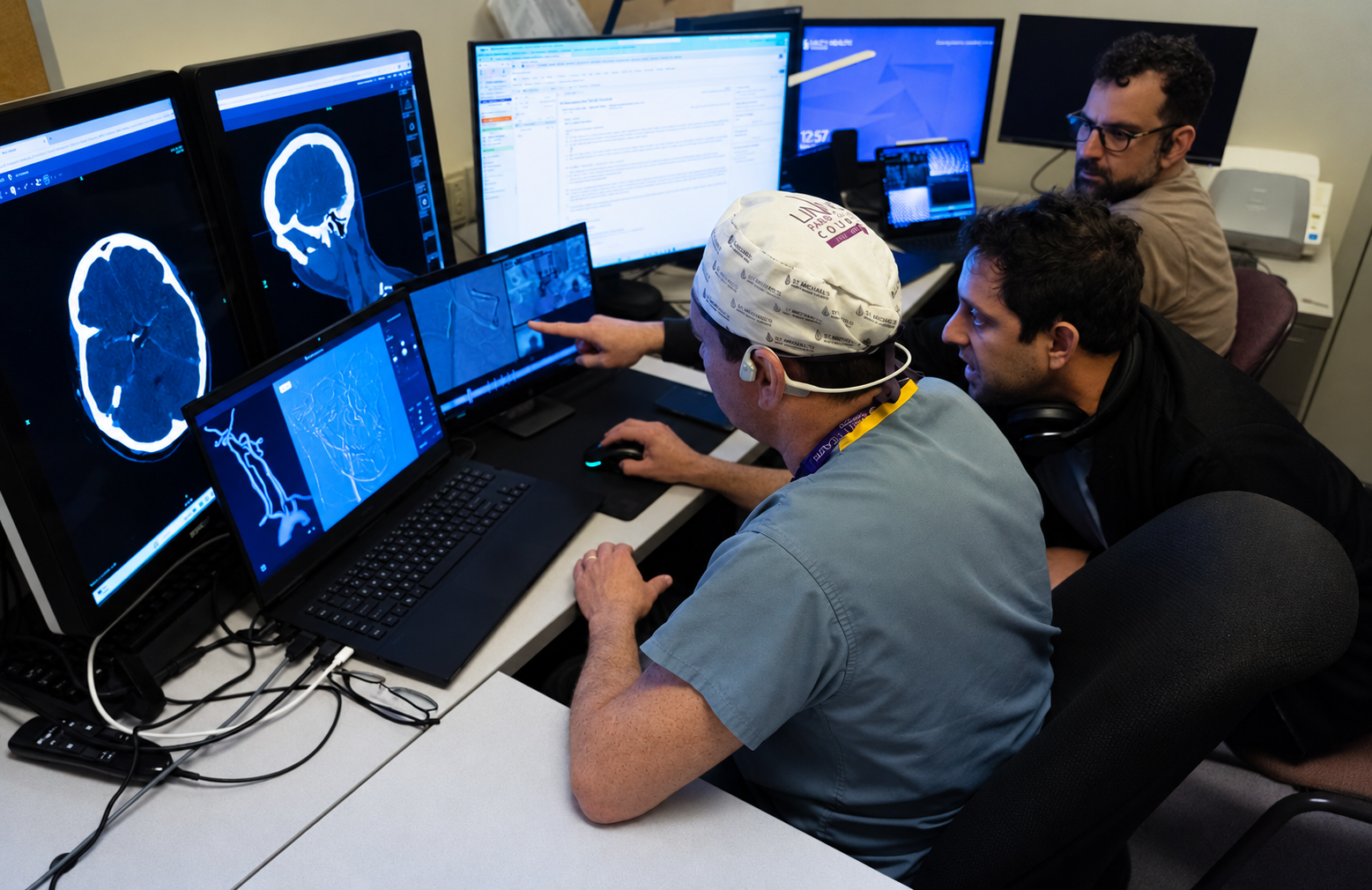
A man in his sixties arrives at a community hospital with sudden weakness on one side. A scan shows a large clot in a brain artery. The treatment that works best, mechanical thrombectomy, needs a specialist who may be hours away and a team that the hospital does not have. The patient is transferred, and each hour of delay costs brain tissue.
That access gap is the argument behind Remedy Robotics, which announced a $62 million Series B on November 16. The company wants a robot to perform, or help perform, endovascular procedures wherever the patient is. The round does not prove the robot works at scale. It pays for the trial that would start to show whether it does.
Remedy has raised money to find out whether a robot can bring thrombectomy to places that lack a specialist. A pivotal trial, not a funding round, will answer that.
In This Deep Dive
- Why this matters now
- What actually happened
- The obvious read versus the deeper signal
- Historical playbook
- The world forming around robotic thrombectomy
- Category map and taxonomy
- Evidence Ladder
- Regulation: investigational status, FDA pathways and cross-border operation
- Capital flows and bottom-up economics
- The HealthTech Investor's Signal
- Counter-thesis
- Forward Intelligence
- The Bottom Line for Hospital Leaders and Investors
Why this matters now
Mechanical thrombectomy removes a clot from a brain artery using a catheter and is the best treatment for the most severe ischemic strokes. The difficulty is who can do it. The MT-GLASS survey, run through the Mission Thrombectomy 2020+ network across 75 countries, received 887 responses from 67 countries. The median global access rate was 2.79%. It was below 1.0% in 18 countries, or 27%, and zero in seven, or 10%. Low-income countries had 88% lower access than high-income countries. Operator availability was 16.5% of the optimal level and center availability was 20.8%.
Remedy cites a similar figure of 2.8% in its release. Its October 2025 partnership announcement with SVIN Mission Thrombectomy added that only one-third of Americans have access to thrombectomy without delay. Those are the numbers that justify a robot: if the limiting factor is the number of trained operators, a remote or autonomous system could widen the pool.
The same logic applies to cardiac and peripheral procedures, which the N1 is designed to address in later stages. Stroke comes first because the time pressure is greatest and the access gap is largest.
What actually happened
- The round. Remedy raised $62 million in Series B funding led by DCVC. New investors include UC Investments, the University of California's investment office, Skip Capital and Hostplus, which the release calls one of Australia's largest pension funds. Existing investors Build Collective by Tony Fadell, Blackbird, Divergent Capital and KdT Ventures increased their stakes.
- The plan. Funds will support a planned pivotal clinical trial in partnership with the University of California, advancement toward FDA approval for neurovascular intervention, and deployment of prototype N1 Systems across Remedy's clinical partners, including SVIN Mission Thrombectomy and the Australian Stroke Alliance.
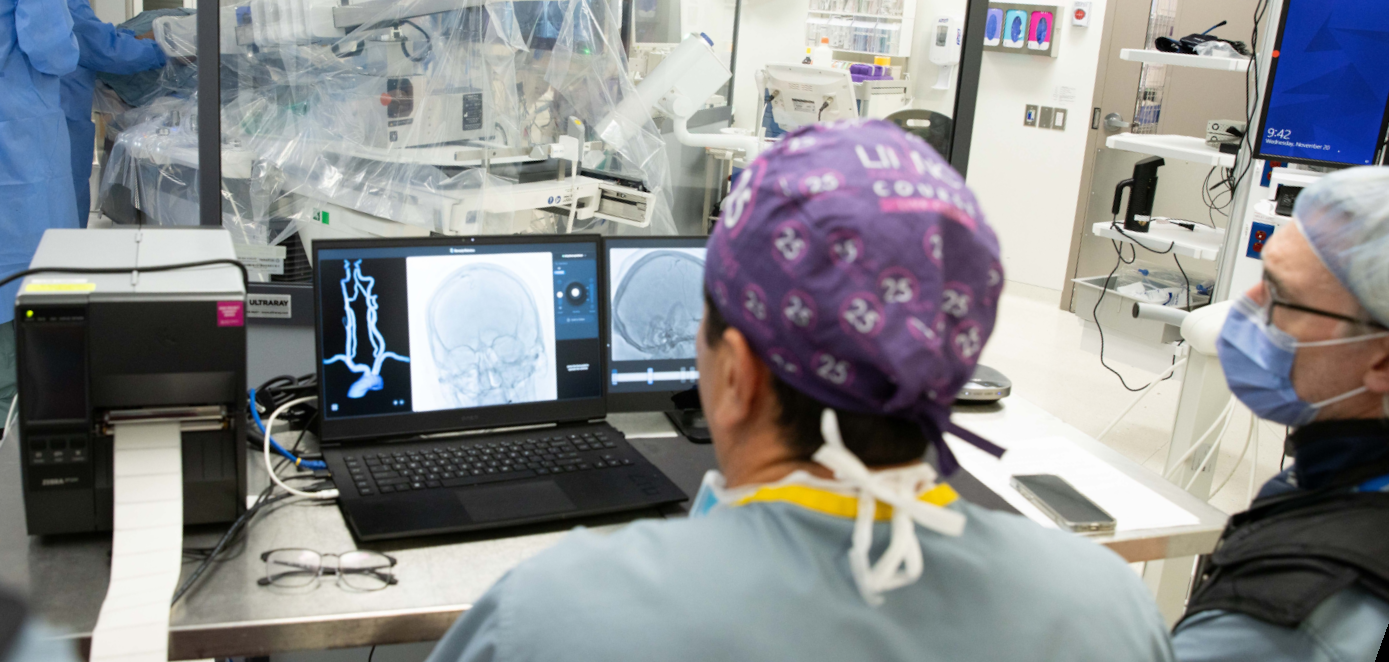
- The system. The N1 is a robotic platform and software suite that uses machine learning to analyze preoperative imaging, simulate cases in advance, provide real-time 3D-2D image registration and complete entire endovascular procedures robotically. It is designed for on-site, remote or autonomous operation.
- The status. The release states that the N1 System is under development and not available for sale or clinical use in any jurisdiction. Remedy says it works with more than 100 hospitals, holds 48 patents and announced the world's first remote neurointerventional procedures with the N1 in October 2025.

The obvious read versus the deeper signal
The obvious read: A well-funded robotics company is closing in on remote stroke treatment, and a robot will soon let a distant specialist operate at a rural hospital.
The deeper signal: The round buys a trial, not a launch. The deciding questions are regulatory and operational: what endpoints satisfy the FDA, who is on site when a remote operator is not, who pays for the system and how hospitals without any neurointerventionalist would staff and credential it. The robot addresses one constraint, the operator, while the others remain.
Historical playbook
Remote surgery has a long record of promise and slow adoption. Telesurgery over long distances was demonstrated decades ago, but hospital adoption depended on reliable networks, clear liability and payment, none of which arrived together. Robotic surgery became commercial through on-site systems that surgeons control in the same room, and its growth came from established procedures with clear reimbursement.
Endovascular robotics followed a similar path. Early systems assisted with catheter handling in the same room as the operator, mostly for cardiac and peripheral work. The shift Remedy proposes is bigger: remote and eventually autonomous procedures for emergencies where the operator may be far away. That moves the technology from an operator convenience to a change in who can deliver care, which raises the evidence bar.
The world forming around robotic thrombectomy
Remedy is not alone. Medical Device Network reported on September 11, 2026 that XCath Robotics' Iris system had received FDA breakthrough device designation after what XCath describes as the world's first remote telerobotic thrombectomy in a living patient, in March 2026, over about 120 miles between Panama cities. The same report said Sentante, based in Lithuania, received FDA breakthrough designation in September 2025 and a European CE mark in May 2026. Remedy separately announced its own first fully remote neurointerventional procedures in October 2025. Both firsts are company claims and the definitions differ.
The result is a crowded field of small companies, each with early human data, each seeking an FDA pathway for a category that has no established cleared remote stroke robot. The first company to complete a pivotal trial will set expectations for the rest.
Category map and taxonomy
The table compares the three remote endovascular developers named in the sources and the manual baseline. Status is as reported on the dates cited, and cells for rivals reflect trade-press descriptions, not company filings.
| Player or approach | Modality | Physical / commercial target | Clinical maturity | Regulatory pathway | Strategic moat | Key limitation |
|---|---|---|---|---|---|---|
| Remedy Robotics N1 | Robotic catheter and wire handling with ML image analysis; on-site, remote or autonomous | Neurovascular first, then coronary and peripheral | First remote procedures claimed Oct 2025; pivotal trial planned | Investigational; FDA pathway not disclosed | ML imaging, simulation, 48 patents (company) | Not available for sale or clinical use |
| XCath Robotics Iris | Remote robotic-assisted thrombectomy | Acute ischemic stroke | First remote procedure in a living patient claimed March 2026 | FDA breakthrough designation (reported Sep 2026) | Early human experience, FDA designation | Under development; no commercial clearance reported |
| Sentante platform | Remote endovascular robotic surgery platform | Endovascular procedures | CE mark reported May 2026 | FDA breakthrough designation Sep 2025; CE mark | European regulatory head start | U.S. clearance not reported |
| Manual thrombectomy by a neurointerventionalist | Human operator at the bedside | Large vessel occlusion stroke | Standard of care | Established | Operator skill and center volume | Median global access of 2.79% |
Evidence Ladder
- 1. Physics and engineering. Does the robot reproduce the catheter control an expert has, through latency, loss of connection and anatomy that varies?
- 2. Bench and animal proof. Has it navigated realistic anatomy and survived failure modes without harm?
- 3. First-in-human experience. Have early cases been completed safely and reported with outcomes, not just success of access?
- 4. Pivotal clinical validation. Does a prospective trial show safety and procedural success compared with manual practice, with endpoints the FDA accepts?
- 5. Reimbursement and operations. Is there a payment pathway, a staffing model for remote operation and a credentialing plan for hospitals?
Regulation: investigational status, FDA pathways and cross-border operation
The release says the N1 is not available for sale or clinical use in any jurisdiction, which means it is investigational. A pivotal clinical trial of a significant-risk device in the United States would typically run under an FDA investigational device exemption, and the company has said it is advancing toward FDA approval for neurovascular intervention. The release does not say which marketing pathway Remedy intends to use, and we do not assume one.
FDA breakthrough designation, which the trade press reports for XCath and Sentante, is a program that speeds interaction with the agency. It is not clearance or approval. Readers should not treat a designation as proof of safety or efficacy.
Remote operation adds questions outside the device itself: licensure of an operator in one place treating a patient in another, liability, network reliability and data protection. Remote operation can also cross state and national lines, which complicates all four. Remedy's partnership with the Australian Stroke Alliance and SVIN Mission Thrombectomy suggests it expects to work across jurisdictions.
Capital flows and bottom-up economics
A $62 million round is large for a pre-commercial medical device company, but a pivotal trial and an FDA review consume much of it. Remedy did not disclose valuation, trial size or timeline, so we cannot estimate runway or cost per patient.
The unit economics that matter come later. A hospital will ask what the system costs, how many procedures it will perform, and what it displaces. For a rural hospital without a neurointerventionalist the comparison is not with an on-site specialist but with a transfer, which has its own costs and delays. This is an illustrative framing, and no number is available for the N1.
Hostplus, an Australian pension fund, and UC Investments are unusual in a device round. Their presence suggests that long-horizon institutional capital sees access technology as a durable theme, though the release gives no detail on their reasoning.
Institutional hubs and buyer dynamics
The early customers are comprehensive stroke centers and academic networks that can run trials, such as the University of California. The long-term customers are the smaller hospitals the technology is meant to serve, which usually lack interventional staff and may lack the cath lab space.
Stroke networks are a second hub. Mission Thrombectomy, the clinician network that named Remedy its exclusive robotics partner in October 2025, can convene sites and set training standards, which matters for a technology that changes who is on site.
The HealthTech Investor's Signal
Investors should treat the round as financing for a binary event. If the pivotal trial succeeds and a pathway opens, the company holds a position in a category with little cleared competition. If it does not, the money has bought data and a team. The 48 patents and the University of California relationship are real assets, but neither is a substitute for a clearance.
The watch items are trial registration, FDA correspondence the company chooses to disclose, and follow-on financing. We offer no stock picks.
Counter-thesis
The first objection is that the bottleneck is not only the operator. Stroke systems depend on imaging, anesthesia, nursing and intensive care. A robot at a hospital that lacks these still cannot run a thrombectomy safely.
The second is that on-site robotic assistance may be easier to clear and sell than remote or autonomous operation. A company could win commercial traction with the on-site mode while the remote mode waits on regulation and liability.
The third is evidence. First-in-human claims from several companies use different definitions, and none replaces a controlled comparison with manual practice. A rival with a CE mark may reach patients in Europe first and generate more real-world data.
Forward Intelligence
- Registration of the University of California pivotal trial: size, endpoints, sites and start date.
- Any statement from Remedy on the FDA pathway or investigational device exemption status.
- Progress for XCath and Sentante in the United States, including trial starts or clearance.
- Deployment of prototype N1 systems with SVIN Mission Thrombectomy and the Australian Stroke Alliance.
- Reimbursement or liability frameworks for remote endovascular procedures.
The Bottom Line for Hospital Leaders and Investors
What changed this week is that a leading remote endovascular robotics company has the capital to attempt a pivotal trial. The access gap it targets is real and documented, and the funding gives the technology its first serious chance to show it can address it.
What remains uncertain is nearly everything that matters for adoption: trial design, regulatory pathway, staffing, liability and payment. Hospital leaders should not plan around the N1 until it has a clearance. Investors should treat the round as a bet on the trial.
Sources
- Remedy Robotics: Remedy Robotics Raises $62 Million Series B (Nov 16, 2026)
- Remedy Robotics: Remedy Robotics Raises $62 Million in Series B Funding (Nov 16, 2026)
- Remedy Robotics and Mission Thrombectomy: partnership announcement (Oct 27, 2025)
- Circulation: Mechanical Thrombectomy Global Access For Stroke (MT-GLASS), a Mission Thrombectomy Study (2023)
- Medical Device Network: XCath secures FDA breakthrough designation for remote thrombectomy robot (Sep 11, 2026)