The Draft Is the Product: What AI ECHO INSIGHT Changes for Echo Labs

Dr. Dereck Mush, MD, MBAThe Daily SignalNovember 10, 2026
PLUS: XRHealth Acquires PursueCare and the FDA-Authorized RESET Addiction Therapeutics

Good morning, HealthTech insiders. The most useful number in today's lead story is a tie. In a blinded, randomized trial presented Monday at the American Heart Association Scientific Sessions, cardiologists rewrote AI-drafted echocardiogram reports about as often as they rewrote drafts from sonographers and fellow cardiologists, and they could not tell which was which. A tie sounds dull until you remember that the AI never gets tired, and that finishing an AI draft took cardiologists 4.6 minutes instead of the 8.5 they spent writing a report from scratch.
The same Monday, two deals showed where the rest of the value chain is heading. XRHealth bought PursueCare, a virtual addiction clinic that owns two FDA-authorized apps first built by Pear Therapeutics, and Pierre Fabre signed XtalPi to design small molecules with AI and robots while it keeps the clinic and the commercial rights. The pattern across all three: software is being absorbed into whoever already owns the clinical workflow, and the standalone product pitch keeps getting weaker.
In today's Signal:
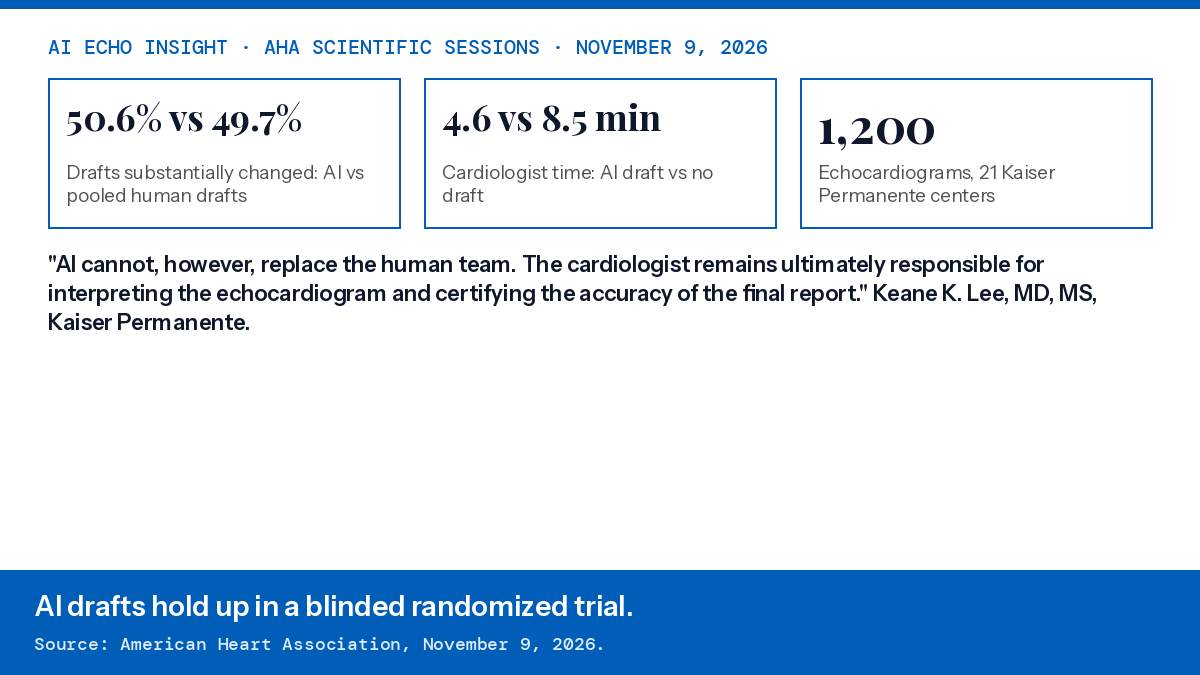
Kaiser Permanente's AI ECHO INSIGHT trial (1,200 echocardiograms, presented November 9): cardiologists made substantial changes to 50.6% of AI drafts versus 49.7% of human drafts, meeting noninferiority, and spent 4.6 minutes finalizing AI drafts versus 8.5 minutes without any draft.
XRHealth acquires PursueCare (announced November 9), adding virtual addiction treatment in six states and the FDA-authorized prescription digital therapeutics RESET and RESET-O; terms were not disclosed.
Laboratoires Pierre Fabre and XtalPi (2228.HK) sign an AI and robotics drug discovery collaboration across oncology, potentially dermatology, and rare diseases (announced November 9), with an undisclosed upfront payment and milestones.
Plus: AWS commits $100 million in AI and cloud credits for health organizations serving underserved communities; Oura Ring 5 reaches Ulta Beauty shelves ahead of WHOOP; FDA opens a discussion on autonomous and telesurgical robots.
Pebl’s Chief Business Officer, Dutta Satadip, joins The GTM Garage to show how Pebl merged Operations and GTM under one leader, and how it aligned goals and incentives across the customer lifecycle.
You’ll also see how Pebl uses AI across that lifecycle and the stack behind prospecting, pipeline, and handoff to onboarding.
15 min conversation. 15 min open Q&A. For Seed to Series A teams.
LATEST DEVELOPMENTS

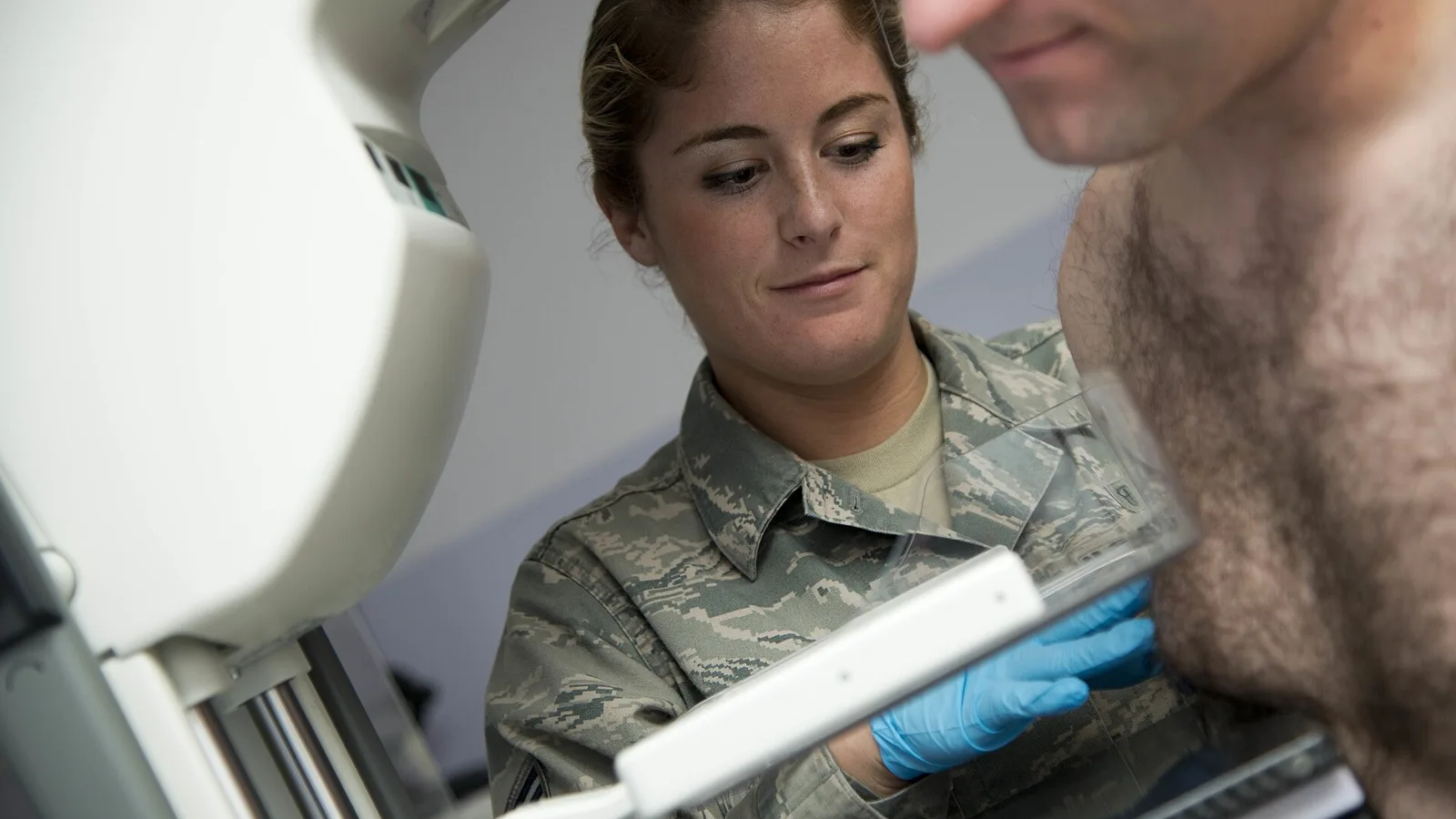
Kaiser Permanente's AI ECHO INSIGHT trial found AI-drafted echocardiogram reports comparable to human drafts, reducing cardiologist reporting time by 46%. Credit: Kaiser Permanente.
On November 9, Kaiser Permanente Northern California investigators presented AI ECHO INSIGHT as late-breaking science at the American Heart Association Scientific Sessions in Chicago. An AI model, a sonographer and a cardiologist each drafted a preliminary report for the same 1,200 echocardiograms, and cardiologists who did not know the source of each draft reviewed and finalized them.
The details:
Cardiologists substantially revised 50.6% of AI drafts versus 49.7% of human drafts, meeting the study’s noninferiority threshold (P = .0035). Reviewers could not distinguish AI drafts from human ones.
AI-assisted reports took 4.6 minutes to finalize versus 8.5 minutes without assistance, a 46% reduction. Human drafts offered similar savings, but AI could eliminate the drafting step, potentially saving sonographers 10 minutes per study.
The study covered 1,200 exams across 21 Kaiser Permanente centers, involving 9 sonographers and 20 cardiologists. The EchoPrime/EchoNet findings remain preliminary and unreviewed, with no patient outcomes assessed..
The Signal: The point is not that AI can read an echo. It is that a blinded randomized design put an AI draft into the exact slot a sonographer or a colleague fills today and found no quality gap. That moves the bottleneck from model accuracy to workflow ownership: who signs, who carries liability, and who pays for a draft that saves physician minutes but creates no new billable code. Echo labs facing a projected cardiologist shortfall now have trial-grade evidence to redesign the reading queue, pending peer review and a clear regulatory pathway for a full-report tool.

XRHealth acquired PursueCare, expanding into virtual addiction treatment and adding two FDA-authorized prescription digital therapeutics. Credit: XRHealth.
On November 9, XRHealth announced it has acquired PursueCare, a virtual provider of addiction treatment and co-occurring mental health care. The deal includes PursueCare's multidisciplinary telehealth clinical services and its FDA-authorized prescription digital therapeutics RESET and RESET-O. Financial terms were not disclosed in the announcement.
The details:
What XRHealth gets: licensed addiction clinicians, therapists, psychiatrists and case managers treating alcohol, opioid, cannabis, kratom and 7-OH use, in a model that accepts private insurance, Medicare and Medicaid across Connecticut, Kentucky, Maine, New Hampshire, Ohio and West Virginia. XRHealth says it is licensed in 40 U.S. states and serves patients through Medicare Part B, VA programs and commercial insurance.
The software: RESET delivers cognitive behavioral therapy alongside contingency management for substance use disorder over 12 weeks, and RESET-O supports retention in outpatient opioid use disorder treatment with buprenorphine over 12 weeks. Pear Therapeutics built both (RESET received FDA De Novo authorization in 2017; RESET-O was cleared in December 2018). After Pear's April 2023 Chapter 11 filing, PursueCare acquired them in December 2023.
Eran Orr is founder and CEO of XRHealth, and Nicholas Mercadante is founder and CEO of PursueCare. Orr framed the deal as extending care across AR and VR glasses, smartphones and smartwatches. PursueCare patients gain access to XRHealth's immersive VR support groups, where they can join as avatars.
The Signal: Pear’s bankruptcy exposed the difficulty of selling standalone prescription software. Medicare’s digital mental health codes (G0552-G0554) now reimburse devices delivered through ongoing clinical care, a model XRHealth owns. We expect more FDA-authorized therapeutics to move inside care providers rather than remain standalone businesses.

Pierre Fabre partnered with XtalPi to accelerate small-molecule drug discovery using AI and robotics. Credit: XtalPi.
On November 9, Pierre Fabre and Hong Kong-listed XtalPi (2228.HK) announced an AI-driven drug discovery partnership targeting oncology, with potential expansion into dermatology and rare diseases. XtalPi will use AI and robotics to design new small molecules, while Pierre Fabre will lead clinical and commercial development.
The details:
Economics: The deal includes upfront, milestone and downstream payments, with terms undisclosed. It targets historically difficult-to-drug proteins.
Leadership: Pierre Fabre’s Francesco Hofmann positioned the partnership as part of its AI-driven R&D strategy, while XtalPi’s Raymond Zheng emphasized advancing preclinical candidates.
Context: Pierre Fabre reported €3.2 billion in 2025 revenue, with 89% of pharmaceutical R&D investment directed toward precision oncology. XtalPi’s 2025 DoveTree deal carried a potential value of $5.99 billion.
The Signal: Mid-sized pharma is increasingly outsourcing AI drug discovery while retaining clinical and commercial control. Pierre Fabre’s deal with XtalPi reflects this shift. The real test is whether the partnership produces a clinical candidate, turning AI-driven discovery into a viable drug pipeline.
QUICK HITS
AI ECHO INSIGHT to practice: We're watching for the peer-reviewed paper, whether Kaiser Permanente moves AI drafting into routine reading, how the model's regulatory status is handled for a full-report tool, and whether other systems replicate the result outside one integrated network.
XRHealth and PursueCare integration: We're watching whether XRHealth extends PursueCare beyond its six states using its 40-state licensure, how much of the combined revenue runs through Medicare's G0552 to G0554 digital mental health codes, and whether more orphaned digital therapeutics find homes inside provider groups.
Pierre Fabre and XtalPi milestones: We're watching for the first disclosed target class or development candidate, whether Pierre Fabre adds more AI partners alongside Iktos and XtalPi, and how XtalPi's partner revenue trends in its next results as more programs move from design to preclinical work.
The deals:
XRHealth: Bought a clinic plus two FDA-authorized apps, choosing owned care delivery and reimbursement over standalone app development.
Pierre Fabre: Paid an undisclosed upfront to use XtalPi’s AI drug design platform while keeping control of clinical development and commercial rights.
AWS: Committed $100 million in credits, not cash, to health organizations serving underserved communities, betting cloud usage will grow with adoption.
Avanlee Care: Raised $3.5 million led by BEA Venture Fund on November 5 to sell caregiver engagement tools to Medicare Advantage plans.
ArrayPatch: Closed a €3.2 million seed round on November 5 to advance its dissolving-microneedle GLP-1 patch toward first-in-human studies.
The pattern: Capital is flowing to companies that control distribution and care delivery, not just standalone products. Investors are backing workflow ownership, reimbursement access and infrastructure that can carry a product into real-world use.
FDA public workshop on autonomous and teleoperated robotic devices: December 2 to 3, 2026 · Hybrid (FDA CDRH)
The first public forum on FDA's new robotics discussion paper, useful for surgical robotics and telesurgery teams preparing comments before the January 5, 2027 docket deadline.
EACVI 2026 (EuroEcho, EuroCMR and ICNC-CT): December 3 to 5, 2026 · Milan, Italy
Europe's cardiovascular imaging congress, a natural place to hear how echo labs and imaging societies respond to AI-drafted reporting after AI ECHO INSIGHT.
45th Annual J.P. Morgan Healthcare Conference: January 11 to 14, 2027 · San Francisco, CA
The year's first big read on pharma business development, including how AI discovery partnerships like Pierre Fabre and XtalPi are being priced.
Truveta care insights. On November 9, Truveta launched a platform using daily updated, de-identified EHR data and clinical notes to track real-world treatment patterns, including why patients stop or switch therapies. Truveta Intelligence supports natural-language queries for pharma and device companies.
AZmed Rayvolve via Nanox Marketplace. On November 9, Nanox expanded USARAD’s use of AZmed’s FDA-cleared X-ray AI, covering eight findings across chest and musculoskeletal imaging. Integration into OnePacs brings AI results directly into radiologists’ workflows.
MedLuma inside Bp Premier. On November 2, Best Practice Software and Medcast launched MedLuma inside Bp Premier, giving Australian GPs cited answers from approved clinical sources and accredited CPD tracking within their existing software.
HealthEx: San Francisco health records platform that integrated Epic’s MyChart Central authorization on November 9, allowing patients to share records from multiple Epic health systems through a single sign-in. Led by co-founder and CEO Priyanka Agarwal.
DeepLife: Paris-based techbio company developing TwinCell, an AI model trained on over 100 million single-cell data points. On November 9, it partnered with South Korea’s 3billion to identify genetic targets and develop small-molecule therapies. Led by CEO Jonathan Baptista.
Avanlee Care: Caregiver engagement platform helping Medicare Advantage plans support family caregivers through medication management, scheduling and AI tools. Raised $3.5 million on November 5, bringing total funding to $6 million. Led by founder and CEO Avanlee Christine.
The Draft Is the Product: What AI ECHO INSIGHT Changes for Echo Labs. How a blinded randomized design differs from benchmark claims, where AI drafting fits against measurement and guidance tools already cleared by FDA, and who captures the time it saves.
After Pear: Why Digital Therapeutics Are Ending Up Inside Clinics. What XRHealth bought, why the standalone prescription software model struggled, and how Medicare's digital mental health codes shape the next owners.
Renting the Molecule Factory: Pierre Fabre, XtalPi and Mid-Sized Pharma's AI Bet. How AI and robotics discovery deals are structured, what the evidence so far supports, and the milestones that would prove the model.
Which of today's shifts is most likely to change how your organization buys clinical software in the next 12 months? |
An AI draft that ties with human drafts in a blinded trial, a virtual clinic that absorbs two FDA-authorized apps, and a French drugmaker that rents an AI and robotics lab while keeping the clinic. Each story is about the same move: software losing its standalone identity and becoming a step inside someone else's workflow, whether that is a cardiologist's reading queue, an addiction program's care plan or a pharma pipeline.
That is good news for adoption and a harder question for value capture. If the AI draft saves four minutes but the cardiologist signs and bills, if the app keeps patients in treatment but the clinic gets paid, and if the molecule is designed by XtalPi but owned by Pierre Fabre, where does your company sit when the software becomes invisible?
How did we do today? |
See you tomorrow,
Dr. Dereck Mush, MD, MBA
The HealthTech Signal is independently funded. Sponsorships help us invest in better reporting, research, and a stronger newsletter for our readers. Want to reach HealthTech founders & executives while supporting the Signal? Get in touch.
Was this email forwarded to you? Sign up here.
Until tomorrow,
The HealthTech Signal

Dr. Dereck Mush, MD, MBA
Dr. Dereck Mush, MD, MBAKeep exploring