Good morning, HealthTech insiders. A robot drew blood from patients this weekend. Thousands of them. Without a human guiding the needle. The FDA authorized Vitestro's Aletta device on August 19, and this Monday it lands in a field already grappling with a national phlebotomist shortage and 7-11% vacancy rates. This is not a science experiment. This is autonomous clinical labour, cleared for outpatient use.
Meanwhile, Cleveland Clinic just published its AI scribe deployment blueprint in Nature, showing how you take 4,000 clinicians from zero to live in 16 weeks. And Tempus AI surged 40% last week after the Merck-Moderna cancer vaccine trial validated the genomics platform it is buying for $1.5 billion. Three different stories. One shared direction: clinical AI is moving from pilots into infrastructure, and the infrastructure is starting to touch the patient directly.
In today's Signal:
FDA authorizes Vitestro's Aletta, the first autonomous robotic blood-draw device, for adult outpatient use, one phlebotomist can now supervise three machines simultaneously
Cleveland Clinic publishes its enterprise AI scribe blueprint in npj Health Systems: 4,800+ clinicians live across 3.5 million encounters in 12 months, led by partnership with Ambience Healthcare
Tempus AI surges 39.5% in a week after the Merck-Moderna melanoma vaccine Phase 3 hit both endpoints — validating the Personalis NeXT Platform it is acquiring for $1.5 billion
Follow the money: MaxQ Medical ($31.5M) and Ours Privacy ($15M) round out a week where capital flows toward physical-world diagnostics and compliance infrastructure
Quick Hits: HIMSS AI Leadership Summit opens San Diego; NHS Palantir contract faces imminent break clause decision; Precise Behavioral raises $14.2M for ED psychiatric AI
LATEST DEVELOPMENTS
MEDICAL DEVICES
1. The FDA just cleared a robot to draw blood on its own.

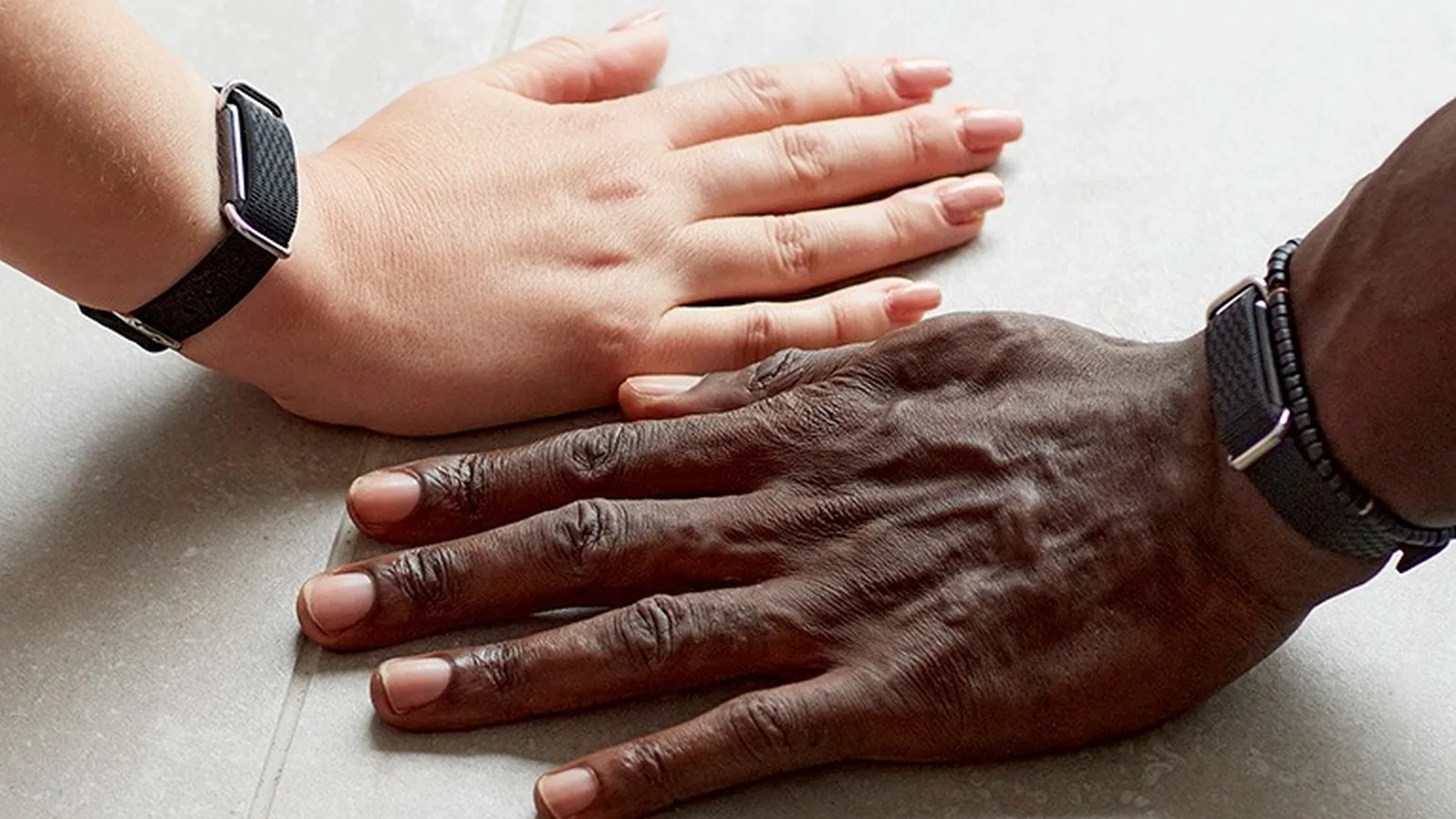
Source: Vitestro.com — Aletta, the world's first FDA-cleared autonomous robotic phlebotomy device, in clinical use.
The signal: Vitestro's Aletta device received FDA De Novo authorization on August 19, the first autonomous robotic phlebotomy system cleared for adult outpatient use without hands-on human intervention during needle insertion.
The details:
Aletta uses near-infrared light and Doppler ultrasound to locate veins, distinguish them from arteries, and execute the full draw: tourniquet, disinfection, needle, tube changes, bandage. One phlebotomist can supervise up to three units simultaneously.
In a 1,633-patient clinical trial, Aletta succeeded on the first needle insertion 94.5% of the time, matching or exceeding the rate of trained human phlebotomists across patients with difficult vein access, varying skin tones, and comorbidities. Adverse events were mild and occurred in only 0.6% of cases.
The FDA authorization was granted through the De Novo pathway (low-to-moderate risk, novel device type), and the special controls it established will allow future autonomous phlebotomy products to seek the faster 510(k) clearance route. Vitestro co-founder and CEO Toon Overbeeke described the milestone as years of validation that autonomous phlebotomy matches the standard patients expect globally. US hospital vacancy rates for diagnostic personnel run 7-11%.
90% of patients reported equivalent or less pain than manual draws. 82% said they would prefer Aletta or had no preference.
Why it matters: This is the first FDA clearance for autonomous clinical labour that directly touches the patient's body without a human guiding the intervention. The phlebotomy shortage is real, the De Novo pathway creates a template for competitors, and a 94.5% first-stick success rate means this is not a novelty device. Watch how quickly health systems start doing the staffing math.
CLINICAL AI
Cleveland Clinic just published the AI scribe playbook every health system has been waiting for

Source: Duke-Margolis Institute for Health Policy / FDA Workshop
The signal: Cleveland Clinic published a detailed deployment blueprint in npj Health Systems (Nature) this month showing exactly how it took 4,000 ambulatory clinicians from pilot to enterprise-wide ambient AI scribe in just 16 weeks, through a structured partnership with Ambience Healthcare.
The details:
More than 4,800 CCF clinicians are now using the AI scribe across more than 3.5 million encounters, 12 months after enterprise-wide launch. Active users rely on it for 76% of their scheduled outpatient visits.
The deployment used four structured pillars: a joint governance structure with Ambience Healthcare, a wave-based training model (pilot alumni first, then 80% of target users, then specialties), an always-accessible support layer, and a real-time learning loop for continuous feedback between the health system and vendor.
The paper, led by Dr. Amy Merlino and colleagues, is the first peer-reviewed blueprint for rapid enterprise-scale AI scribe deployment, and it establishes contractual onboarding milestones as the accountability mechanism that kept the vendor and health system aligned. This model is immediately replicable.
Why it matters: Before this paper, every health system choosing an AI scribe was essentially guessing at deployment logistics. Now there is a documented, peer-reviewed blueprint from a 23-hospital academic medical center that took 4,000 clinicians live in four months. The governance model and wave structure are worth reading closely, the accountability clause between vendor and health system is the detail most deployments skip.
PHARMA & AI
3. Tempus AI jumped 40% last week. Here is what it actually means.

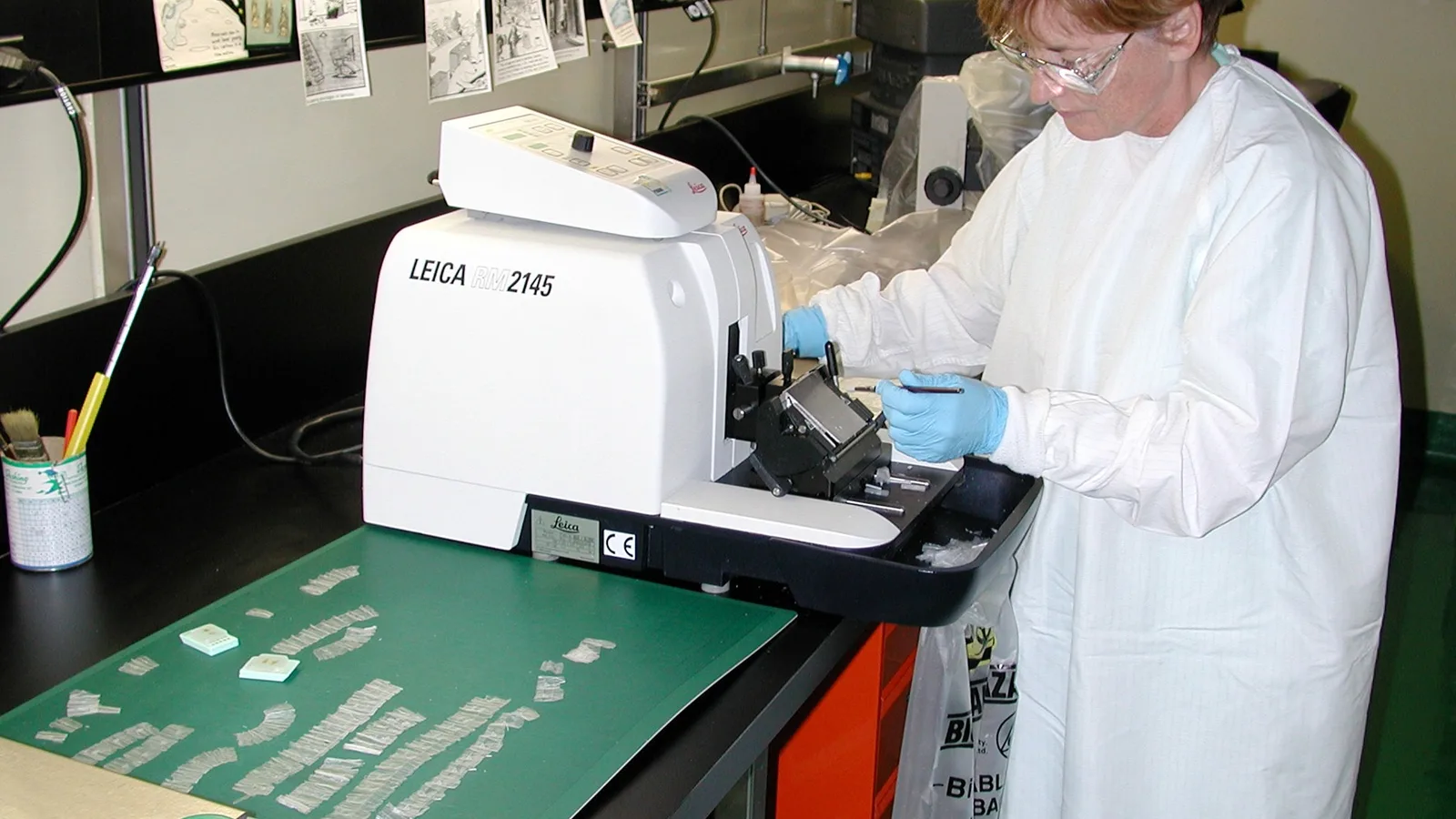
Source: Tempus Media Library — A laboratory professional working with clinical samples at a Tempus facility.
Source: Rock Health Digital Health Venture Investment Report
The signal: Tempus AI (NASDAQ: TEM) surged 39.5% in a single week after Merck and Moderna's personalised mRNA cancer vaccine, intismeran autogene, hit both co-primary endpoints in Phase 3 melanoma trials, validating the Personalis NeXT genomic profiling platform that Tempus agreed to acquire for $1.5 billion in July.
The details:
Tempus's stock moved from $52.10 to $72.69 during the week, adding $3.7 billion in market value. Its $1.5 billion acquisition of Personalis (a company whose NeXT Platform for genomic tumor profiling was central to the vaccine's development) suddenly looks very differently priced. BTIG analyst Mark Massaro raised his price target to $80.
Personalis reported clinical revenue of $2.6 million for Q2 2026, up 442% year-over-year, with more than 1,400 doctors now ordering NeXT Personal tests. Clinical test volume nearly tripled to 10,384 tests.
The Phase 3 trial (1,137 patients, resected melanoma) showed statistically significant and clinically meaningful improvement on both recurrence-free and distant metastasis-free survival versus Keytruda alone. Specific efficacy data have not yet been disclosed. Regulatory submissions for intismeran autogene are being prepared. are heavily favoring companies building full clinical operating layers over narrow, single-feature AI wrappers.
Top-funded startups are deploying dedicated engineering teams directly inside hospital networks to build embedded workflow moats.
Why it matters: Tempus built a data and AI business on top of genomic sequencing; the Personalis deal bets that the next wave of precision oncology runs on deeper tumor profiling. The mRNA vaccine result did not make Tempus more valuable because Tempus invented the therapy. It made them more valuable because the therapy needs exactly what Personalis does. That is a different kind of validation, and a template for AI companies that quietly own critical infrastructure in drug development pipelines.
QUICK HITS
💰 FOLLOW THE MONEY
The deals: MaxQ Medical closed a $31.5M Series A (August 20) for a transurethral imaging and therapy system for prostate care, backed by Olympus Innovation Ventures, Atlantic Blue Ventures, and S3 Ventures. Ours Privacy raised a $15M Series A (August 19) for a HIPAA-compliant marketing data platform for healthcare, led by Lightbank and Health Velocity Capital with Rock Health participation. Precise Behavioral raised $14.2M in venture funding (announced August 22) for AI-driven psychiatric services across hospital ED and skilled nursing facilities, led by A1 Health Ventures; already deployed across 200 hospitals and 24 million patients in California.
The pattern: This week's deals are split between physical-world diagnostics (MaxQ: a device going inside patients) and healthcare data infrastructure (Ours Privacy: compliance tooling for marketing, Precise Behavioral: AI layered into existing psychiatric workflows). Capital is flowing into categories where healthcare's specific legal and operational constraints create durable moats that generic tech companies cannot easily replicate.
🩺 THE CLINICIAN’S SIGNAL
On Aletta's FDA clearance: A single phlebotomist supervising three robots changes the staffing model for outpatient labs, not just the workflow. The safety controls are sound, but clinicians in understaffed rural or community settings will need clear protocols for cases where the device declines to proceed, because when the robot says no, someone still has to say yes.
On the Cleveland Clinic scribe blueprint: The governance model matters as much as the technology. Health system leaders should note that Cleveland Clinic required training before granting access, a friction most deployments skip and later regret. The contractual onboarding milestone structure is the detail worth borrowing.
On Tempus AI and precision oncology: More doctors ordering NeXT Personal tests means more tumor profiles feeding into the training datasets behind AI drug development pipelines. Clinicians who send these tests are increasingly contributing to research they will never be credited for, that is worth a consent conversation as genomic AI matures.
🛠️ Trending HealthTech AI Tools & Startups
Ambience Healthcare: The ambient AI scribe behind Cleveland Clinic's enterprise deployment (3.5M+ encounters). Used by CCF for 76% of scheduled outpatient visits in active clinicians. Now has a peer-reviewed blueprint for enterprise rollout.
Oracle Health Clinical AI Agent: Expanded Aug 19 to cover automated professional fee coding, AI-assisted chart review, and clinician-controlled dictation for US health systems. Moving from documentation into the revenue cycle.
Aletta (Vitestro): First FDA-cleared autonomous robotic phlebotomy device. Near-infrared + Doppler ultrasound-guided autonomous venipuncture for adult outpatients. De Novo authorization creates the regulatory template for future autonomous clinical robotics.
Tempus NeXT Personal (via Personalis): Genomic tumor profiling test now ordered by 1,400+ physicians. Central to the Merck-Moderna personalised mRNA vaccine pipeline; acquisition by Tempus pending regulatory and shareholder approval.
Vitestro: Co-founded by Toon Overbeeke and Daan Giesen, building autonomous robotic phlebotomy devices. Aletta is now FDA De Novo cleared for US adult outpatient markets after CE mark in Europe. Targets the 7-11% diagnostic vacancy rate in US hospitals.
MaxQ Medical: $31.5M Series A (August 20), backed by Olympus Innovation Ventures. Developing an all-in-one transurethral imaging and therapy system for prostate care. Expanding from benign prostate hyperplasia into prostate cancer therapy.
Ours Privacy: Founded by Jessica Holton, Adam Putterman, and Tyler Zey. $15M Series A (August 19) for a HIPAA-compliant customer data platform for healthcare marketers. 200+ healthcare organizations including multi-billion-dollar health systems.
Precise Behavioral: Founded by Dr. Nitin Nanda. $14.2M venture round for AI-driven psychiatric services across hospital EDs, skilled nursing, and correctional facilities. Deployed across 200 hospitals and 24 million patients via CommonSpirit Health and Prime Healthcare.
📣 Highlights: Events, Lists & Deep Dives
📖 Trending Deep Dive: The AI Scribe Enterprise Playbook: Cleveland Clinic's Deployment Blueprint.
🏆 HealthTech List: Top Autonomous Medical Devices FDA-Cleared in 2026.
🔬 Diagnostic Tech: Robotic Phlebotomy: What Aletta's FDA Clearance Means for Clinical Labs.
📅 Industry Calendar: Upcoming HealthTech Events, Conferences & Webinars.
That's it for today!
A robot drew blood without a human guiding it. A 23-hospital academic center published the blueprint for deploying AI across 4,000 clinicians in four months. And a genomics company saw its acquisition value rewritten by a cancer vaccine trial it had nothing to do with. The common thread: clinical AI has stopped asking for permission to be infrastructure.
I want to know what you think about the Aletta clearance. Is this the beginning of autonomous clinical labour, or is supervised autonomy just a more expensive version of the old system?
Before you go, was today’s Signal worth your time? Let us know. Your feedback helps us keep improving what we send you.
How did we do today? |
See you tomorrow,
Dr. Dereck Mush, MD, MBA
The HealthTech Signal is independently funded. Sponsorships help us invest in better reporting, research, and a stronger newsletter for our readers. Want to reach HealthTech founders & executives while supporting the Signal? Get in touch.
Was this email forwarded to you? Sign up here.
Until tomorrow,
The HealthTech Signal