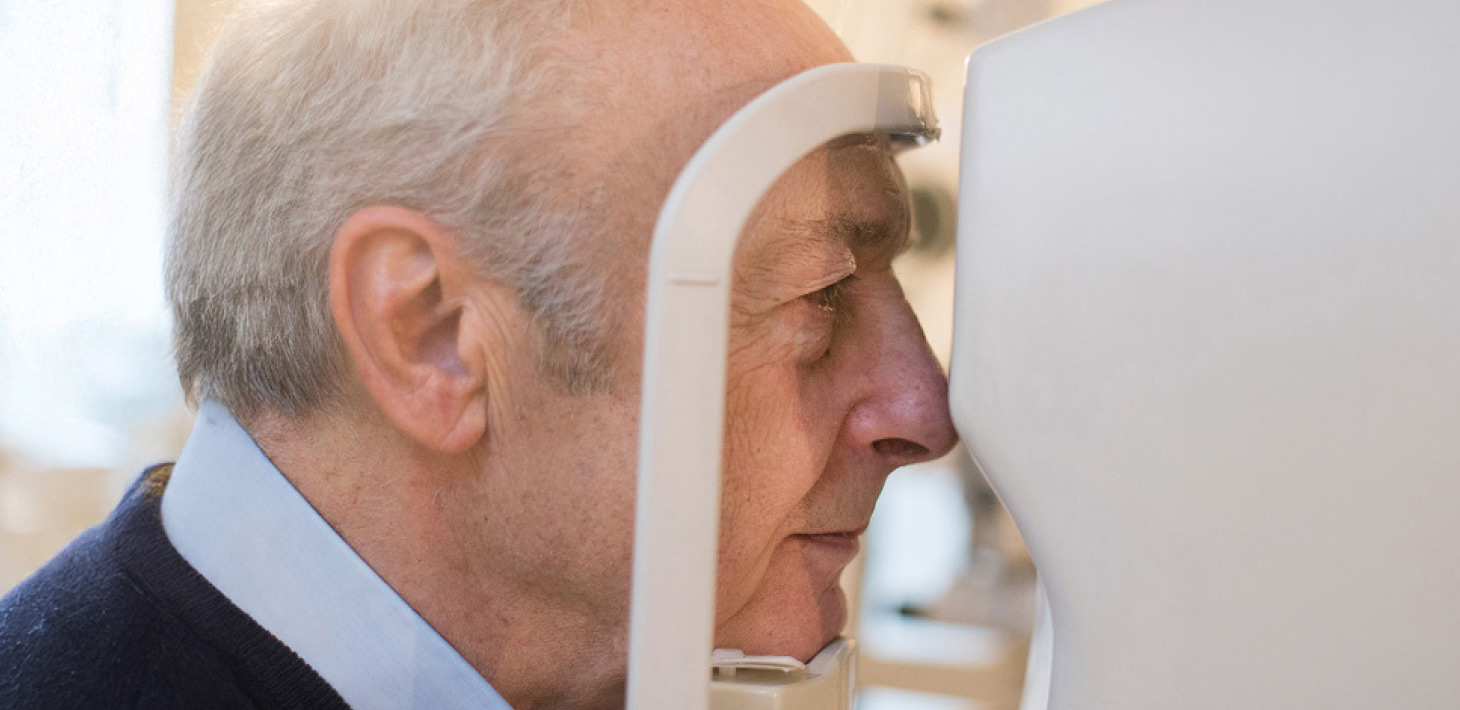
SEOUL. Across U.S. primary care, people with diabetes sit in front of a retinal camera a nurse or technician can photograph the back of their eyes. The images are checked for diabetic retinopathy, and then, in most clinics, they are filed away. On November 27, Mediwhale said the FDA had cleared software that can read something else in the same picture: an estimate of that person's 10-year risk of a first heart attack or stroke.
The product is called Dr. Noon CVD. It combines AI analysis of retinal photographs with a person's age and sex and sorts them into one of three risk categories. It does not diagnose heart disease. It gives a primary care clinician one more input when deciding who needs a statin, a coronary calcium scan or a closer look at blood pressure and lipids.
The retina is the only place in the body where a camera can look straight at small blood vessels without a needle, a scan or radiation. Mediwhale is betting that primary care will pay to use that view twice.
This week the pattern has been hard to miss. On Wednesday we covered DeepHealth's FDA clearance for a model that predicts five-year breast cancer risk from a 3D mammogram. On Friday we listed Remidio's Systemic Health AI, which flags heart and kidney risk indicators from a retinal photo. Earlier in the week we looked at Lunit and M42 using AI to find lung cancer on chest X-rays that were taken for other reasons. The trend is the same each time: AI is being asked to extract a second, preventive answer from images that health systems already pay to acquire.
In This Story
- What the FDA cleared
- How Dr. Noon CVD works in a clinic
- The evidence so far, in numbers
- Mediwhale's regulatory path
- Why primary care is the target
- What it means for clinicians and health systems
- What it means for founders and the industry
- What it means for investors
- The research question underneath
- Competitors and context
- Counter-thesis
- Risks and open questions
- What to watch next
What the FDA cleared
Mediwhale's release, dated November 27 on PR Newswire, says Dr. Noon CVD received 510(k) clearance and "paves the way" for the company to introduce it into U.S. clinical practice. The company's website lists the clearance number as K262958.
The cleared claim is specific. The software estimates an individual's 10-year risk of a first ASCVD event, the category that covers heart attack, coronary death and stroke caused by narrowed arteries. It uses the retinal images together with age and sex, and its output is a three-tier risk category. The company frames the product as support for clinicians' cardiovascular risk assessment "alongside other clinical information."
Mediwhale ties the timing to U.S. guidance. Its release cites the 2026 ACC/AHA multisociety guideline on the management of dyslipidemia, published in the Journal of the American College of Cardiology on March 13, 2026, as reflecting a greater emphasis on earlier intervention informed by individual risk assessment.
Kevin Taegeun Choi, Mediwhale's CEO and co-founder, put the commercial logic simply: "Retinal cameras are already in primary care clinics across the United States, where they are used every day for diabetic eye exams. With FDA clearance, that same retinal exam can now do more: support cardiovascular risk assessment. We intend to be first to bring this to U.S. primary care, working with partners that already operate these networks and building U.S. real-world data as we go."
How Dr. Noon CVD works in a clinic
On its product page, Mediwhale describes a short patient journey. A clinician identifies a patient who may be at cardiovascular risk, for example someone with diabetes, hypertension, high cholesterol or obesity. A technician takes one photograph of each retina with a fundus camera. The images are uploaded to the clinic's server or a cloud platform, the AI analyses them, and a report returns a risk category to the clinician.
| Step | What happens | Who does it |
|---|---|---|
| 1. Identify | Patient with risk factors such as diabetes, hypertension, hyperlipidaemia or obesity | Clinician |
| 2. Consult | History and current health reviewed | Clinician |
| 3. Photograph | One retinal photo of each eye; no radiation | Technician |
| 4. Upload | Images sent to the clinic server or cloud | Clinic IT |
| 5. Analyse | AI estimates 10-year ASCVD risk using images, age and sex | Dr. Noon CVD |
| 6. Act | Risk category used with other clinical information | Clinician |
Source: Mediwhale product page and November 27 release.
The pitch to clinics is that the expensive part, the camera and a trained person to use it, is often already in place. Diabetic eye screening in primary care has grown with autonomous AI for diabetic retinopathy, which means the same photograph can now feed two reads.
The evidence so far, in numbers
Mediwhale says its models are built on more than 4 million clinical data points and supported by more than 100 peer-reviewed publications. Two studies sit at the core of the cardiovascular claim, both published in 2023 and both listed on the company's publication page.
The first, in European Heart Journal: Digital Health (June 2023), compared the retinal biomarker, then called Reti-CVD, with standard risk calculators in two large populations.
| Population and comparator | Participants | Sensitivity | Specificity | PPV | NPV |
|---|---|---|---|---|---|
| UK Biobank, Pooled Cohort Equations (intermediate and high risk) | 48,260 | 82.7% | 87.6% | 86.5% | 84.0% |
| UK Biobank, QRISK3 (intermediate and high risk) | 48,260 | 82.6% | 85.5% | 49.9% | 96.6% |
| Singapore Epidemiology of Eye Diseases, modified Framingham | 6,810 | 82.1% | 80.6% | 76.4% | 85.5% |
Source: Yi JK, Rim TH, et al. European Heart Journal: Digital Health, 2023, as summarised on Mediwhale's publication page.
These numbers show that a retinal photo can identify roughly the same people that a questionnaire and blood test calculator would flag. That is useful when cholesterol results are missing or out of date. It is not yet proof that the retina adds new information on top of a full risk score.
The second study, in JAMIA (October 2023), was a regulated pivotal trial using the Korean CMERC-HI high-risk cohort. It compared the three Reti-CVD risk groups with coronary artery calcium on cardiac CT, carotid intima-media thickness and pulse wave velocity.
| Measure | Result |
|---|---|
| Participants | 1,106 |
| Cardiovascular events over 5 years | 33 (3.0%) |
| Hazard ratio trend across low, moderate and high Reti-CVD groups | 2.02 (95% CI 1.26 to 3.24) |
| Moderate risk vs low risk, full model with CAC, CIMT, baPWV and risk factors | HR 2.40 (95% CI 0.82 to 7.03) |
| High risk vs low risk, same full model | HR 3.56 (95% CI 1.34 to 9.51) |
| Regulatory outcome | Results led the Korean regulator to authorise Reti-CVD |
Source: Lee CJ, Rim TH, et al. JAMIA, 2023, as summarised on Mediwhale's publication page.
In that combined model, only the Reti-CVD high-risk group remained significantly associated with events. The cohort is small and the event count is low, so the confidence intervals are wide. Academics will want to see the U.S. 510(k) evidence and larger, more diverse prospective data. Mediwhale's own timeline shows four abstracts at AHA 2026 in November and five at the American Society of Preventive Cardiology congress in August.
Mediwhale's regulatory path
The U.S. clearance is the newest step in a sequence that started in Korea and Europe.
| Date | Milestone | Source |
|---|---|---|
| May 11, 2021 | First EC certificate for Dr. Noon CVD in Europe, issued by SGS Belgium | Mediwhale product page |
| August 1, 2022 | Korea MFDS approval for DrNoon for CVD; later commercialised with reimbursement | Mediwhale product page |
| March 2026 | $13.1 million Series B round | Mediwhale company journey |
| April 2026 | EU CE MDR certification for DrNoon (CVD and Fundus) | Mediwhale company journey |
| May 2026 | Approval in Brazil | Mediwhale company journey |
| July 2026 | HIPAA compliance certification | Mediwhale company journey |
| September 2026 | Approval in Saudi Arabia | Mediwhale company journey |
| November 2026 | FDA 510(k) clearance, K262958 | Mediwhale release and website |
The company says Dr. Noon CVD is commercialised in Dubai, the UK and Italy, with regulatory approvals in 11 regions. It also sells Dr. Noon Fundus, which detects retinal abnormalities, and lists kidney disease, fatty liver disease and cognitive disorders as research areas.
Why primary care is the target
Cardiovascular prevention depends on finding the right people early. Today that usually means a risk calculator that needs blood pressure, cholesterol, diabetes status and smoking history. The calculation is easy, but the inputs are often missing, especially for people who rarely see a doctor or whose lab results are old.
A retinal photo offers a different route. It takes minutes, needs no blood draw and uses equipment that many clinics already own for diabetic eye screening. For a primary care network, the commercial question is whether a second read on an existing photo can be billed, bundled into value-based contracts or justified by downstream savings.
That is why Choi talks about partners "that already operate these networks." Mediwhale is not trying to place new cameras in every clinic. It wants to ride on the installed base of fundus cameras and teleretinal screening programmes.
What it means for clinicians and health systems
For clinicians, the practical value is triage. A patient with diabetes who has not had a lipid panel in two years, or who declines a CT calcium scan, could still get a risk category from an eye photo taken that day. A high-risk result could prompt a statin conversation, a lipid test or a calcium score. A low-risk result should not override a full clinical assessment.
For health systems, opportunistic risk prediction is attractive because the acquisition cost has already been paid. But each new output creates follow-up work. If a retinal photo flags a patient as high cardiovascular risk, someone has to own the result, contact the patient and arrange care. Systems that add Dr. Noon CVD will need clear pathways, just as they did when AI began flagging incidental lung nodules and coronary calcium on CT scans taken for other reasons.
There is also a governance question. Last week we wrote about the NHS SENTINEL-AI project to monitor AI after deployment. Risk models are exactly the kind of tool that can drift as populations, cameras and treatment patterns change, so local monitoring of calibration matters.
What it means for founders and the industry
Mediwhale's path is a template many AI founders outside the U.S. are following: win approval and reimbursement at home, collect evidence across several countries, then use the FDA clearance to open the largest market. The company's leadership reflects that plan. Its co-founder and chief medical officer, Tyler Hyungtaek Rim, is a retina specialist and clinician scientist who previously held academic roles at Duke-NUS Medical School, the Singapore Eye Research Institute and Yonsei University Severance Hospital. Its chief business officer, David Daeho Ko, previously led commercial operations at Optus Pharmaceutical and worked in diabetes and cardiovascular marketing at companies including Novo Nordisk and MSD.
For the industry, the bigger shift is that imaging AI is moving from finding disease in the image to predicting disease elsewhere in the body. DeepHealth's Mammo Risk predicts future breast cancer. Remidio's systemic health tool and Mediwhale's software look for heart and kidney risk in the eye. Cleerly's updated plaque algorithm, shown at RSNA this week, quantifies coronary plaque on CT. Each of these products turns an image into a forecast.
What it means for investors
The clearance strengthens Mediwhale's U.S. story at a time when the company has said it is preparing for an initial public offering. A June 2026 news item on its website describes new European certification, new investment and IPO preparation. Its company journey lists a $13.1 million Series B in March 2026. We have not seen a valuation or U.S. revenue figures, and the company has not named its U.S. distribution partners.
For investors, the questions are about adoption, not technology. How many U.S. clinics run retinal cameras at scale? Who pays for a cardiovascular read on an eye photo? Will payers and value-based care groups treat it as a cheaper alternative to calcium scoring, or as a duplicate test? The answers will decide whether retinal cardiovascular AI is a feature inside eye-screening platforms or a stand-alone business.
The research question underneath
The scientific question is whether the retina adds information beyond age, sex and standard risk factors, and for whom. Age is a dominant driver of 10-year cardiovascular risk, and any model that includes age will look accurate partly because of it. The strongest evidence would show that retinal AI reclassifies people correctly, moving some from low to high risk and others the other way, in large, diverse populations followed over time.
The research field is active. The idea that deep learning can read cardiovascular risk factors from fundus photos was shown publicly by Google researchers in Nature Biomedical Engineering in 2018 (Poplin et al.). Since then, groups in Asia, Europe and the U.S. have published models for heart, kidney and neurological risk. What has been missing is regulatory clearance in the U.S. for a cardiovascular claim. That is what changed this week.
Competitors and context
| Company or product | What it does | Status | HTS coverage |
|---|---|---|---|
| Mediwhale Dr. Noon CVD | 10-year ASCVD risk category from retinal images, age and sex | FDA 510(k) K262958, November 2026; Korea, EU and others | This story |
| Remidio Systemic Health AI | Cardiovascular and kidney risk indicators from retinal photos on Remidio cameras | Launched November 25, 2026; company calls results screening indicators | Tool page |
| DeepHealth Mammo Risk | Three- to five-year breast cancer risk from 3D mammograms | FDA clearance, November 2026 | Deep dive |
| Cleerly PLAQUE | AI analysis of coronary plaque on CT angiography | FDA-cleared algorithm shown at RSNA 2026 | Tool page |
| Lunit with M42 | AI detection of lung cancer on existing chest X-rays | UAE partnership announced November 2026 | Deep dive |
Sources: company releases and HTS coverage linked above.
The closest competition for Mediwhale in U.S. primary care is not another eye AI company. It is the status quo: a pooled cohort equation, a lipid panel and, for some patients, a coronary calcium score. Retinal AI has to show that it finds risk that those tools miss, or that it gets the same answer more cheaply for people who would not otherwise be assessed.
Counter-thesis
The sceptical case is straightforward. A 510(k) clearance shows the software performs as claimed against a predicate. It does not show that patients who get a retinal risk score have fewer heart attacks. Most of the published performance comes from Korean, UK and Singaporean cohorts, and the pivotal Korean study had only 33 events. Risk models also tend to be less accurate in populations they were not trained on.
There is also a workflow risk. Primary care is already overloaded with alerts and incidental findings. If a new risk category lands without a clear pathway, it may be ignored, or it may trigger more tests than clinics can handle.
Risks and open questions
- Payment: there is no specific U.S. payment route described by the company for a cardiovascular read on a retinal photo.
- Calibration: how well the 10-year risk categories hold in U.S. populations of different ancestry, age and diabetes prevalence.
- Camera variability: performance across the many fundus cameras used in U.S. clinics, which the company says its training data covers.
- Follow-up: who owns a high-risk result found during a diabetic eye exam, and how fast the patient is seen.
- Consent and information: patients photographed for eye screening may not expect a heart risk estimate, which raises questions about how clinics explain the second read.
What to watch next
- Which U.S. primary care or teleretinal screening networks Mediwhale names as partners first.
- U.S. real-world data on reclassification, follow-up and statin starts after a retinal risk result.
- Whether value-based care groups and Medicare Advantage plans adopt retinal risk scoring for patients without recent lipid tests.
- Mediwhale's IPO timing and any disclosure of U.S. revenue.
- More FDA clearances for systemic risk from retinal images, including kidney and liver disease, which Mediwhale lists as research areas.
Mediwhale has spent five years proving that a photo of the eye can say something about the heart. The FDA has now allowed that claim in the U.S. The harder test starts in primary care, where the question is not whether the retina can predict risk, but whether anyone acts on the answer.
Sources
- Mediwhale: Mediwhale announces first FDA 510(k) clearance for its retinal-AI cardiovascular risk assessment software (PR Newswire, November 27, 2026)
- Mediwhale: FDA 510(k) clearance announcement on the company newsroom (November 2026)
- Mediwhale: Dr. Noon CVD product and regulatory information
- Mediwhale: Company journey and milestones
- Mediwhale: Leadership
- Yi JK, Rim TH, et al. Cardiovascular disease risk assessment using a deep-learning-based retinal biomarker: a comparison with existing risk scores. European Heart Journal: Digital Health, 2023
- Lee CJ, Rim TH, et al. Pivotal trial of a deep-learning-based retinal biomarker (Reti-CVD) in the prediction of cardiovascular disease: data from CMERC-HI. JAMIA, 2023
- Poplin R, et al. Prediction of cardiovascular risk factors from retinal fundus photographs via deep learning. Nature Biomedical Engineering, 2018
- The HealthTech Signal: DeepHealth's FDA clearance for breast cancer risk AI from 3D mammograms (November 25, 2026)
- The HealthTech Signal: Remidio Systemic Health AI (November 27, 2026)
- The HealthTech Signal: Lung cancer AI on existing chest X-rays, Lunit and M42 (November 24, 2026)
- The HealthTech Signal: Post-market AI monitoring and NHS SENTINEL-AI (November 26, 2026)