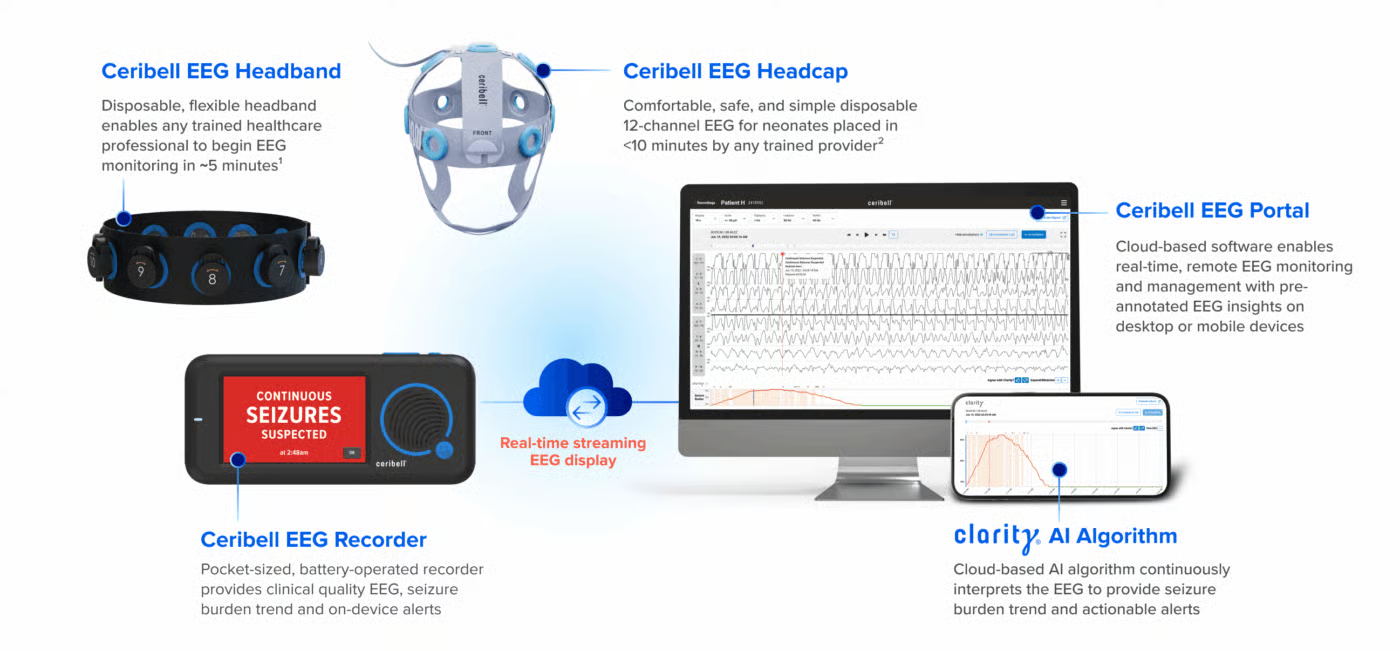
Inside an intensive care unit at midnight, an intubated patient following an aneurysmal subarachnoid hemorrhage begins experiencing subtle physiological instability. In traditional critical care environments, ruling out non-convulsive status epilepticus or delayed cerebral ischemia requires ordering a continuous electroencephalography study, waiting up to four hours for an EEG technologist to apply specialized scalp leads, and waiting additional hours for an off-site neurophysiologist to review 50 pages of raw electrical waveforms.
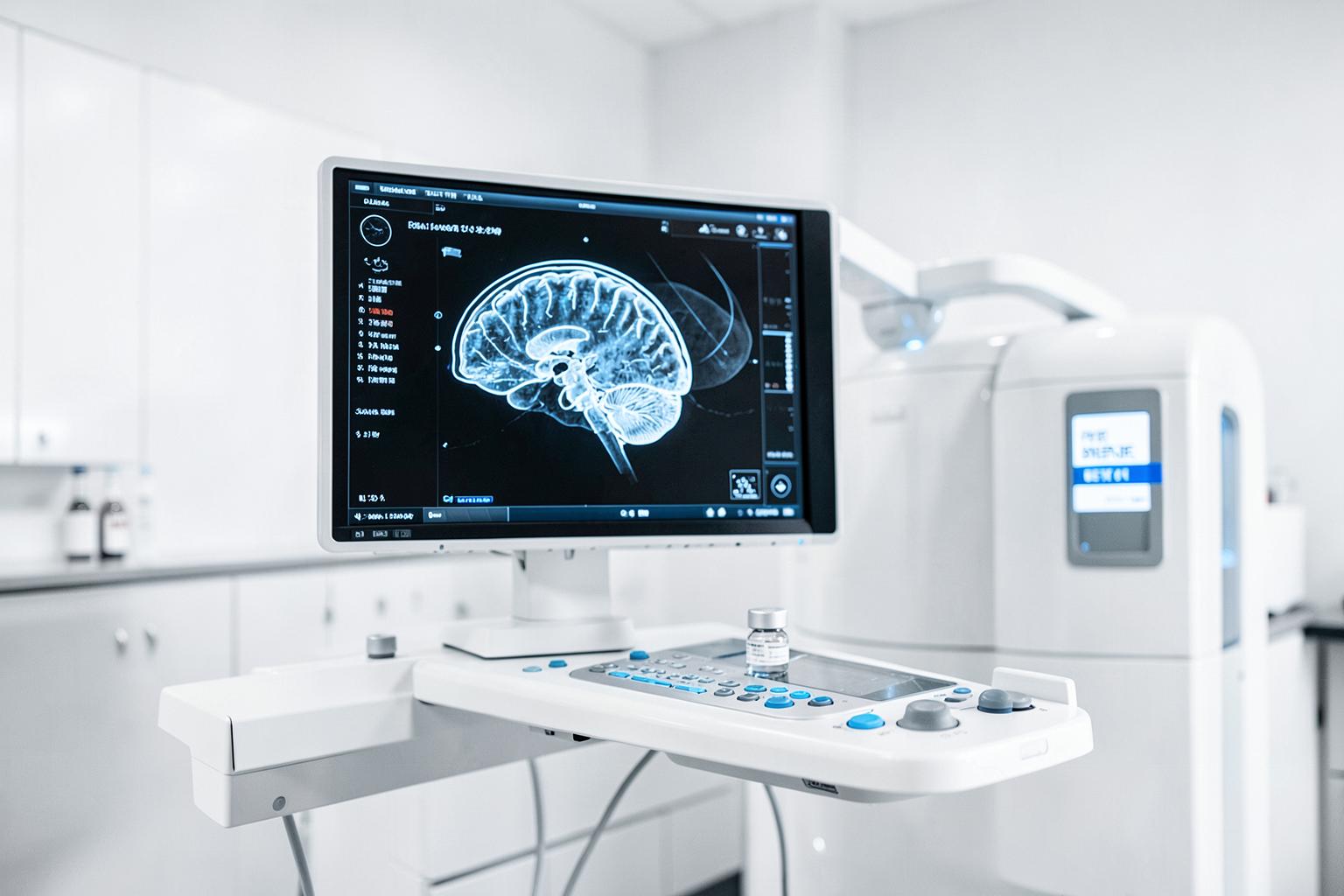
That structural delay creates a dangerous clinical gap where irreversible brain injury can occur before therapy is adjusted. The FDA 510(k) clearance granted to Ceribell on September 30, 2026, for Quantitative EEG (qEEG) Trending and Amplitude-Integrated EEG (aEEG) represents a decisive technological pivot. By translating dense, multi-channel waveforms into simplified Alpha-Delta Ratio trends and Burst Suppression metrics at the bedside, neuro-telemetry is shifting from a specialist-restricted consultative service into continuous, autonomous hemodynamic monitoring.
In this deep dive
- Why this matters now: the acute neuro-monitoring bottleneck
- What actually happened: deconstructing Ceribell's 510(k) software clearance
- The obvious read versus the deeper signal
- Neuro-monitoring taxonomy: comparing bedside EEG platforms
- Hospital economics: bedside triage ROI and length-of-stay reduction
- The counter-thesis and four observable test milestones
Why this matters now: the acute neuro-monitoring bottleneck
Non-convulsive seizures occur in up to 40% of comatose ICU patients and represent an independent predictor of in-hospital mortality. Yet fewer than 15% of community hospitals maintain round-the-clock neurophysiology coverage. This creates massive clinical friction: patients suspected of subclinical seizures are either empirically over-sedated with high-dose anesthetics, leading to prolonged mechanical ventilation and extended ICU length of stay, or transferred via air transport to regional tertiary academic centers at immense expense.
What actually happened: deconstructing Ceribell's 510(k) software clearance
The FDA cleared three integrated analytical modules on Ceribell's platform (Nasdaq: CBLL, led by co-founder and CEO Jane Chao, Ph.D.):
- Alpha-Delta Ratio (ADR) and Relative Alpha (RA) Trending: Continuously measures the spectral power ratio between high-frequency alpha waves (indicative of healthy cortical perfusion) and low-frequency delta waves (indicative of cortical ischemia or distress), alerting bedside nurses to acute vasospasm in subarachnoid hemorrhage.
- Burst Suppression (BS) Monitoring: Quantifies the percentage of electrical silence versus burst activity in real time, allowing intensive care teams to titrate continuous intravenous sedatives (such as propofol or midazolam) during medically induced coma without waiting for manual interval reviews.
- Amplitude-Integrated EEG (aEEG): Compresses long-term electrical activity into logarithmic envelope trends without age restrictions, bringing standard NICU neonatal asphyxia monitoring into adult neuro-ICUs. The update is slated for automated fleet-wide rollout in early 2027.