Inside TumorSight Risk: What MRI-Based Recurrence Assessment Can and Cannot Tell Clinicians

Dr. Dereck Mush, MD, MBAThe Daily SignalOctober 19, 2026
PLUS: Scarlet Raises $50M to Expand AI Medical Device Certification

Good morning, HealthTech insiders. SimBioSys is putting breast MRI data to a new use: helping clinicians assess the risk of cancer returning. Its newly announced FDA clearance combines imaging and clinical information to estimate five- and ten-year recurrence risk for women with a defined type of breast cancer.
Scarlet is taking on another bottleneck: getting medical AI through device review. It has raised $50 million to expand its certification business. Meanwhile, Confido has announced a $12.5 million extension to expand CareOS beyond patient calls into the administrative work that follows.
Better clinical insight, greater review capacity and fewer unfinished tasks. Today’s stories examine three practical routes to making healthcare technology more useful, and the evidence behind each. Let’s get into it.
In today's Signal:
SimBioSys: What TumorSight Risk’s clearance covers, and where its clinical evidence stops.
Scarlet: A $50M bet on the capacity to assess AI medical devices.
Confido: Moving from answering calls to completing administrative workflows.
He has a newsletter on beehiiv. So do Codie Sanchez, Jay Shetty, David Begnaud, Colin & Samir, and Joanna Stern.
They could publish just about anywhere. They chose beehiiv to build a direct connection with the people who want to hear from them most. And you can do the same, whether you’re world-famous or just at the start of your plan for world domination.
LATEST DEVELOPMENTS

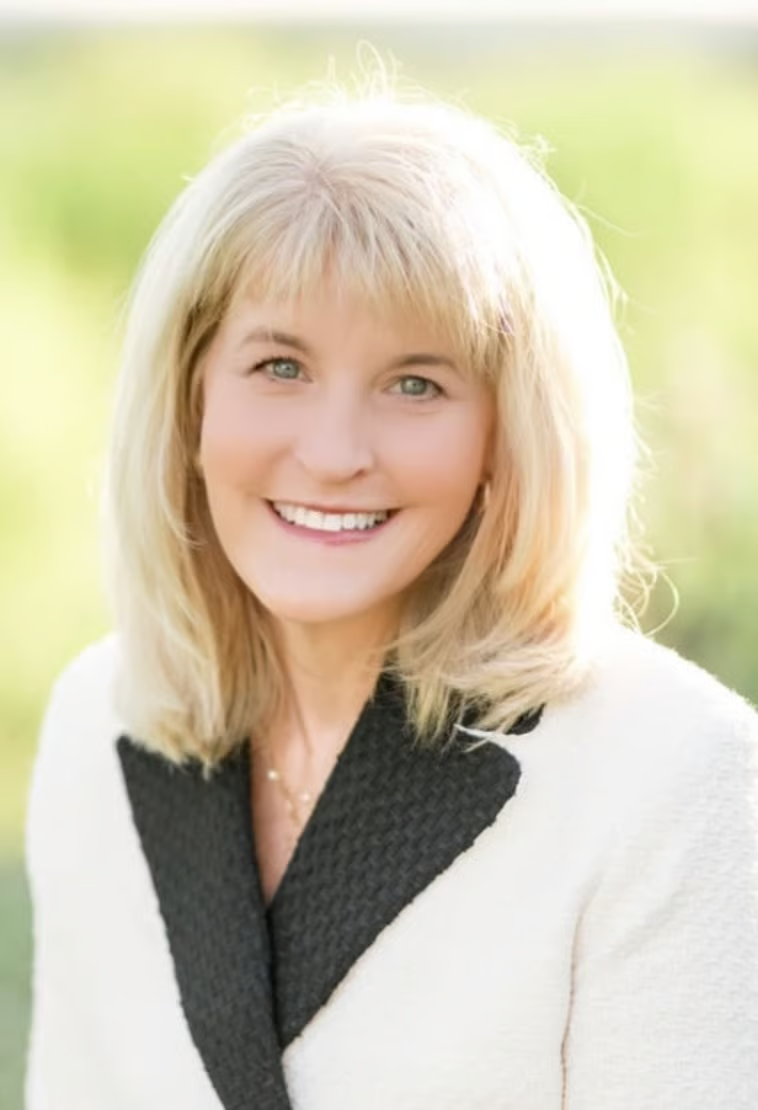
Stacey Stevens, President and CEO of SimBioSys. Credit: SimBioSys.
SimBioSys announced TumorSight Risk on October 15. The software combines breast MRI-derived information with pathology and clinical factors to estimate recurrence risk. FDA’s clearance record, K260023, dates the decision to September 25.
The details:
A defined role and population. It generates five- and ten-year recurrence estimates for adult women with HR-positive, HER2-negative, N0 or N1, Stage I-IIIA breast cancer, to support physician assessment alongside other clinicopathological information.
Retrospective validation. The company describes a blinded, prospectively designed retrospective study of 2,129 patients. This is prognostic validation, not a prospective trial showing that treatment decisions based on the tool improve outcomes.
Keep the product claims separate. Recurrence assessment is not a demonstrated reduction in repeat surgery or proof of chemotherapy benefit. TumorSight Viz has a separate visualization role.
The Signal: The opportunity is useful prognostic information from data already collected in care. The next test is whether it helps clinicians and patients make better-informed decisions in the intended workflow.

Caption: Scarlet has raised $50 million in Series B funding to expand its medical AI certification business. Credit: Scarlet.
Scarlet announced a $50 million Series B on October 12, led by Headline. The company is investing in the assessment infrastructure around medical AI, with plans to grow its expert team and expand its US and Asia-Pacific presence.
The details:
Investors are backing review capacity. Notion Capital joined existing investors Kindred Capital, Creandum, Atomico and Entrepreneurs First in the round.
Technology supports the review process. Headline describes software handling documentation tasks while qualified reviewers make regulatory judgments. Scarlet’s claims of shorter timelines are company claims, not a universal turnaround guarantee.
Authority remains specific to the scheme. FDA lists Scarlet NB B.V. as a recognized third-party reviewer for eligible devices within its scope. That is different from FDA clearance, and it does not create a worldwide approval route.
The Signal: A faster, clearer assessment process could make launch planning more predictable. The meaningful test is whether greater capacity preserves expert scrutiny and traceable decisions as the business grows.

Confido Health co-founders Chetan Reddy, left, and Vichar Shroff. Credit: Confido Health.
Confido’s October 14 announcement disclosed a $12.5 million Series A extension led by Z47, bringing total Series A funding to $22.5 million. The company is expanding CareOS to carry out administrative work across multi-site healthcare groups.
The details:
The work extends beyond a conversation. The platform connects tasks such as scheduling, insurance verification, patient outreach and payment follow-up across existing systems.
Integration is part of the proposition. Confido reports connections to more than 50 systems of record. A practice still needs to verify the workflows and actions supported in its own configuration.
Operational claims need local measurement. Automation rates, productivity and customer financial gains in the announcement are vendor-reported. Administrative coordination does not establish autonomous diagnosis or prescribing authority.
The Signal: The useful measure is a correctly resolved request, including any human handoff. An answered call is only the starting point if staff still have to repair the record or complete the next task.
QUICK HITS
Clinical decision impact: Whether TumorSight Risk adds useful information at the point of decision, with its performance and limitations assessed in the relevant patient population.
Assessment capacity: How Scarlet expands expert review and reports delivery across different submission types, without treating a speed claim as evidence of lower regulatory requirements.
Verified task completion: How practices evaluate CareOS’s system updates, exception handling and repeat contacts after deployment.
The deals:
Scarlet · $50M Series B · October 12. Led by Headline, supporting certification capacity and geographic expansion.
Confido · $12.5M Series A extension · disclosed October 14. Led by Z47, taking the cumulative Series A to $22.5M. Count the extension once.
Abby Care · $82M Series C · October 15. Led by Transformation Capital, with participation including CVS Health Ventures. The care-at-home platform plans to expand its clinically supported family-caregiving model, technology and health-plan partnerships.
The pattern: These announcements cover $144.5M in round and extension amounts. They back three different capabilities: device assessment, administrative execution and care delivery at home. The financings do not establish comparable valuations or a common clinical ROI.
DTD2026 · October 26-27 · Novotel München Messe, Munich. Digital Transformation & Data in Medical Technologies. Dr. Dereck Mush’s programme-listed talk is “Why Good MedTech Fails: The GTM Gap Between Regulatory Approval and Adoption.”
HLTH USA 2026 · November 15-18 · The Venetian Expo, Las Vegas. Healthcare innovation, investment and industry partnerships. Official details
RSNA 2026 · November 29-December 3 · Chicago. Radiology education, science and technology; technical exhibits end December 2.
TumorSight Risk · SimBioSys: Cleared recurrence-prognosis software for its labeled breast cancer population; combines MRI-derived and clinicopathological inputs.
TumorSight Viz · SimBioSys: A distinct breast MRI visualization product. Its visualization role should remain separate from TumorSight Risk’s prognostic claim.
CareOS · Confido: AI-enabled administrative workflows across practice systems. Assess action accuracy, escalation and supported integrations in the intended deployment.
SimBioSys: Precision oncology company led by President and CEO Stacey Stevens; announced TumorSight Risk’s clearance on October 15.
Scarlet: Medical AI certification business co-founded by James Dewar and Jamie Cox; $50M Series B. It assesses devices rather than supplying a patient-facing clinical tool.
Confido Health: Healthcare operations company co-founded by Chetan Reddy and Vichar Shroff; expanding CareOS with $22.5M in cumulative Series A financing.
Which hurdle most often slows useful healthcare AI in your organization? |
Healthcare is becoming less dependent on snapshots.
Apple is exploring signals the wrist has never captured before. Inspiren is turning senior living into a continuously monitored environment. H1 is building a more real-time picture of who is actually in-network and accessible.
Different markets, same direction: more of healthcare is shifting toward infrastructure that observes, updates, and responds continuously.
The opportunity is obvious. So is the risk.
How much continuous monitoring actually improves care, and at what point does it simply create more data, more surveillance, and more systems for already stretched teams to manage?
How did we do today? |
See you tomorrow,
Dr. Dereck Mush, MD, MBA
The HealthTech Signal is independently funded. Sponsorships help us invest in better reporting, research, and a stronger newsletter for our readers. Want to reach HealthTech founders & executives while supporting the Signal? Get in touch.
Was this email forwarded to you? Sign up here.
Until tomorrow,
The HealthTech Signal

Dr. Dereck Mush, MD, MBA
Dr. Dereck Mush, MD, MBAKeep exploring