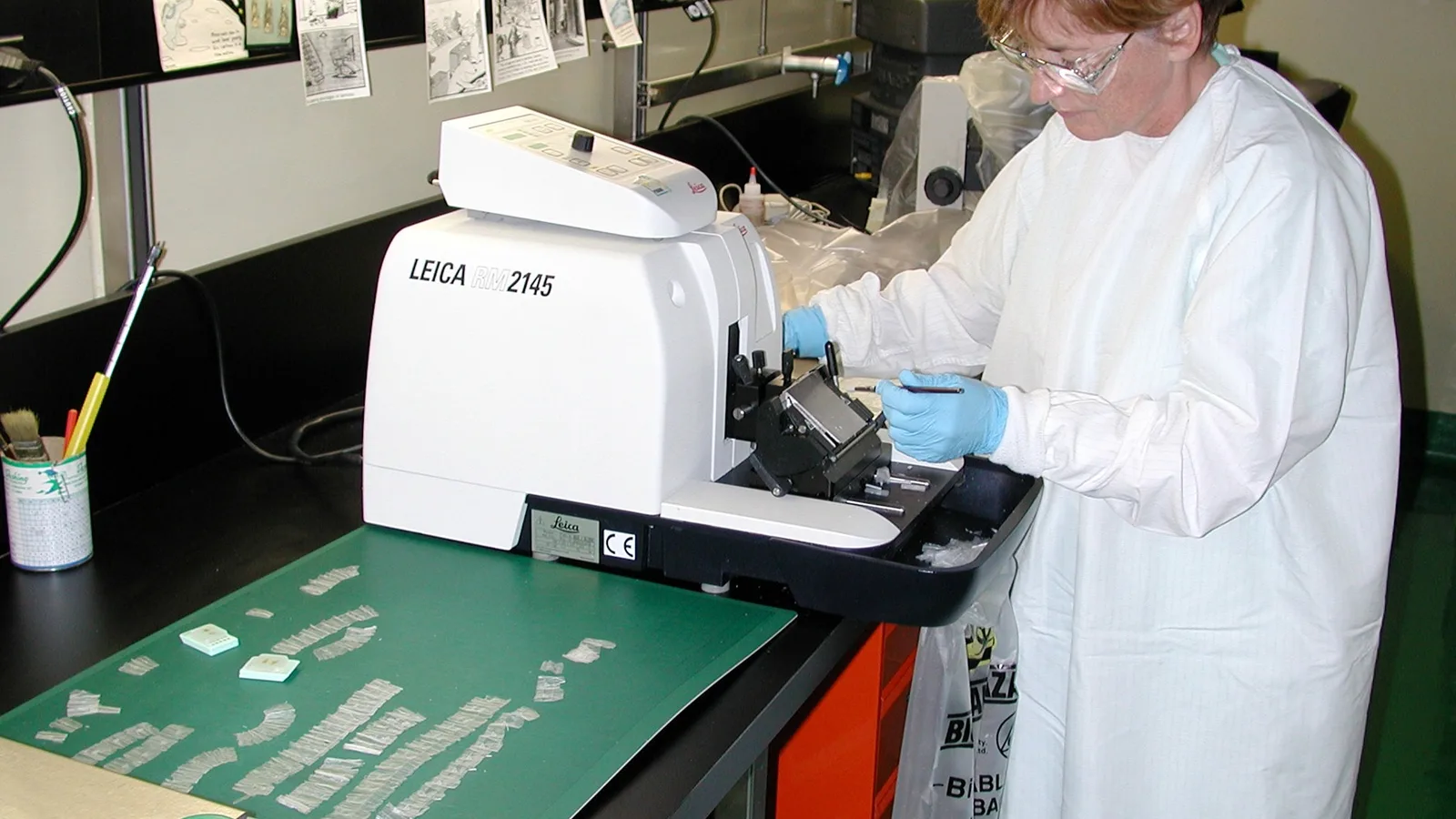
In 2017, the Philips IntelliSite Pathology Solution became the first whole slide digital pathology scanner FDA-approved for primary diagnosis in the United States. Almost a decade later, adoption of digital pathology across U.S. hospital systems remains, in the words of one industry publication, "spotty," despite steady regulatory progress on the AI layer built on top of it. 360Dx
The regulatory picture has genuinely advanced. Paige received FDA 510(k) clearance for its FullFocus digital pathology image viewer for use with two additional scanner models, the Leica Aperio GT 450 DX and Hamamatsu NanoZoomer S360MD, expanding the ecosystem of hardware compatible with cleared AI tools. Paige A May 2026 regulatory analysis found that De Novo authorization is the dominant pathway for novel AI whole slide imaging algorithms, three of four devices reviewed went through De Novo rather than 510(k), reflecting how limited the predicate landscape still is for this category. Innolitics
Why is the regulatory pathway different for pathology AI than for radiology AI?
Radiology AI has well over a thousand cleared devices, most through 510(k), because decades of prior clearances created a dense predicate landscape to compare against. Pathology AI has almost no such landscape. Very few AI-enabled whole slide imaging products existed before this decade, so most novel algorithms have nothing to be "substantially equivalent" to, forcing manufacturers into the De Novo pathway, which creates a new device classification and generally requires more scrutiny than a standard 510(k). That is a structural reason pathology AI has moved more slowly to market than radiology AI, independent of clinical merit.
Most cleared pathology AI tools are also positioned as adjunct devices, meaning they assist a pathologist's read rather than replace it, similar to computer-aided detection in mammography. That framing matters for liability and workflow: the pathologist remains the diagnosing clinician of record, and the AI output is a second read, not a primary one.
What is actually slowing hospital adoption?
Capital cost of scanning infrastructure. A single high-throughput whole slide scanner costs well into six figures, and a hospital lab needs enough scanning capacity and storage to digitize its full slide volume, not a subset, for the workflow benefits to materialize. Partial digitization creates two parallel workflows, which is often worse than staying on glass entirely.
Storage and IT burden. A single whole slide image file can run into the gigabytes. A hospital pathology department digitizing its full annual slide volume is generating a data storage burden that dwarfs most other departments, and many hospital IT infrastructures were not built with that scale in mind.
Pathologist workflow disruption. Reading on a monitor instead of a microscope is a genuine behavior change for clinicians who trained for years on glass, and validation studies for a lab's own switch to primary digital diagnosis are required by CAP and CLIA before go-live, adding time and cost beyond the scanner purchase itself.
What is different in 2026 versus five years ago
| Factor | 2020 | 2026 |
|---|---|---|
| FDA-cleared whole slide scanners | Handful | Multiple, cross-compatible with viewers |
| Cleared AI pathology algorithms | Very few | Growing, mostly De Novo, mostly adjunct |
| Reimbursement for digital primary diagnosis | Limited, inconsistent | Still limited, improving slowly |
| Champion-driven hospital adoption model | Not yet common | Increasingly the stated adoption strategy |
Industry coverage now frames adoption as depending on individual hospital systems and internal "tech champions" willing to drive the change locally, rather than a broad market pull, which is itself a signal that reimbursement and workflow economics have not yet made the switch self-evidently worthwhile at the institutional level. 360Dx
The takeaway
Digital pathology AI has cleared its biggest regulatory hurdle: there are now real, cleared, adjunct algorithms running on compatible cleared hardware. What has not cleared is the capital and workflow hurdle inside hospitals, which is a slower, more expensive problem than getting a 510(k) letter. Any vendor selling into this category needs a capital-equipment sales motion and a change-management program, not just a clinical validation study.
Key Signals
Most novel AI whole slide imaging algorithms clear through De Novo, not 510(k), due to a thin predicate landscape. Nearly a decade after the first cleared scanner, U.S. hospital adoption of digital pathology is still described as spotty. Scanner capital cost and slide-level storage burden are bigger adoption barriers than the AI algorithms themselves. Cleared pathology AI tools are positioned as adjunct reads, not primary diagnosis replacements.