Consumer health AI has mostly followed the software playbook: ship a chatbot, watch what happens, fix it later. On November 15, Apple did something different. Instead of launching a health assistant, it launched a study. The 

In this deep dive we look at why a company that rarely announces products before they are ready chose a research study, what
Most consumer health AI measures accuracy. Apple is measuring trust, comprehension and behavior, which is a sign of what it thinks can go wrong.
In This Deep Dive
- Why this matters now
- What actually happened
- The obvious read versus the deeper signal
- Category map and taxonomy
- Evidence Ladder
- HIPAA, personal health apps and the rules around consumer health AI
- Capital flows and bottom-up economics
- The HealthTech Investor's Signal
- Counter-thesis
- Forward Intelligence
- The Bottom Line for Consumer Health Builders, Health Systems and Clinical AI Companies
Why this matters now
People are already asking AI about their health in large numbers, through general chatbots that were not designed as medical tools. Robert M. Wachter, MD, chair of medicine at UCSF, put the problem plainly in Apple's release: patients and clinicians are both turning to AI, but the tools they use are being built and tested in separate worlds. That split produces visits where the patient arrives with one chatbot's answer and the doctor works from different sources.
Apple holds an unusual position in that landscape. HealthKit already aggregates data from the iPhone, the Apple Watch and connected apps, and many users have connected health records. Apple also has a track record of large virtual studies run through the iPhone. A study at this scale lets it generate evidence about how people use health AI before it decides what to build, and that evidence could shape industry norms, as the release says it intends.
Timing adds weight. The study launched on the main stage at HLTH, the same week 
Certainty: (A) the Wachter quote, study design and HLTH launch are from Apple's release and Healthcare Dive; (B) the HIPAA rule details are from HHS and the AHA; (C) the positioning analysis is ours.
What actually happened
- The launch. Apple announced the study on November 15 at HLTH in Las Vegas, where Sumbul Desai, MD, presented it on the main stage, according to Healthcare Dive. It runs through a dedicated study app, separate from the Health and Research apps, according to Fierce Healthcare.
- The technology. Answers are generated with
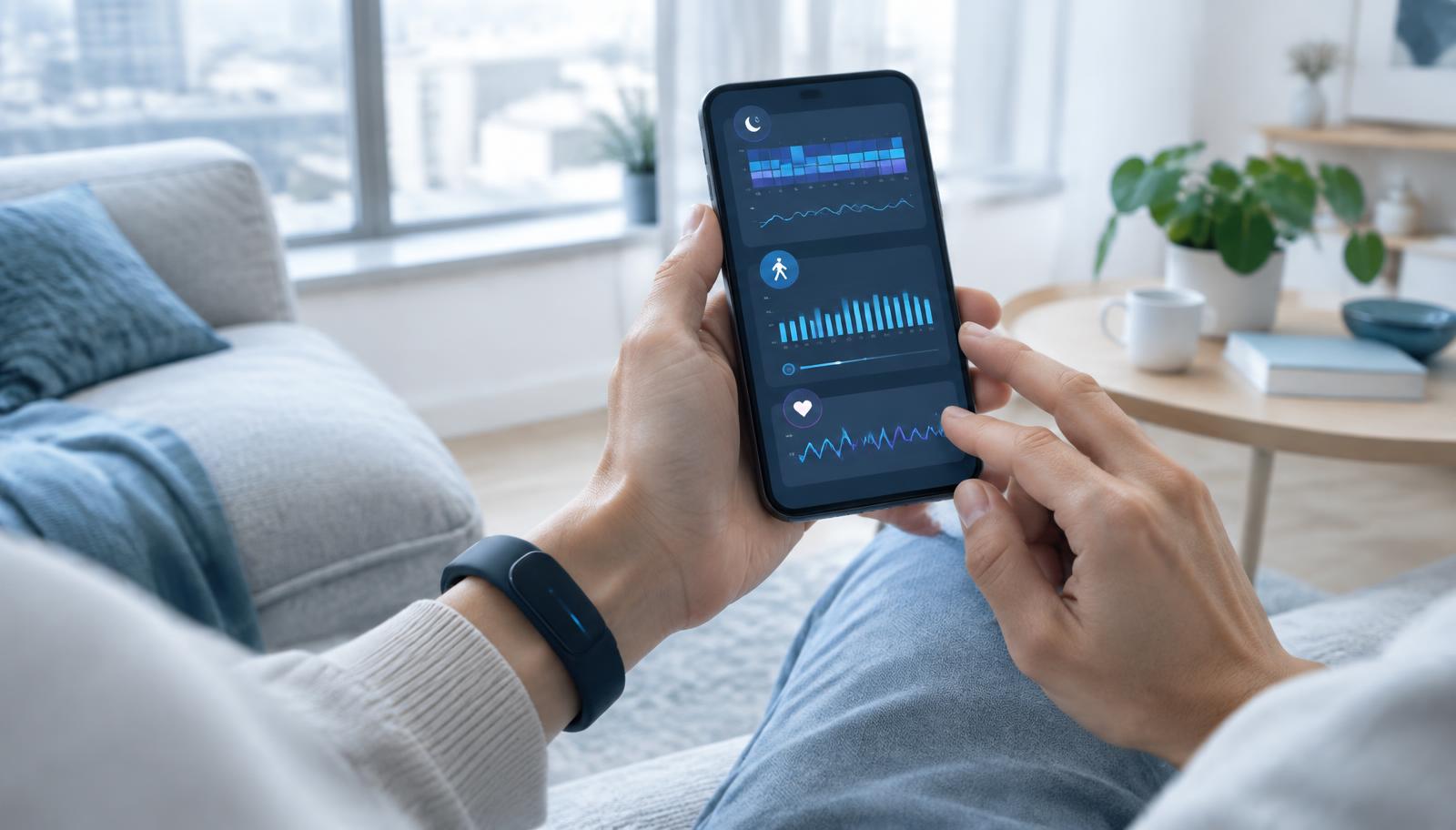
- The data. Participants can choose to share HealthKit data types, including resting heart rate, activity, sleep and lab results, to test how personal data affects relevance and understanding. They can rate answers and complete surveys.
- The guardrails. The app flags certain concerning questions and suggests following up with a provider. It is not meant to diagnose or treat. Study data will not be used to train AI models. TechCrunch reported
- The scale. Up to 200,000 eligible adults age 21 and older in the U.S., with an Apple Intelligence-enabled iPhone 15 Pro or later on iOS 26 or later; participation for up to 12 months per Fierce Healthcare.
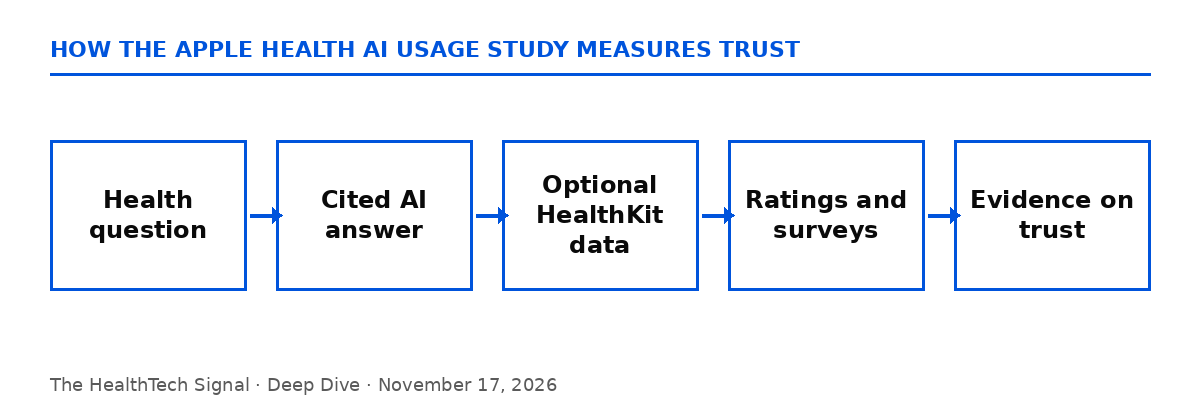
Certainty: (A) design details are from Apple's release; (B) the 24-hour deletion, 12-month duration and separate app are from TechCrunch and Fierce Healthcare reporting.
The obvious read versus the deeper signal
The obvious read: Apple is late to health chatbots and is using a study to catch up quietly.
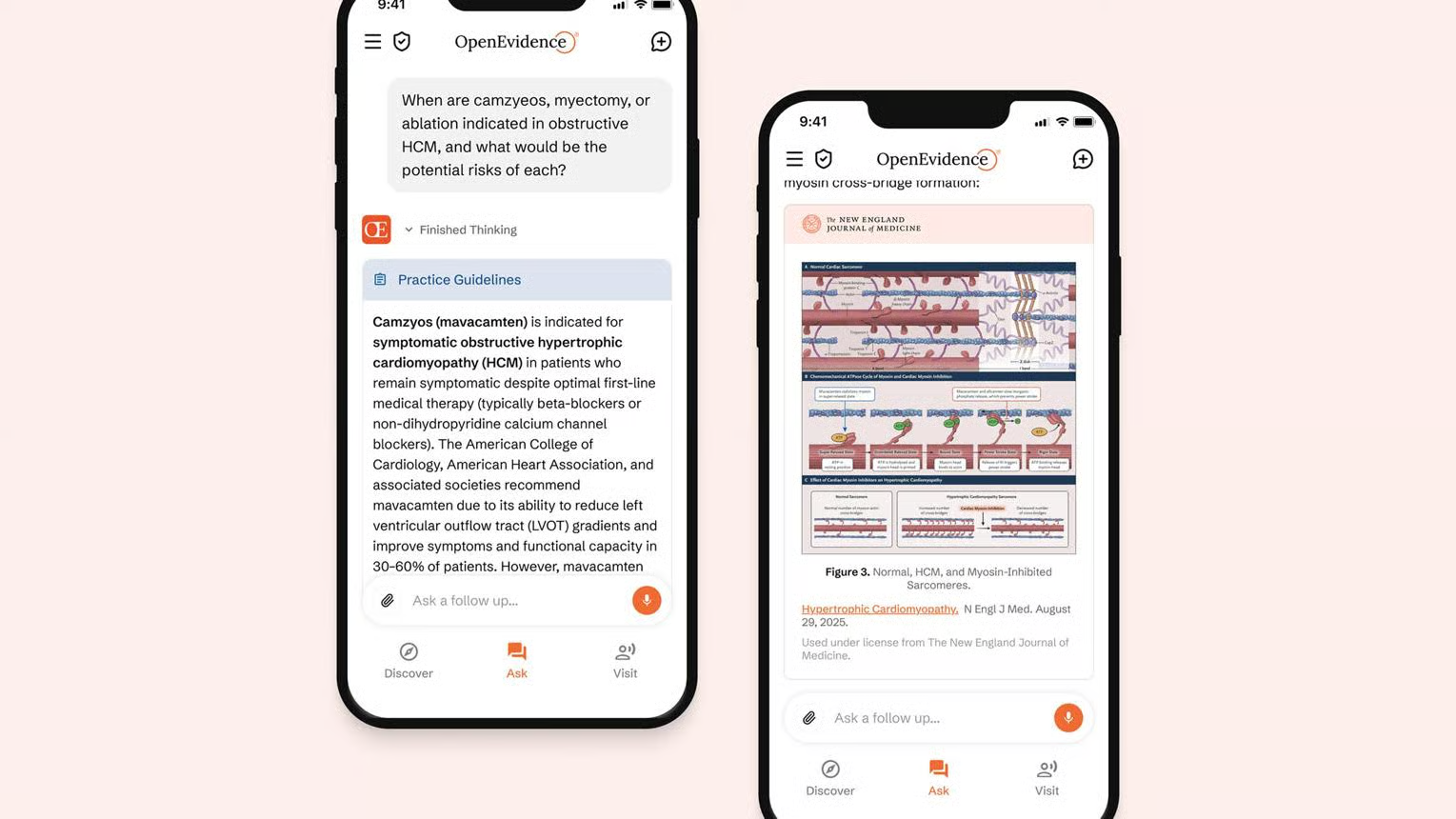
The deeper signal: The deeper signal is that Apple is treating trust as the product. By measuring comprehension and behavior change with consented, opt-in data at scale, it can build evidence that competitors shipping first do not have. The partner choice matters just as much: putting a clinician-grade evidence engine in front of patients is a bet that the winning consumer health AI will be the one doctors already recognize, so that patient and clinician read from the same sources.
Certainty: (C) this is our interpretation.
Historical playbook
Apple has used the iPhone as a research instrument for years. Its ResearchKit framework launched in 2015, and the Apple Heart Study with Stanford Medicine enrolled more than 400,000 participants to test irregular rhythm notifications on the Apple Watch, with results published in The New England Journal of Medicine in 2019. That pattern, study first and then build features with evidence behind them, is what the company is repeating here with AI.
Consumer health information has its own history of trust problems. Symptom checkers and health search have long been criticized for alarming or misleading users, and early studies of general chatbots on medical questions found answers that were sometimes accurate and sometimes confidently wrong. The industry's lesson has been that accuracy alone does not make a tool safe; how people interpret and act on the answer matters as much.