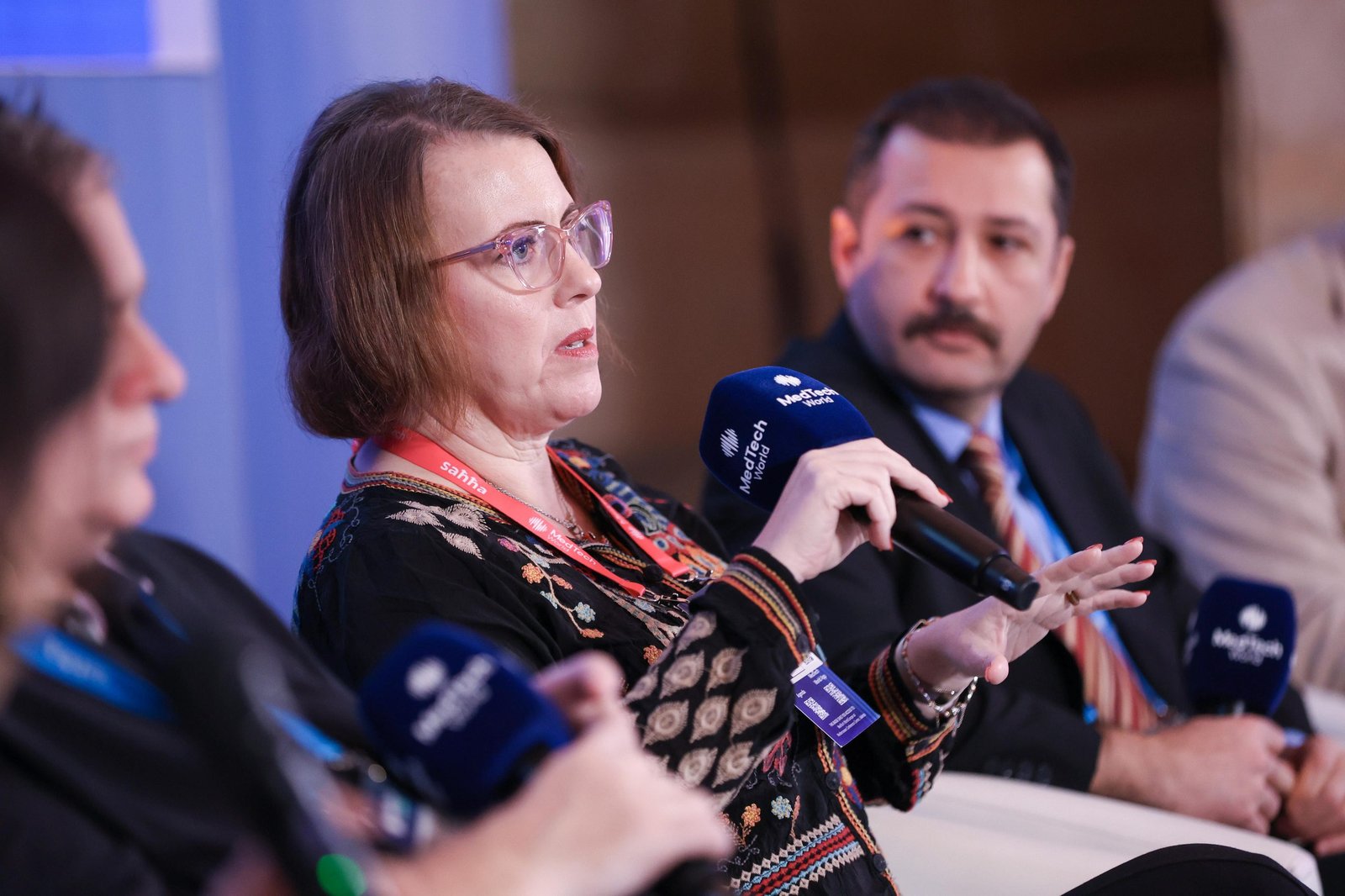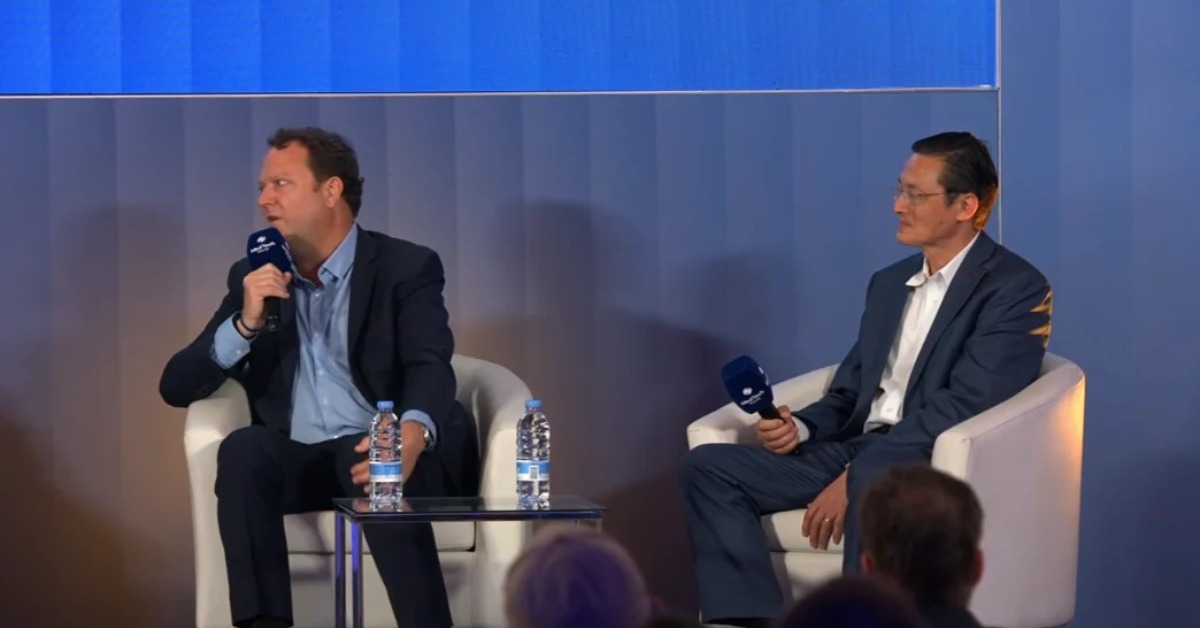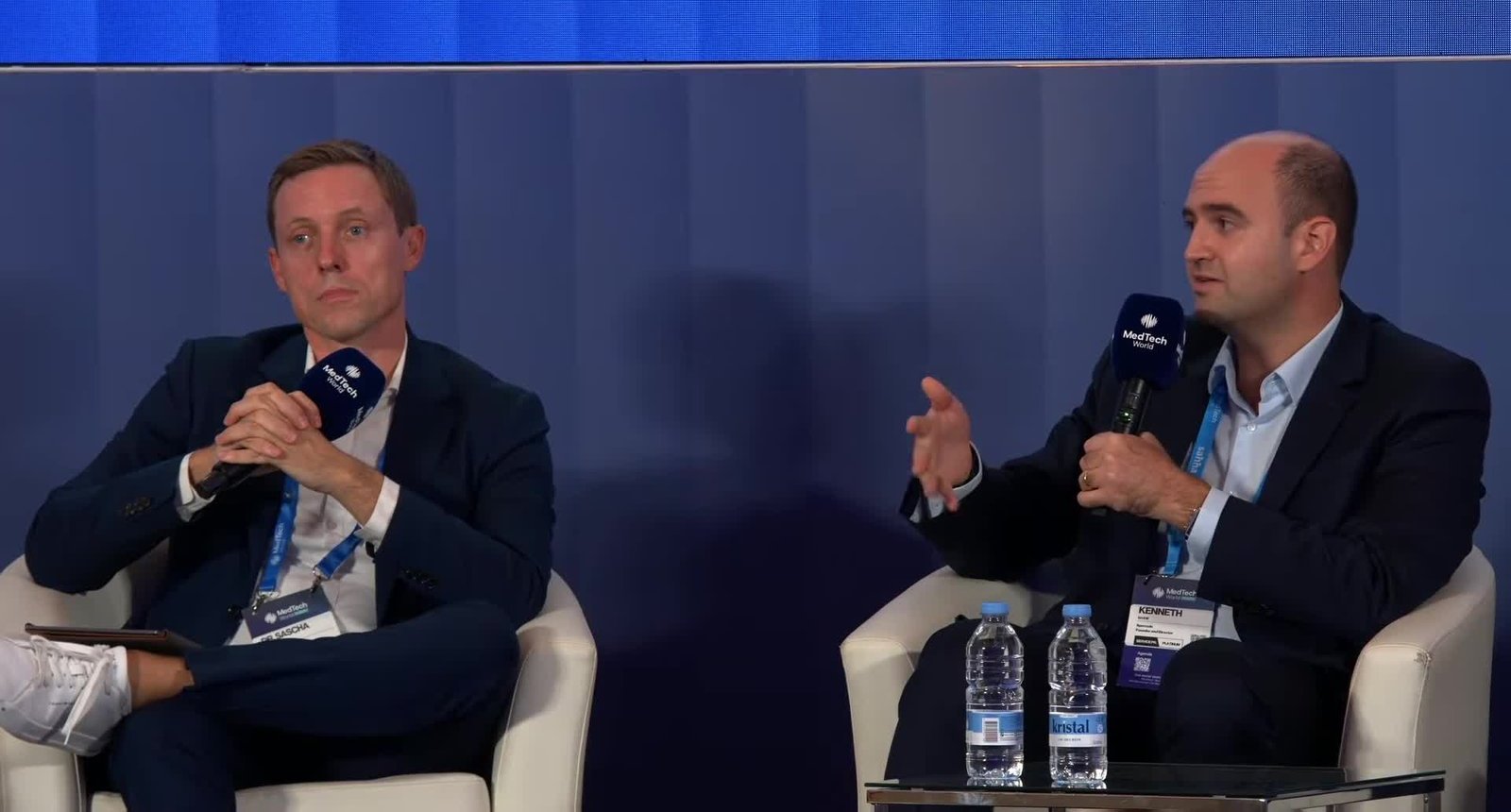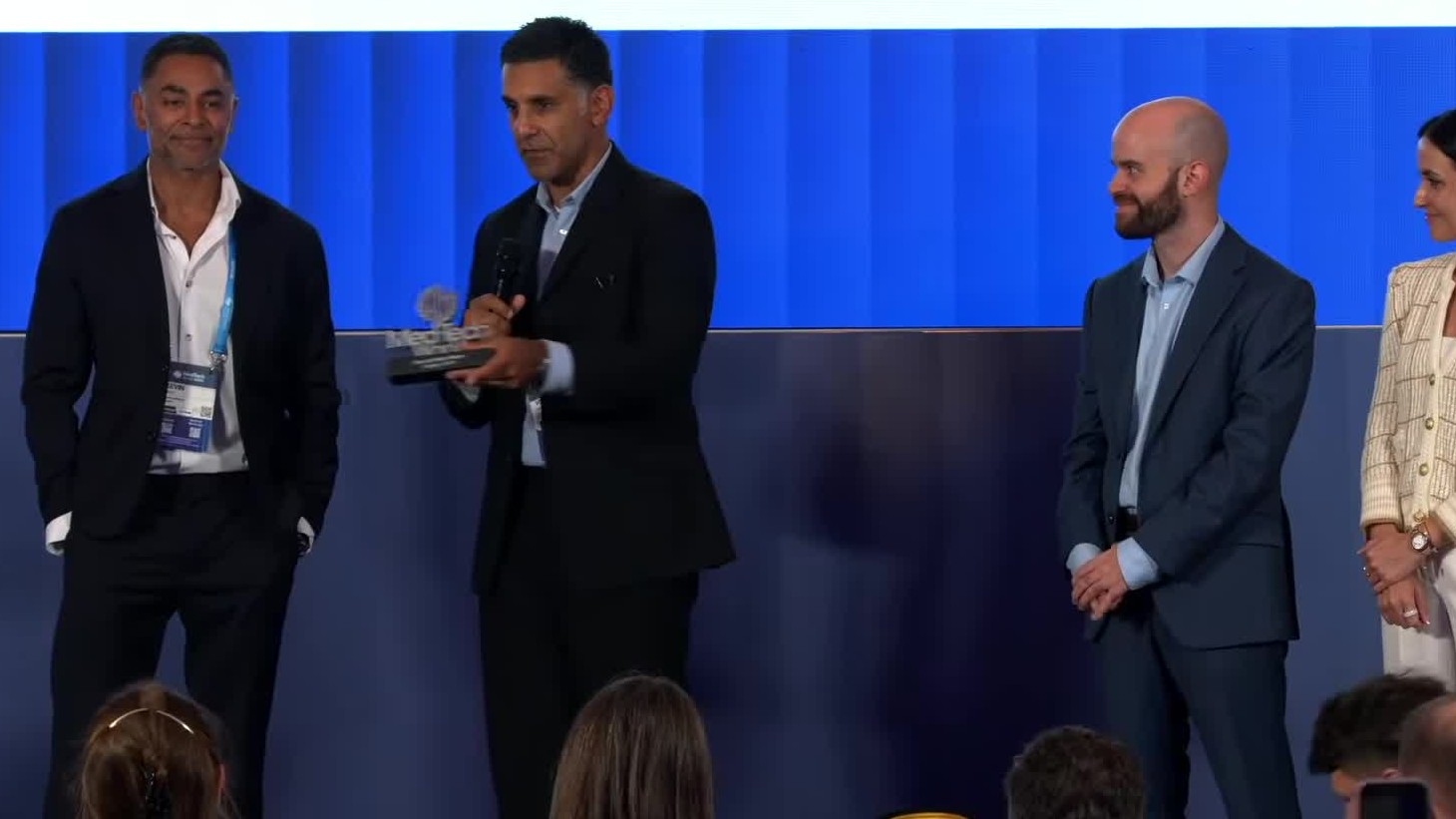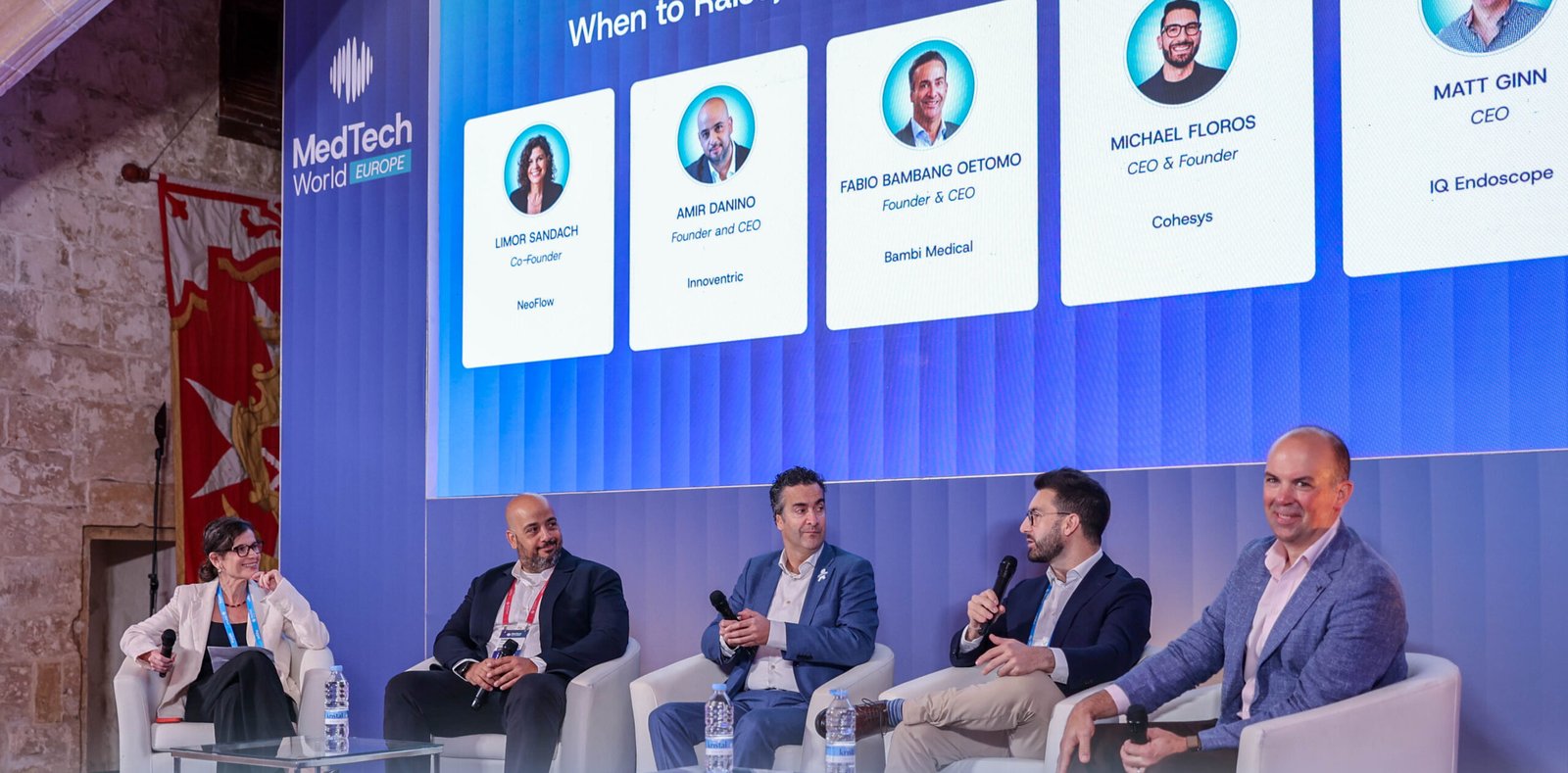
Every MedTech founder tells two versions of the story, said moderator Limor Sandach as she opened "The Founder's Dilemma: When to Raise, When to Partner and When to Sell" on the first morning of MedTech World Europe 2026 in Valletta. One is the pitch deck. The other is about the pivots, the fundraising and the partnerships that nearly broke the company. Sandach has seen both sides. She spent 25 years as an investor and operator, took AV Medical through its acquisition by Medtronic, co-founded NeoFlow and now leads strategic partnerships at Galilee Medical Center in Israel.
Her panel was four CEOs from four countries, each at a different stage.
| Speaker | Company | What it makes |
|---|---|---|
| Amir Danino | Innoventric | Transcatheter tricuspid valve therapy, at pivotal stage |
| Fabio Bambang Oetomo | Bambi Medical | The Bambi Belt, wireless vital sign monitoring for newborns |
| Michael Floros | Cohesys | BoneTape, bone fixation that is ultrasonically welded to bone |
| Matt Ginn | IQ Endoscopes | Single-use endoscopes for gastrointestinal procedures |
| Limor Sandach (moderator) | NeoFlow; Galilee Medical Center | Co-founder; strategic partnerships |
Small rounds, big milestones
Danino described Innoventric's path, which has raised around $50M from US and European venture funds and strategic partners, in patient numbers. The company insisted on a $4M seed round, which he called unusual, and turned down term sheets that offered less. That money took it to first in human and 8 treated patients, enough to get through what he called the death valley of "having data but not enough data" and raise the A round. The B round brought in several strategic investors. One of the big four in structural heart had watched from the sidelines for a long time before moving in, and once it did, another strategic followed.
Structural heart is a space where strategics are watching from day one, but Danino said it is wrong to think of your company as being built to be sold. A founder has no way of influencing when a corporate will buy. "The only thing which I can do is build a strong capable company that is worth something," he said.
Family offices and a niche market
Bambang Oetomo calls Bambi Medical a baby tech company. Its Bambi Belt is skin-friendly wireless monitoring that helps physicians care for premature babies, and the company is part of the MedTech community around Eindhoven in the Netherlands.
Bambi went the family office route, and two of his points stood out. Family offices and high net worth individuals decide fast, he said, because they do not need layers of approvals. The catch is that it only works if you already have relationships with those families. And he was honest about market size. Neonatal monitoring is a niche, with consumables worth around $600M, so Bambi's plan A is to become part of a strategic, not to build a standalone giant. He agreed with Danino that there is no such thing as too early with strategics, with one warning. In most corporates people spend between a year and a half and three years in a role, so the person you have been building trust with may soon be gone.
The Pentagon as a partner
Floros has raised about $16M for Cohesys through convertible instruments, SAFEs and priced rounds, a lot of it non-dilutive. BoneTape replaces plates and screws for some fractures: it is ultrasonically welded to the surface of the bone. Cohesys works with several strategic partners, and he said each wanted something different. One is far from traditional: the US Department of Defense.
His method was to raise on milestones. "You get some really good data, you reach a milestone, you raise some money, rinse and repeat." Raising is far easier, he said, when there is a significant milestone to point to.
You are the David
Ginn runs IQ Endoscopes, a Welsh company making single-use endoscopes for GI procedures. It started in 2020, in the middle of COVID, as a concept more than a prototype, and has raised about £20M. It had just completed its first six months of commercial sales in the UK. Early funding came from the Development Bank of Wales, which also introduced an angel group, and the company relocated to Wales. He then chose Creo Medical, an endoscopy company in Chepstow, as a strategic partner. Creo has not invested, but it contributes discussion, support and resources every month.
He was also the panel's most cautious voice on corporates. "Just be really careful because having a strategic on board is not a slam dunk for success," he said. Founders should not idolise a big partner or bring one in on its terms. Prioritise your business, your needs and your exit, he said, and have confidence that "you are the David in the Goliath relationship".His numbers for founders planning an exit were sobering. In his view a UK device company needs around £20M in sales to be taken seriously by acquirers, and on average it takes more than £50M of investment to reach an exit.
What the four agreed on
| Question | The panel's answer |
|---|---|
| When to talk to strategics | Early, before you need them |
| What a strategic gives you | Insight, validation and sometimes capital, on its own terms |
| Biggest risk with a corporate partner | Your champion moves on, or you end up on the partner's terms |
| How long it takes | Longer, harder and more expensive than you expect |
| Build to sell? | No. Build a strong company and keep options open |
Where the money is going
The four CEOs were describing a market that has become more selective. EY's Pulse of the MedTech Industry analysis counted about $8.7 billion of medtech venture funding in the 12 months to June 2025, up 20%, but spread across only 237 rounds, 47% fewer than the year before. Bigger cheques are going to fewer companies, usually those with clinical data or revenue. Mergers and acquisitions totalled $38.8 billion across 61 deals, and EY counted only eight medtech IPOs, so for most device startups an acquisition is still the realistic exit.
| Path | When it fits | What it costs the founder |
|---|---|---|
| Raise | A clear milestone, such as first-in-human data or clearance, that lifts the valuation | Dilution, and a board that expects the next milestone on time |
| Partner | A strategic or distributor that brings channel access or manufacturing | Less control over pricing and geography, sometimes a right of first refusal |
| Sell | A buyer that can scale the product faster than you can | The upside of building the company yourself |
For health systems and payers, the path matters as well. A product owned by a large strategic comes with the supply contracts and service guarantees that hospital procurement teams prefer, while a startup has to prove it will still be around in five years.
For clinicians, the choice matters more than it seems. A device that is sold early can reach patients faster through a large company's sales force, or it can sit in a portfolio behind a competing product. The evidence a startup generates before that point, especially peer-reviewed clinical data, is what keeps the product alive whichever path the founder chooses.
My take
The detail I would underline is Bambang Oetomo's point about turnover inside strategics. I have seen clinical partnerships stall for the same reason. A hospital sponsor leaves, and the project loses its memory. The CEOs on this stage had all learned to treat a corporate relationship like a clinical programme: documented, shared across several people and reviewed regularly. Ginn's numbers deserve attention too. £50M to an exit is a long road for a single-use device, and founders should plan their evidence and their cash for that road from day one.