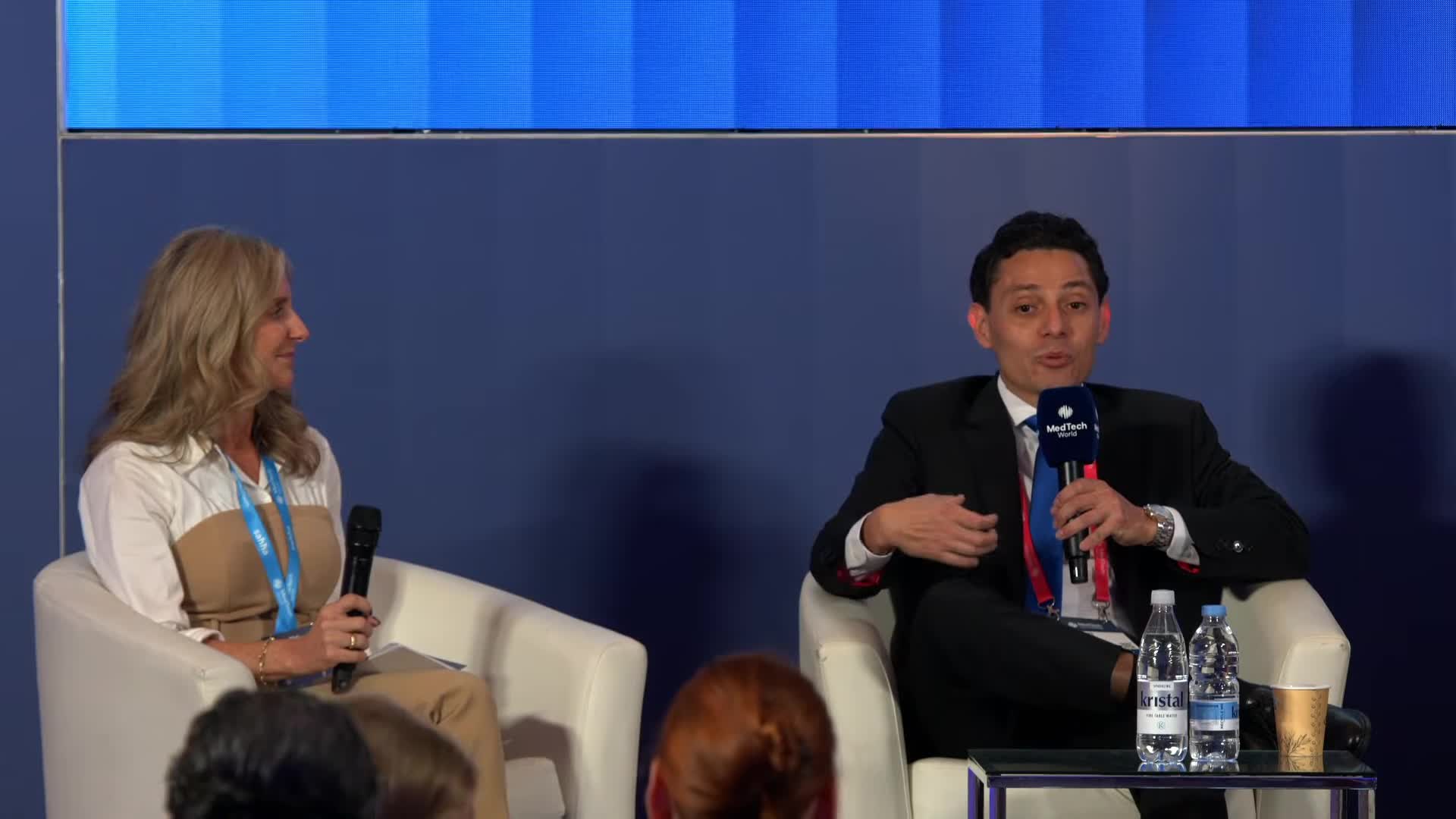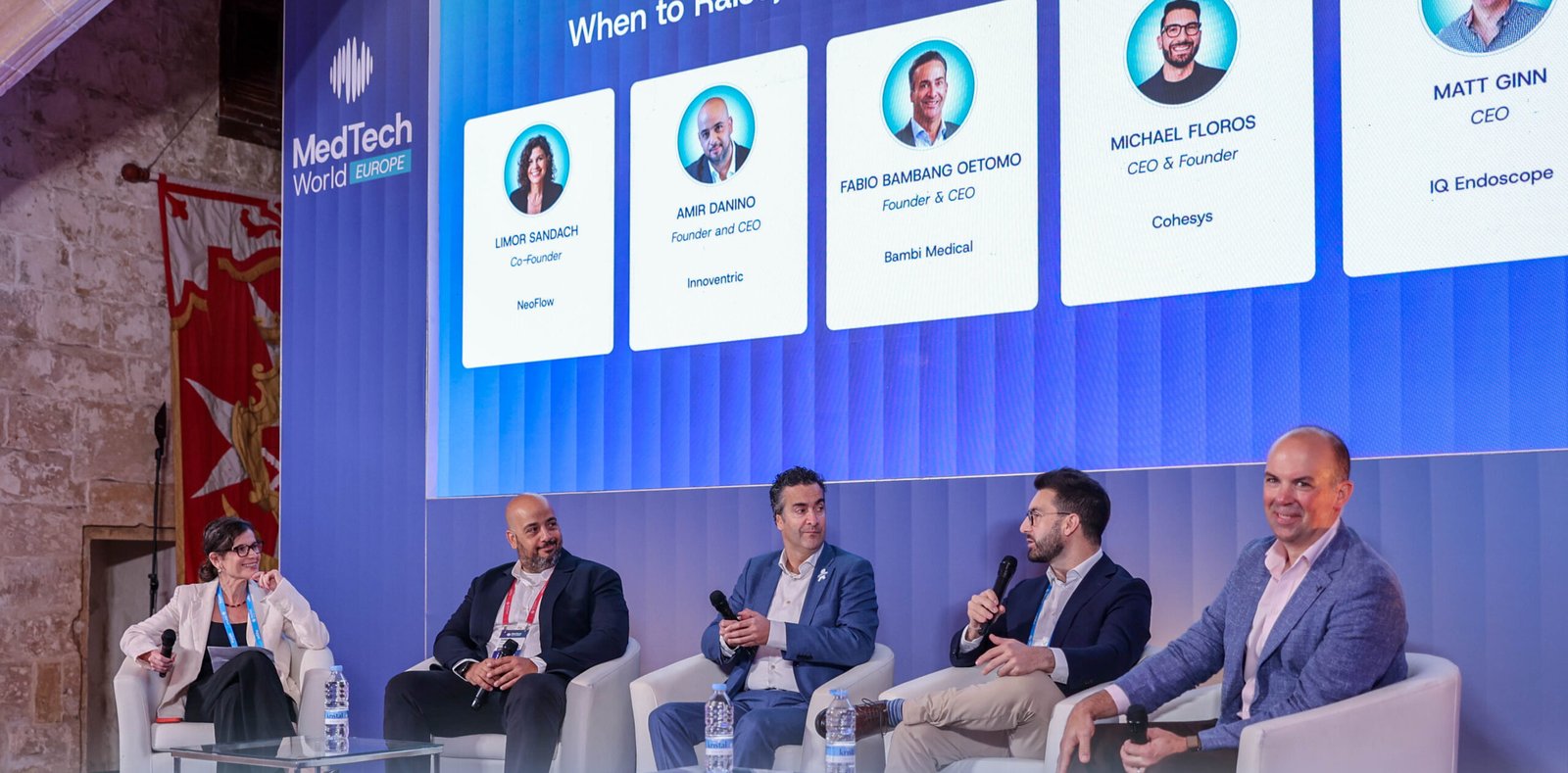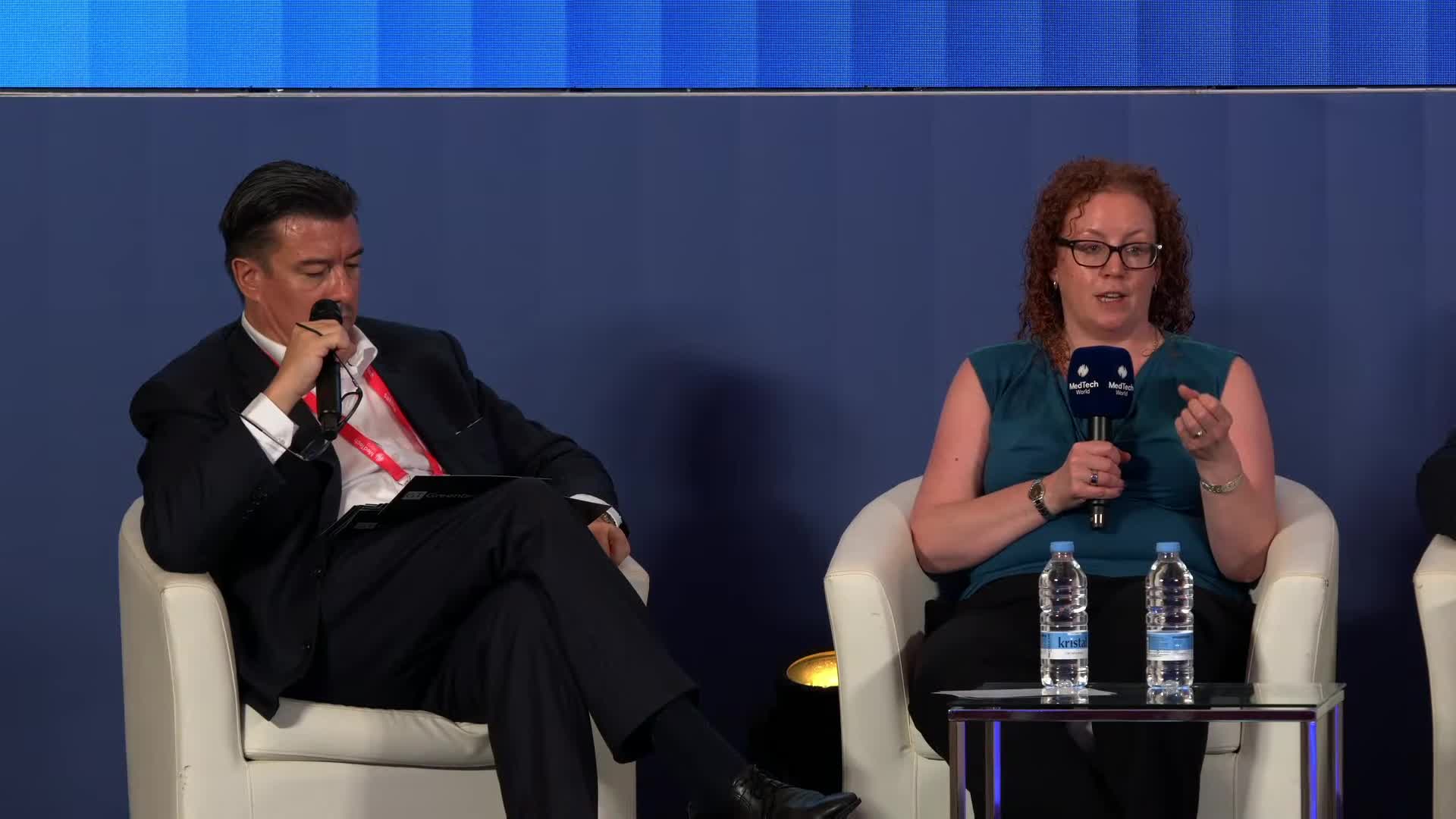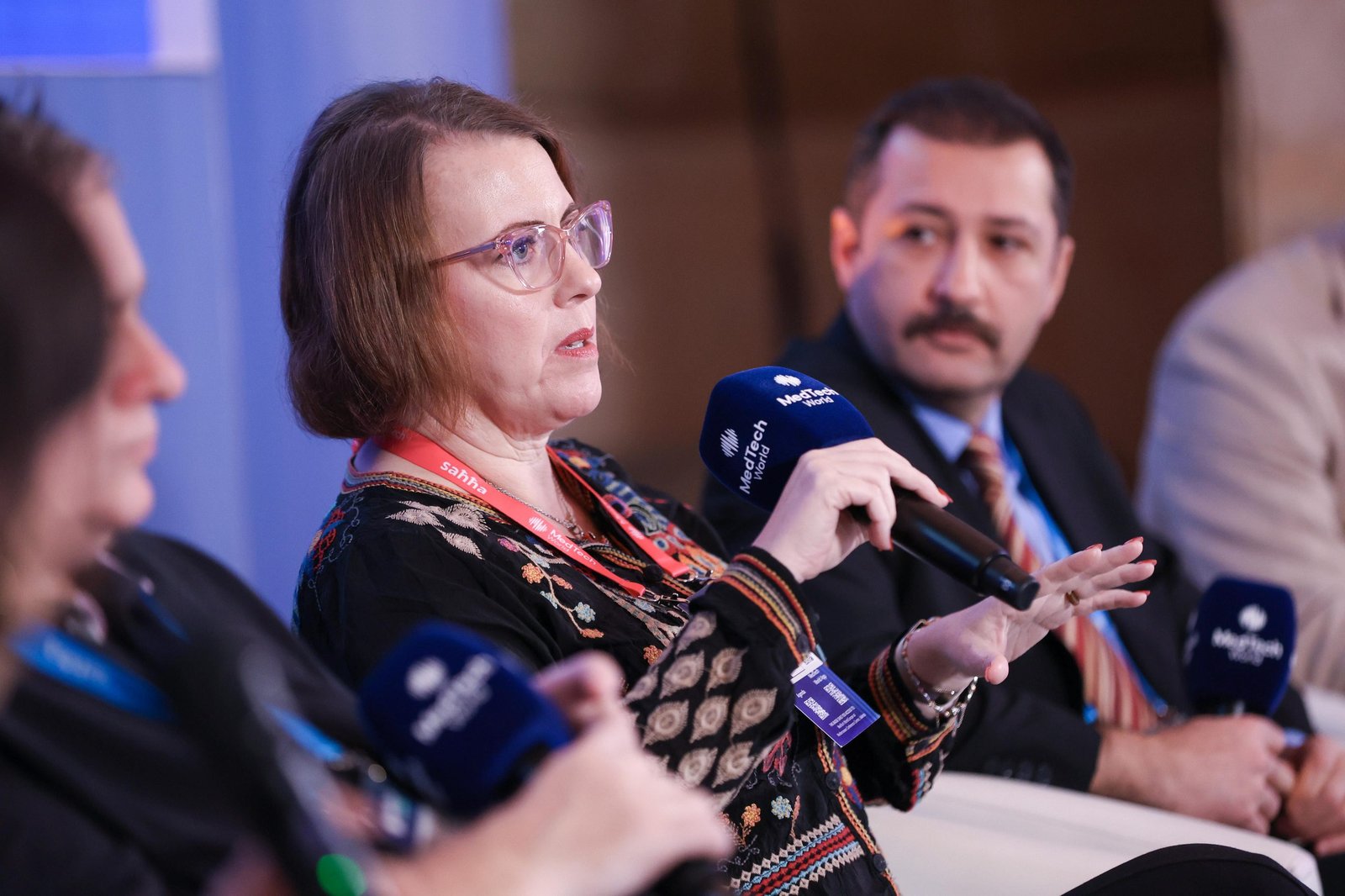
"Built for Global Scale: Quality, Regulation and Operational Infrastructure" was billed as a session on turning compliance into a competitive advantage across the US, Europe and Asia. On the second day of MedTech World Europe 2026 in Valletta it became something more useful: a frank discussion of how startups waste money on quality systems, consultants and hires.
The moderator was Dr. Allison Post, CEO and co-founder of Rhythio Medical, a biomedical engineer and inventor who described herself as someone living the problem.
| Speaker | Role |
|---|---|
| Edwin Lindsay | Co-founder, RAF Solutions; more than 20 years in quality, regulatory and clinical, with over 100 startups |
| Michelle Lott | Principal and Founder, LeanRAQA; former adviser on an FDA good manufacturing practice advisory committee |
| S. Oğuz Savaş | Head of Notified Body, Malta Conformity Assessment |
| Tim Lawrie | Founder and CEO, ProjectUS Consulting, a MedTech talent business |
| Dr. Allison Post (moderator) | CEO and co-founder, Rhythio Medical |
Answers, not options
Post started with the team. How can a founder without regulatory expertise judge an adviser? Lindsay said do your homework on their product experience, and check whether you can work with them. His main test was whether a consultant gives "answers, not options". Most founders are not regulatory experts, so an adviser who lists possibilities and leaves the decision to them adds little. Post agreed: "Please just tell me what to do."
Lott added a second test: look at the consultant's average client. She has inherited startups whose previous consultants only ever served large companies. One company of three people had been given a quality system with around 50 procedures and hundreds of forms. Nobody could keep up with it. She also warned founders against "cheaping out" by doing the work themselves and asking a consultant to approve it. Fixing that work often takes longer than doing it properly from the start.
Her tool for spending wisely was a submission risk matrix, a log of known issues, the decision taken on each and when it will be revisited, for example after the next funding round.
Design controls first, the full QMS later
What has to be in place early? Lott's answer was design controls, and they start earlier than most founders think, with documented user needs. Who is the device for, and why? All of it belongs in a trace matrix. Teams that skip this arrive at submission and have to "get in the time machine" to rebuild the design history.
Lindsay went further. A consultant who says you need a full QMS right away "is just wanting to make money", he said. Startups do not need every procedure or ISO 13485 certification on day one. They need a design history file built alongside the design, with risk management, and the rest of the system can grow toward launch. Lott described the same phasing: design controls with risk and usability first, supplier controls when manufacturers are chosen, and post-market surveillance procedures while the submission is under review. Most startups outsource manufacturing, so the quality system should be scaled to the activities the company actually performs, with supplier controls for the rest.
There is no single global product
Lott's favourite story came from an enteral feeding tube project. She asked the sales team where they wanted to sell. "Globally," they said. "Selling globally is a thing," she told the room, "but thinking I'm going to build one product and sell it all over the world as is, is not." Electrical safety standards and voltages differ by country, so testing has to be planned with later markets in mind.
Lindsay gave the costly version. A client did animal testing on an implant, gained the CE mark, then decided to go to the US. It had not collected histology, which could not be recreated six or twelve months later, so the animal study had to be repeated. He now starts every engagement by asking which countries a company wants to sell in and whether the clinical workflow is the same in each.
The notified body's view
Savaş said regulation and design have to be integrated from the start, and startups should talk to a notified body early to build their own regulatory knowledge. A company cannot outsource all of its understanding, he said, comparing it with an AI agent that needs context to give good answers.
He named two problems his notified body sees. The first is "shopping around": a manufacturer that knows what needs to be done looking for a notified body that will not see it. Handling a risk before market, he said, is much safer than handling it afterwards. The second is decisions based on fear. In recent years many companies chose the US first because MDR was said to be difficult. MDR is not what it was five years ago, he said, but the perception has outlived the reality.
The empire builder
Lawrie, who recruits for MedTech companies on both sides of the Atlantic, said founders get "wowed by the logo" on a CV. Someone from a blue chip may be used to support and infrastructure a startup cannot offer. His interview question is to ask candidates which scrappy projects they personally led that did not cost millions, and what they would do in your business that would have the biggest impact for little money.
Lindsay described the hiring mistake he has cleaned up most often. A startup hires a VP of quality and regulatory with years of experience who has not written a document in eight years. "Next minute they want to build an empire," he said: a QA engineer, a document controller and more. Fractional support, in his view, lets a startup buy the hands-on work it needs until commercialisation.
Lawrie said most companies bring these functions in-house as they approach revenue. His advice was to hand over gradually, with consultants training the internal hire, not cut them off overnight. Lott's warning from experience: companies that drop their consultants as soon as a junior hire learns the lingo often call back months later to fix the mess. And whatever is outsourced, she said, a company "can't outsource executive responsibility".
What to build and when
| Stage | What the panel recommended |
|---|---|
| Idea | Document user needs; start the trace matrix |
| Design and development | Design controls with risk and usability; a submission risk log |
| Choosing suppliers | Supplier controls and quality agreements that say who owns the documentation |
| Under review | Post-market surveillance and vigilance procedures |
| First market | Plan testing for later markets so it is not repeated |
| Approaching revenue | Bring functions in-house gradually, with consultant handover |
Deadlines that shape the money
For many founders, the European deadlines set the timetable. Under Regulation (EU) 2023/607, legacy devices certified under the old directives can stay on the EU market until 31 December 2027 for class III and most implantable class IIb devices, and until 31 December 2028 for other class IIb, class IIa and some class I devices, but only if the manufacturer applied to an MDR notified body by 26 May 2024 and signed an agreement by 26 September 2024. New companies get no such grace period. They go straight into the notified body queue.
| Market | Main route | What it means for a startup |
|---|---|---|
| European Union | CE marking under the MDR through a notified body | Notified body capacity and clinical evidence drive the timeline |
| United States | 510(k), De Novo or PMA with the FDA | The predicate and the clinical data decide the route and the cost |
| Several markets at once | MDSAP single audit for the quality system | One audit accepted by Australia, Brazil, Canada, Japan and the US |
For hospitals and payers, the stakes are supply and evidence. A device certified in several markets can build real-world data faster, and one that is withdrawn from Europe leaves hospitals looking for a replacement.
For investors, these timelines are runway. A company that plans its quality system for more than one market from the start needs less money to enter the second one. For clinicians, the stakes are access. When manufacturers decide a product is not worth certifying under the MDR, the device can disappear from European hospitals, which is why the panel's message about designing for more than one market matters beyond the startup itself.
My take
The repeated animal study is the story I would tell any founder who thinks international planning can wait. The cost of redoing a study is not only money. In an implant programme it is a year or more of time and animals used for a question that could have been answered once. The documentation point is just as practical. Lindsay described design firms that would only hand over locked PDFs, and Lott said the quality agreement must spell out who owns the design documents. Founders who pay for that work should check in writing that they own it, in a format they can edit.