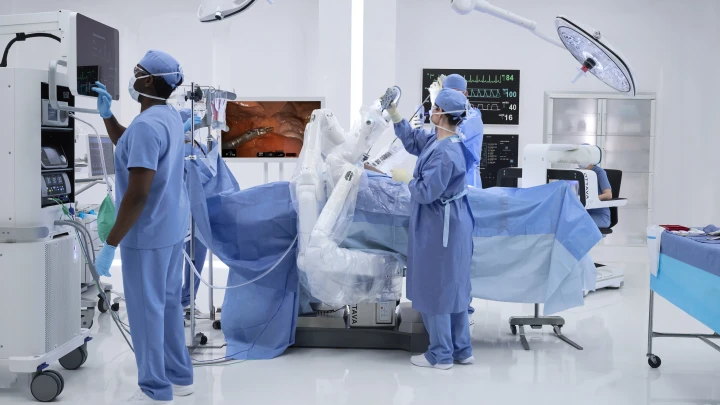
A surgical robot is only one part of a surgical service. A hospital also needs trained teams, appropriate cases, reliable instruments, technical support and an operating model that makes the equipment useful. That is why the most consequential feature of Stryker's alliance with CMR Surgical may be the connection between product engineering and commercial execution.
The agreement gives CMR a route to Stryker's US customer relationships while preserving a distinct development organization. For hospital executives, the opportunity is an additional platform to evaluate against their clinical needs. For investors, it is an example of how a sophisticated medical device can gain a distribution partner without an immediate acquisition.
In This Deep Dive
- The investment, agency agreement and acquisition option
- The distinction between device generations and US indications
- The operating model around modular robotics
- The evidence ladder and complete cost of adoption
- The HealthTech Investor's Signal and four developments to watch
What actually happened
Stryker and CMR announced their strategic alliance on October 12, 2026. Stryker agreed to an approximately $400 million, or £300 million, preferred-equity investment, subject to customary closing conditions. That is an investment in CMR, not a disclosed fee for distribution rights or evidence that a buyout has already occurred.
The commercial-agency agreement makes Stryker the exclusive US sales agent for the Versius portfolio. A separate provision gives Stryker an exclusive option to acquire 100% of CMR's outstanding equity in the future, subject to the agreement's terms. The public announcement does not establish a completed acquisition or disclose a procedure-volume threshold that automatically triggers one.
CMR continues to lead product development and commercialization outside the United States. The announcement identifies Massimiliano Colella as CMR's CEO. CMR separately reported more than 45,000 patients treated worldwide in March 2026. That is a dated, company-reported patient count, not a measure of US utilization or the number of installations.
Why modular architecture matters
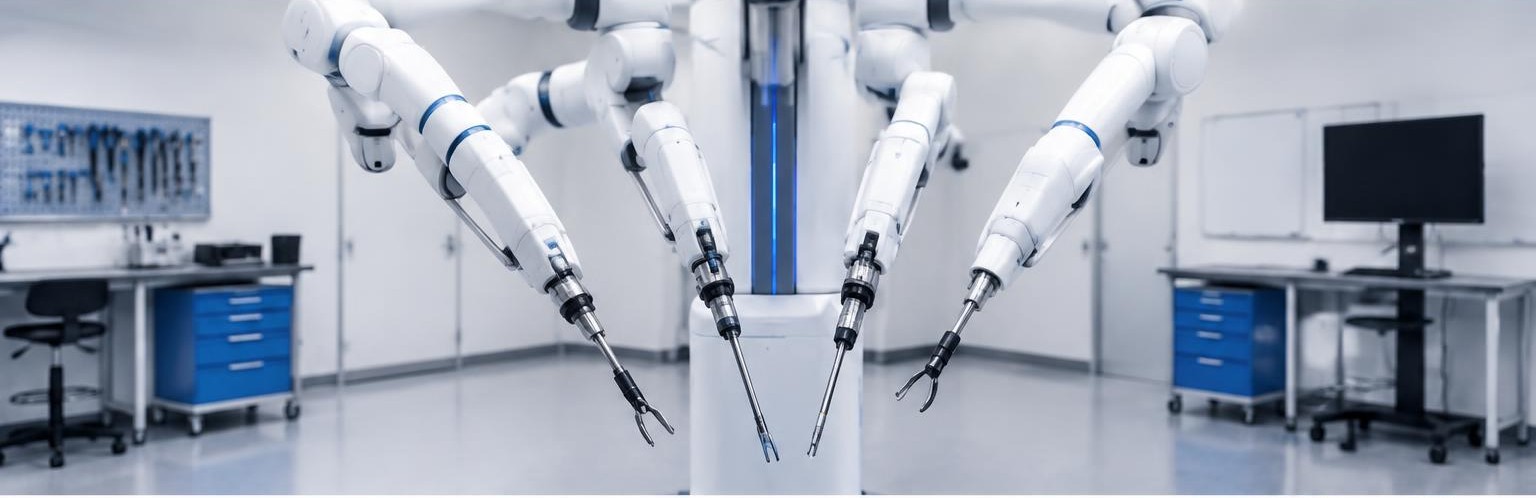
Versius is built around independently positionable units rather than a single fixed arrangement around the patient. CMR describes a compact modular design and an open console. This offers hospitals a different configuration to evaluate for their rooms and clinical workflows.
Architecture is not an outcome. A movable unit can create flexibility, but room layout, port placement, instrument availability and team familiarity still determine how a particular case proceeds. The alliance announcement does not establish universal reductions in turnaround time, capital cost or expenditure per procedure.
US authorization: Follow the exact system and procedure
The first-generation Versius system received FDA De Novo authorization on October 11, 2024, for cholecystectomy in eligible adults aged 22 and older. Versius Plus subsequently received 510(k) clearance on December 16, 2025, under K252111. Those are different regulatory decisions for different device generations.
CMR's October 23, 2026 announcement describes an expansion to specified benign gynecologic procedures for eligible adults aged 22 and older: total hysterectomy, oophorectomy, salpingectomy, adnexectomy, ovarian cystectomy and lysis of adhesions. Its announcement also identifies instrument-specific labeling considerations. Procurement and training should use the applicable instructions for the exact system, instruments and procedure.
International experience provides context, but it does not enlarge a US indication. Likewise, a soft-tissue platform should not be treated as interchangeable with an orthopedic robotic system simply because both involve robotic assistance.