The Great Unbundling: What the CVS Split Says About Vertical Integration in Healthcare

Dr. Dereck Mush, MD, MBAThe Daily SignalNovember 5, 2026
PLUS: GE HealthCare Leads Up to $160M Series B in AI-Guided Cath Lab Startup Laza Medical

Good morning, HealthTech insiders. The company that tried to be pharmacy, insurer, PBM and clinic under one roof now says it wants to be two. Eight years after closing its Aetna deal, CVS Health announced on Wednesday plans to separate into a healthcare solutions company built around Aetna and Caremark, and a standalone CVS Pharmacy with about 9,000 stores, MinuteClinic and its Health100 technology business.
The same day, GE HealthCare led an up to $160M Series B in Laza Medical, a Shifamed company building AI-powered robotic imaging for the cardiac cath lab. And Medscape and Google both published how they grade clinical AI, one with benchmark scores and one with a full evaluation framework. Today's Signal is about structure: how companies are organized, how procedures are guided, and how AI gets judged.
In today's Signal:
CVS Health plans to separate into two public companies, with Aetna, Caremark, CVS Specialty, Oak Street and Signify on one side and CVS Pharmacy on the other, expected in the first half of 2028.
Laza Medical raises up to $160M in a Series B led by GE HealthCare to build AI-powered robotic imaging for the cath lab.
Medscape reports 88.6% on NOHARM v2 and details its ClinVal framework, while Google publishes its own health AI evaluation framework.
Plus: Amwell beats its revenue guidance, WHOOP heads to Ulta Beauty, and UCB brings Cradle's AI protein design into antibody discovery.
ChatGPT is insanely powerful.
But most people waste 90% of its potential by using it like Google.
These 1,000+ proven ChatGPT prompts fix that and help you work 10X faster.
Sign up for Superhuman AI and get:
1,000+ ready-to-use prompts to solve problems in minutes instead of hours, tested & used by 1M+ professionals
Superhuman AI newsletter (3 min daily) so you keep learning new AI tools & tutorials to stay ahead in your career, the prompts are just the beginning
LATEST DEVELOPMENTS

CVS Health announces plans to split into two public companies. Image: CVS Health.
On November 4, CVS Health said it intends to separate into two independent, publicly traded companies after a comprehensive strategic review by its board. The separation is expected to be completed in the first half of 2028 and is intended to be tax-free to CVS Health and its shareholders.
The details:
The healthcare solutions company, called CVS Health in the interim, keeps Aetna, CVS Caremark, CVS Specialty, Oak Street Health and Signify Health. CVS Pharmacy takes about 9,000 pharmacies, mail pharmacy, MinuteClinic (including virtual care) and the Health100 technology services business, which CVS says will deliver AI-native products.
David Joyner, currently Chairman and CEO of CVS Health, will lead the healthcare solutions company as Chairman and CEO. Prem Shah, currently Group President of CVS Health, will be CEO of CVS Pharmacy. CVS says more leadership roles and board members will be announced later.
Completion depends on final board approval, an effective Form 10 registration with the SEC and confirmation of tax-free treatment. CVS expects both companies to hold solid investment grade ratings and pay a dividend, and it raised full-year 2026 guidance in a separate Q3 release the same day.
The Signal: CVS spent nearly two decades assembling one of the most vertically integrated companies in American healthcare. Now it is betting that a pharmacy free to partner with every payer and PBM is worth more than a pharmacy tied to one. For HealthTech vendors, that creates a new independent buyer in retail health, and it puts pressure on the integrated model that UnitedHealth and Cigna still run.

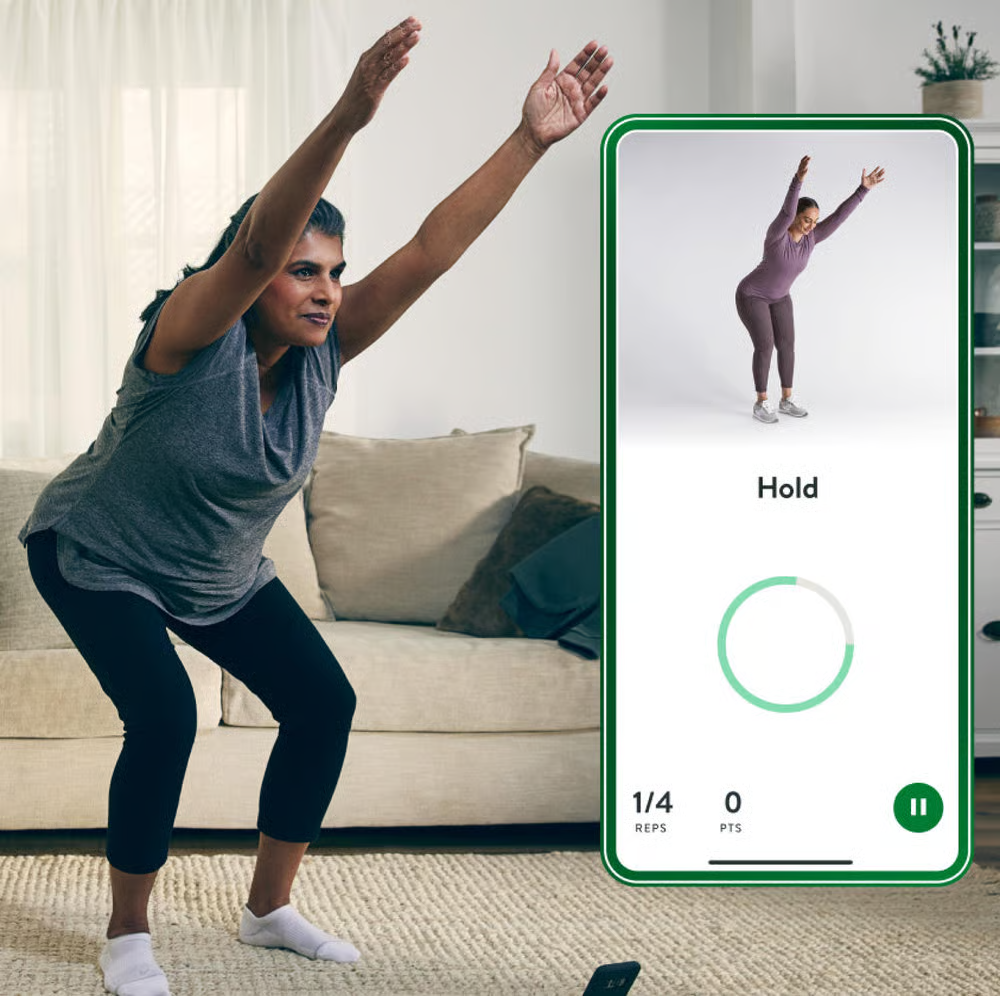
AI-powered cardiac imaging platform backed by GE HealthCare. Image: Laza Medical.
On November 4, Laza Medical, a Shifamed portfolio company in Los Gatos, California, announced it has raised up to $160M in Series B structured financing led by GE HealthCare. Laza is building AI-powered robotic imaging for cardiac interventions.
The details:
Returning investors Unorthodox Ventures, PA MedTech and AMED joined the round. The money supports intelligent imaging designed to simplify procedures, increase autonomy, ease staffing constraints and lay the groundwork for future robotic interventions.
"Integrating imaging modalities so they work seamlessly together has the potential to redefine the cath lab," said Jyoti Gera, CEO of Cardiovascular and Interventional Solutions, Advanced Imaging Solutions at GE HealthCare, who said GE is expanding its collaboration with Laza.
The Laza Medical System is under development and is not approved for commercial sale in any geography. The company says a first-in-human clinical study took place last year.
The Signal: The cath lab bottleneck is less about devices than about expert imaging hands. A strategic imaging leader writing the lead check into a pre-approval robotic imaging company tells us GE sees AI-guided imaging as the path into procedural robotics. The proof points to watch are a regulatory submission and clinical data, neither of which is public yet.

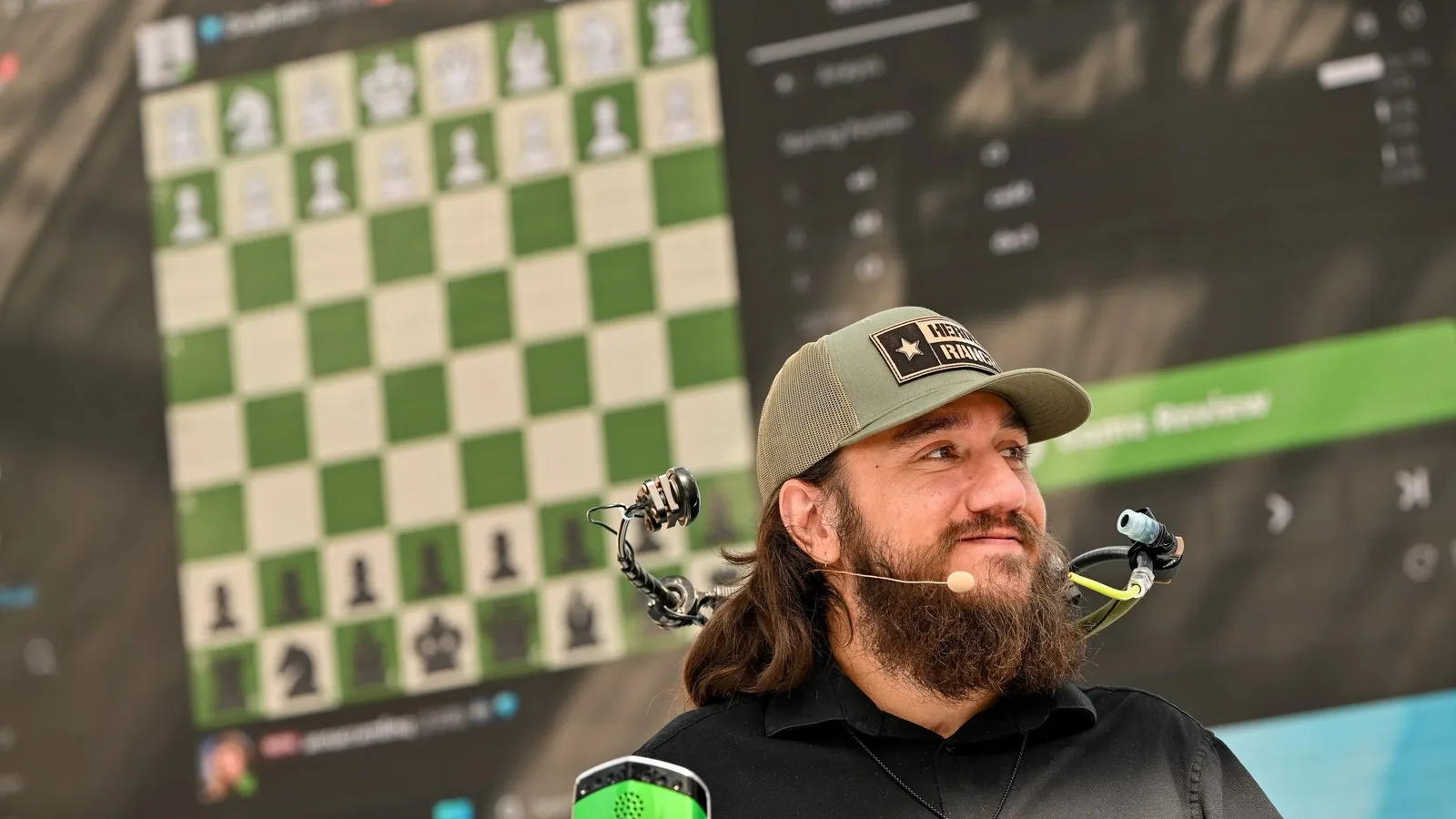
New frameworks for evaluating clinical AI safety and performance. Image: Medscape.
On November 4, Medscape said its Clarus model scored 88.6% on the NOHARM v2 safety benchmark and 85.0% on HealthBench Professional, and described its ClinVal evaluation framework for the first time. The same day, Google published a whitepaper laying out how it evaluates health AI.
The details:
Medscape says its NOHARM v2 score beats the three highest published competitor scores (86.2%, 84.5% and 80.0%), and its HealthBench Professional score beats the top three published competitor results (69.2%, 65.6% and 65.3%). These are company-reported results.
ClinVal scores AI answers against 16 criteria spanning safety, accuracy, relevance and traceability, combining automated AI assessment with clinician review. Joshua Conrad, PharmD, Group VP Editorial & Content Strategy at Medscape, said clinical AI quality "requires an ongoing commitment to improvement."
Google's framework, written with health experts Dr. Elizabeth McGlynn and Dr. Dana Gelb Safran, assesses accuracy, safety and usefulness through closed-question benchmarks, autoraters and expert human review, according to Dr Sarah Montgomery-Taylor, Clinical Evaluation Lead, Google for Health.
The Signal: Clinical AI buyers have been asking vendors to show their homework. Now the homework is arriving, but every vendor grades on a different rubric. Public benchmarks give a common yardstick, internal frameworks show process, and neither tells a CMIO how a tool performs on their own patients. Expect evaluation to become a procurement line item.
QUICK HITS
CVS's Form 10 and leadership slate: The separation needs an effective Form 10 registration with the SEC, and CVS says more leadership roles and board members will come later. We're watching for the Form 10 filing, the CVS Pharmacy board and how Caremark and CVS Pharmacy contract with each other after the split.
Laza's regulatory path: Laza's system is not approved for commercial sale anywhere. We're watching for a regulatory submission, published first-in-human data and what the expanded GE HealthCare collaboration covers in practice.
Benchmarks as procurement criteria: Medscape published NOHARM v2 and HealthBench Professional scores against competitors. We're watching whether other clinical AI vendors publish results on the same benchmarks, and whether health systems start asking for them in RFPs.
The deals:
CVS Health: Plans to separate its insurance, PBM and care delivery businesses from pharmacy by H1 2028.
Laza Medical: Up to $160M Series B led by GE HealthCare to advance AI-guided cath lab imaging.
Rivio: R$180M Series A led by Valor Capital Group at a R$1B+ valuation for AI-powered hospital revenue recovery.
nPhase: $30M Series D led by Viking Global Investors to scale its AI-native clinical trial data platform.
UCB-Cradle: New collaboration to advance AI-powered antibody design.
The pattern: Capital and strategic partnerships are targeting practical healthcare workflows, from hospital billing and clinical trials to cath lab imaging and drug discovery.
San Antonio Breast Cancer Symposium 2026: December 8 to 11, 2026 · Henry B. Gonzalez Convention Center, San Antonio, TX
The major annual meeting for breast cancer research, where AI pathology, imaging and risk prediction tools increasingly share the stage with new therapies.
World Health Expo (WHX) Dubai 2027: January 25 to 28, 2027 · Dubai Exhibition Centre, Expo City and Dubai World Trade Centre, UAE
Formerly Arab Health, now across two venues with WHX Tech for digital health and AI. A key stage for medtech companies selling into Middle East health systems.
CRT 2027: March 6 to 9, 2027 · Washington Hilton, Washington, DC
Cardiovascular Research Technologies, an interventional cardiology meeting where cath lab imaging, devices and AI guidance get debated by the people who use them.
Ask Felix: Launched November 4, Felix Health's AI assistant connects patients with clinicians when needed. Features 17 safety checks per message and a median clinician handoff of 45 minutes or less.
Arkstone Next: Launched November 4, this AI platform delivers infectious disease guidance and antimicrobial stewardship support, building on technology used in two million cases.
Shields Health Solutions: Reported preliminary results from its AI Clinical Risk Model, including 35% fewer ER visits and hospitalizations and 95% pharmacist acceptance. Figures are company-reported.
Rivio: Brazilian AI startup recovering lost hospital revenue on a results-based model. Raised R$180M in Series A funding at a valuation above R$1B. Serves 13 hospital groups, including Einstein and Sírio-Libanês.
Evident Vascular: Secured FDA 510(k) clearance on November 4 for its AI-enabled intravascular ultrasound system featuring voice control and NVIDIA-powered imaging. Not yet commercially available.
nPhase: Raised $30M in Series D funding led by Viking Global Investors. Its nPhase.ai platform integrates clinical trial data management and statistical analysis.
1. The Great Unbundling: What the CVS Split Says About Vertical Integration in Healthcare. Why one of the most integrated companies in American healthcare is choosing focus, and what an independent CVS Pharmacy means for payers, PBMs and HealthTech vendors.
2. The Intelligent Cath Lab: GE HealthCare, Laza Medical and the Road From AI Imaging to Robotic Intervention. How AI-guided imaging could ease the expert bottleneck in interventional cardiology, and the evidence and regulatory steps still ahead.
3. Who Grades the Clinical AI? Benchmarks, Vendor Frameworks and What CMIOs Should Ask For. Medscape's scores, its ClinVal framework and Google's evaluation approach, and why none of them replaces local validation.
Is the CVS split good news for patients? |
A pharmacy giant pulling apart its own integration, a medtech leader paying for a cath lab that does not yet have approval, and two clinical AI players publishing their grading rubrics. Each move is a bet on where trust and margin will sit by 2028.
The tension for every HealthTech company is the same: if one of the most integrated players in the market decides focus beats scale, how long can a smaller company afford to be everything to everyone?
How did we do today? |
See you tomorrow,
Dr. Dereck Mush, MD, MBA
The HealthTech Signal is independently funded. Sponsorships help us invest in better reporting, research, and a stronger newsletter for our readers. Want to reach HealthTech founders & executives while supporting the Signal? Get in touch.
Was this email forwarded to you? Sign up here.
Until tomorrow,
The HealthTech Signal

Dr. Dereck Mush, MD, MBA

Dr. Dereck Mush, MD, MBAKeep exploring