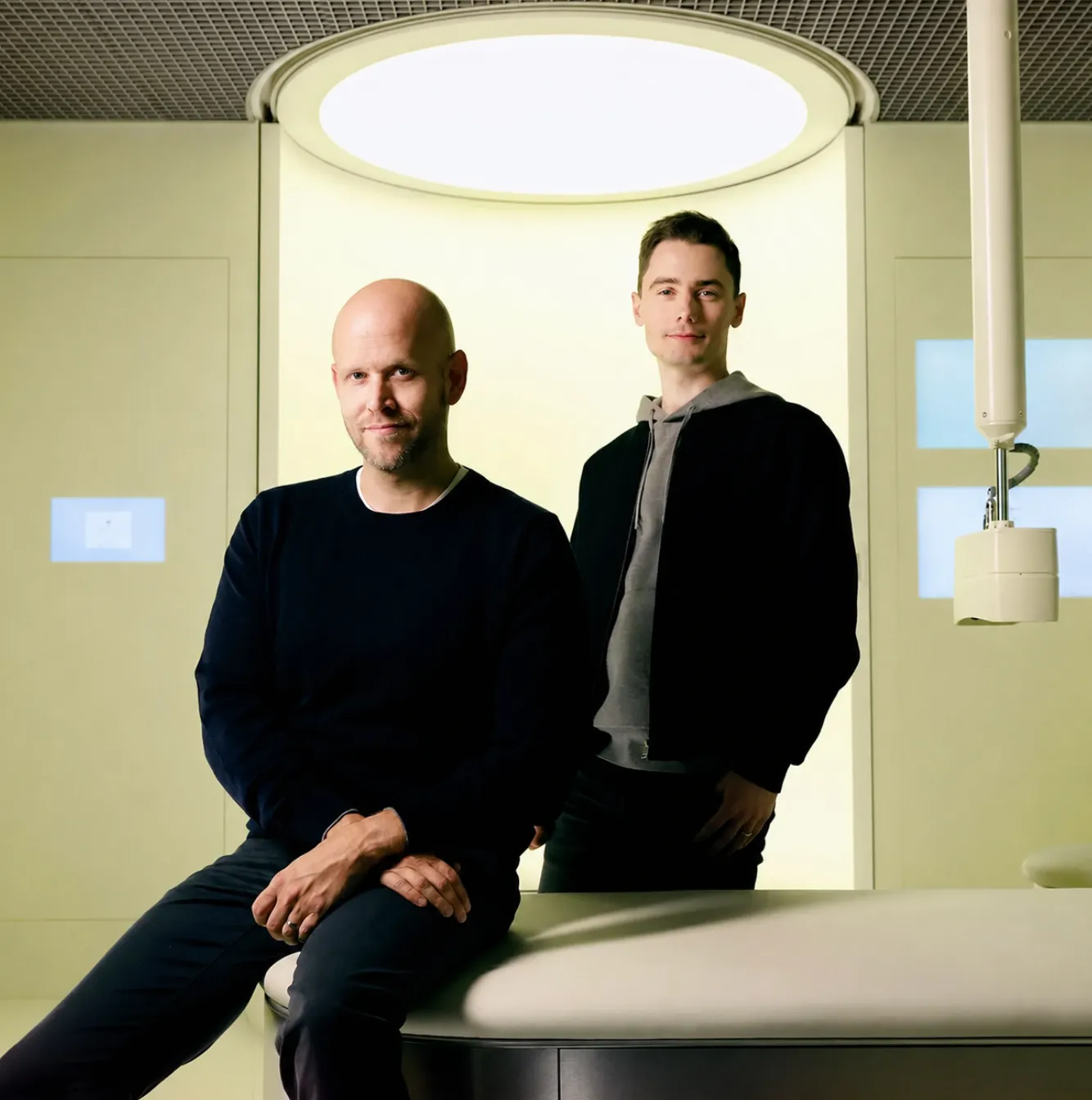

By the time the lights rise over MEO Arena, the most valuable hour of Web Summit Lisbon 2026 will already be gone.
It vanished weeks earlier: into the introduction that secured an investor breakfast, the quiet product demonstration booked before the public launch, and the message that persuaded a global technology editor to reserve twenty minutes. The spectacle happens in November. The leverage is built before Lisbon.
That distinction matters in healthtech. Web Summit is not a hospital procurement conference, and treating it like one is an expensive category error. It is a compressed market for capital, distribution, partnerships, policy influence and attention, where healthcare competes with every other technology narrative in the room. For an operator with a precise objective, that is exactly the attraction.
Lisbon is not where a healthtech company proves everything. It is where the right company makes the next proof point impossible to ignore.
If a clinical proposition can hold a generalist investor between meetings, survive a policy leader's challenge and remain intelligible to a technology reporter, it is probably ready for a boardroom. This is The HealthTech Signal's field guide to making that test count.
The essential briefing
Web Summit 2026 runs from November 9 to 12, 2026, across MEO Arena and the FIL exhibition halls in Parque das Nações, Lisbon. The organiser is planning for more than 70,000 attendees across multiple thematic tracks. Its startup programme advertises more than 2,500 startups and 1,500 investors.
| Field | What operators need to know |
|---|---|
| Dates | November 9 to 12, 2026 |
| Main campus | MEO Arena and FIL, Parque das Nações, Lisbon |
| Health programme | Health Summit, included in the main Web Summit programme |
| Reported scale | 70,000+ attendees, 2,500+ startups and 1,500+ investors |
| Best healthtech use | Capital, international partnerships, distribution, policy and media |
| Poor fit | Deep clinical diligence or a hospital procurement-only mission |
The dedicated Health Summit track covers territory from AI-enabled health insights and autonomous tracking to technologies intended to extend healthy life. Its breadth is an advantage only if readers arrive with a filter. A full room does not establish clinical demand. A polished demonstration does not establish implementation readiness. A famous investor on a delegate list does not mean that investor is looking for your company.
Our Web Summit Lisbon event page carries the practical event details. The HealthTech events calendar places Lisbon alongside the sector's other major 2026 meetings.

Why Lisbon matters differently for healthtech
HIMSS, ViVE and HLTH are built around healthcare buyers, operators and procurement conversations. Web Summit's strategic advantage is adjacency.
In one day, a healthtech founder can move from a specialist health session to a consumer technology investor, an enterprise platform partner, a government delegation and an international newsroom. Few healthcare meetings create that density of cross-sector contact. Fewer still force a company to explain why its work matters without leaning on clinical shorthand.
For European companies, the timing matters too. Capital, reimbursement and commercial relationships remain fragmented across national markets. Lisbon gives teams a common week around which to organise introductions that might otherwise require months of travel. The stages establish reputation. The exhibition floor generates volume. The private calendar creates enterprise value.
The conference-fit matrix
| Objective | Lisbon fit | The evidence to carry | The right next step |
|---|---|---|---|
| Fundraising | High | Runway, buyer proof, milestone-linked use of funds | A focused second meeting with the relevant partner |
| Distribution partnership | High | Integration logic, target geography, shared economics | Technical and commercial discovery session |
| Hospital procurement | Selective | Workflow impact, security posture, implementation owner | Introduction to a qualified provider decision-maker |
| Media launch | High | A real milestone, credible data and a clear human consequence | Embargoed briefing before the event |
| Clinical diligence | Low on-floor | Protocol, endpoints, comparator and external validation | A separate expert review after Lisbon |
| Policy engagement | High | Specific regulatory friction and a workable remedy | Follow-up with the relevant institution or delegation |
The implication is simple: do not measure the trip in badges scanned. Measure it in qualified next steps. A useful outcome has an owner, a date and a defined information request. Everything else is traffic.
Four investable signals to watch at Health Summit
1. Health AI moves from performance to accountability
The important question is no longer whether an AI model can produce an impressive output. It is who validates the model in production, who notices when its performance changes, who owns escalation and what a health system is actually buying.
Listen for operators who can name the deployed population, monitoring cadence, failure mode, human override and measurable outcome. A demonstration proves capability. A credible accountability model suggests a business that can survive deployment.
Green flag: the company can describe what happens when the model is uncertain.
Red flag: the answer begins and ends with benchmark accuracy.
2. Consumer sensing crosses the clinical boundary
Hearables, wearables and continuous sensors are absorbing functions that once belonged inside clinics. Web Summit's consumer technology audience makes Lisbon a useful place to observe where wellness products seek to cross into regulated care.
The premium signal is not another dashboard. It is evidence that passive data changes a clinical decision, supports a reimbursable pathway or improves adherence without adding work for the patient or clinician. Teams should be able to explain consent, data quality and the action triggered by an alert, not merely the volume of data collected.
3. European regulation becomes product architecture
The EU AI Act, the European Health Data Space and medical-device requirements increasingly influence model design, data access, deployment sequence and market entry. Their obligations are not interchangeable, and implementation dates and guidance still require careful monitoring.
The strongest conversations will treat regulation as a product and engineering constraint. Watch for companies that can explain how intended use, risk classification, post-market monitoring and data governance shape the system being built, rather than how a legal team will document it later. Our dual-track FDA and CE-MDR playbook examines that operating model in detail.
4. Investors separate efficiency from theatre
Healthtech capital is selective, not absent. The serious investor signal will be which claims still command attention: reimbursement clarity, validated clinical impact, measurable administrative savings, durable workflow ownership or a defensible data advantage.
The organiser advertises more than 1,500 investors, but access is not appetite. Founders should use Lisbon to discover which evidence unlocks a second meeting and which fashionable language ends the first.
| Claim heard on the floor | The expert follow-up question |
|---|---|
| “We save clinicians time” | Against what baseline, over what period and for which workflow? |
| “Our AI is clinically validated” | In which population, against which ground truth and at how many sites? |
| “Hospitals love the product” | Who owns the budget, implementation and renewal decision? |
| “We are ready for Europe” | What is the intended use, classification and conformity route? |
| “Our data moat is unique” | What rights, provenance, refresh cycle and generalisability support it? |

The operator's 30-day playbook
Before Lisbon: build the meeting thesis
Start with one primary objective and one secondary objective. “Networking” is not an objective. “Secure three diligence meetings with European growth investors who understand regulated software” is.
Prepare three layers of explanation:
- The ten-second line: the problem, the buyer and the consequence.
- The ninety-second case: why now, why this team and the single strongest proof point.
- The diligence layer: regulatory status, clinical evidence, implementation burden, economics and the next value-inflecting milestone.
Then classify every target meeting by the decision you want it to produce. A useful calendar distinguishes a first introduction from a product review, investor qualification, press briefing or partnership design session. The preparation should match the decision.
In Lisbon: protect signal from noise
Treat the startup floor as a discovery and qualification channel, not as the place to close a strategic agreement. The current official startup programme highlights PITCH, Startup Showcase, 40 words and Mentor Hours. These can create visibility, but consequential conversations should already be in the diary.
Book the highest-value meetings early in the day and away from the loudest exhibition areas. Leave travel and overrun space. A tightly packed schedule looks efficient until one delayed conversation destroys the afternoon.
| Time block | Highest-value use | Avoid |
|---|---|---|
| Morning | Investor, buyer or strategic partner meetings | Unstructured floor wandering |
| Midday | Curated introductions and targeted Health Summit sessions | Back-to-back commitments without travel time |
| Afternoon | Product discovery, startup screening and media conversations | Trying to conduct detailed diligence in a noisy booth |
| Evening | Relationship building and small hosted gatherings | Treating every invitation as equally valuable |
After Lisbon: convert attention into evidence
Follow up within 48 hours, but do not send the same note to everyone. Restate the problem discussed, attach only the proof requested and propose one next action. The strongest follow-up is not “great to meet.” It is “you asked for our two-site implementation data; here it is, and the clinical lead is available Thursday.”
Within two weeks, review the trip as a pipeline:
- meetings that produced a defined next step;
- introductions requiring internal qualification;
- market intelligence that changed the product or financing thesis;
- conversations that were interesting but commercially irrelevant.
This discipline turns a four-day event into an operating asset rather than a travel expense.
A role-by-role field guide
For founders
Carry one proof point that cannot be confused with marketing: deployment data, a signed customer, a regulatory milestone, a measured workflow improvement or a clinician using the product in practice. If the claim is “AI-powered,” expect the next question to be about data rights, external validation or workflow ownership.
For investors
Use the floor as a screening system, not a diligence room. Choose two or three subsectors where you already have a thesis, identify the companies before arrival and use the event to test founder quality, market timing and evidence maturity. The key question is not which booth attracts a crowd. It is which team can name the buyer, budget, implementation burden and next material risk-reduction milestone.
For health system leaders
You will find fewer peers than at a dedicated provider conference, but you may meet emerging vendors before they enter a formal procurement queue. Ask what the product replaces, who owns it after implementation and what burden it removes. If the answer depends on a new workflow nobody has agreed to manage, the demonstration is not yet a deployment.
For policy and industry leaders
Look for areas where regulation, infrastructure and market access are moving at different speeds. The useful conversation is not a general plea for “innovation-friendly” policy. It identifies a specific bottleneck, the patients or operators affected, the evidence available and a remedy that preserves safety and accountability.
The Signal scorecard
Use this scorecard after every meaningful conversation. A company that cannot answer these questions may still be early. A company that refuses to answer them is sending a different signal.
| Dimension | Strong signal | Weak signal |
|---|---|---|
| Clinical value | Defined outcome in a named population | General claims of better care |
| Buyer clarity | Budget owner and buying pathway identified | “Hospitals” treated as one customer |
| Deployment | Workflow owner, integration and escalation described | Demo presented as implementation |
| Evidence | Comparator, sites and limitations disclosed | Accuracy number without context |
| Regulation | Intended use and route shape the product plan | Compliance deferred until launch |
| Economics | Value accrues to the party being asked to pay | Savings claimed elsewhere in the system |
| Next milestone | Time-bound and risk-reducing | Another feature or unspecified pilot |
Is Web Summit Lisbon 2026 worth attending for healthtech?
Yes, when the objective is fundraising, international partnerships, technology distribution, policy access or media visibility. It is less efficient when the only goal is to meet hospital procurement leaders or conduct deep clinical diligence.
The best reason to attend is not that everyone is there. It is that the people who can change a company's trajectory are there for different reasons, and for four days those reasons overlap. The operator's job is to convert that proximity into one precise next step at a time.
The final checklist
- Define one primary outcome for Lisbon.
- Pre-book the people who can advance it.
- Carry one claim and one defensible proof point.
- Match every meeting to a requested decision.
- Protect time for high-value conversations.
- Record objections while they are fresh.
- Follow up with the evidence requested within 48 hours.
- Judge the trip by qualified next steps, not contacts collected.
The HealthTech Signal will cover Health Summit in Lisbon through briefings in The Daily Signal and post-event analysis of the signals that changed. If you are building in health and will be at Web Summit 2026, use our contact form to tell us what you are launching.