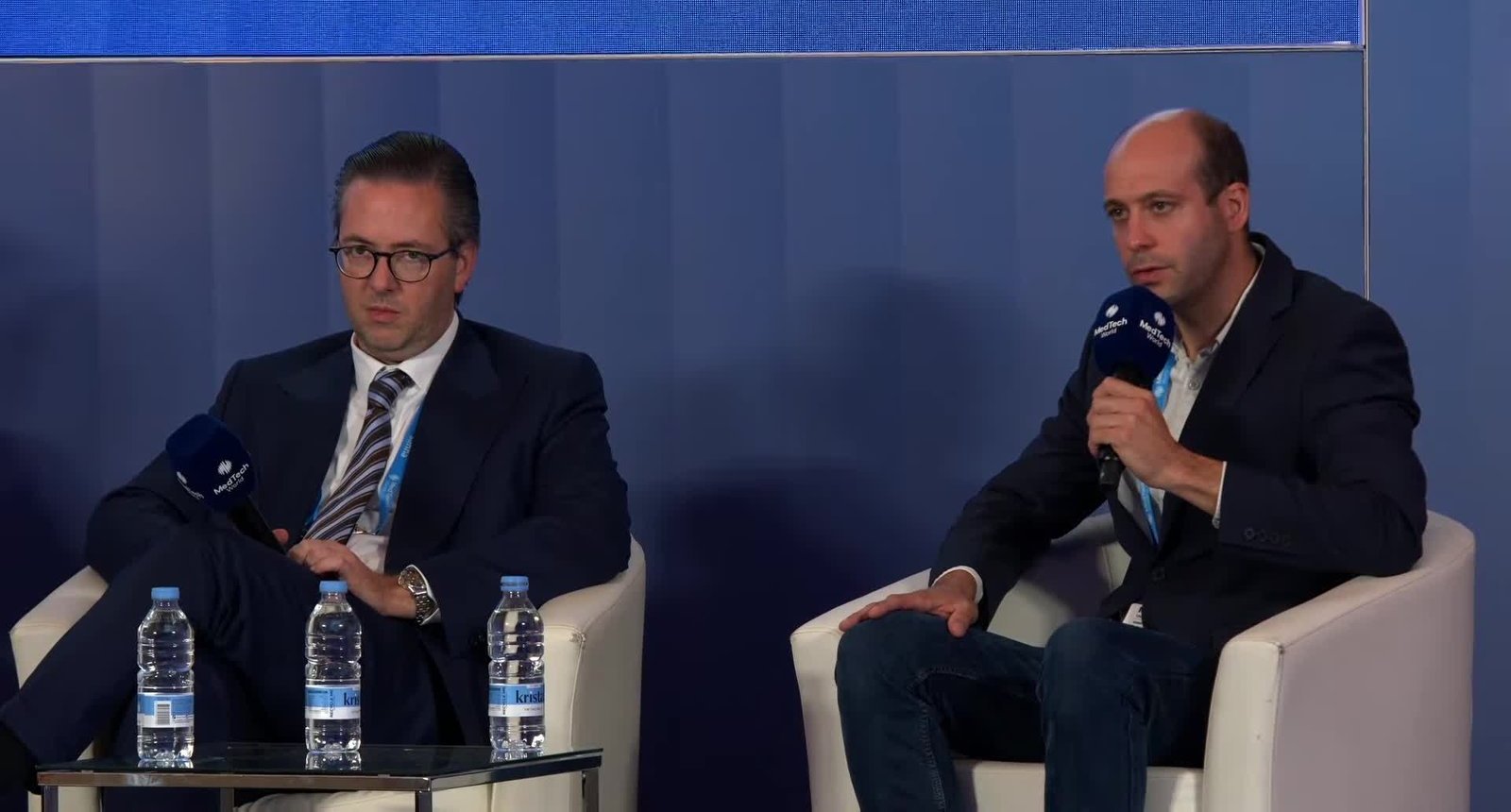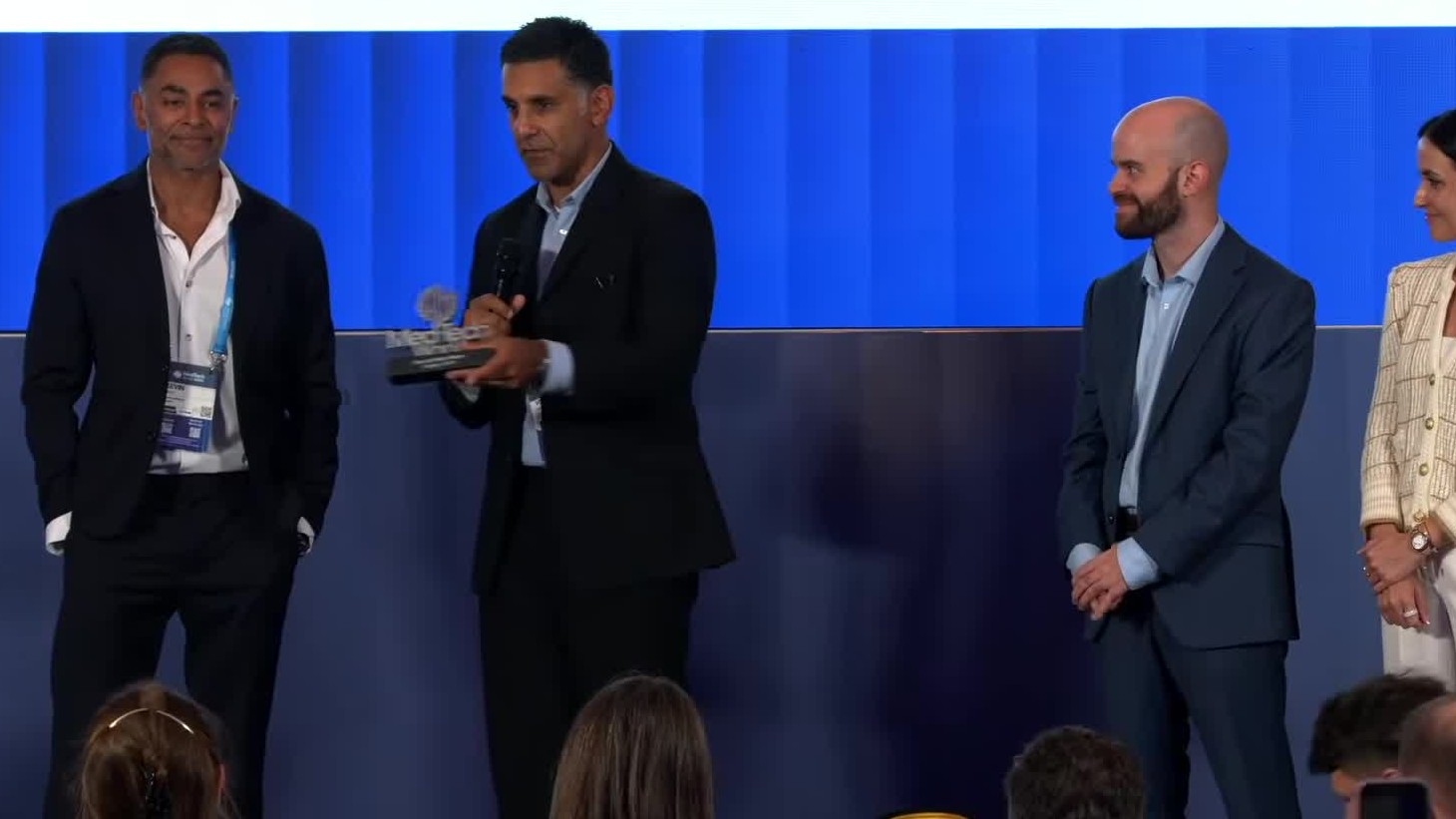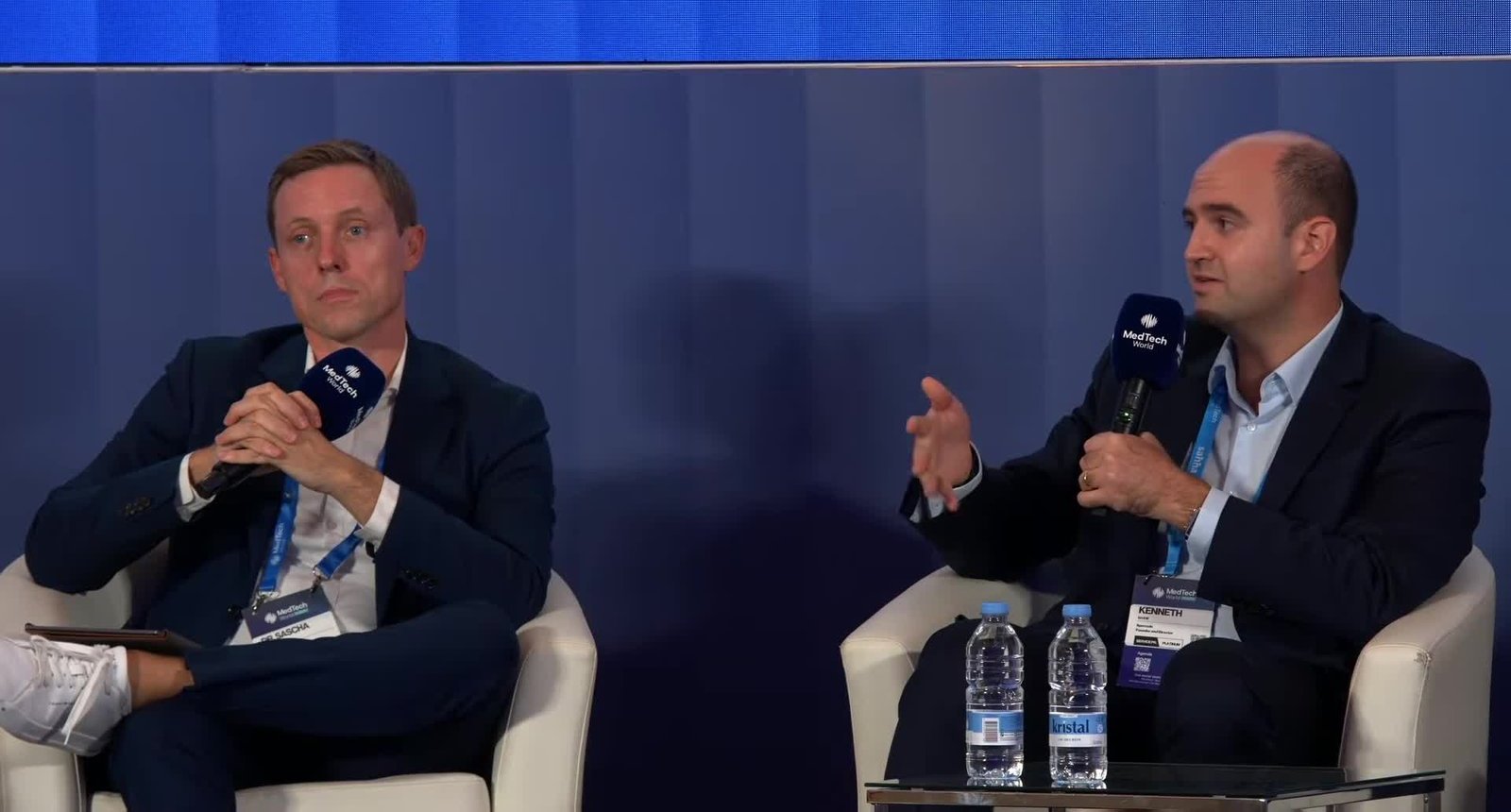
The last panel of MedTech World Europe 2026 asked what happens when technology investors and medical device investors look at the same company. "The New MedTech Playbook: When Technology Investors Meet Medical Devices" was moderated by Blythe Karow, Founder and Principal of The Karow Advisory Group, who also runs The Device Files.
| Speaker | Role |
|---|---|
| Diana Saraceni | Co-founder and Managing Partner, Panakès Partners |
| Dr. Sascha Berger | Senior Advisor, ACP Healthtech |
| Kenneth Shaw | Founder and Director, Specculo |
| Daniel Ollert | Transaction Director, Findos |
| Blythe Karow (moderator) | Founder and Principal, The Karow Advisory Group |
What each side calls digital health
Karow started with definitions, because Europeans and Americans use "digital health" differently. Saraceni, who has 25 years in venture capital and co-founded 360 Capital before Panakès, said her firm manages about €300M and writes tickets of €3M to €7M across seed, Series A and Series B. For Panakès, digital health is anything where most of the innovation is in the software, often unregulated, that changes how care is delivered. Berger, advising ACP Healthtech, a new European fund investing at the clinical inflection point, focuses on device and software combinations that improve a clinical or economic decision.
Shaw, whose firm Specculo helps companies and their investors with regulatory diligence for devices and IVDs, gave the regulator's version. When he hears "we're in digital health", he said, he often assumes the company is trying to avoid device regulation. Ollert, who leads healthcare at Munich private equity firm Findos, said the split between regulated and unregulated products matters most, because they have different business models and risk.
What each side can learn
Saraceni said digital founders arrive with more ambition. They address large markets, disrupt business models and raise a lot of capital, because they have to. With little protection from IP or regulation, they either move fast and become the leader or they lose. MedTech founders could borrow that ambition. In the other direction, digital players could learn to focus on medical need and measurable clinical benefit.
Berger described a founder he met at lunch who pitches to both camps. Tech investors look at speed, customer acquisition cost and market share. MedTech investors look at what is defensible: IP, clinical strategy and proprietary data. The ideal company satisfies both.
The open source test
Karow asked where value lies when anyone can build software by "vibe coding". Berger's test was simple. "If your source code would become open source tomorrow, what do you still have?" Code alone is hard to defend when an AI coding tool can run for 24 hours and produce what once took a team. Value comes from hardware, regulation, data and customer relationships.
Ollert added that many software companies have lost valuation because code is now faster and cheaper to write. The funnel of safe software investments has narrowed, and the intersection of MedTech, software and data is one of the places he still sees room.
Berger then put a number on the crowded AI market. By his count there were about 1,600 FDA-authorised AI products as of June, mostly in radiology, and more than 95% cleared through the 510(k) route. With so many, he said, a clever algorithm is not a differentiator. Adoption and revenue are, and strategics buying companies look first at commercial traction.
Data needs a payer
Ollert's rules for valuable data were concrete. It must be high quality and unique. It must have a clinical use. "And last but not least, someone needs to pay for it." Saraceni added a kind of data MedTech founders often ignore: commercial data on customers, how to reach them and what they will pay. Service businesses in prevention, consumer health and diagnostics live on it.
Karow, who works heavily with wearables, said hardware teams often ask her to review their commercial plan before they have built the software that fits a clinician's workflow. "That's 100% of the uptake," she said. If a nurse cannot log in, nobody will use it.
The AI paperwork problem
Shaw described the most common regulatory mistake: building the product first and discovering late that it is a medical device, which pushes the timeline out by two years or adds a clinical data requirement. AI products in the EU now also face additional legislation, and applying standards retrospectively takes longer than starting with software requirements on day one.
He also described a new problem. Clients run their documentation through AI tools and send him things like "500 risks for a low-risk device" with little substance behind them. Rushed AI-written submissions come back, cost more and slow everything down. He did see a positive side: AI can help a founder understand an unfamiliar piece of EU legislation. Karow said she now reads long, AI-generated proposals that are hard to respond to, and finds herself valuing the human element more.
Women's health as a market
Near the end, the session host asked the panel how to get industry excited about women's health, which she called the largest untapped market in medicine. Saraceni said recent billion-dollar deals in women's health were a wake-up call, estimated the untapped menopause opportunity alone at around $30 billion, and said the few dedicated women's health funds she knows are all in the US. Karow's advice to founders was to lead with the numbers, because many investors are men for whom the opportunity is not obvious.
Lightning round
| Speaker | What they want to see |
|---|---|
| Ollert | More companies at the MedTech and technology edge growing into private equity targets |
| Shaw | AI beyond radiology, and more innovation in areas such as neurovascular implants |
| Berger | AI shortening the decade-long path from innovation to patient |
| Saraceni | Curious, and a little sceptical, about brain-computer interfaces |
| Karow | Continuous hormone and cortisol measurement for women's health |
What the research says about AI-written code
The vibe coding debate has a study behind it. Researchers at Stanford, in a paper presented at ACM CCS 2023, found that people using an AI coding assistant wrote less secure code than people working without one on four of five tasks, and were more likely to believe their code was secure. In a consumer app that is a bug. In software that is part of a medical device, it is a patient safety and regulatory problem.
| Requirement | Why it applies to AI-written device software |
|---|---|
| IEC 62304 software life cycle | Every software item needs documented requirements, design, testing and risk control, whoever wrote the code |
| FDA cybersecurity rules (section 524B) | Since March 2023, submissions for connected devices must include a software bill of materials and a plan to find and patch vulnerabilities |
| EU MDR and AI Act | Software that informs diagnosis or treatment is a medical device, and AI systems in it face extra obligations |
For health systems, AI-written software adds work to the vendor security review, and payers will only pay for software that shows outcomes, which is the panel's point that data needs a payer.
For tech investors moving into devices, that is the gap between the two worlds the panel described. Code can be written in an afternoon, but the evidence that it is safe still takes months. For clinicians, the question to ask a vendor is not whether AI wrote the code but whether the validation and the cybersecurity file would satisfy a regulator.
My take
Berger's open source test is the right question for health AI, and I would add a clinical version: if your algorithm disappeared tomorrow, would the hospital's workflow notice? With hundreds of similar radiology tools already authorised, the winners will be the ones embedded in care and paid for. Shaw's warning matters for patient safety as well as speed. A risk file with 500 generic entries can hide the few risks that actually hurt patients, and regulators will learn to spot it.