
Babies cry before they can tell us what is wrong. Zoundream wants to know whether those sounds contain information that technology could interpret more systematically. It's a fascinating research question, and exactly the kind that needs careful separation between possibility and proof.
Zoundream, a company based in Basel and Barcelona, brought its infant-cry research story into the Web Summit 2026 period. Its preliminary work involves acoustic measurements in early infancy and later developmental assessments. Nothing in the published record establishes a validated diagnostic test for autism or another neurodevelopmental condition.
What is Zoundream studying?
The idea is to examine patterns in infant cries and investigate whether aspects of the sound are associated with developmental outcomes. In theory, a non-invasive signal that families already encounter every day could eventually support screening or monitoring.
But cry sounds are influenced by many ordinary factors: hunger, discomfort, the environment and differences between infants. A meaningful medical claim would require careful study designs, appropriate comparison groups and performance testing in the populations where the system might be used.
What does the early research actually show?
The company described preliminary CEPAS findings involving 93 infants connected to Hospital Clínic de Barcelona's BCNatal and Fundación Salud Infantil. The research examined whether early-life cry patterns could be associated with later Bayley-III developmental measurements.
The available information describes early poster research presented by the company, an encouraging starting point for further study. Examples of infants described as “at risk” should not be converted into evidence that the tool detects autism. A small exploratory cohort may identify signals worth studying. It cannot, by itself, establish a dependable clinical screening programme.
A rigorous next stage would need to test the acoustic features prospectively, account for confounders and show how many false positives and false negatives arise. That matters because early developmental concerns can be emotionally significant for families.
What is known about the company?
Zoundream was founded in 2019 and operates from Basel and Barcelona. Co-founder and CEO Roberto Iannone announced a €4 million seed round in September 2025, with investors including CRB Health Tech and Verge HealthTech Fund.
Commercial ambition and research ambition need separate milestones. A demonstration can show that sound classification works technically. An established clinical tool would need evidence about what the output means and how professionals or parents should act on it.
Why this is worth following
Most infant-health technology focuses on what can be measured without invasive procedures. Cry analysis is an intriguing extension of that idea, especially if it one day helps clinicians identify children who might benefit from earlier assessment.
But if the technology raises concerns without sufficiently accurate evidence, the cost may be unnecessary anxiety, referrals and false reassurance. That is precisely why research-stage language matters.
Zoundream has an interesting hypothesis. Its most consequential future announcement would be transparent, independently reviewable prospective evidence, not a more confident marketing description of what a cry “means.”
Why researchers are interested in the sound of a baby's cry
Crying is one of the few ways a young baby can communicate distress or need. Parents rapidly learn that cries can vary with circumstances, but translating those differences into a dependable clinical signal is a much more demanding task. Babies cry for many reasons, and the sound can be affected by the infant's age, state, surroundings and recording conditions.
Zoundream's research starts from an intriguing premise: acoustic patterns might contain information that supports the study of infant development or wellbeing. The company exhibited at Web Summit after presenting preliminary data from 93 babies at a scientific meeting in Lyon.
The early findings were shared in a company summary of a research poster. That is a legitimate stage of scientific communication, but it does not carry the same weight as a fully reported, peer-reviewed study in which readers can inspect methods and results. The sample size is also relevant. Ninety-three participants can be useful for an early investigation, but a study at that scale cannot automatically establish how an algorithm will perform across large and varied populations.
What an infant’s cry might help researchers understand
Machine learning systems can classify or compare acoustic features. They may detect differences that human listeners find difficult to describe. What those differences mean is a separate question. A feature that appears associated with a particular condition in one dataset might instead reflect age, recording device, background noise or some other factor that differs among the groups studied.
This is especially important when claims reach toward early detection of neurodevelopmental conditions. Such conditions are not defined by a single universal cry sound. Development is complex, and clinical assessment uses a much broader range of information over time. A tool that identifies a statistical association would require extensive validation before anyone could responsibly say it detects a particular condition earlier than established practice.
The risk is not only a false diagnosis. A worried parent could interpret an experimental classification as a warning about a child's future development, even when the evidence does not justify that inference. Conversely, a reassuring output might lead someone to delay seeking professional advice about a concern. The presentation and wording of results would therefore be as important as the model's technical accuracy.
Zoundream is studying whether infant-cry acoustics can yield useful information. This remains research toward potential applications, rather than a clinically validated diagnostic or screening test.
What would a stronger study need to show?
The first requirement is a clearly defined question. Is the model distinguishing cry contexts, identifying specific acoustic features or predicting an independently assessed developmental outcome? These tasks are not interchangeable, and each needs a suitable reference standard.
Researchers should explain how recordings were collected and whether the babies represented different ages and circumstances. A model trained on recordings from a limited set of devices or environments could struggle elsewhere. Background noise, microphone distance and recording length may all alter the data. An evaluation that includes ordinary home recordings would answer a different question from one conducted in a controlled research environment.
It would also be useful to know how the team avoided information leakage. If several recordings from the same baby are divided between training and test sets, a model may learn characteristics of an individual rather than a general pattern relevant to the target outcome. A rigorous analysis needs to account for that possibility.
Prospective follow-up becomes particularly important for developmental claims. Researchers would need to establish whether an early acoustic pattern predicts a later, independently assessed outcome, not merely whether two groups of recordings look different after the fact. The study should report uncertainty and any limits on generalisability.
Independent replication would help distinguish a promising early signal from one that depends on a particular dataset or research setting. Until such evidence is available, the most responsible coverage is careful about what the preliminary work actually suggests.
The challenge of building a product for parents
A product aimed at families has to work in emotionally demanding circumstances. Parents of newborns may be exhausted, anxious and already exposed to conflicting advice. A technology that asks them to interpret probabilistic outputs could add stress unless its purpose is clearly explained.
The practical user experience matters. What is the person supposed to do after receiving a result? Does the app provide general information, suggest recording patterns for discussion or claim to identify a condition? Does it distinguish an uncertain measurement from a significant concern? Good design should avoid making parents feel they have failed when a baby cries in a way that a device cannot classify.
There is also a privacy dimension. Audio recordings from a household may capture other voices or private information. Users need to understand whether recordings are stored, transmitted or used to improve models. As Zoundream develops the product, clear explanations of how household audio is protected could become an important part of earning parents' trust.
Commercialisation would involve similar choices. A family-oriented wellness tool, a research platform and a clinical screening product have different customer expectations and evidentiary obligations. A company should be judged against the purpose it actually claims, rather than against the most dramatic future application mentioned in a pitch.
Why the Web Summit appearance is worth covering
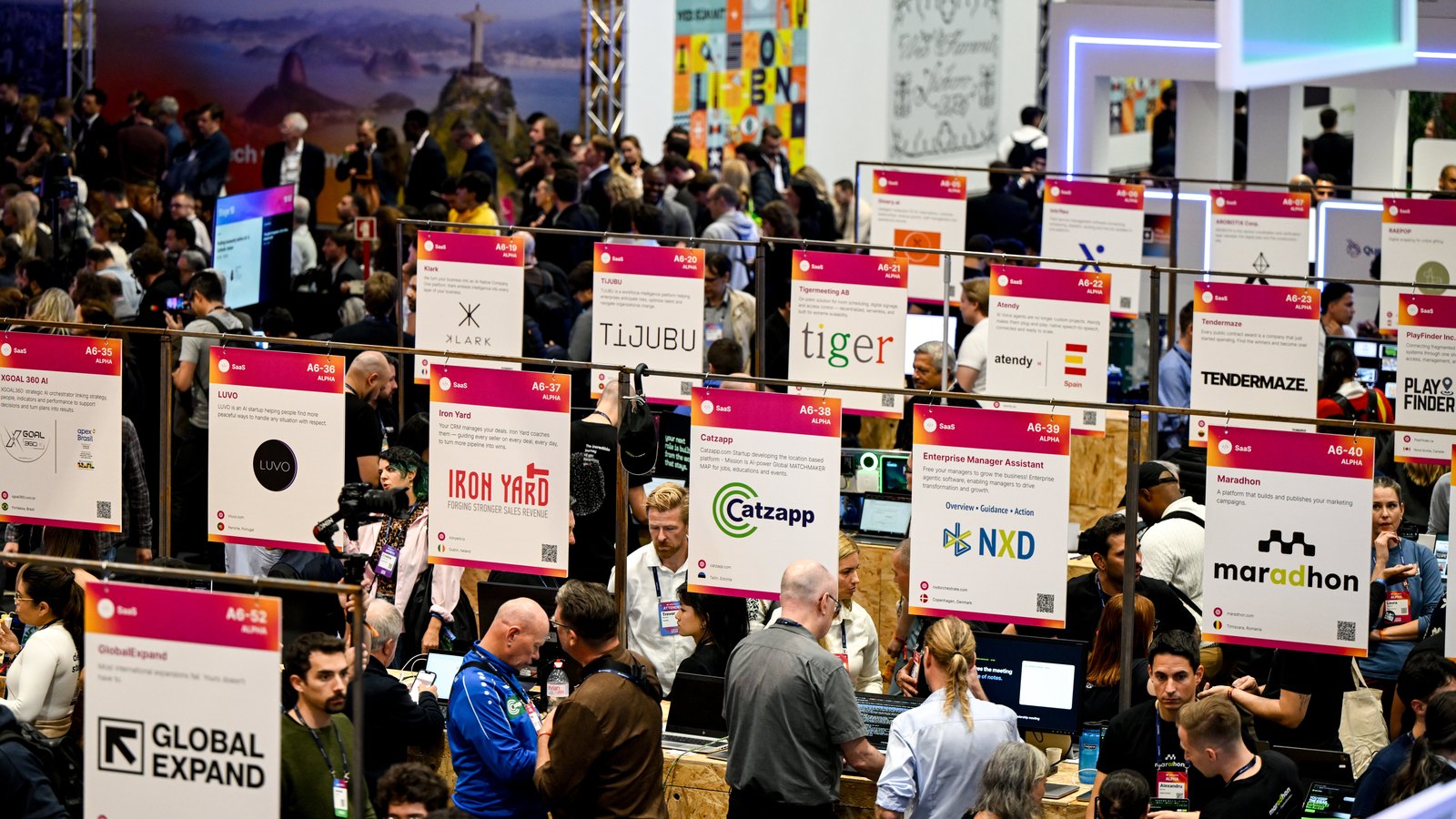
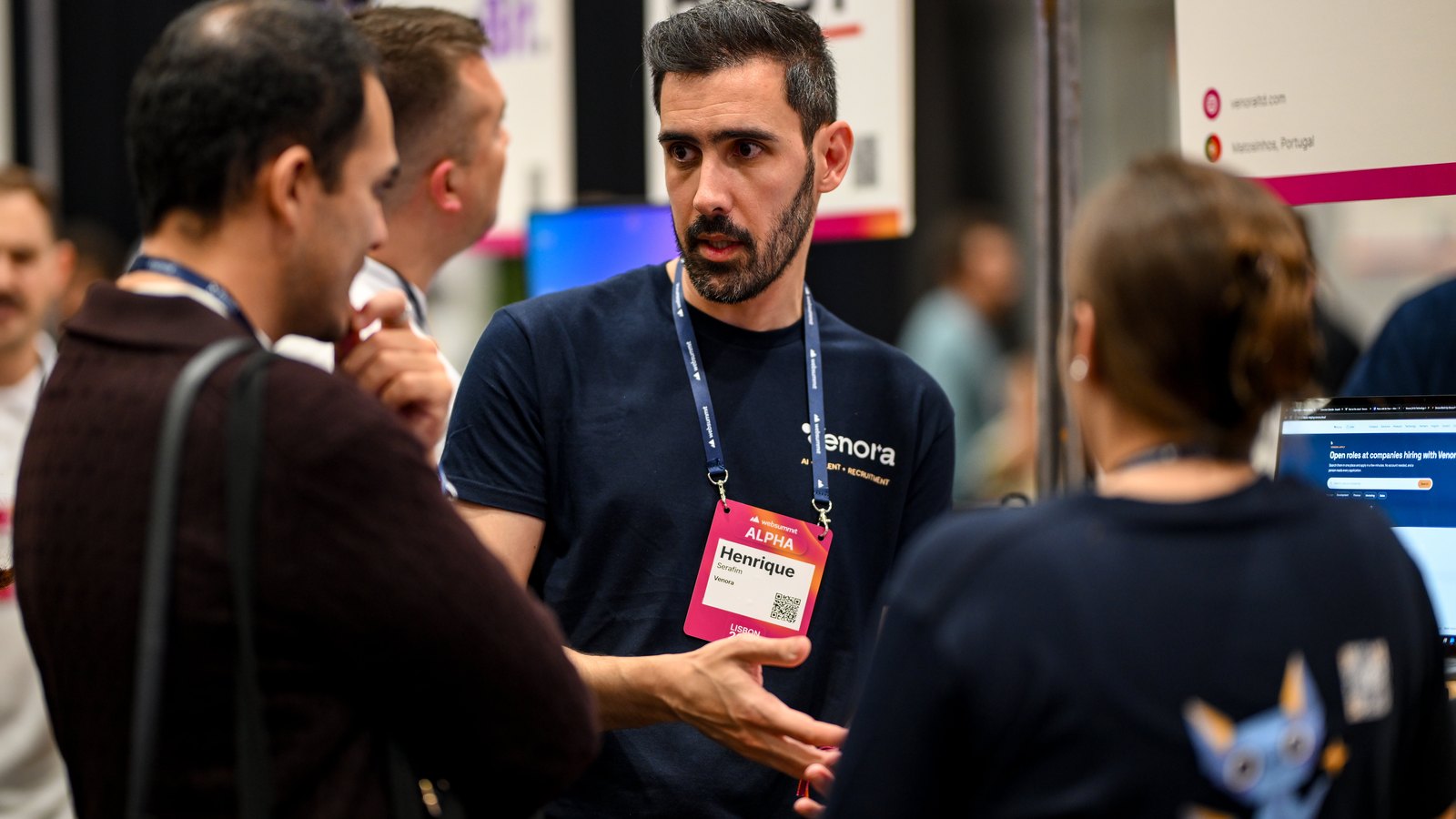
The company was present at a major technology event shortly after a scientific presentation. That creates a useful opportunity to connect startup ambition with the stage of the underlying research. Many readers encounter only the commercial language around promising AI products; fewer see how long it can take to determine whether an intriguing signal has real medical value.
The next milestone should be publication of methods and outcomes, followed by larger and more independent evaluations where appropriate. If the team eventually pursues a clinical use, readers will also need clarity about intended use and the relevant regulatory position.
There is no need to dismiss the research because it is early. Investigating patterns in infant cries may contribute to better understanding of communication and development. But there is equally no reason to describe preliminary evidence as a breakthrough in early diagnosis. Zoundream's most interesting story is the effort to turn a plausible research question into something measurable, reproducible and genuinely useful.