Read alongside The Myth of “Normal” in Women’s Health: Clue CEO Rhiannon White on Building a Business Around Women’s Real Needs.
AI is often sold as a solution to missing data. In women's health, that promise deserves extra scrutiny. A model cannot simply manufacture the evidence that decades of research failed to collect.
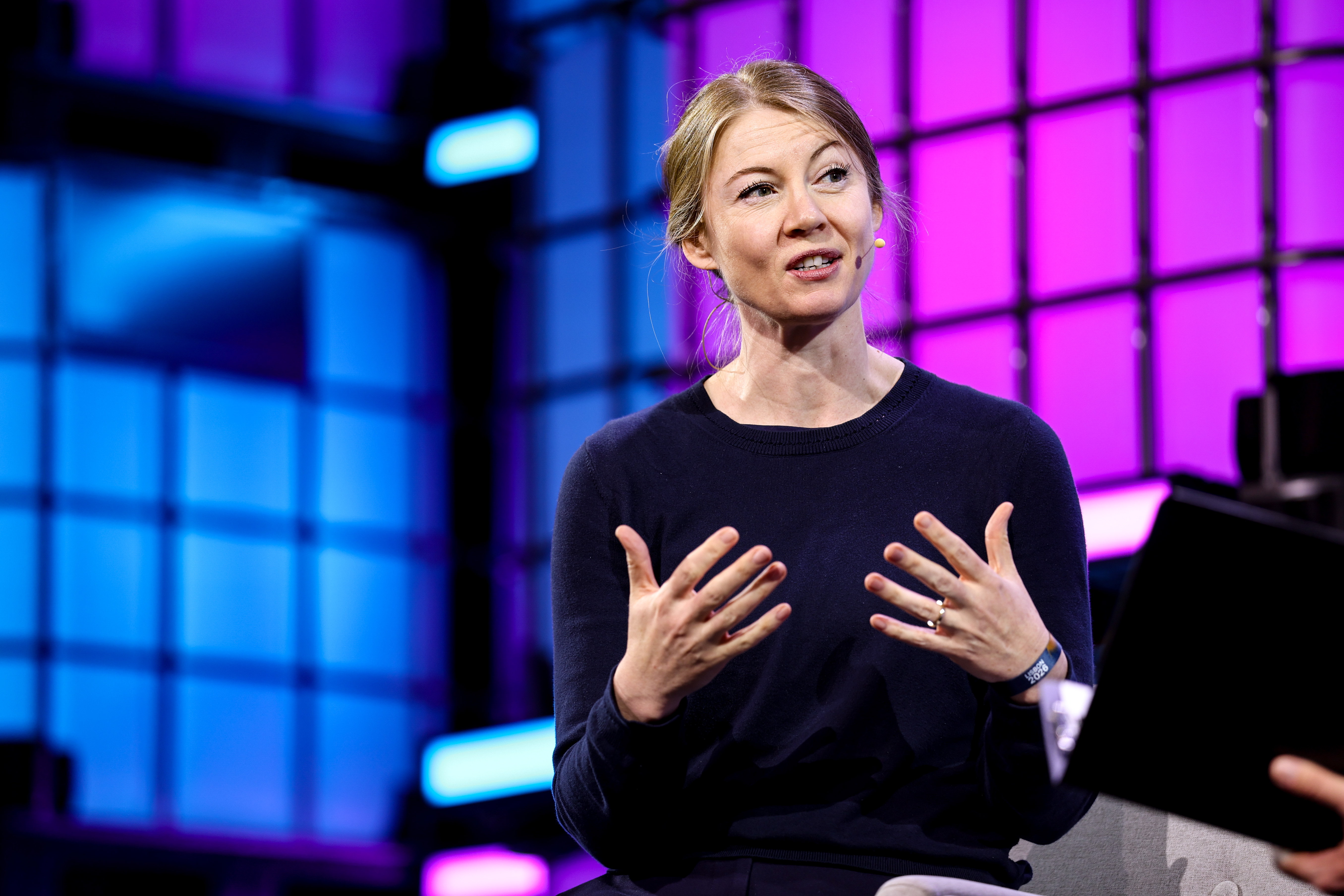
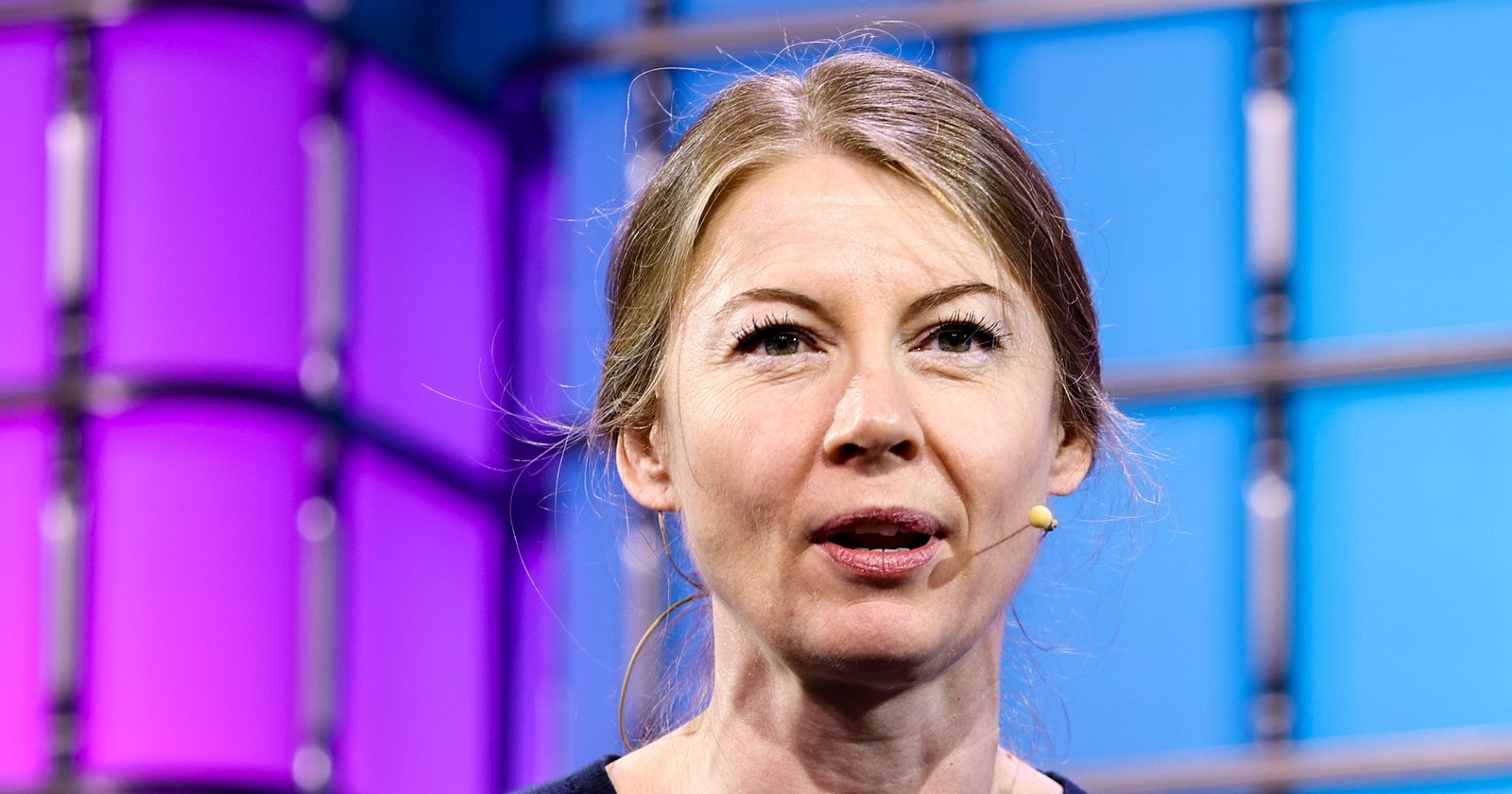
Clue CEO Rhiannon White appeared twice on Web Summit's Health Summit stage in Lisbon on November 12, 2026. First came “The Women's health data gap,” with Global News reporter Katherine Ward. Later she joined Claire Sanderson for a live Just as Well podcast recording about what menstrual-cycle data can, and cannot, reveal.
What is the women's health data gap?
The discussion raised a straightforward problem: many women's health questions have been under-researched, leaving holes in datasets, clinical understanding and the tools that depend on them. It asked whether AI can address this “cold start” while protecting privacy and accuracy.
The danger is to mistake a model's ability to generate an answer for its ability to establish a medical fact. A cycle app can identify trends in data a person records. That does not mean it can accurately explain every symptom, predict an underlying condition or diagnose a hormonal problem.
What did Clue's CEO discuss?
For intimate information such as menstrual-cycle records, trust and control can matter as much as the sophistication of a new feature. AI adoption depends on whether users understand the benefit and retain meaningful choices about their data.
Privacy and control are part of the product
A period-tracking app can contain intensely personal records. It may include fertility intentions, symptoms, changes in medication or other information that users would not want shared freely. A company needs to explain which information is collected, how AI systems access it, whether a user can opt out and what happens to their historical data.
Separate consent for AI features, if implemented as described, is a more meaningful design choice than a blanket claim that everything is “private.” But the effectiveness of the choice depends on exactly what it governs and how easily it can be withdrawn.
The later Just as Well session was officially framed around the limits of cycle data. That is the right question for the category. Data can be useful without pretending to tell us everything.

Turning better data into useful care
The opportunity in women's health is not simply to collect more data and let AI speak confidently over it. It is to explain what the data genuinely supports, where the uncertainty begins and how the woman using the product remains in control.
Building stronger evidence for women’s health
Medical research has not always represented women well, and women-specific conditions have often received less attention than their burden warrants. The result is not a single empty spreadsheet that a model can fill overnight. It is a patchwork of missing observations, incomplete longitudinal studies and questions that were not investigated in the first place.
The distinction matters when a technology company promises to use AI to overcome a data gap. A model can sometimes make useful estimates from incomplete information. It can identify patterns in existing observations, make predictions for populations similar to those it has seen and help researchers decide where to investigate next. It cannot recover a ground truth that was never measured merely by producing a plausible answer.
For a menstrual-health application, this problem is concrete. People may track symptoms inconsistently. Cycles vary within and between individuals. Not everyone records medication, illness, sleep or changes in routine. A prediction made from that information may still be useful as a prompt or an estimate, but it is best distinguished from a direct measurement of an event that was not observed.
The session's cold-start theme brings that challenge into focus: what information is available when a user's history is limited, what a model can infer and how it communicates uncertainty.
What can a period tracker actually tell someone?
Cycle tracking can help people document the timing of periods and the symptoms they experience. For some, that record supports conversations with healthcare professionals, particularly when symptoms are persistent or difficult to describe from memory. A longitudinal view can sometimes reveal regularity, variation or patterns that prompt useful questions.
But a calendar prediction is not confirmation that ovulation occurred on a particular date. Nor does a cycle app, simply by storing symptom entries, diagnose the cause of pain, bleeding changes or other concerns. The significance of a pattern depends on the person's circumstances and, where appropriate, clinical assessment.
This boundary is easy to lose in marketing because consumers understandably want answers, not only charts. A prediction interface may look precise even when its basis is an estimate. One extra day on a calendar can seem negligible in a promotional image but matter greatly to someone making a consequential personal decision. Good product design should make the limits of its knowledge as visible as its recommendations.
The same caution applies when discussions move to hormonal health, fertility and menopause. These are connected areas, but they are not interchangeable. A dataset useful for predicting cycle dates may not be adequate for an entirely different clinical question. Models should be evaluated against the tasks they actually claim to perform.

Privacy should be understandable before a crisis
Reproductive and menstrual data can reveal deeply personal aspects of someone's life. Their sensitivity is not limited to what a regulator might formally classify as medical information. A person may be concerned about who can access the data, whether a partner can see an account, how it is used to personalise recommendations or what happens if an organisation changes ownership or policies.
An effective privacy approach therefore needs more than a general assertion that information is safe. Users should be able to learn what is collected and whether it is necessary. They should be able to understand how long it remains available, what happens when they delete their account and whether data are shared for purposes unrelated to the service they asked for.
Introducing AI makes these questions more complex. If a model uses an individual's historic entries to generate an answer, does it retain the interaction? Can a user turn off a feature without losing the underlying tracker? Are personal records used to train models, or only to calculate a response? Clear product documentation should answer these questions, particularly because the data are intimate.
Privacy can also affect clinical usefulness. People are less likely to record candid symptoms if they do not trust the service handling them. An app that encourages detailed disclosure while leaving its data practices hard to understand risks undermining the very information quality its predictions depend on.
Evaluating women's-health AI
A convincing evaluation would begin by identifying the intended claim. Is an algorithm forecasting the next period? Is it estimating an individual risk? Is it summarising symptoms for a clinician? Each task has different reference standards and different costs of error.
Then comes the population. A model tested on people with regular cycles may perform differently among users with irregular cycles, recent hormonal changes or incomplete records. Missing entries should not silently disappear from the evaluation. A company interested in reaching a broad population should be willing to report performance across relevant groups, rather than relying exclusively on a single average.
The user experience deserves evaluation too. What happens when the model is unsure? Does the language encourage an appropriate conversation with a clinician when symptoms are worrying? Are people likely to mistake an estimate for certainty? These questions matter because an accurate numerical prediction can still be misunderstood if the interface overstates its significance.
A useful study should report not only what the system predicts but whether those predictions help users achieve something meaningful. Better documentation and improved understanding can be valuable outcomes. They do not necessarily represent evidence that the product detects or treats a condition unless that has actually been demonstrated.
What the two Lisbon appearances add
White's participation in the health-data discussion and the subsequent Just as Well podcast gave Clue an opportunity to speak to both industry and consumer audiences. The later podcast was advertised as examining what cycle data can and does not fully tell users, which is exactly the distinction this field needs.
There is a better story here than the familiar claim that AI will finally solve women's health. It is about how a company can use data responsibly without treating prediction as a substitute for evidence. If the technology becomes more capable, its obligation to explain its limitations becomes greater, not smaller.