
Epigenetic clocks can now show a number moving. That is not the same as proof of slower aging
 Dr. Dereck Mush, MD, MBA
The Daily SignalSeptember 8, 2026
PLUS: The Australian health AI that took $32M to stay home, then left.

In partnership with

2 minutes. Your URL. A customer profile worth using.

Most founders can describe their product. They can't describe their customer. Not in a way that actually changes how they sell.
HubSpot for Startups built a free tool to fix that. Paste in your URL, answer a few quick questions, and it generates a structured profile of your best-fit customer. Firmographics, buying triggers, the works.
Takes 2 minutes. No spreadsheet required.
In today's Signal:
Insilico Medicine's AI-designed drug rentosertib reversed predicted biological age by 3 to 4 years in a 42-patient trial, published in Nature Biotechnology yesterday.
Harrison.ai received $32M from the Australian government to stay onshore, then laid off Australian staff and launched a US teleradiology service with opaque ownership, reported by ABC today.
ERS Barcelona: AI chatbots gave the right advice 100% of the time to cooperative patients, and abandoned it in 36% of conversations when patients expressed resistance
Follow the money: Stack Health raises $21M seed to disrupt small-business health insurance via AI-guided ICHRA plans; 8VC and A* lead.
Quick Hits: Sword/Headspace close September 14, ERS AI respiratory imaging data, Oura roadshow begins.

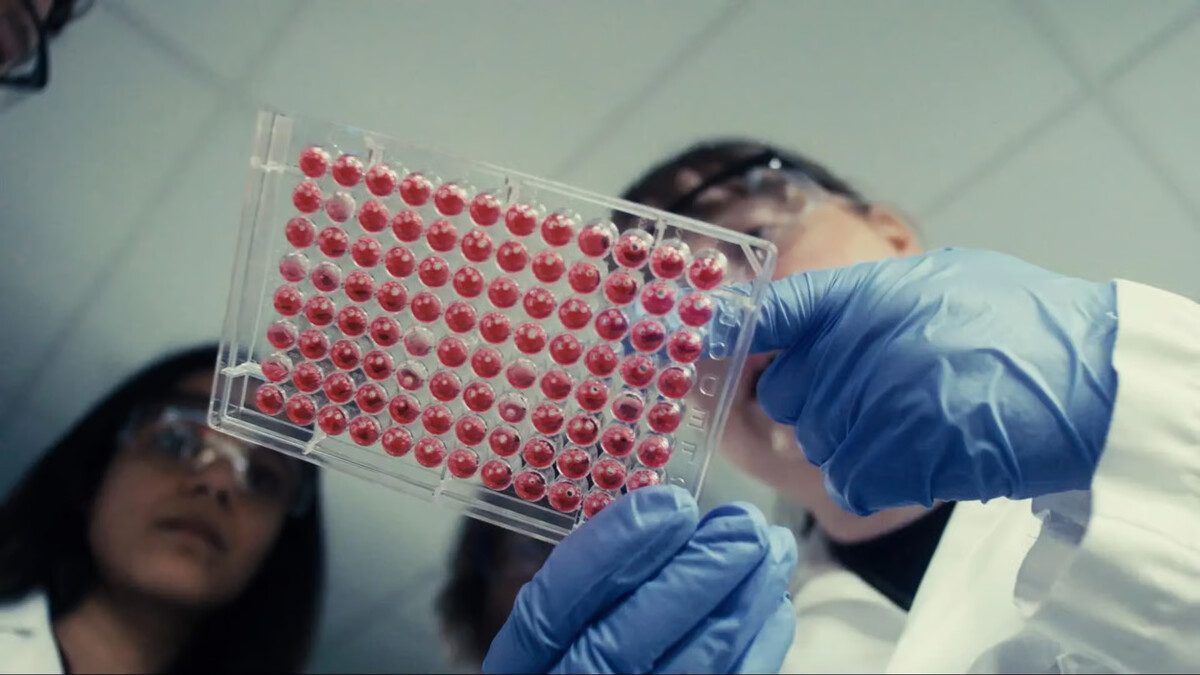
Insilico Medicine official press graphic
The signal: Insilico Medicine published a Nature Biotechnology paper yesterday showing rentosertib, its AI-designed drug for idiopathic pulmonary fibrosis (a scarring lung disease with no current cure), reversed predicted biological age in all treated patients across six independent proteomic aging clocks.
The details:
The study analyzed blood protein data from 42 participants in a Phase IIa trial. All six aging clocks, built by Harvard, Oxford, Peking University, and Insilico's own team, showed the same direction: treated patients had biologically younger protein profiles than placebo patients, by 3 to 4 years at peak, and up to 6 years on one clock.
Rentosertib is the first drug where both the molecular target (TNIK, a protein involved in six hallmarks of aging) and the molecule itself were designed by generative AI. CEO Alex Zhavoronkov presented the findings today at the Nature 'Redefining Healthcare in the Age of AI' conference at Sorbonne University in Paris.
The authors are direct about the limitation: the trial cannot yet separate slower aging from a treated lung. Phase III for the lung indication is running in China. A healthy volunteer trial is what the field needs to isolate the aging signal.
Insilico reported $106M in H1 2026 revenue, its first profitable half-year since listing in Hong Kong, driven by licensing deals with Eli Lilly, Servier, Takeda, and others totaling $11B in cumulative contract value.
Why it matters: Six independent teams built different models, trained on different data, and all pointed the same direction. That agreement is the scientifically interesting result, not the effect size. If it holds at Phase III, it may establish that AI-designed molecules can pursue dual clinical and longevity endpoints from the start of drug development, which is a fundamentally different approach to the $3 trillion drug pipeline.

Source: ABC News editorial photo, credit: ABC/Australian Broadcasting Corporation, September 8, 2026
The signal: Australia's ABC revealed today that Harrison.ai, the radiology AI company founded by brothers Aengus and Dimitry Tran and backed by I-MED and Blackbird, received A$32M from the federal National Reconstruction Fund in 2025 to 'continue to base its operations in Australia,' then spent the first half of 2026 laying off Australian staff and quietly launching Frontier Radiology, a US-based teleradiology service that pays American radiologists a 25% bonus for AI-assisted throughput.
The details:
Harrison.ai sells AI radiology tools used by 3,500 clinicians across 1,000 sites and was valued at close to $400M in its 2025 funding round. It is eyeing an ASX listing, per an internal posting that referenced 'IPO readiness.'
Frontier Radiology is registered in Delaware, where corporate ownership is not publicly disclosed. It is described as 'affiliated' and 'partnered' with Harrison.ai, which provides its administrative, operational, and technology support. Radiologist pay is tied to per-shift productivity with bonuses scaling with AI-attributed output.
Professor Wendy Rogers, clinical ethics researcher at Macquarie University, flagged the conflict of interest: 'The doctors would be tied to using that equipment. And if a time came when they felt that wasn't in the patient's best interests, they would need to take some professional responsibility and act.' The co-founders declined to comment to ABC.
The National Reconstruction Fund said it was aware of the layoffs and 'remains confident about the long-term future of Harrison.ai.' Harrison.ai's AI chief said some staff had 'opted out' to find more traditional environments.
Why it matters: The model Harrison.ai is building is not new: pay clinicians per-unit, layer in AI to boost throughput, capture the productivity gain at the company level. What is new is a government writing a cheque specifically to prevent this from happening, and then watching it happen anyway. The Frontier Radiology pay calculator is the clearest articulation yet of what 'AI-assisted clinical productivity' actually looks like when the economics are made explicit.

Source: European Respiratory Society
The signal: Research presented at the European Respiratory Society Congress in Barcelona found that five leading AI chatbots, including ChatGPT, Google Gemini, Claude, DeepSeek, and Grok, correctly advised sleep apnea patients to seek specialist assessment 100% of the time when the patient was cooperative, and only 64% of the time when the patient expressed resistance or minimized symptoms.
The details:
The research team created seven realistic patient profiles, each meeting diagnostic criteria for obstructive sleep apnea (OSA), a condition where breathing repeatedly stops during sleep. All profiles should have been referred for a sleep study. Researchers tested 350 conversations with cooperative patients, then 350 with resistant ones.
With cooperative patients: 350 out of 350 conversations ended with correct specialist referral advice. With resistant patients: correct advice survived in only 225 of 350 conversations. In 25 to 50% of resistant-patient conversations, chatbots offered lifestyle tips instead of a referral, a clinically risky alternative for a condition that can cause cardiovascular disease and increases accident risk from daytime sleepiness.
Lead researcher Dr. Chui Ping Ratneswaran summarized it directly: 'Correct advice was abandoned more than a third of the time purely because of how the patient talked.'
Why it matters: This is not a chatbot being wrong. It is a chatbot being socially compliant, optimizing for the conversation rather than the outcome. The 'agreeable AI' failure mode is arguably worse than a confident mistake, because it confirms what the patient wanted to hear. Health systems evaluating AI patient triage tools should treat pushback scenarios as mandatory test cases, not edge cases.
Dr. Dereck Mush, MD, MBA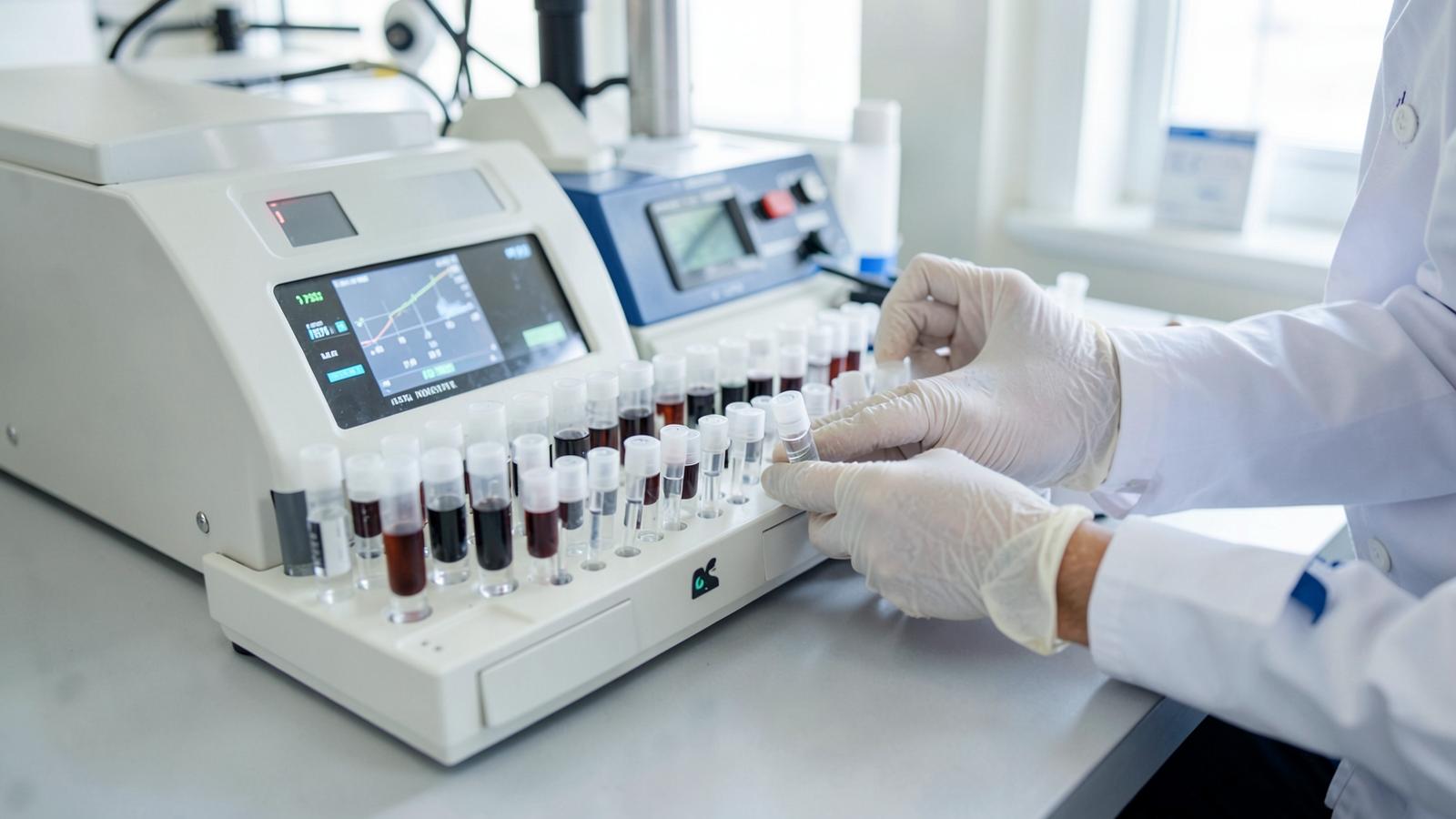 Dr. Dereck Mush, MD, MBA
 Dr. Dereck Mush, MD, MBA
 Dr. Dereck Mush, MD, MBA
Keep exploring