AI agents are beginning to look less like clever chatbots and more like coworkers. In pharmaceutical R&D, that could change how researchers search, organise and interpret evidence. It could also create new problems when an answer looks plausible but cannot be trusted.
Sanofi chief digital officer Emmanuel Frenehard and
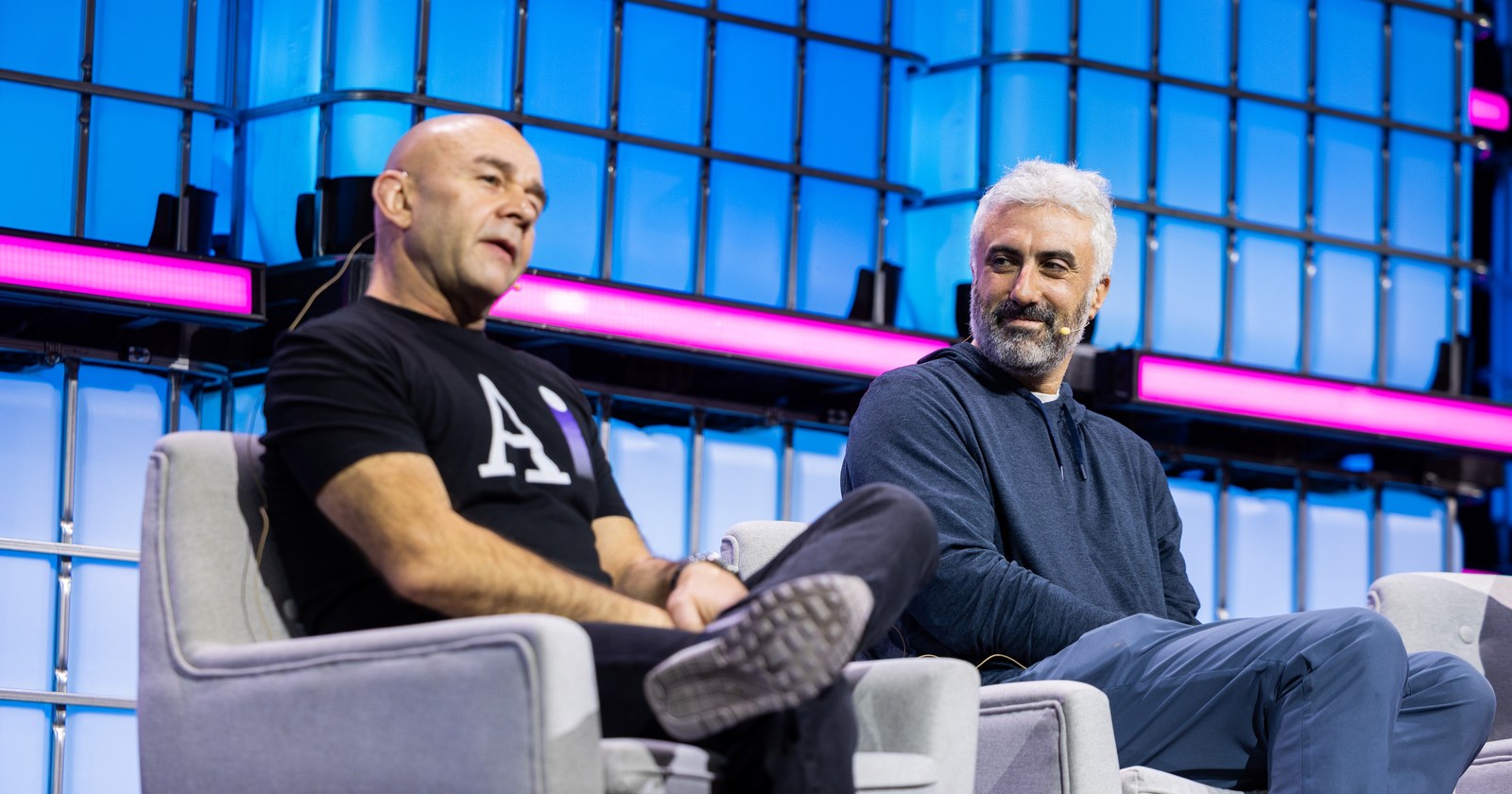
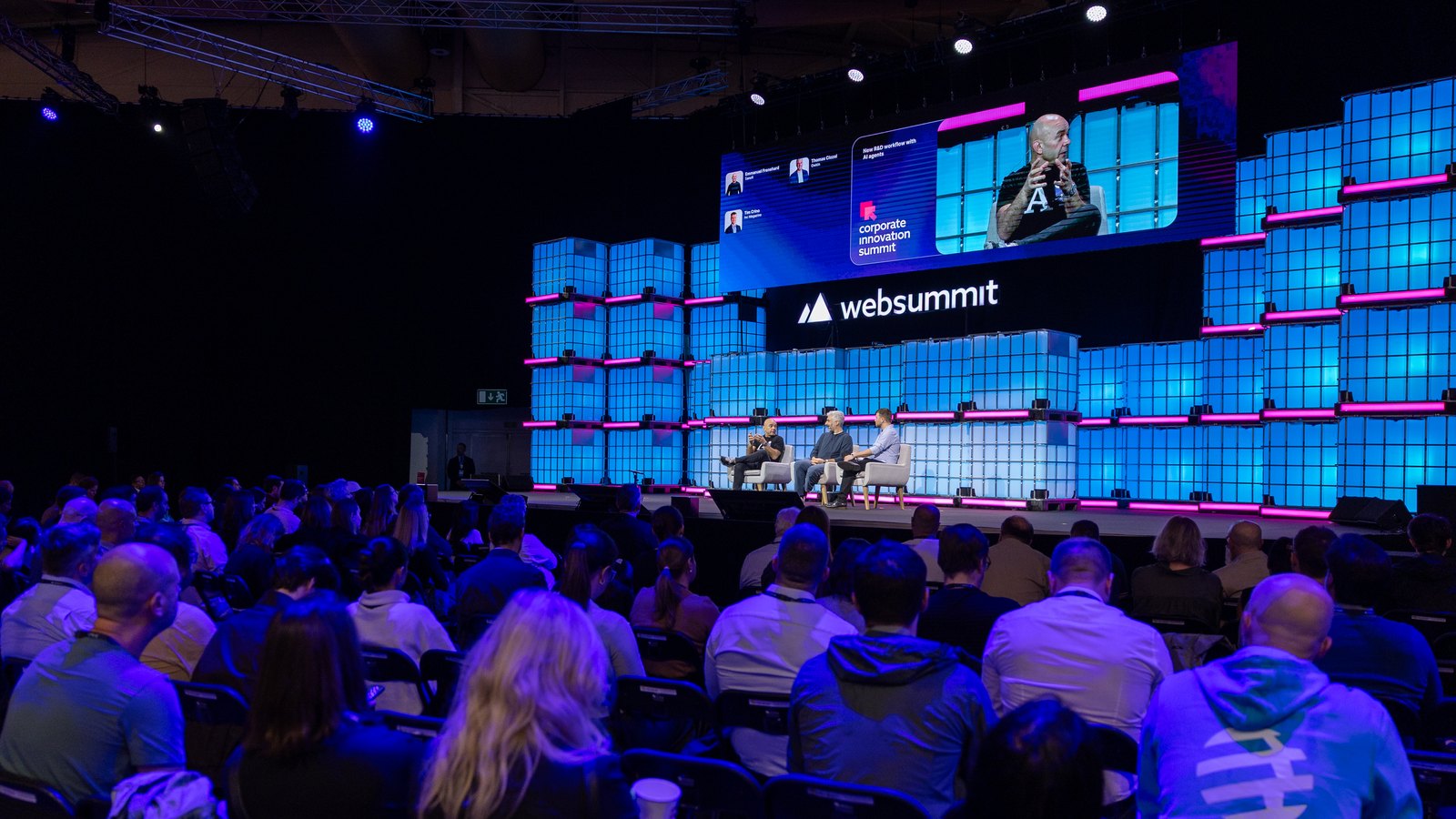
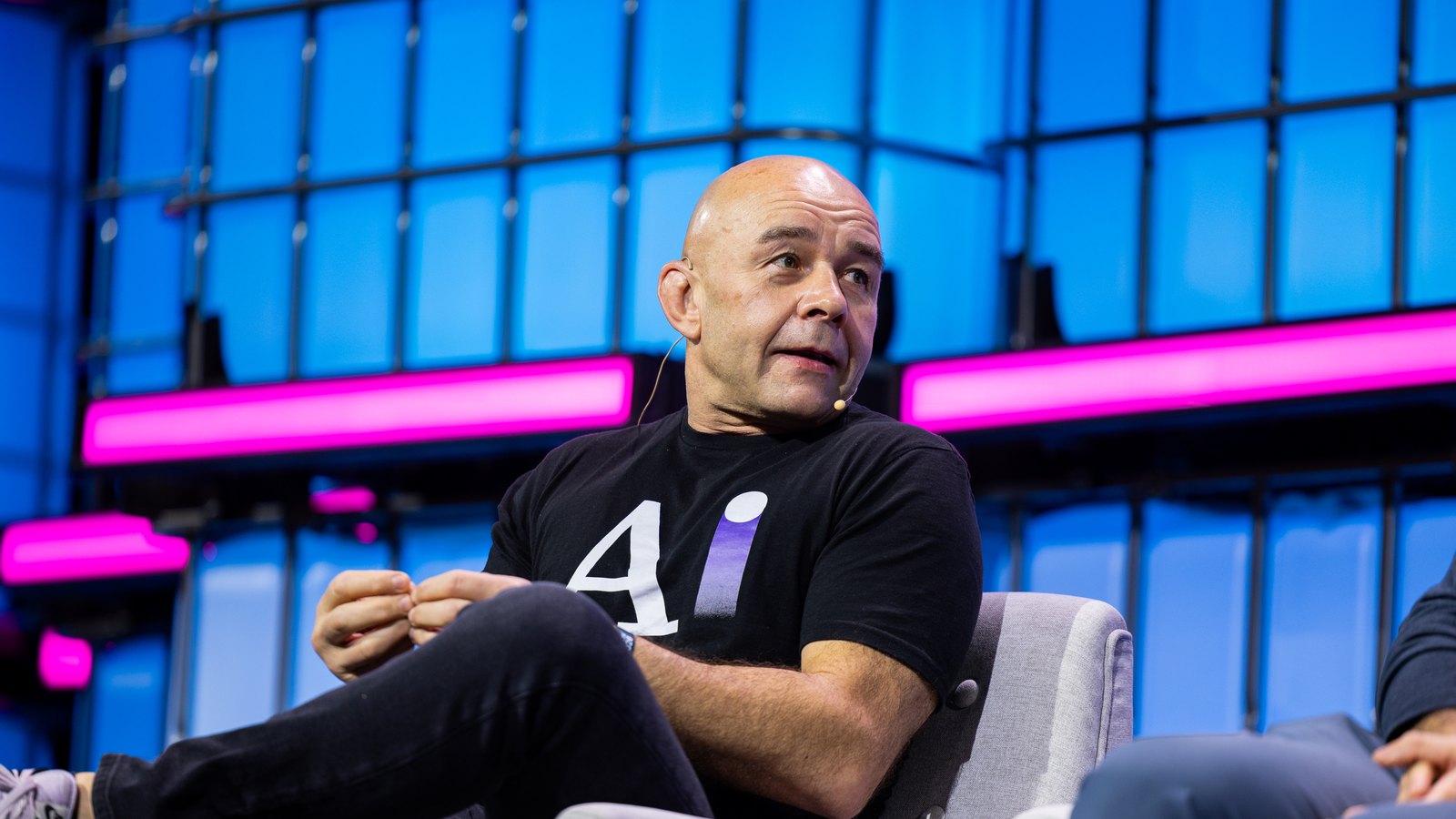
Owkin co-founder and CEO Thomas Clozel appeared at Web Summit Lisbon on November 10, 2026, for a discussion billed around AI agents in drug research. The important commercial context predates the conference: the companies had already announced their collaboration around
Owkin's K Pro platform in June 2026.
AI agents in the research workflow
Frenehard and Clozel brought the perspective of a pharmaceutical operator and a specialist AI company to the discussion of research workflows. Their multi-year K Pro collaboration, announced in June 2026, provides a concrete example of the work behind that conversation.
The K Pro collaboration
The June 2026 announcement described a multi-year collaboration involving Owkin's K Pro, a platform for research workflows. The companies presented the work as an effort to bring agentic capabilities into pharma R&D, making scientific information easier to navigate and research processes more efficient.
For scientists, the attraction is obvious. Research teams spend substantial time retrieving publications, interpreting internal knowledge, comparing findings and preparing material for decisions. Tools that can carry out parts of those workflows might reduce repetitive work.
But the operating standard should be higher than “the agent generated a sensible report.” Scientific work depends on provenance, reproducibility and being able to check the assumptions behind a conclusion. An agent must not silently turn weak evidence into a confident recommendation.
Where the real value would appear
The hardest tests are not on-stage demonstrations. They are whether researchers can verify source material, whether an incorrect claim is caught before influencing an experiment, and whether teams save time once review and validation work are included.
There is also a difference between accelerating discovery and demonstrating that a drug works. A productivity gain in literature analysis is not, by itself, evidence of better clinical outcomes, faster approvals or successful trials. Each requires evidence beyond a workflow productivity measure.
It is worth monitoring Sanofi and
Owkin because their collaboration connects a large pharmaceutical operator with a specialist AI company. But the evidence that ultimately matters will come from documented use cases and measurable results, not from the vocabulary of “agents.”
What the partnership could make possible
The Lisbon discussion followed the companies' June announcement of a multi-year collaboration around K Pro. Scientific provenance, reproducibility and review are central to assessing an AI agent's value in those workflows.
AI will probably become part of the scientific workflow. The companies that earn trust will be the ones that make it easier to verify scientific reasoning, not merely faster to produce it.
Why drug discovery is an appealing target for AI agents
Drug research involves large amounts of information and repeated decisions. Scientists investigate biological mechanisms, compare candidate molecules, assess evidence from experiments and coordinate work across specialist teams. Some of those activities involve searching, organising and comparing information, which are natural targets for computational assistance.
The promise of an agentic system goes a step beyond generating a summary on request. In principle, a tool might retrieve relevant research, organise a proposed investigation and help a scientist move through several related tasks. But this does not mean the system is autonomously inventing approved medicines. Its capabilities must be described in relation to the actual research workflow and the level of human oversight.
Sanofi and
Owkin were discussing a problem where the consequences of false confidence can be costly. A persuasive but incorrect scientific explanation may send a team toward the wrong target or obscure an important limitation in the data. A useful AI agent needs ways to surface uncertainty and trace its outputs back to verifiable information. Fluency in scientific language is not a measure of scientific validity.
The K Pro collaboration, announced in June 2026, focuses on bringing agentic capabilities into pharmaceutical research workflows. Its value depends on the specific tasks being supported and the evidence that researchers can verify.
What human oversight means in research
Human oversight is often presented as a simple safeguard, but its quality depends on what researchers are being asked to review. If an agent produces a recommendation without showing how it arrived there, placing a scientist in the final approval step may create only an illusion of control. The scientist still needs access to the evidence, assumptions and limitations that informed the result.
A useful workflow would allow an expert to inspect the underlying material, challenge a claim and understand which part of an output was retrieved from a source versus generated as an inference. That distinction is particularly important when systems combine structured experimental results with published literature and internal research documents.
The other challenge is volume. If an agent produces hundreds of recommendations that are superficially plausible, reviewers may struggle to give each one meaningful attention. Automation that reduces time spent searching but dramatically increases the amount of review required may not save the organisation much time overall. Measuring end-to-end researcher workload is therefore more meaningful than measuring the speed at which the system generates text.
The best use cases may initially be narrow. An agent that reliably extracts and organises specific information from documents could be valuable without claiming to determine the next breakthrough therapy. Ambition is not the same as deployment readiness, and the highest-impact application may be one that removes a persistent research bottleneck.
The evidence question: faster work or better science?
Pharmaceutical R&D is full of intermediate metrics. A platform can process more documents, suggest more hypotheses or complete a computational task more quickly. Those are potentially useful measures, but they do not demonstrate that the resulting drug candidates are superior or that a programme will reach patients sooner.
To assess a claim of value, buyers and partners need to know which stage of research has changed. Did scientists find relevant information faster? Did the platform help them select candidates that subsequently performed better in experiments? Was the system evaluated against an established workflow? Were decisions reviewed prospectively, or are the results drawn from a retrospective example?
A small improvement in a genuine bottleneck may be more valuable than a large percentage increase in a task that did not limit progress. That is why serious evaluation should identify the operational problem first and the AI performance measure second. Without a clear baseline, phrases such as accelerated discovery tell us little.
There is also a difference between proof of technical capability and the economics of a long research programme. A system may be useful in a laboratory but expensive to integrate, maintain or validate across multiple teams. The value proposition eventually has to account for time, staff effort, information quality and the costs of correcting mistakes.
Data access is part of the product
Drug research involves sensitive and commercially valuable information. A system helping scientists navigate internal records must operate within access rules that already apply to those materials. The ability to search across departments can be useful, but it should not allow an agent to expose information simply because it was able to retrieve it technically.
For external collaborations, the questions become even more specific. What information may be processed, who controls it, and what happens to it after a project ends? Can a model use confidential material to improve itself for other customers? These questions cannot be answered through a general claim that a model is secure. They depend on the architecture, agreements and actual operation of the system being deployed.
Reproducibility matters too. Scientists need to be able to identify which inputs, version and settings led to a particular output. If an agent's recommendations shift as models are updated, the organisation must decide how to document and review those changes. An exciting demo may tolerate variability; a research programme making consequential decisions needs stronger traceability.
The next opportunity for research teams
The questions worth pursuing are practical: which research tasks have agents taken on, how is performance measured, how much human review is required and what errors have the teams encountered? It would also be valuable to understand whether the collaboration has changed decisions inside a real research programme or remains primarily a technology-development effort.
Sanofi and
Owkin have the resources and domain expertise to make the topic worth watching. Their presence on stage is news about the people and the conversation. The stronger future story would be evidence that a specific agentic workflow makes pharmaceutical research demonstrably more reliable or productive. Until that evidence is public, the opportunity is compelling but the outcome remains unproven.