
At Web Summit's opening night in Lisbon, Gonçalo Matias delivered an unusually direct message about artificial intelligence in healthcare: time is a clinical resource.
His argument was about how hospitals manage beds, queues and bottlenecks. AI, he suggested, could help decision-makers see pressure building across a system and move resources before patients lose more time waiting. Then came the headline line: the government had already seen waiting times fall from years to days.
It is the kind of claim that deserves attention, particularly in a country where long waits for specialist appointments and surgery have been a persistent concern. It is also the kind of claim a serious HealthTech publication should not publish as settled fact without asking for the denominator.
Which patients? Which service? Which hospital? What period? Was the comparison made against the same clinical priority group? Did AI actually cause the improvement, or was it one component of a wider redesign? These questions do not diminish the promise. They determine whether the promise is real.

Why the underlying problem is substantial
Portugal's 2025 Country Health Profile, published through the OECD and European health-system reporting process, describes waiting lists that remain significant despite rising hospital activity. At the end of 2024, more than 200,000 people were awaiting surgery and approximately 925,000 were waiting for an initial specialist appointment. The report says 55% of those waiting for first specialist consultations had exceeded the applicable maximum guaranteed response time.
Those numbers are not evidence of what happened at Web Summit in November 2026. They are a baseline showing why access and scheduling matter. They also illustrate why a single dramatic before-and-after figure may be misleading if the scope is not defined.
A patient needing a routine first consultation, a person waiting for a non-urgent imaging slot and someone requiring time-sensitive oncology treatment occupy different clinical categories. Their waiting-time targets, resource constraints and risks are not interchangeable. Improvements in one queue do not establish improvement across the entire health service.
The minister's speech did not identify a hospital, dataset, timeframe or programme capable of independently supporting the “years to days” wording. For now, the responsible description is that Matias made the claim. Confirmation requires the underlying evidence.
Why operational AI deserves more attention
Much of the public conversation about healthcare AI revolves around reading scans, answering clinical questions and generating diagnoses. Those applications are important, but they are not the only places where patient outcomes can be affected.
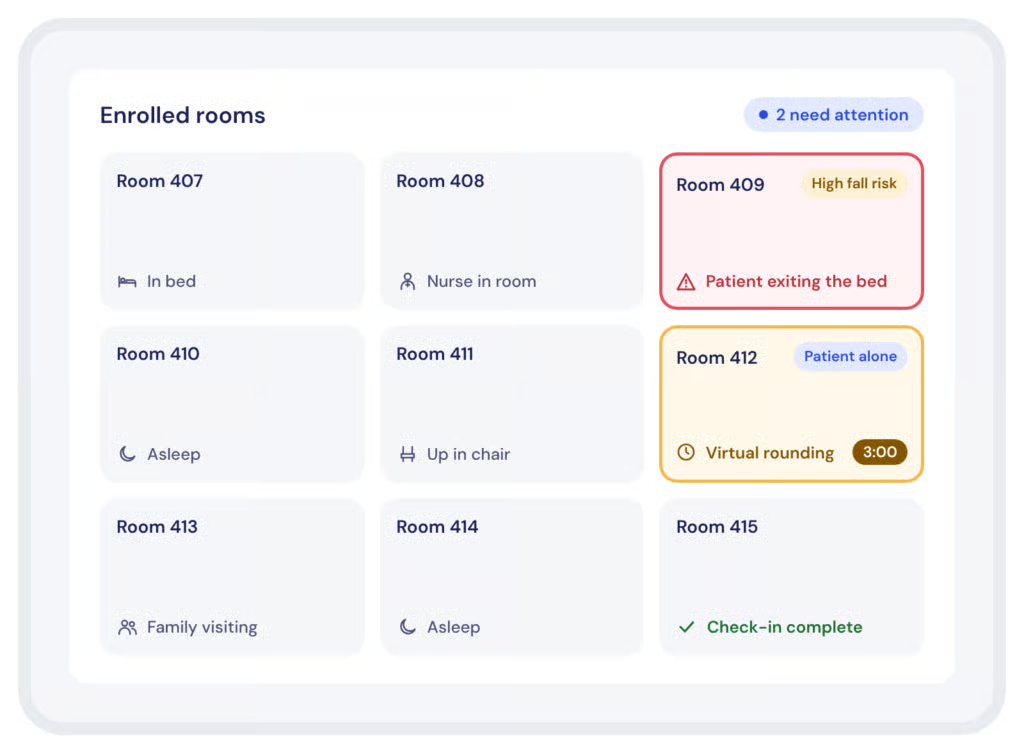
Consider a hospital with operating theatres, inpatient beds, imaging capacity, discharge teams and outpatient clinics. Each part may work competently on its own while the whole system struggles. A patient cannot be transferred because a bed has not been released. A theatre slot becomes unusable because a required test is missing. A scheduled appointment is wasted because the relevant records did not arrive. Clinicians then spend time reorganising work that should have been coordinated earlier.
An operational AI system could potentially detect patterns in those dependencies. It might forecast discharge demand, identify likely bottlenecks, support scheduling or surface capacity that would otherwise be difficult to see. Some of these benefits may also be achieved through conventional analytics, simpler software or basic process redesign. That is an essential comparison, not a reason to dismiss AI.
The clinical benefit is indirect but meaningful. If a hospital reduces avoidable delay without sacrificing safety, it can create more timely access to care. The correct outcome metric may therefore be time to treatment, cancelled procedures or staff hours spent on coordination, rather than the predictive accuracy of a model in isolation.
The difference between a faster queue and better care
Waiting time is not a single number. A useful evaluation should distinguish referral-to-triage, triage-to-appointment, investigation-to-diagnosis, decision-to-treat and actual treatment. If the system makes the first step faster but pushes people into a new downstream queue, the patient may experience little benefit.
A credible study would show how the intervention changed the pathway end to end. It would also examine whether patients with higher clinical urgency improved at least as much as lower-risk groups, whether delays were displaced to neighbouring services, and whether outcomes were sustained after initial implementation support ended.
There is another question that does not always fit into a technology demo: what happens to clinicians who must act on the predictions? A forecast of tomorrow's bed shortage is useful only if someone has the authority, staff and practical ability to respond. If there is no discharge transport, no social-care capacity or no available specialist, the prediction may simply describe the problem more elegantly.
This is where HealthTech meets management. A model is one component of a service. Decisions, responsibilities and escalation rules determine whether it changes care.

What should Portugal publish next?
If the government has a case in which an AI-supported intervention reduced a clinically relevant wait from years to days, publishing a clear evaluation would be enormously valuable. It could help other Portuguese hospitals assess transferability and give international health systems a concrete example to investigate.
At minimum, such a report should identify the setting, size of the patient cohort, baseline distribution of waiting times, measurement dates, comparison method, definition of the AI intervention and concurrent changes to staffing or operations. It should report median waits and outliers, not only an eye-catching example. Where possible, outcomes should be broken down by clinical priority, location and patient group.
It should also make the costs visible. Hospitals must know whether a solution needs expensive integration, additional operational staff, heavy data cleaning or continuous vendor support. A hospital can legitimately invest in a tool that requires resources, but leaders need to know what they are buying and what the full costs look like.
A particularly useful comparison would be AI-enabled workflow improvement versus a well-designed non-AI improvement programme. If the model adds little beyond clearer scheduling rules and better data, buyers should know that. If it adds substantial predictive value in complex conditions, that should be demonstrated too.
A lesson for HealthTech founders
Healthcare procurement is full of products that promise to save time. The stronger proposition is to specify whose time, where it is saved and what happens next. “We reduce administrative workload” is vague. “We reduce repeat scheduling calls for a defined pathway without increasing missed appointments” is testable.
Founders working on capacity management should start with a narrow operational decision. Who makes it today? What information is missing? What alternative action becomes possible with the new prediction? What would count as a harmful recommendation? How would staff know when to override the system?
The answers shape product design and evidence generation. They also make a much better commercial conversation with a hospital buyer who has to defend the expenditure.
One useful feature of the minister's remarks was that he focused on resource allocation instead of presenting another generic vision of intelligent medicine. But the phrase “years to days” sets a high evidentiary bar. An extraordinary improvement should be met with unusually transparent reporting.
The real opportunity
There is a version of healthcare AI that attracts headlines because it appears to think like a doctor. There is another version that quietly helps a hospital use a scarce bed, consultation slot or staff hour more effectively. The second may be less photogenic, but its impact can be measured directly against the patient journey.
Portugal has every reason to pursue it. The country's documented waiting-list pressures make efficient allocation a serious clinical and public-service priority. Yet the credibility of the next announcement will depend on more than the strength of a minister's sentence on stage.
Show the hospital. Show the patient group. Show the baseline. Show the sustained result. If AI has genuinely changed access from years to days in a defined service, that is a story worth publishing in full.
Key Signals
A claim that AI cut waiting times from years to days is only as good as its denominator: which patients, which service, which hospital, which period, and which clinical priority group. Pilots often succeed because of the extra attention around them, so the real test is whether the gain survives routine operation at scale. Time is a clinical resource, and measuring it honestly is what separates a headline from a health-system result.