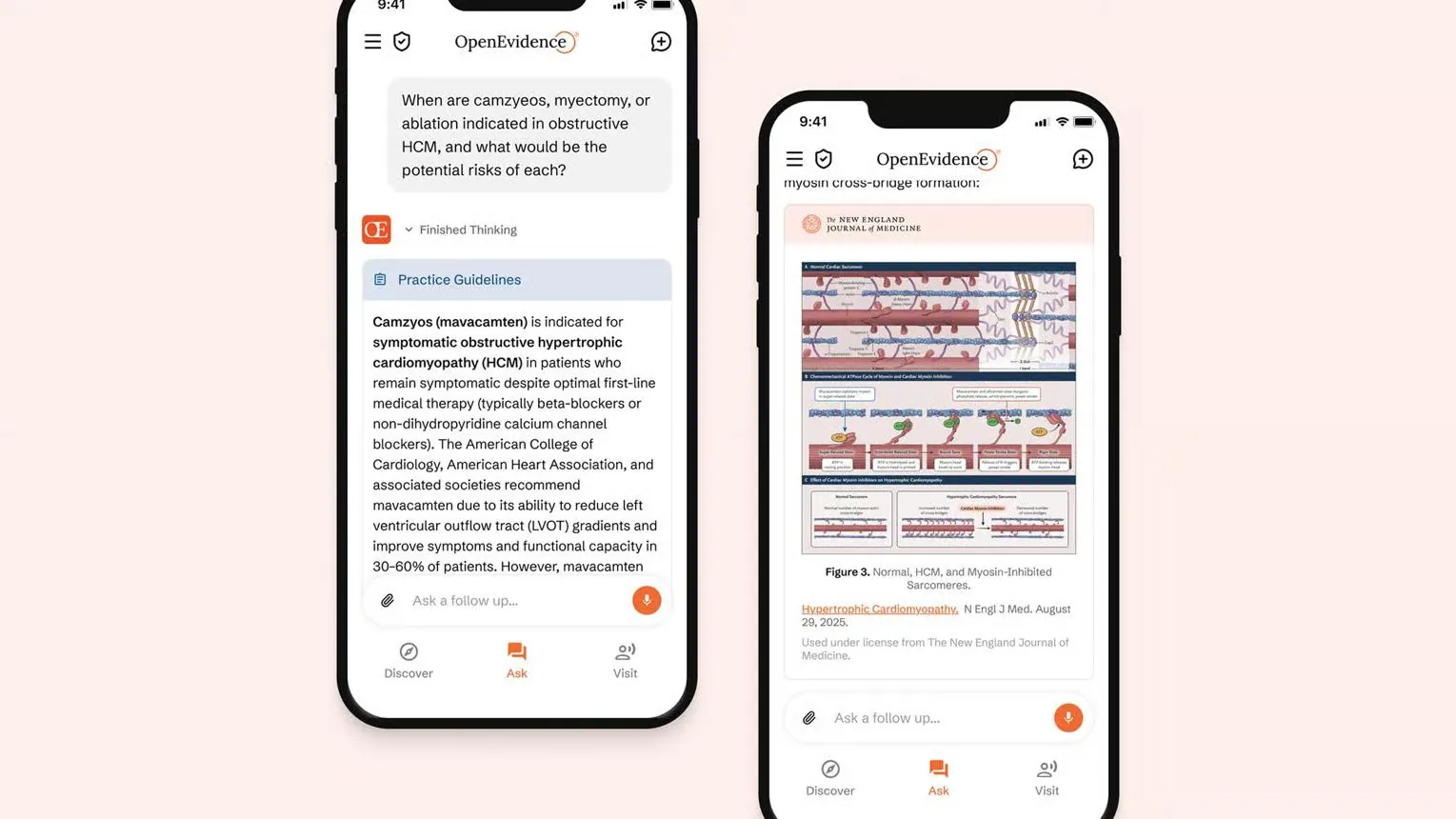
A junior doctor in a Japanese university hospital has a patient with an unusual drug interaction and a senior who is in theatre. She types the question into her phone. About 20 seconds later she has an answer that cites the Japanese guideline, an international trial and the relevant insurance coverage rule, with a link to the exact paragraph each claim comes from.
That is the product Nihin Media sells, and on November 26 it raised ¥520 million, about $3.3 million, to spread it. MedGen Japan is a small company in a big shift: AI evidence assistants for doctors are moving from U.S. novelty to local infrastructure, and the winners in each country may be the ones that know local rules best.
General chatbots know medicine. A national evidence assistant knows the guideline, the drug label and the insurance rule a doctor will actually be held to.
In This Deep Dive
- Why this matters now
- What actually happened
- The obvious read versus the deeper signal
- Historical playbook
- The world forming around national clinical AI assistants
- Category map and taxonomy
- Evidence Ladder
- Regulation and data handling
- Capital flows and bottom-up economics
- The HealthTech Investor's Signal
- Counter-thesis
- Forward Intelligence
- The Bottom Line for Hospital Leaders and Investors
Why this matters now
Doctors already ask general AI tools clinical questions, whether hospitals approve it or not. Nihin Media cites an estimate that more than two-thirds of U.S. physicians use medical-specialised language models, and says adoption in Japan lags far behind. It believes the next one to two years are a turning point for clinical AI in Japan.
Japan is a demanding market for foreign software. Clinical practice follows Japanese guidelines and drug information, coverage is set by national insurance rules, and privacy expectations are strict. e27 reports that MedGen keeps data on servers in Japan and automatically masks patient details typed into questions.
The round also follows a pattern we saw this week in Europe, where Equasens moved to take a majority stake in Synapse Medicine, maker of MedGPT. Local clinical AI assistants are becoming assets that investors and incumbents want to own.
Tier A (fact) for the round, product description and company claims as stated. Tier B (interpretation) for the view that local rules form a moat.
What actually happened
- The round: Nihin Media raised ¥520 million through a third-party allotment in November 2026, with Delight Ventures and SMBC Edge as new investors. e27 reports Delight Ventures led and Antler followed on.
- The product: MedGen Japan searches more than 26 million guidelines and papers from Japan and abroad plus Japan's insurance coverage information, and answers clinical questions in about 20 seconds with verifiable references.
- The transparency features: Answers show each source's evidence level, citation count and why it was selected, with direct links to the cited paragraph, so doctors can check the reasoning rather than trust the output.
- The traction claims: Users at all 82 Japanese university hospitals, with some hospitals in the hundreds; about 90% of new users by referral; one doctor asked more than 800 questions in a month; active-use rate above ChatGPT and Gemini in the second quarter of 2026, per the company's own research.
- The plan: Product development and hiring, using Delight Ventures' growth experience and SMBC Group's business network, with a goal of 100,000 doctor users during 2027.
Doctor asks question
Search guidelines, papers, coverage rules
Cited answer in about 20 seconds
Doctor checks source paragraph
Tier A (fact) as stated by Nihin Media. Usage figures are company-reported; no total user count was disclosed.
The obvious read versus the deeper signal
The obvious read: A small seed-stage round for a Japanese medical chatbot.
The deeper signal: The round buys distribution in a market with about 340,000 doctors where referral networks drive adoption and global tools face local barriers. The investor line-up matters: a well-known Japanese venture firm and the venture arm of a megabank give Nihin Media credibility with hospitals and a route to enterprise and pharma customers.
Tier B (interpretation).
Historical playbook
Clinical reference tools have long been a quiet, profitable business: drug databases, point-of-care references and guideline libraries sold to hospitals and doctors. Generative AI is turning those libraries into conversational assistants, and the companies that hold trusted content or the workflow are moving first.
In the U.S., evidence assistants spread rapidly among doctors through free, individual use before hospitals and pharma advertisers paid. In Europe, MedGPT grew inside existing clinical software before Equasens moved to buy a majority of its maker. In Korea, HUVER's HUVON Chat, which raised seed funding on November 25, offers clinicians evidence lookup alongside hospital agents. Each market is building its own version.
Nihin Media itself has moved fast. e27 reports that it announced an undisclosed round from Coreline Ventures and Antler in February 2026, when it said it wanted to reach tens of thousands of doctors during 2026. The new target is 100,000 doctors during 2027.
The world forming around national clinical AI assistants
Three kinds of player compete for doctors' questions. Global general-purpose chatbots are free and capable but are not built around local guidelines or coverage rules. Global medical assistants bring evidence focus but must localise content and data handling. National specialists such as MedGen Japan, MedGPT in Europe and HUVON in Korea build around local evidence, language and privacy from the start.
Business models are still settling. Nihin Media's site lists offerings for doctors, for medical institutions and MedGen QI for pharmaceutical companies, which suggests a mix of free individual use, institutional licences and pharma services. Which of those pays at scale is the key commercial question.