CAMBRIDGE. On November 23, women invited for routine breast screening in Cambridgeshire became the first to join EDITH, a national trial that asks one of the most practical questions in medical AI: can software safely do the work of one of the two radiologists who read every screening mammogram in the NHS?
The trial is large by any standard. Nearly 700,000 women will be invited across 30 screening sites in the UK. It is funded with £10 million by the National Institute for Health and Care Research (NIHR), led by the University of Warwick, the University of Cambridge and Cambridge University Hospitals NHS Foundation Trust (CUH), and run with NHS England. The UK National Screening Committee helped shape the design.
The question it answers is just as large. If AI can stand in for a second reader without missing cancers or recalling more healthy women, the NHS Breast Screening Programme could free a significant share of scarce radiologist time. If it cannot, the evidence will say so at a scale no vendor study can match.
Every major breast AI vendor has a reader study. EDITH is building the evidence that decides whether a national screening programme changes how it works.
In This Story
- What EDITH is testing
- Why the NHS needs it now
- The evidence before EDITH
- How the trial works for women and clinicians
- What it means for screening services and radiologists
- What it means for AI vendors and founders
- What it means for investors
- The research question underneath
- Regulation and procurement
- Counter-thesis
- Risks and open questions
- What to watch next
What EDITH is testing
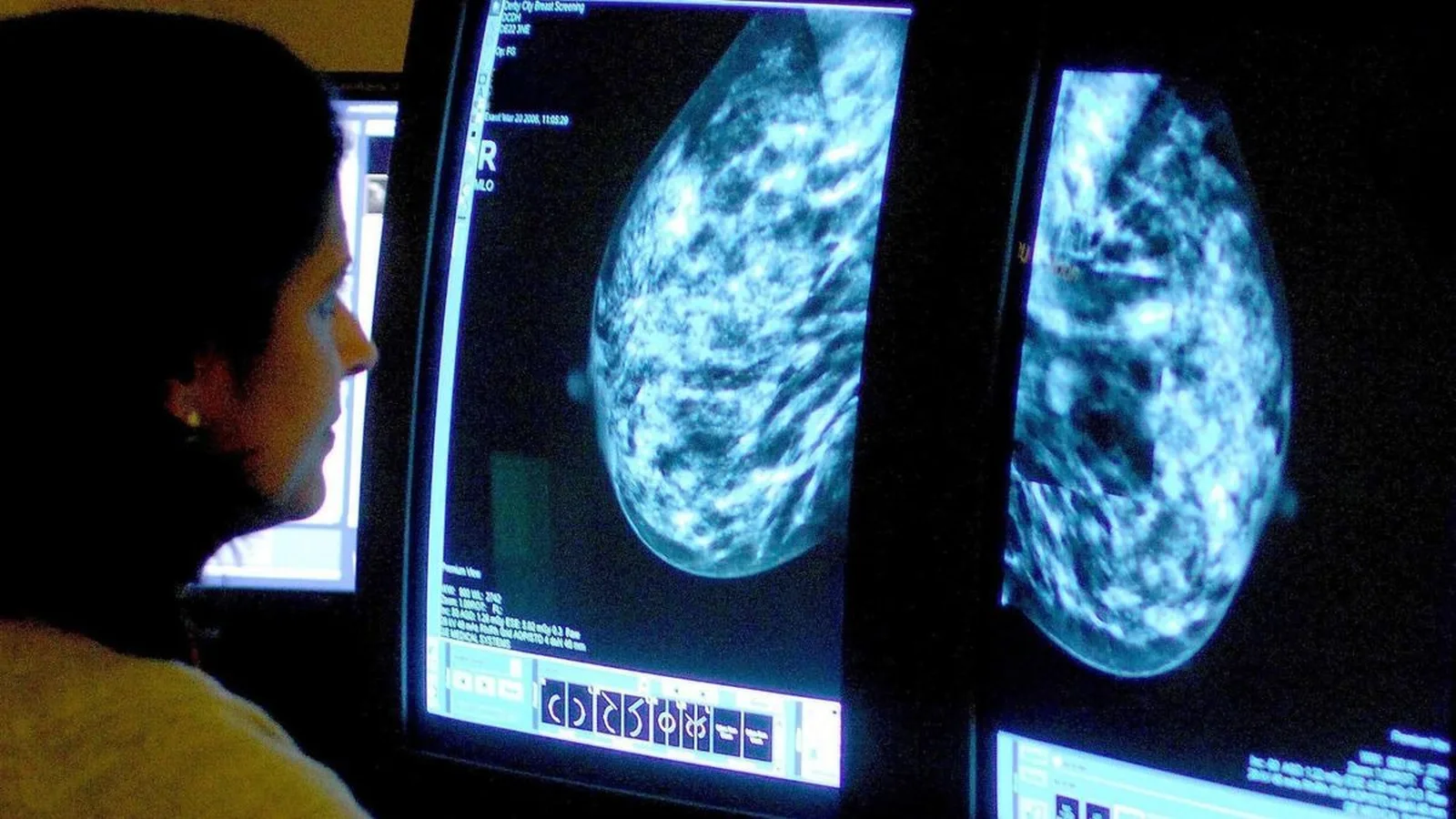
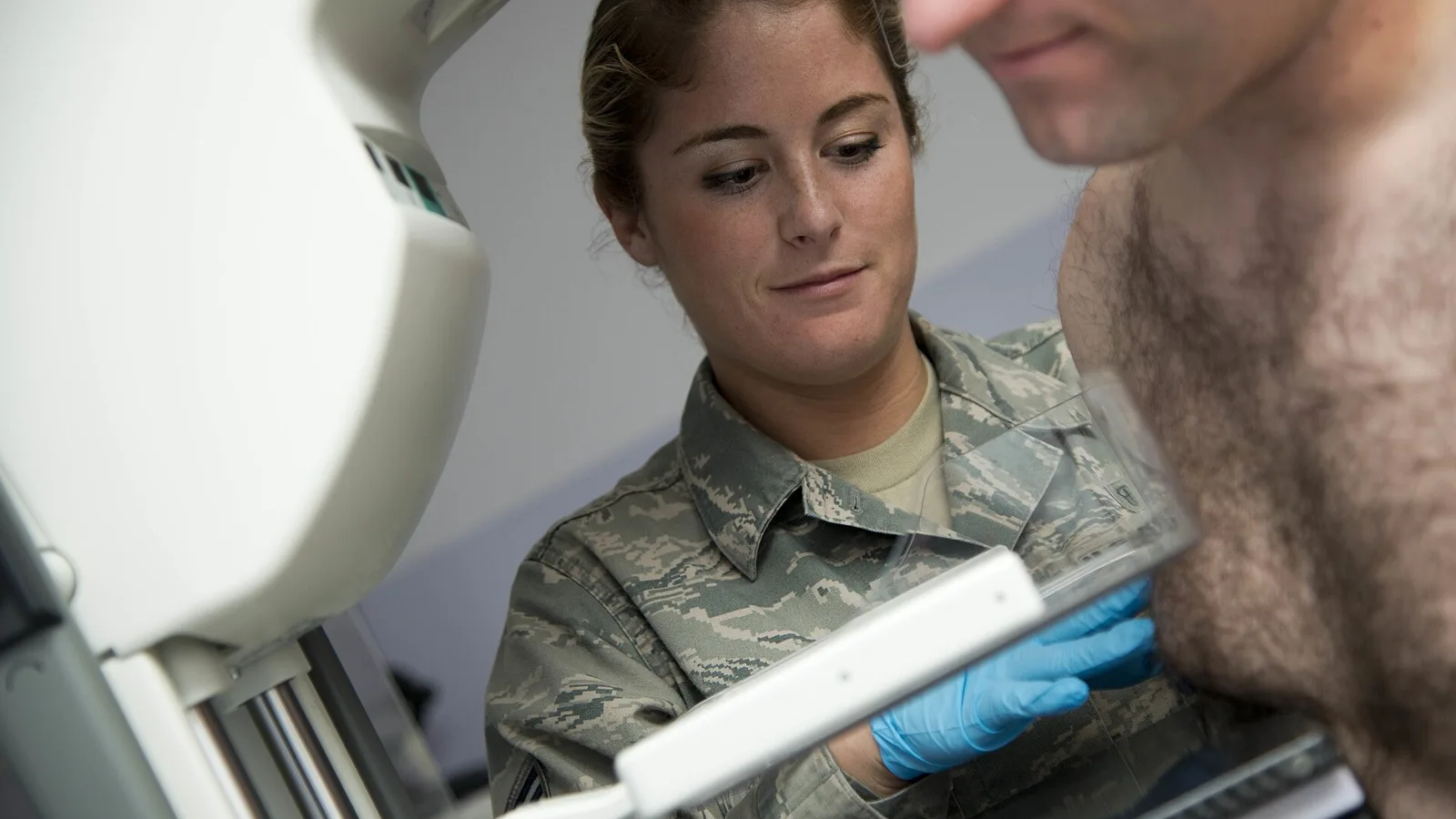
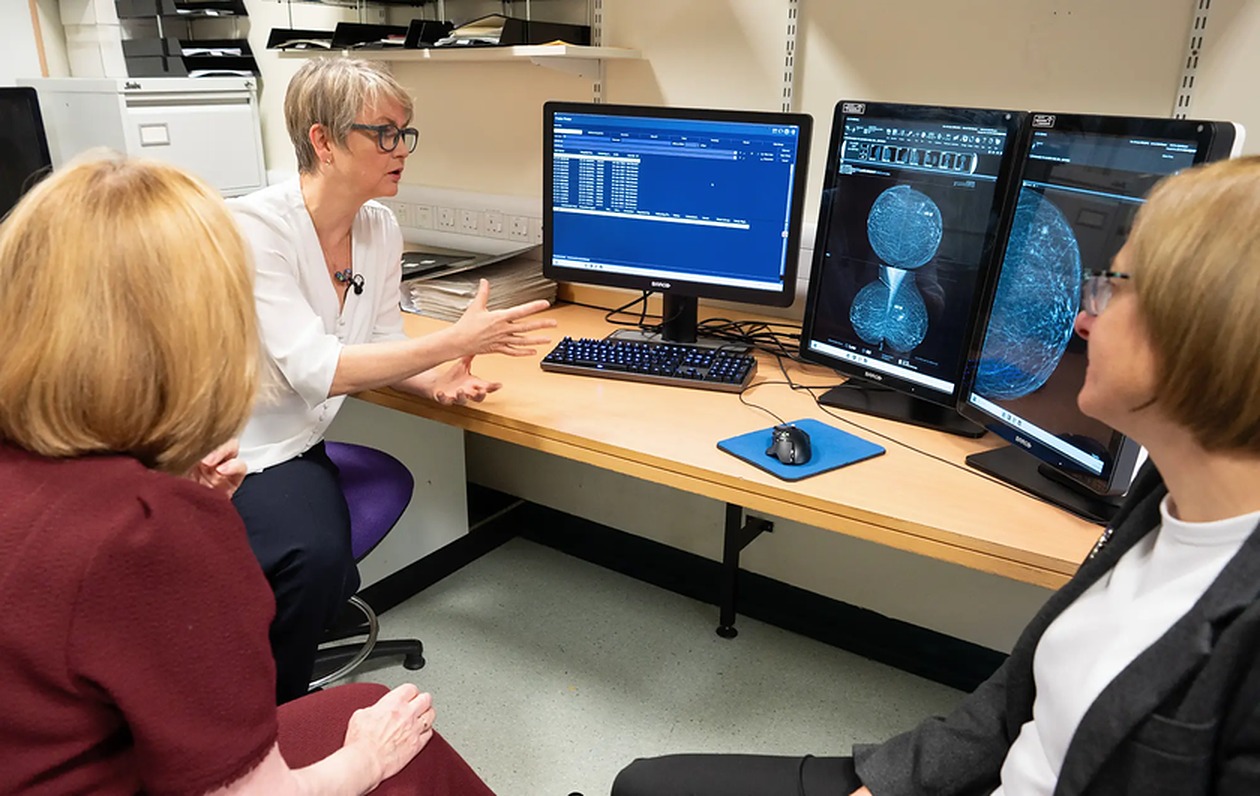
In the NHS Breast Screening Programme, women aged 50 to 71 are invited every three years. Each mammogram is read independently by two specialists, and disagreements go to arbitration. It is a careful system, and a labour-intensive one, because fewer than 1% of mammograms show signs of cancer. Most reading time is spent confirming that images are normal.
EDITH tests whether AI can replace one of those two human readers. The BBC reported that the trial has two AI arms. In one, an AI programme grades images before they are sent to NHS experts. In the other, AI reviews images after the human read. Both are compared with standard double reading.
| Trial element | What has been announced |
|---|---|
| Name | EDITH |
| Recruitment opened | November 23, 2026, at Cambridge University Hospitals |
| Women invited | Nearly 700,000 |
| Sites | 30 breast screening sites across the UK |
| Funding | £10 million from the NIHR |
| Leads | University of Warwick, University of Cambridge, Cambridge University Hospitals |
| Partners | NHS England; UK National Screening Committee helped shape the design |
| Question | Can AI replace one of two human readers safely and effectively? |
| AI arms | AI grades images before human review; AI reviews images after human review |
| Human oversight | Every mammogram read by at least one radiologist |
| AI companies involved | Four (not named in launch materials) |
| Expected duration | About three years |
| Supporting platform | AIR-SP, built by NHS England with nearly £6 million of government funding |
The co-chief investigators are Professor Fiona Gilbert of the Department of Radiology at the University of Cambridge, an honorary consultant at CUH, and Professor Sian Taylor-Phillips, NIHR Research Professor and Professor of Population Health at the University of Warwick. Taylor-Phillips framed the trial's central balance: AI-assisted technology could improve early cancer detection, but the team wants to avoid overdiagnosing milder disease that would never have caused symptoms.
Why the NHS needs it now
The pressure is arithmetic. Around 2.1 million women are screened in the UK each year, according to CUH, and screening helps prevent around 1,300 deaths a year. About 59,000 breast cancers are diagnosed in the UK each year, and the BBC reports that about a third are found through routine mammograms.
At the same time, Gilbert told the BBC there is a "huge shortfall" in radiologists and that the number of imaging examinations is rising by 8% a year. Double reading, the quality standard of the programme, doubles the demand on exactly the specialists in shortest supply.
| UK breast screening context | Figure | Source |
|---|---|---|
| Women screened each year | About 2.1 million | Cambridge University Hospitals |
| Deaths prevented each year | About 1,300 | Cambridge University Hospitals; BBC |
| Breast cancers diagnosed each year | About 59,000 | BBC |
| Share found by routine screening | About one third | BBC |
| Mammograms showing signs of cancer | Fewer than 1% | Cambridge University Hospitals |
| Growth in imaging examinations | About 8% a year | Professor Fiona Gilbert, via BBC |
| Readers per mammogram today | Two | Cambridge University Hospitals |
| Screening age and interval | 50 to 71, every three years | Cambridge University Hospitals |
Health Secretary Yvette Cooper, who visited the Breast Unit at Addenbrooke's Hospital to mark the launch, said AI has huge potential but needs proper safeguards. Kanishka Narayan, the UK Minister for Artificial Intelligence, said the trial puts AI to work alongside expert radiologists to test whether it can spot warning signs sooner. CUH chief executive Nicola Ayton joined the visit.
The evidence before EDITH
EDITH is not starting from zero. Two large European studies have already moved the debate from "can AI read mammograms" to "how should a programme use it".
Sweden's MASAI trial randomised women to AI-supported screening or standard double reading. In results published in The Lancet Digital Health in 2025, AI-supported screening detected 6.4 cancers per 1,000 women against 5.0 per 1,000 with standard reading, a 29% increase, and reduced screen-reading workload by 44.2%, without a significant increase in false positives. Final results published in The Lancet in 2026 showed an interval cancer rate of 1.55 per 1,000 with AI against 1.76 per 1,000 without it, 12% lower and non-inferior, with higher sensitivity and the same specificity.
Germany's PRAIM study looked at real-world use in the national screening programme. Published in Nature Medicine in 2025, it covered 463,094 women screened between July 2021 and February 2023. AI-supported double reading detected 6.7 cancers per 1,000 women against 5.7 per 1,000 without AI, a 17.6% higher detection rate, while recall was slightly lower at 37.4 per 1,000 against 38.3.
| Study | Country | Design | Women | Key result |
|---|---|---|---|---|
| MASAI (Lancet Digital Health, 2025) | Sweden | Randomised, AI-supported vs standard double reading | Population screening cohort | 29% more cancers detected (6.4 vs 5.0 per 1,000); 44.2% less reading workload |
| MASAI final (The Lancet, 2026) | Sweden | Randomised, interval cancer analysis | Same trial | Interval cancers 1.55 vs 1.76 per 1,000 (12% lower, non-inferior) |
| PRAIM (Nature Medicine, 2025) | Germany | Real-world observational, national programme | 463,094 | Detection 6.7 vs 5.7 per 1,000 (17.6% higher); recall 37.4 vs 38.3 per 1,000 |
| EDITH (from November 2026) | UK | Trial of AI replacing one of two readers, two AI arms | Nearly 700,000 invited | Results not yet available |
What EDITH adds is the UK setting, the scale and the specific question. Sweden and Germany use different reading workflows, recall thresholds and populations. The UK programme has its own standards and its own quality assurance, and NHS England has said it will only change how screening works if the evidence shows AI is as safe and effective as current care.
How the trial works for women and clinicians
For women, very little changes. Details of the trial come with the routine screening invitation, along with how to opt out. The appointment itself is the same; only the way images are reviewed may differ. Mammograms are taken at hospital clinics, GP sites or mobile screening vans as before.
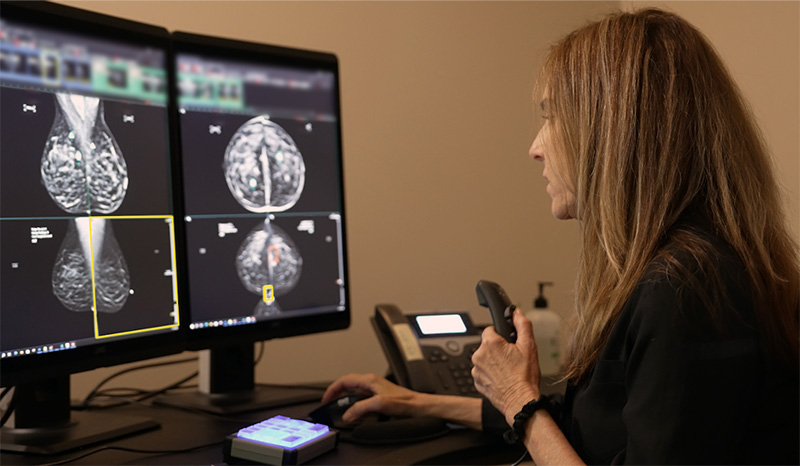
For radiologists and screening staff, the trial changes the reading workflow in the arms where AI participates. The AI flags areas of a mammogram where cancer might be missed, which is how Taylor-Phillips described its role. Every image is still seen by at least one human expert, and Professor Peter Johnson, NHS England's national clinical director for cancer, told the BBC that every scan will still be seen by a specialist.
Underneath the trial sits AIR-SP, the AI research screening platform NHS England built with nearly £6 million of government funding. Its purpose is to make it easier for trusts to join AI screening trials, which matters because integration into each site's systems is usually the slowest part of any multi-site AI study.
What it means for screening services and radiologists
For screening services, the prize is capacity. If one human read per mammogram becomes acceptable for most women, the time saved could go to assessment clinics, diagnosis and care of women with cancer. Gilbert made that case directly, saying technology could free breast radiologists to spend more time caring for patients with cancer.
For radiologists, EDITH is also a test of a new working relationship. Reading alongside AI changes what a human second read is for: less a repeat of the first, more a check on what the software flagged or missed. Training, audit and arbitration rules will need to change if the trial succeeds, and the programme's quality assurance teams will need to measure performance at the level of each reader and each AI product.
For health system leaders outside the NHS, the trial is a reference point. Many European programmes also double read, and many are short of breast radiologists. A positive EDITH result would give them a large, independent dataset to cite in their own business cases.
What it means for AI vendors and founders
Four AI companies are involved in EDITH, according to the BBC, though the launch materials did not name them. For those vendors, the trial is the most valuable evidence opportunity in screening AI: an independent, publicly funded study in a national programme, judged on cancers detected, recalls and interval cancers.
For founders building in imaging AI, the lesson is about what buyers will ask for. A regulatory clearance shows a product is safe to sell. It does not show a programme should change its workflow. That second step needs prospective evidence in the buyer's own setting, and national programmes are now generating it themselves. Founders should plan for trials like EDITH as a cost of entry rather than a marketing bonus.
The market is moving in the same direction elsewhere. On November 24, DeepHealth, a subsidiary of RadNet, announced FDA 510(k) clearance for Mammo Risk, which predicts three-, four- and five-year breast cancer risk from 3D mammograms, citing a study of more than 65,000 screening mammograms at 10 U.S. sites. On November 25, Pro Medicus said its subsidiary Visage Imaging received FDA clearance for Visage 7 | AI Mammography, a concurrent reading aid, with a Predetermined Change Control Plan. Detection, risk prediction and reading support are converging into one breast imaging AI category.
| Recent breast imaging AI milestones | Date (2026) | What happened |
|---|---|---|
| EDITH recruitment opens | November 23 | NHS trial of AI replacing one of two readers begins at CUH |
| DeepHealth Mammo Risk | November 24 | FDA 510(k) clearance for image-based 3-, 4- and 5-year risk prediction from 3D mammograms |
| Visage 7 | AI Mammography | November 25 | FDA 510(k) clearance for a concurrent reading aid, with a Predetermined Change Control Plan |
| AMA Category III CPT code | Effective January 1, 2027 | Tracks use of image-based breast cancer risk assessment, per DeepHealth |
What it means for investors
For investors, EDITH is a demand signal with a long fuse. Public money is paying for the evidence: £10 million for the trial and nearly £6 million for AIR-SP. If the trial shows AI can safely replace a reader, the NHS becomes a large buyer of screening AI at programme scale, and other European programmes are likely to follow its evidence.
Listed exposure to breast imaging AI sits mainly with diversified imaging companies. RadNet (Nasdaq: RDNT) owns DeepHealth, and Pro Medicus (ASX: PME) owns Visage Imaging. For private vendors, the funding question is endurance: a three-year trial means revenue from a national programme decision is several years away, and companies need balance sheets that can wait for it.
Investors should also price the downside. If EDITH shows more recalls or overdiagnosis, the single-reader business case weakens, and value shifts toward tools that support readers rather than replace them, or toward risk prediction, where reimbursement in the U.S. is only now being tracked through a Category III code.
The research question underneath
The hardest outcome to measure in screening is not detection. It is whether extra cancers found are ones that would have harmed women. AI that detects more small, slow-growing cancers could raise detection rates without saving lives, while adding treatment and anxiety. That is the overdiagnosis risk Taylor-Phillips named.
That is why interval cancers matter. These are cancers diagnosed between screening rounds, after a normal screen, and they are the closest practical measure of what screening misses. MASAI's final analysis reported fewer interval cancers with AI. EDITH's design, with AI before and after human reading, should show whether the UK programme sees the same benefit and which workflow delivers it.
| Evidence rung | Question | Status for AI in UK breast screening |
|---|---|---|
| 1. Technical performance | Can AI identify suspicious regions on mammograms? | Yes, across many reader studies and regulatory clearances |
| 2. Prospective detection | Does AI-supported reading find more cancers? | Yes in MASAI (Sweden) and PRAIM (Germany) |
| 3. Workload | Does it reduce reading time? | Yes in MASAI (44.2% less reading workload) |
| 4. Missed cancers | Does it reduce interval cancers? | Yes in MASAI's final analysis; not yet shown in the UK |
| 5. UK programme fit | Is single human reading with AI as safe as double reading in the NHS? | This is what EDITH tests |
Regulation and procurement
AI products used in screening must be regulated medical devices, and EDITH adds a further gate: programme-level evidence. NHS England has said the programme will only change if the evidence shows AI is as safe and effective as current care. Professor Kevin Dunbar, deputy director of public health for England, said EDITH will help build the evidence needed while keeping safety, quality and professional expertise at the heart of the programme.
That has procurement consequences. Trusts that buy breast AI today do so locally and mostly for reader support. A national change to single reading would make the screening programme, not individual trusts, the decision maker, and the four vendors in EDITH would have a head start. The trial also aligns with the NHS 10 Year Health Plan and the National Cancer Plan, which gives it political backing beyond the research budget.
Counter-thesis
The counter-thesis is that EDITH may answer the question too late, or too narrowly. AI products update far faster than a three-year trial runs. By the time results arrive, the models tested may have been replaced, and regulators in the U.S. are already approving change control plans that let products evolve after clearance. A result on a 2026 model may not settle the case for a 2029 model.
There is also a risk that a positive result in a trial setting does not carry over to routine use. Trials have monitoring, support and motivated sites. Routine programmes have staffing gaps, varied equipment and less oversight. Without the kind of continuous post-deployment monitoring the NHS is beginning to build, performance could drift after rollout.
Risks and open questions
- Which four AI companies are in the trial, and will results be reported by product or pooled?
- How quickly will the other 29 sites open, and will recruitment reach close to 700,000 women?
- How will the trial define and measure overdiagnosis within its follow-up period?
- What happens to radiologist training and arbitration if one human reader becomes the norm?
- Will interim results be published, or only final results after about three years?
- How will the NHS keep checking AI performance after any rollout?
What to watch next
- Site openings across the 30 locations and early recruitment numbers.
- Whether the NHS or the trial team names the four AI vendors.
- The breast imaging AI launches and evidence at RSNA 2026 in Chicago, November 29 to December 3.
- Further MASAI publications and any programme decisions in Sweden or Germany based on their results.
- NHS procurement frameworks for screening AI that reference EDITH.
The Bottom Line for Health System Leaders, Founders and Investors
EDITH turns a long argument about AI in breast screening into a measurable national test. For health system leaders, it is the evidence that will decide whether double reading, one of the programme's quality standards, can safely change. For clinicians, it keeps a human reader on every image while testing whether AI can carry part of the load.
For founders and investors, the message is that national evidence, not clearance alone, now decides large screening contracts. The vendors inside EDITH have the best seat. Everyone else should watch the recall and interval cancer numbers, because those, more than detection rates, will decide where the money goes.
Sources
- Cambridge University Hospitals: Cambridgeshire women are first to join world-leading breast screening trial (November 2026)
- NHS England: First women join world-leading AI-assisted NHS breast screening trial (November 2026)
- University of Cambridge: Cambridge co-leading world's largest trial to use AI to help detect breast cancers earlier (November 23, 2026)
- BBC News: Can AI spot breast cancer earlier? NHS launches world's largest trial to find out (November 23, 2026)
- NIHR Be Part of Research: Artificial intelligence to help healthcare professionals detect cancer in the UK breast screening programme
- The Lancet Digital Health: Screening performance and characteristics of breast cancer detected in the MASAI trial (2025)
- The Lancet: Interval cancer, sensitivity, and specificity comparing AI-supported mammography screening with standard double reading in the MASAI study (2026)
- Nature Medicine: Nationwide real-world implementation of AI for cancer detection in population-based mammography screening (PRAIM, 2025)
- DeepHealth: DeepHealth receives FDA clearance for first AI to predict five-year breast cancer risk from 3D mammograms (November 24, 2026)
- Pro Medicus: Visage 7 | AI Mammography FDA 510(k) clearance (ASX announcement, November 25, 2026)