Key Signals
- November 24, 2026: Great Ormond Street Hospital (GOSH) announced a 15-month "Agentic Hospital" programme with Hyland and Amazon Web Services (AWS), supported by NHS England funding.
- The programme runs until the end of October 2027. AI agents will run alongside current manual processes, so results can be compared before anything is switched over.
- Phase 1 has two use cases: matching supplier statements with invoices and flagging discrepancies, and helping staff find and apply Trust policies.
- Later phases may cover clinically adjacent steps that happen after a clinician has made a decision, such as booking tests or appointments. GOSH says the tools will not make clinical decisions.
- Hyland is designing and building the platform on its Content Innovation Cloud, with its AI Control Tower overseeing and auditing agent activity. AWS provides cloud credits, technical guidance and Amazon Bedrock.
- Each phase ends with a formal review against safety, accuracy, governance and friction criteria. If GOSH continues with agentic AI afterwards, it will run a competitive procurement.
LONDON. On November 24, Great Ormond Street Hospital announced what it calls a first-of-its-kind agentic AI programme in an NHS hospital, working with Hyland and Amazon Web Services. The 15-month programme, which GOSH calls the Agentic Hospital, is supported by NHS England funding and will run until the end of October 2027.
The first jobs are deliberately unglamorous. One set of agents will match supplier statements against invoices and flag discrepancies for finance staff. Another will help staff find the right Trust policy and understand how it applies to a specific question. Nothing in the first phase touches a patient record or a clinical decision.
That restraint is the story. Most hospital AI announcements lead with what the software can do. This one leads with how the hospital will decide whether the software should be allowed to do it.
Generative AI wrote drafts that people checked. Agents take actions inside workflows. GOSH is trying to build the rules for that shift before it scales, and it has promised to share what it learns across the NHS.
In This Story
- What GOSH, Hyland and AWS announced
- Why agents are different from the AI hospitals already use
- How the programme is built
- Why finance and policy search come first
- What it means for NHS trusts, US health systems and vendors
- The market forming around governed agents
- Regulation, data protection and procurement
- Evidence Ladder
- Counter-thesis
- Risks and open questions
- What to watch next
What GOSH, Hyland and AWS announced
The release describes a phased programme that will develop agentic AI tools and run them alongside current manual processes to see how the technology could support hospital teams. Tools are being built now and will be tested in real hospital settings, one phase at a time.
The roles are clearly split. Hyland is working with GOSH teams to design and build the agentic AI platform. AWS is providing cloud computing credits and technical guidance. NHS England is funding the work. GOSH says it chose Hyland and AWS for their expertise in workflow automation, agentic AI and healthcare.
| Programme element | What the release says |
|---|---|
| Name | Agentic Hospital |
| Length | 15 months, running until the end of October 2027 |
| Funding | Supported by NHS England funding |
| Lead | Great Ormond Street Hospital |
| Platform builder | Hyland, on its Content Innovation Cloud |
| Infrastructure | AWS cloud credits, technical guidance and Amazon Bedrock |
| Oversight tooling | Hyland AI Control Tower, which oversees and audits agent activity |
| Data protection | Working closely with the Information Commissioner's Office; data managed under UK GDPR |
| Clinical scope | Tools will not make clinical decisions |
| After the pilot | Competitive procurement if GOSH continues using agentic AI |
The release also puts the work in the context of NHS pressure. It cites the 2025 NHS Staff Survey, in which 31% of NHS staff said they felt burnt out because of their work.
Why agents are different from the AI hospitals already use
Most AI inside hospitals today does one of two things. It classifies, as imaging models do when they flag a suspected bleed on a CT scan. Or it generates, as ambient scribes do when they draft a clinic note for a clinician to edit. In both cases a person reviews the output and decides what happens next.
The GOSH release draws the line explicitly. Unlike generative AI, it says, agentic AI goes beyond generating answers or summarising information. It can coordinate tasks and take action across workflows, operating within defined rules and safeguards, with human oversight.
That changes the risk. A draft that a clinician ignores costs a few seconds. An agent that posts a payment to the wrong supplier, books the wrong test or sends a message to the wrong patient creates work and possibly harm. The governance question moves from "is the answer right?" to "was the action allowed, was it right, and can we prove it afterwards?"
| Type of AI | What it does | Who acts | Typical hospital example |
|---|---|---|---|
| Classification | Scores or flags an input | Clinician acts on the flag | Imaging triage for suspected hemorrhage |
| Generation | Drafts text or summaries | Person edits and sends | Ambient clinical documentation |
| Agentic | Plans steps and takes actions within rules | Software acts, people review exceptions | Matching supplier statements to invoices (GOSH Phase 1) |
How the programme is built
The technical design follows the governance goal. Hyland's Content Innovation Cloud, built on AWS, lets agents securely access the information they need to understand the full context of a task and complete it from start to finish. Amazon Bedrock lets the team choose different AI models for different tasks rather than committing to one model for everything. Hyland's AI Control Tower provides oversight and auditing of what the agents do.
Three design choices stand out.
First, the agents run in parallel with people. The programme will run tools alongside current manual processes. That gives GOSH a direct comparison: the same supplier statements reconciled by staff and by agents, the same policy questions answered both ways.
Second, every phase is gated. Each phase ends with a formal review against criteria including safety, accuracy, governance requirements and the ability to reduce friction in daily work. Decisions about future phases will only be made after those assessments.
Third, people stay in the loop by design. All tools will operate with human oversight, and human review checkpoints will let GOSH staff review or escalate tasks based on their complexity and sensitivity.
Dr Shankar Sridharan, GOSH's chief clinical information officer and national clinical lead for artificial intelligence at NHS England, framed the problem this way: "The challenge is not simply making the technology work, but ensuring it can operate safely, reliably and at scale."
Jitesh S. Ghai, CEO of Hyland, described the aim as "a governed foundation that lets those tools actually be trusted with real work, across an entire institution, not just one department at a time."
Ash Thankey, managing director and general manager for the UK, Germany and international organisations in the public sector at AWS, said what works at GOSH "could go on to deliver impact right across the NHS."
Why finance and policy search come first
The two Phase 1 use cases look modest, but they were chosen for measurability and for what they build.
| Phase 1 use case | What the agents do | Why it was chosen, per the release |
|---|---|---|
| Supplier statement reconciliation | Match invoices to statements from external suppliers and detect anomalies for staff review | High-volume, well-defined workflow with clear inputs, clear outputs and a clear way to measure success; fast, measurable proof of value |
| Trust policy discovery and guidance | Turn policy documents into knowledge anyone in the Trust can search, with answers grounded in approved Trust documents | Builds the context layer later agents need; agents cannot act reliably without knowing which content is authoritative and what governs a process |
Reconciliation is a classic test case for automation. A finance team has a statement from a supplier and a set of invoices in its own ledger. Either they match or they do not, and when they do not, someone has to find out why. The release calls it an ideal first proof point for how the agent architecture performs under real operational load.
Policy search is the more strategic choice. Hospitals run on policies: who may do what, under which conditions, with what evidence. If an agent is going to book an appointment or route a request in a later phase, it first needs to know which version of which policy applies. GOSH describes this use case as the foundation that makes every later agent smarter and more trustworthy.
There is a parallel in pharma. On November 23, Munich-based Playbook announced an €8 million round led by Heal Capital for software that turns standard operating procedures and work instructions into structured data that AI agents can read but not change. The logic is the same as GOSH's policy layer: agents need the organisation's rules in a form they can follow, and humans need to control those rules.
What it means for NHS trusts, US health systems and vendors
For NHS trusts, the value is the template. GOSH says findings will be shared across the NHS and the wider health sector. If the phase reviews are published with real numbers, other trusts get a tested governance framework, a set of evaluation criteria and evidence on where agents save time. That could shorten their own approval work.
For US health systems, the programme offers a useful contrast to vendor-led deployments. Several US agent deployments we have covered, such as Innovaccer's patient call agents and Zentist's payment posting agents, start in patient access or revenue cycle, where the return is easy to count. GOSH starts in back-office finance for the same reason, but it pairs that with an explicit commitment to parallel running, gated phases and a competitive procurement at the end. Health system boards asking how to approve agents could borrow that structure directly.
For vendors, the message is that governance is becoming part of the product. Hyland's pitch is not a single agent but a control layer, AI Control Tower, that audits agent activity across the institution. AWS's pitch is model choice through Bedrock. The hospital keeps the right to run a competitive procurement afterwards, so neither company is guaranteed the follow-on contract.
For investors, the programme is a signal about where spending may go once pilots end. If hospitals insist on audit trails, parallel running and policy grounding, vendors that provide those controls, and that can show evaluation data, are better placed than vendors that sell agents alone.
The market forming around governed agents
Governed agents are showing up across healthcare in different forms. The table lists recent, verified examples that share one idea: the rules the agent follows sit outside the model and stay under human control.
| Company or programme | Setting | Control mechanism | Announced |
|---|---|---|---|
| GOSH with Hyland and AWS | NHS hospital back office | Parallel running, phase reviews, AI Control Tower auditing | November 24, 2026 |
| Playbook | Pharma manufacturing and quality | Operating Memory: SOPs as structured data agents can read but not change | November 23, 2026 |
| Zentist | Dental revenue cycle | Autoposting Skills: customer-defined rules agents follow when posting insurance payments | November 24, 2026 |
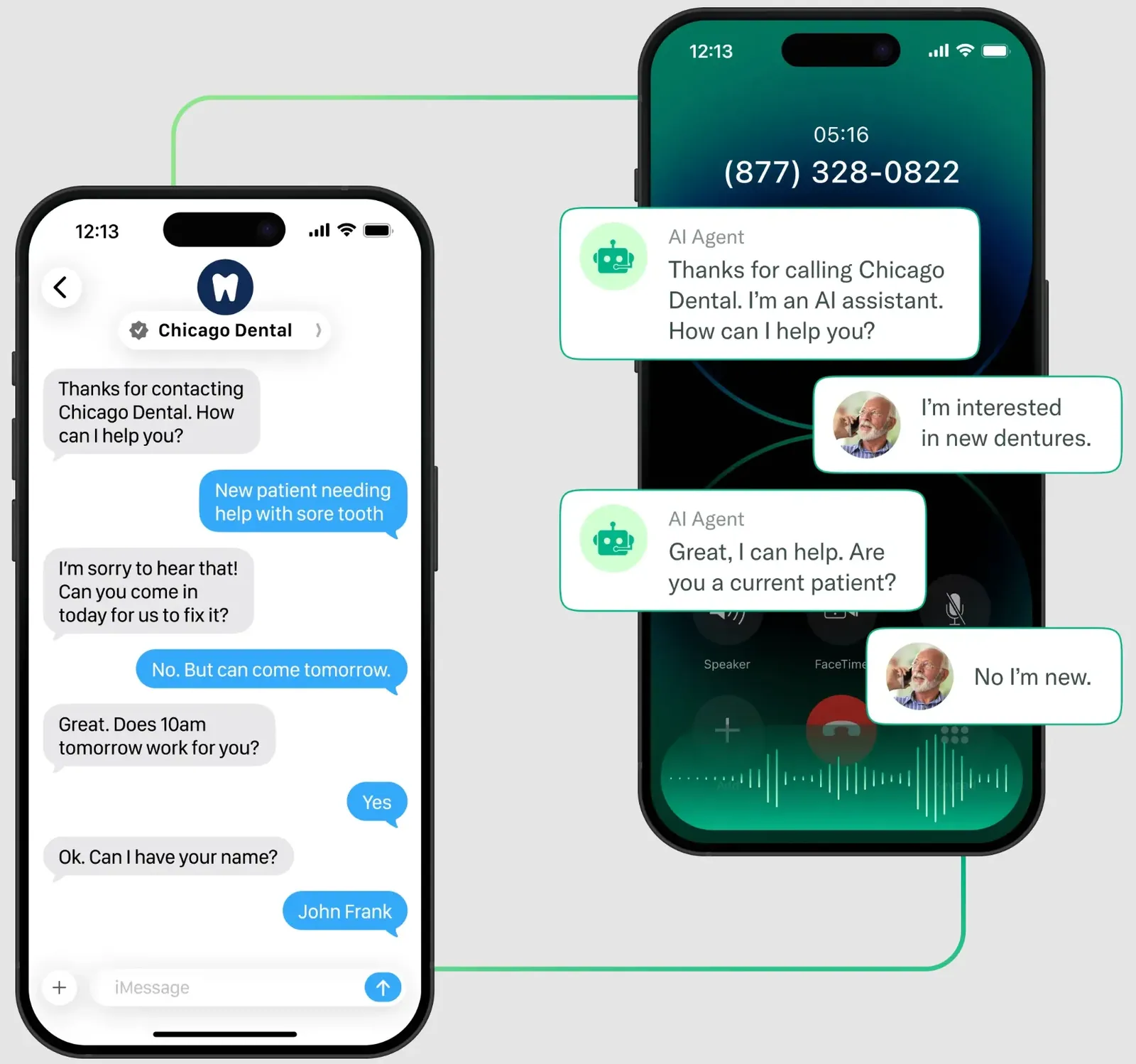
| Innovaccer | Patient calls for health systems and payers | Agents for administrative calls, human in the loop for clinical conversations | November 23, 2026 |
Zentist CEO Ato Kasymov put the customer demand plainly when announcing Autoposting Skills: dental groups wanted to understand why a payment was posted a certain way and change the rules themselves. We covered Innovaccer's voice agents in depth in Voice Agents Move From Answering Calls to Doing Work.
The common thread is that buyers no longer accept agents as black boxes. They want to see the rule, change the rule and audit the action.
Regulation, data protection and procurement
Three frameworks shape what GOSH can do.
Data protection. The release says the team is working closely with the Information Commissioner's Office and that data will be managed in line with UK GDPR. Agents that access finance records, policies and later scheduling systems will process personal data about staff, suppliers and eventually patients, so lawful basis, data minimisation and audit trails matter from the start.
Medical device regulation. GOSH has kept Phase 1 outside clinical use, and says the tools will not make clinical decisions. That matters because software that informs diagnosis or treatment can fall under medical device rules in the UK. Booking tests after a clinician has decided, which the release lists as a possible later phase, sits closer to that line and will need careful scoping.
Procurement. The release states that if GOSH chooses to continue using agentic AI, a competitive procurement process will take place. That keeps the pilot from becoming a de facto contract and gives other suppliers a route in. It also means the evaluation criteria GOSH publishes could become the de facto requirements in later NHS tenders.
The policy backdrop supports the work. The government's 10 Year Health Plan for England, published in July 2025, sets a shift from analogue to digital as one of its core changes. Agents that cut administrative work are an obvious candidate for that agenda, provided they can be governed.
Evidence Ladder
| Rung | Question | Status for the GOSH programme |
|---|---|---|
| 1. Technical feasibility | Can agents complete reconciliation and policy tasks at all? | Plausible; tools are being built now, no results published |
| 2. Parallel accuracy | Do agents match staff accuracy on the same tasks? | Not yet tested; parallel running is the design |
| 3. Operational value | Do agents save staff time and reduce friction? | Not yet measured; a formal criterion at each phase review |
| 4. Governance at scale | Can the hospital audit and control many agents across departments? | The core aim of the programme; evidence due by October 2027 |
| 5. Spread | Do other trusts adopt the framework? | Depends on GOSH publishing its findings |
Today the programme sits at the bottom of the ladder. That is normal for a pilot announced this week, and it is why the phase reviews matter more than the launch.
Counter-thesis
The strongest counter-argument is that the first use cases are too easy to prove much. Invoice reconciliation has been automated with rules-based software for years, and policy search is a retrieval problem that does not need autonomous action. If agents only match what existing automation already does, the programme may produce a governance framework without proving that agents add value beyond simpler tools.
A second concern is cost. Running agents in parallel with staff doubles the work during the pilot, and the long-term cost of model calls, platform licences and oversight staff is not disclosed. NHS trusts under financial pressure will want to see net savings, not just accuracy.
A third is vendor gravity. Even with a competitive procurement at the end, a platform built on one vendor's content cloud and auditing tools can be hard to replace once policies, integrations and staff habits are built around it.
Risks and open questions
- Error handling. What happens when an agent and a staff member disagree during parallel running, and how are those cases counted?
- Audit depth. Will AI Control Tower logs show why an agent took an action, or only that it did?
- Model changes. Bedrock lets the team switch models by task. How will GOSH regression-test agents when a model is swapped or updated?
- Scope creep. Booking tests and appointments after a clinical decision is close to clinical workflow. Where exactly will GOSH draw the line?
- Publication. The release says findings will be shared. Will that include error rates, staff hours saved and costs, or only lessons learned?
- Staff experience. With 31% of NHS staff reporting burnout in the 2025 survey, will staff see agents as relief or as another system to supervise?
What to watch next
- The Phase 1 formal review: reconciliation accuracy, discrepancy detection, time saved and any incidents.
- Whether GOSH publishes its governance framework and evaluation criteria for other trusts to reuse.
- The decision on Phase 2 and which clinically adjacent processes it covers.
- Whether other NHS trusts announce similar programmes, with Hyland, AWS or competitors.
- The scope and timing of any competitive procurement after October 2027.
The Bottom Line for NHS Leaders, Health Systems and Investors
GOSH has done something most hospital AI projects skip: it has written the rules of the trial before showing results. The programme runs agents next to staff, gates every phase on safety and accuracy, keeps clinical decisions out of scope and promises a competitive procurement at the end. If it publishes what it finds, it could save every other trust from designing its own agent governance from scratch.
The evidence, though, does not exist yet. For now there is a well-structured plan, two measurable use cases and strong quotes from GOSH, Hyland and AWS. Leaders should watch for the Phase 1 review numbers. Investors should treat the programme as a signal that hospitals will pay for control layers and evaluation alongside agents, and that vendors without audit and policy tooling will find NHS doors harder to open.
Sources
- Great Ormond Street Hospital: GOSH leading first-of-its-kind agentic AI programme in an NHS hospital, in collaboration with Hyland and Amazon Web Services (November 24, 2026)
- Amazon: Great Ormond Street Hospital announces first-of-its-kind agentic AI programme in an NHS hospital (November 24, 2026)
- AWS: Amazon Bedrock
- UK Government: 10 Year Health Plan for England: fit for the future (July 2025)
- NHS Staff Survey: results
- Playbook: Playbook raises €10.5 million to make AI follow protocol in pharma (November 23, 2026)
- Zentist: Zentist Introduces Agentic AI for Dental Payment Posting with New Autoposting Skills (November 24, 2026)
- Innovaccer: Innovaccer Expands Gravity Voice AI with Grok Voice for Autonomous Patient Engagement (November 23, 2026)