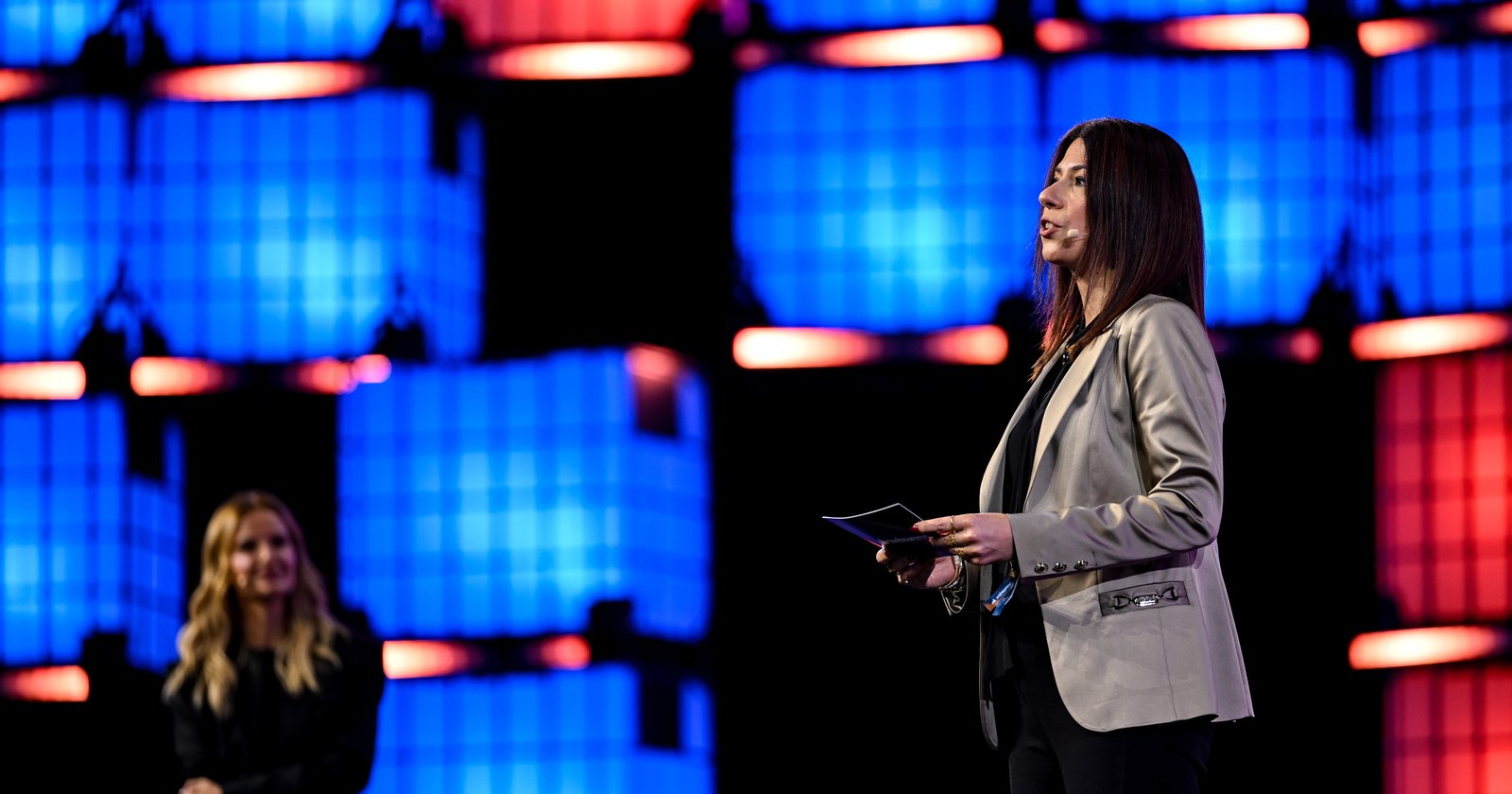
Women have been tracking periods, symptoms, sleep and energy in separate apps for years. Cristina Ferreira thinks the next step is to make those fragments talk to one another. On Web Summit's Centre Stage in Lisbon, she put a name to that ambition: Ask Gira.
The Portuguese TV host and executive unveiled the women's-health AI product on November 12, 2026, alongside Daniela Braga, founder and CEO of Defined.ai. Ferreira said Ask Gira would launch in Portugal in early 2027. She did not announce a price, an evaluated clinical outcome or a regulatory classification.
What is Ask Gira?
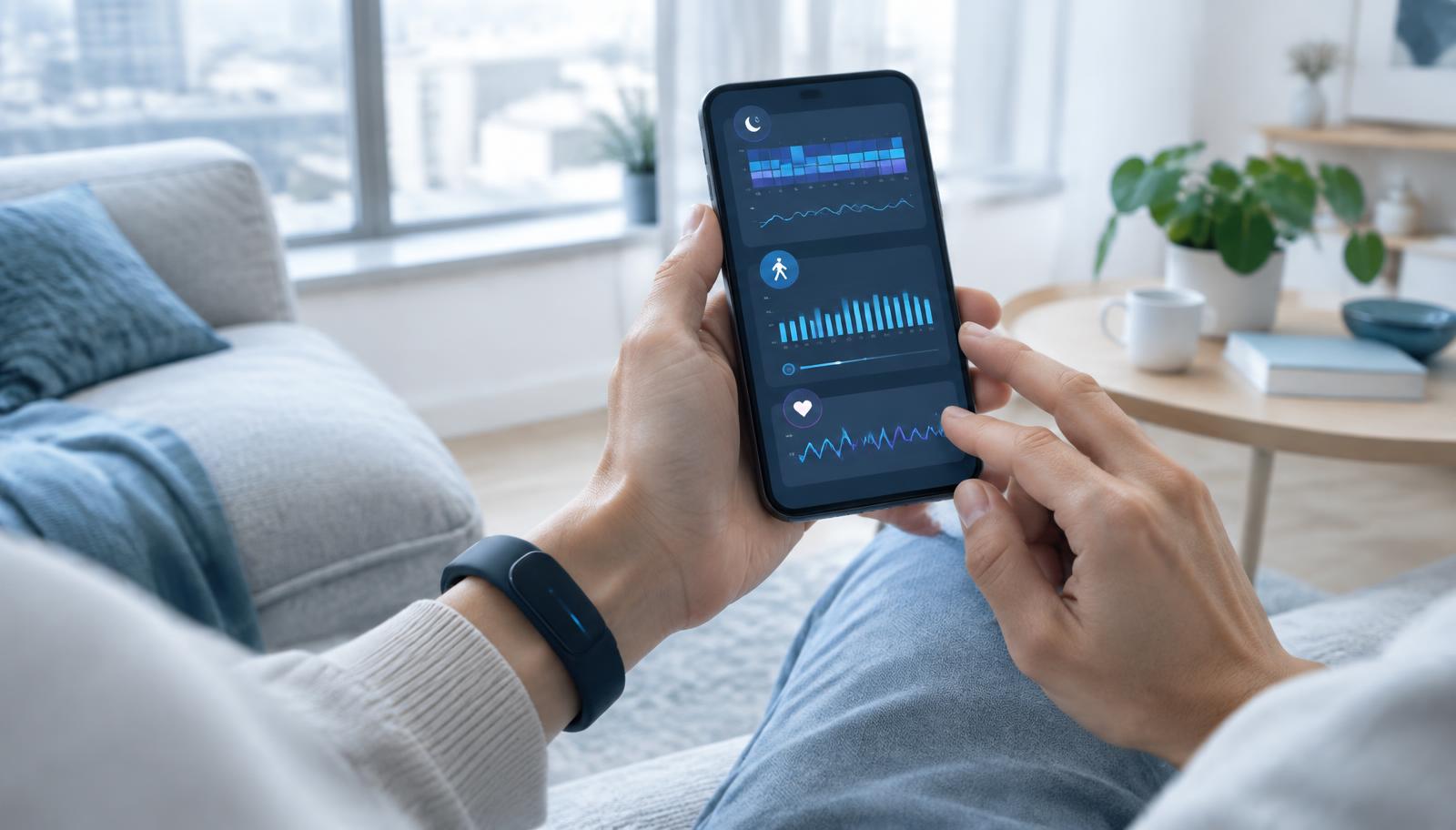
Ferreira presented Ask Gira as a personalised assistant informed by data a woman chooses to share. The launch film connected cycle information, sleep, wearable signals, symptoms, activity and lab results. Instead of asking a generic chatbot why she's tired or sleeping badly, a user would be able to ask a system that has access to her own longitudinal information.
The product demonstration included a luteal-phase view and questions about sleep. Ferreira called it a “Female Intelligence Platform,” contrasting it with single-purpose trackers and general AI assistants. That is the company's proposed category, not, by itself, evidence it has created a new scientific or clinical one.
The idea is appealing. But combining more personal data is not the same as establishing why a symptom occurs. Fatigue, changes in libido, poor sleep and forgetfulness have many possible explanations. Personalisation may make information feel more relevant, while also making an incorrect explanation sound unusually convincing.
What did Ferreira and Braga say about building it?
Ferreira spoke mainly in Portuguese, saying she wanted to celebrate a project developed with Portuguese expertise. She said she had brought Braga into the project and described them as developing Ask Gira together. Braga's own English remarks were more specific about the commercial role: Defined.ai was advising Ferreira's company, she said.
Braga described customising large language models with knowledge from experts in endocrinology, obstetrics and gynaecology, sleep, nutrition and menopause, then connecting that expertise to personal histories and biosignals with consent. That describes a technical approach. The speakers did not present an independent clinical evaluation proving the resulting guidance is accurate or safe.
The two accounts of the relationship are not necessarily incompatible, but they are not identical. The precise legal or development arrangement was not explained on stage.

When will Ask Gira launch?
Ferreira said Portugal would be the starting market in early 2027, followed by broader expansion. A later Público interview described intended markets including Spain, Brazil, the US and UK and reiterated privacy and non-diagnostic messaging.
The launch video included app-store badges. They are not evidence that the application was already available for download in November 2026. The stage also showed an InsurAds partnership slide citing a claimed audience of 1.5 billion monthly users. That describes the partner's claimed reach, not Ask Gira adoption.
The clinical questions that matter as Ask Gira develops
The presentation did not give a pricing model, a clinical study, a sensitivity or accuracy measure, or a defined regulatory pathway. Consent is central to responsible health-data handling, but permission to process data does not validate a prediction. Users should also know what information leaves the device, whether it is used to train models and how uncertain health-related suggestions are communicated.
Ask Gira is a credible story to follow because women's health needs more thoughtful tools. The question is whether the app can turn abundant personal data into guidance women can safely use, not merely produce an answer that feels personal.

Why personalisation can be useful without being medical evidence
The underlying problem Ask Gira addresses is easy to understand. Health information is fragmented. A woman may have menstrual-cycle data in one application, sleep data in another, wearable measurements on her wrist and blood results stored as a document. The connections between those sources may be difficult to see, and a generic chatbot has no access to the history unless the user explains it repeatedly.
Bringing the information together could make it easier for people to notice patterns, prepare questions and have better conversations with healthcare professionals. The value would not necessarily come from discovering a previously unknown disease. Sometimes the useful outcome is simply that a person arrives at an appointment able to describe her symptoms and changes over time more accurately.
But a system that has access to more data can also appear more authoritative. If it notices that someone sleeps worse during a particular phase of the menstrual cycle, it may offer a plausible physiological explanation. That explanation could be informative. It could also be incomplete or wrong, particularly when other factors such as medication, stress, illness or sleep conditions have not been established. A personal history makes an answer more tailored. It does not automatically make the causal explanation correct.
That distinction matters when the product's promotional material raises questions about libido, tiredness, memory and menopause. These are real concerns, but they can have many possible causes. Users need to understand when an AI assistant is offering general information and when symptoms deserve clinical assessment. The more comfortable and personal the interaction feels, the more important those boundaries become.
Making connected health information genuinely useful
Ferreira's presentation emphasised consent. That is an essential design principle, especially for sensitive information about reproductive health. But meaningful consent is not merely a screen with an acceptance button. People need to know what information is being shared, with whom, for what purpose, for how long and whether the data will be used for anything beyond providing their own answers.
The product description raises questions that would be worth putting directly to the team. Can a user connect some data sources without connecting others? Can she remove a device later? Can she inspect or delete information already imported? Are lab results processed only to answer the user's question, or might they have a broader role in model improvement? How does the system distinguish imported measurements from conclusions generated by a model?
None of these questions imply that Ask Gira has mishandled data. They are the practical questions any team building a longitudinal women's-health assistant should anticipate. They also explain why privacy promises must eventually be demonstrated through product design and documentation rather than through reassuring stage language.
Integration is only one part of the technical challenge. Wearables and consumer applications measure different things, at different intervals and with varying reliability. A missing measurement may mean the user removed her device, the battery failed or the integration broke. It does not necessarily mean a physiological event occurred. An assistant that draws conclusions across multiple sources needs a way to represent uncertainty and missing data, not simply turn every available signal into a confident narrative.

How Ask Gira could build confidence with users
The first useful demonstration would be a clear explanation of the tasks the team expects the assistant to perform. Summarising information from connected apps is not the same as identifying a health condition. Explaining a generally accepted relationship between sleep and the menstrual cycle is not the same as establishing the cause of one individual's symptoms. The product may choose to focus on information and guidance, but then the interface, claims and testing should consistently reflect that choice.
A robust evaluation could test whether the assistant accurately extracts information from laboratory documents, represents measurements without distortion and produces answers consistent with the evidence it has been given. It could also examine what happens when a user asks about worrying symptoms or supplies contradictory information. The product should be tested on scenarios where the safe response is to explain uncertainty or encourage a medical assessment, not to improvise a plausible answer.
Clinical outcomes would require a different level of evidence. If the company eventually claims that using the assistant improves health, reduces delays in diagnosis or changes symptoms, those claims should be supported by suitable studies. An engaging demonstration and a team of advisers do not establish that kind of benefit.
Portugal is the launch market, not the proof of concept's conclusion
Ferreira described plans to launch in Portugal in early 2027 and ambitions to expand internationally, including to European markets and Brazil. Subsequent reporting discussed additional destinations and privacy assurances.
The marketing opportunity is obvious. Ferreira has a public profile and an existing brand, while Braga brings a separate reputation in AI data and model development. That combination could help the product reach users quickly. It does not, by itself, settle whether consumers will trust it with sensitive information or whether the advice will prove dependable.
Ask Gira will be worth revisiting once it is publicly available. At that point, the interesting evidence will be much more concrete: which integrations work, what users are asked to consent to, how the assistant handles sensitive questions and whether independent testing supports the capabilities being advertised. Until then, the launch is a significant announcement about a proposed product, not a completed clinical validation exercise.