The Curative Adjuvant Checkpoint Pivot: How Genentech's ATOMIC Approval Redefines Early GI Oncology Economics and Reflex Testing Infrastructure

Dr. Dereck Mush, MD, MBAThe Daily SignalOctober 9, 2026
PLUS: MRI2CT's AI generates 3D bone CTs from routine spine MRIs.

Good morning, HealthTech insiders. The FDA just approved a new way to reduce the risk of colon cancer returning after surgery. In the ATOMIC trial, adding Genentech’s Tecentriq to chemotherapy cut the relative risk of recurrence or death by 50% in patients with stage III mismatch repair-deficient disease. That gives oncology teams a new treatment option, and makes knowing the tumour’s biology central to deciding who should receive it.
And that is only one of three developments changing how care could be delivered in today’s Signal. MRI2CT’s newly announced FDA clearance could help spine teams obtain detailed bone images from an MRI the patient already has, while Viatris has agreed to acquire Pacira for $1.65 billion to expand its non-opioid pain portfolio. Different markets, different technologies, but the same practical question underneath them: how do you turn a better treatment or a smarter tool into fewer setbacks for the patient?
In today's Signal:
Adjuvant colon cancer immunotherapy: Tecentriq plus chemotherapy reduced the relative hazard of recurrence or death by 50% in ATOMIC, supporting a new FDA-approved option for stage III dMMR disease.
More from an existing MRI: MRI2CT’s NextMR Spine generates 3D lumbar spine and sacrum bone visualisations from routine MRI. Its clearance does not establish it as a general replacement for CT.
$1.65 billion pain-management deal: Viatris agrees to acquire Pacira, bringing Exparel and Zilretta into its innovative medicines strategy, subject to closing conditions.
Follow the Money: $144 million plus €50 million across Multiply Labs, Healthleap, Vitalize, and Yazen, spanning biomanufacturing, hospital operations, and medical obesity care.
Become an email marketing GURU for FREE.
GURU Conference, powered by Constant Contact, is back November 12-13. It's 100% virtual and 100% free, and it's packed with tactics you can use right away on newsletters, deliverability, design trends, AI, and what NOT to do with email.
What to expect:
Speakers including Molly Ringwald, Dan Levy, Amy Porterfield, Frank Vella + more
Sessions from world-class marketers at top brands
Networking every day
DJs, world-record breaking, and an alarming amount of rom-com fun!
Last year, 29,000+ marketers joined us. This year is even bigger, and spots are limited.
LATEST DEVELOPMENTS

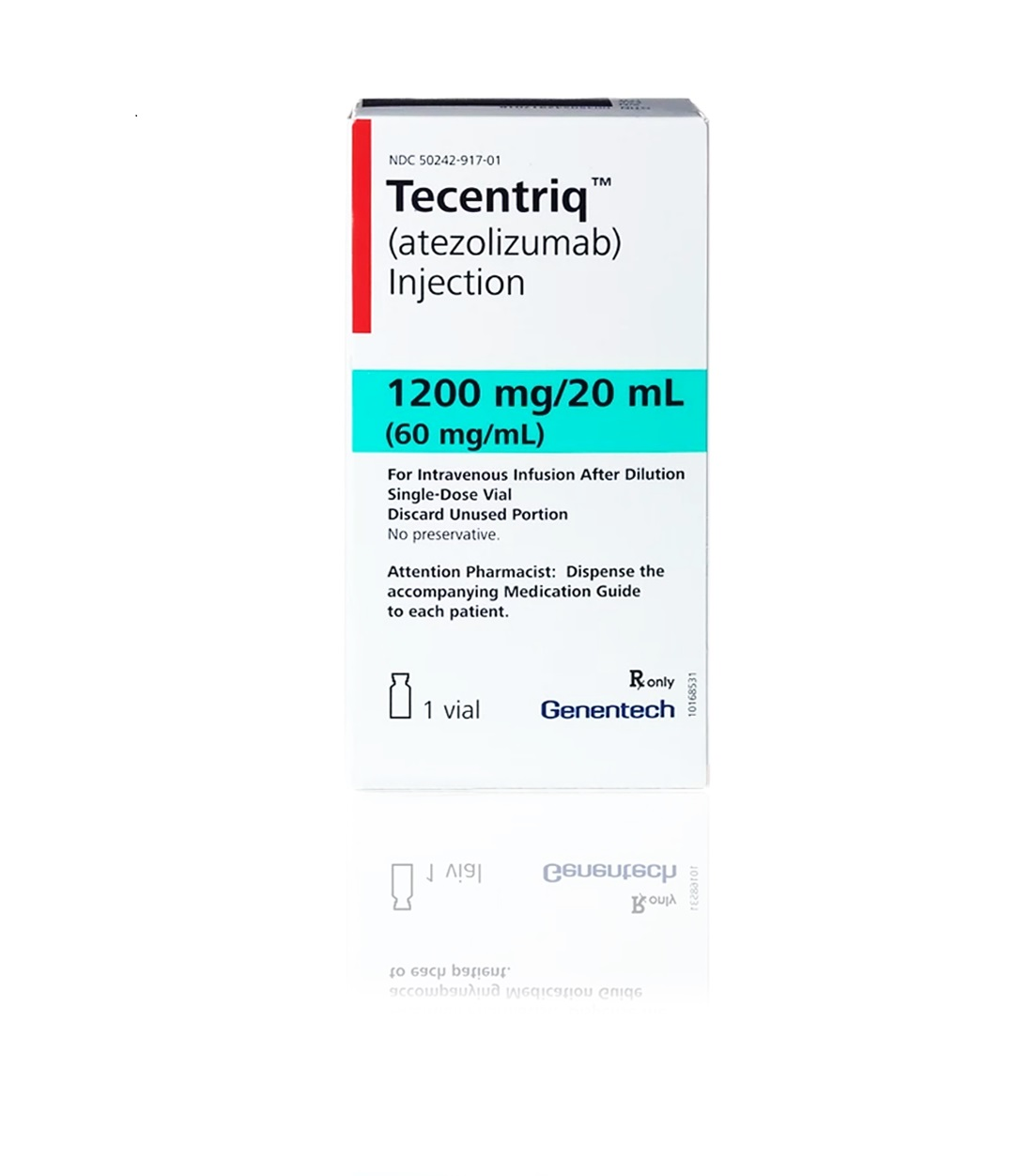
Image courtesy of Roche/Genentech.
On October 8, the FDA approved Genentech’s Tecentriq (atezolizumab) with a fluoropyrimidine and oxaliplatin for adjuvant treatment of stage III mismatch repair-deficient (dMMR) colon cancer.
Intravenous Tecentriq is approved for adults and children aged two years and older. Subcutaneous Tecentriq Hybreza is approved for patients aged 12 and older who weigh at least 40 kg.
The details:
ATOMIC/ML39057 enrolled 712 patients. Adding atezolizumab to mFOLFOX6 reduced the relative hazard of recurrence or death by 50% versus chemotherapy alone: HR 0.50; 95% CI 0.35-0.73; FDA-reported p=0.0001.
At a median follow-up of 40.9 months, published three-year disease-free survival was 86.3% versus 76.2%, an absolute difference of 10.1 percentage points.
The regimen combines immunotherapy and chemotherapy for six months, followed by six months of immunotherapy alone, subject to recurrence or unacceptable toxicity. The demonstrated benefit is disease-free survival; an overall-survival benefit has not been established by these results.
The Signal: This approval gives biomarker status a direct role in selecting adjuvant treatment for stage III colon cancer. For oncology teams, the operational priorities are timely access to MMR results, pathway updates, and coordination of chemotherapy and immune-related toxicity management. The addition of a subcutaneous option also creates a delivery choice for eligible patients.

MRI2CT announced on October 7 that NextMR had received FDA 510(k) clearance. The FDA record lists NextMR Spine under K260525, with a clearance date of September 4, 2026.
The details:
The Class II software enhances MRI images to visualise 3D bone morphology in the lumbar vertebrae L1-L5 and sacrum, for patients aged 18 and older.
It processes conventional T1- or T2-weighted MRI from 1.5T and 3T scanners, producing DICOM images compatible with standard viewing systems. MRI2CT reports generation of 3D bone output in under 60 seconds.
Retrospective paired MRI/CT validation demonstrated mean cortical delineation error below 1 mm. Reported submillimetre accuracy refers to cortical delineation rather than image slice thickness.
The cleared indications explicitly state that NextMR images are not intended to replace CT images generally. Compatibility with third-party surgical devices must be checked separately.
The Signal: NextMR could help clinicians obtain useful bone information from imaging a patient already has. The commercial test is whether selected workflows can safely avoid additional imaging or appointments. Savings and robotic-navigation benefits remain dependent on clinical suitability, compatibility, and evidence from deployment.

Copyright © 2023 Viatris Inc.
Viatris and Pacira announced a definitive acquisition agreement on October 8. Viatris will offer $36.50 per share in cash, representing an aggregate equity value of $1.65 billion and approximately a 45% premium to Pacira’s previous closing price.
The details:
Pacira brings Exparel, a bupivacaine liposome injectable suspension for postsurgical pain, and Zilretta, an extended-release triamcinolone injection for osteoarthritis knee pain.
Pacira generated approximately $746 million in revenue and $177 million in adjusted EBITDA in the 12 months ended June 30, 2026.
Viatris expects to finance the transaction primarily with excess cash and the remainder through short-term borrowing. Closing is expected by year-end, subject to the tender offer and customary regulatory conditions.
Medicare’s temporary additional payments for qualifying non-opioid treatments in hospital outpatient departments and ambulatory surgery centres began January 1, 2025, and run through December 31, 2027 under current policy. This is an existing programme, not a January 2027 launch.
The Signal: The deal advances Viatris’ strategy to expand its innovative medicines business through established products and commercial infrastructure. For surgical providers, the relevant question is how clinical evidence, product-specific payment eligibility, and acquisition costs affect formulary decisions. Separate reimbursement supports adoption; it does not guarantee profitability or market dominance.
QUICK HITS
Adjuvant immunotherapy adoption: How oncology teams incorporate the new approval, manage toxicity, and maintain timely biomarker results. Longer-term outcomes will help clarify the durability of benefit.
MRI-only workflow evidence: Whether NextMR deployments demonstrate fewer additional scans and shorter pathways in clinically appropriate patients, alongside verified third-party compatibility.
Pacira deal completion and pain-treatment access: Progress towards closing, international expansion plans, and how providers use the existing Medicare non-opioid payment programme.
The deals:
Multiply Labs: $75M Series B led by Dr. Patrick Soon-Shiong with NantWorks to scale robotic manufacturing for cell and gene therapies and other advanced biologics.
Yazen: €50M financing led by Verdane, with Evli Growth Partners participating, to expand its medication-supported, multidisciplinary obesity care across Europe.
Healthleap: $38M across seed and Series A funding from Sequoia Capital, First Round Capital, and Hummingbird Ventures to expand AI screening for overlooked conditions in hospital patients.
Vitalize: $31M Series A led by Oak HC/FT to scale AI-powered hospital staffing, scheduling, and capacity management.
The pattern: These rounds share a practical focus: improving the infrastructure behind care. Multiply Labs tackles manufacturing constraints, Vitalize coordinates clinical staffing, Healthleap helps teams identify missed patient needs, and Yazen combines treatment with ongoing support. The investment case depends on turning those capabilities into measurable improvements in cost, capacity, and care.
World Health Summit 2026: Oct 11-13, 2026 | Berlin, Germany & Online
Bringing together global health leaders around “From Crisis to Resilience: Innovating for Health,” with a focus on stronger and more equitable health systems.
Frontiers Health 2026: Oct 20-21, 2026 | bcc Berlin Congress Center, Germany
Connecting digital health innovators, life sciences executives, and investors around healthcare innovation, commercialisation, and adoption.
ABHI UK HealthTech Conference 2026: Nov 9-10, 2026 | Cavendish Conference Centre, London, UK
Exploring UK medtech regulation, AI oversight, NHS market access, and the commercial environment shaping HealthTech adoption.
🏥 Epic Deterioration Index Version 2: FDA-cleared clinical decision-support software using Epic EHR data to flag adult patients at risk of care escalation within 24 hours or mortality within 72 hours.
🫀 Wellysis S-Patch CardioAI: FDA-cleared ECG analysis software that evaluates arrhythmias and supports professional review within existing cardiac monitoring workflows.
🔬 CapsoVision AI Highlights: FDA-cleared capsule endoscopy software that prioritises images containing suspected abnormal lesions for physician review in small-bowel studies performed for suspected bleeding.
🤖 Multiply Labs: Robotic manufacturing clusters that automate manual steps in advanced biologics production, aiming to increase capacity and reduce costs and contamination risk.
🏥 Vitalize: AI-powered workforce and capacity software connecting hospital scheduling, shift allocation, and patient demand in a single operational platform.
🧠 Healthleap: EHR-integrated clinical AI that flags patients who may have overlooked conditions, starting with malnutrition and expanding into additional clinical needs.
After Surgery, Before Recurrence: What Tecentriq’s Colon Cancer Approval Changes
How the ATOMIC results translate into treatment decisions, biomarker testing, and delivery choices for stage III dMMR colon cancer.
More From One MRI: NextMR’s Promise and the Limits of Replacing CT
What MRI-based 3D bone visualisation could change in spine care, and why clinical suitability and device compatibility remain central to adoption.
The $1.65 Billion Pain Bet: Inside Viatris’ Proposed Pacira Acquisition
How Exparel, Zilretta, and the existing Medicare non-opioid payment programme shape the commercial opportunity and providers’ formulary decisions.
Following the new Tecentriq approval for stage III dMMR colon cancer, which implementation challenge deserves the most attention? |
Today’s developments highlight how much implementation matters. A treatment approval needs a workable clinical pathway. Imaging software needs a clearly defined role. And a pharmaceutical acquisition needs to translate into access and useful treatment choices.
For health system leaders, clinicians, and investors, that is where the next set of decisions sits: moving from the announcement to measurable value in practice.See you tomorrow,
Dr. Dereck Mush, MD, MBA
The HealthTech Signal is independently funded. Sponsorships help us invest in better reporting, research, and a stronger newsletter for our readers. Want to reach HealthTech founders & executives while supporting the Signal? Get in touch.
Was this email forwarded to you? Sign up here.
Until tomorrow,
The HealthTech Signal

Dr. Dereck Mush, MD, MBA

Dr. Dereck Mush, MD, MBAKeep exploring