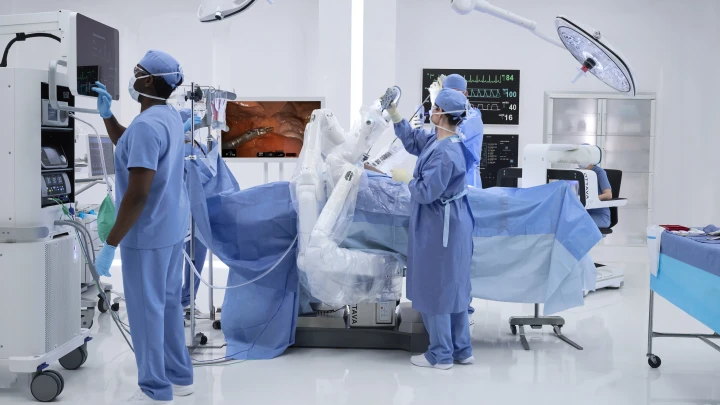
Operating rooms already capture enormous amounts of video during surgery, yet almost none of it is analyzed while the procedure is underway. Spatial orientation and margin judgment remain the surgeon's unaided work. XRlabs wants to change that with software that runs on computing hardware inside the theatre, layered over the cameras hospitals already own.
The company's $8.4 million seed round, announced October 19, gives that proposition new resources and a clear set of near-term tests: regulatory submissions in the United States, the United Kingdom and Europe, and broader clinical deployment with partner hospitals.
In This Deep Dive
- Why this matters now
- What actually happened
- The obvious read versus the deeper signal
- Taxonomy: Three routes to surgical guidance
- The evidence ladder: From latency benchmarks to clearances
- The HealthTech Investor's Signal
- Adoption priorities
- Forward Intelligence: Four developments to watch
- The Bottom Line for Surgical and Device Leaders
Why this matters now
Capital budgets in many health systems are under pressure, and multi-million-dollar robotic platforms carry long depreciation cycles plus per-procedure consumable costs. A software layer that works with installed microscopes, endoscopes and exoscopes would let hospitals add intraoperative guidance without buying new capital equipment, if it performs.
Latency is the technical crux. Guidance that lags the live video feed is worse than no guidance near critical anatomy. Running computer vision models locally on edge hardware rather than in a distant cloud is the architectural answer XRlabs has chosen, and the company reports sub-10 millisecond processing on NVIDIA Jetson Thor modules. That figure is company-reported; independent latency audits under real theatre conditions would strengthen it.
What actually happened
XRlabs announced an $8.4 million seed financing on October 19, 2026, led by Playground Global with participation from Eka Ventures. The company says the funds will support regulatory filings with the US FDA, the UK MHRA and European CE marking, and expansion of clinical deployments.
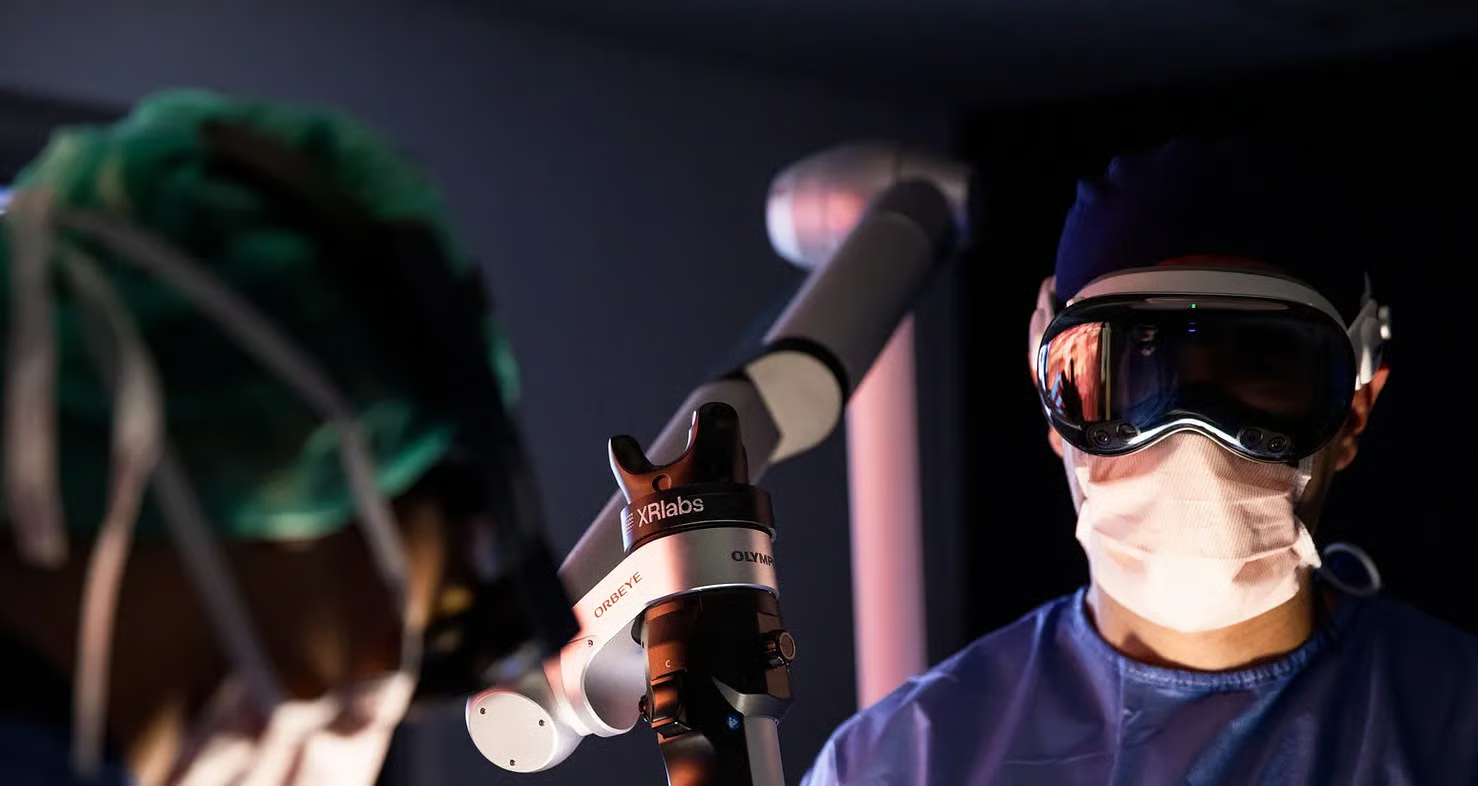
The company was founded by practicing neurosurgeon Dr. Ali Haddad and is headquartered in London with Palo Alto offices. XRlabs says its platform has supported more than 100 surgical cases across three continents, including work with the Gemini Untwined charity on craniopagus twin separation, and that it has integrated with the Olympus ORBEYE 4K 3D exoscope in procedures conducted under research approvals. Case counts and integrations are company statements, and research-approved use is not the same as cleared routine use.

The obvious read versus the deeper signal
The surface story is another surgical AI seed round. The deeper signal is the separation of spatial intelligence from mechanical robotics. If guidance, tool tracking and anatomical alerting become software services that ride on commodity hardware, the economic centre of digital surgery shifts away from closed hardware ecosystems.
That shift is a hypothesis, not an outcome. Incumbent manufacturers control the video outputs the software depends on, hospitals buy cautiously, and no regulatory clearance for the platform's intraoperative indications has been announced. The seed round funds the attempt; it does not settle it.