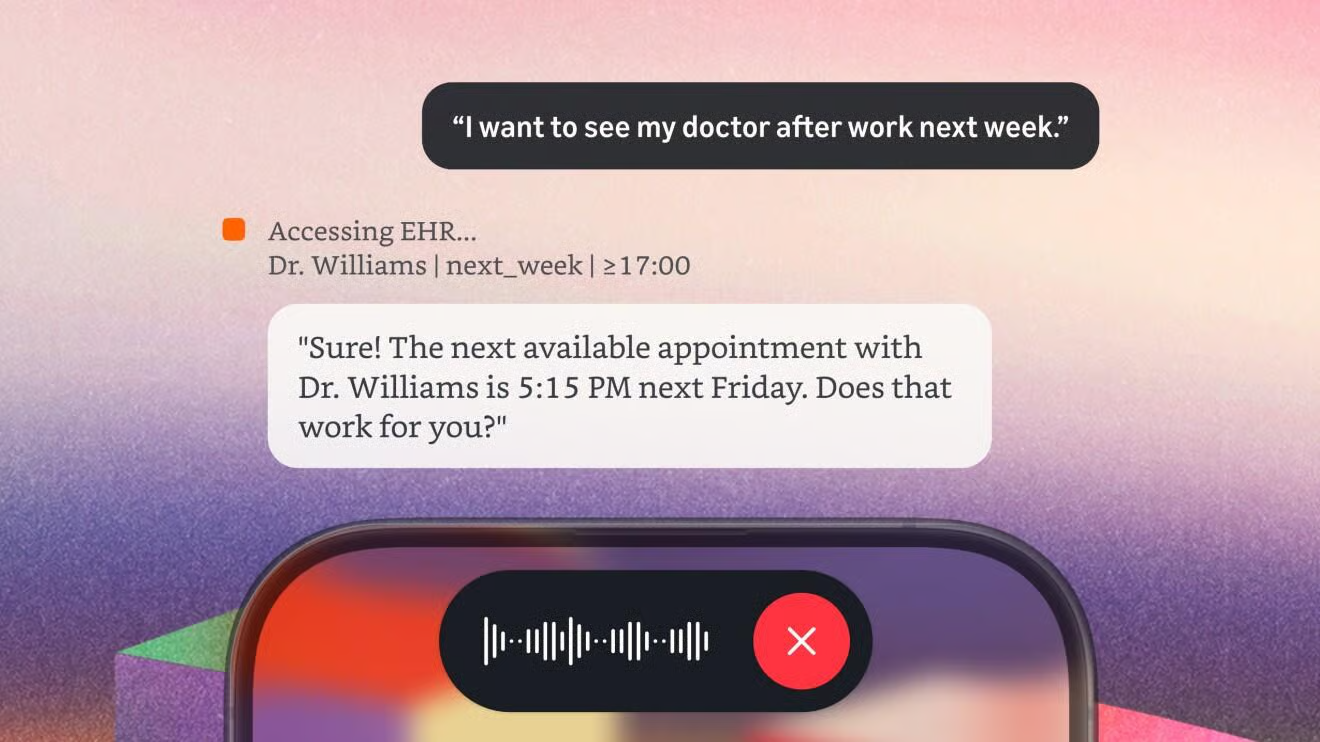
A physician in an exam room types a prescription. Before the patient leaves, the system should know whether the drug is covered, what it will cost and whether the plan wants a prior authorization. When it works, the patient walks to a pharmacy with an answer. When it does not, the patient finds out at the counter, and many never pick the drug up.
On November 11, Inovalon agreed to acquire DrFirst, a company that sits inside that moment. The price was not disclosed, but the combination links Inovalon's data and analytics business to a prescribing network connected to hundreds of EHRs. This briefing explains what Inovalon gets, why 2027 federal deadlines make the timing relevant, and what could go wrong.
Medication access is decided at the point of prescribing. Inovalon has bought a position there, just as federal rules are about to standardize what happens at that point.
In This Deep Dive
- Why this matters now
- What actually happened
- The obvious read versus the deeper signal
- Historical playbook
- The world forming around point-of-care prescribing
- Category map and taxonomy
- Evidence Ladder
- Regulation: the January 2027 benefit standard, HTI-4 and the proposed drug prior authorization rule
- Capital flows and bottom-up economics
- The HealthTech Investor's Signal
- Counter-thesis
- Forward Intelligence
- The Bottom Line for Health System Leaders and Investors
Why this matters now
Prescription abandonment, delays from prior authorization and surprises at the pharmacy counter all start at the moment of prescribing. A prescriber who sees accurate coverage and cost information at that moment can choose a covered drug or start a prior authorization right away. A prescriber who does not may find out days later.
That is why the point-of-care layer has become valuable to data companies, pharmacies, payers and manufacturers. Each wants to put information, and sometimes services, in front of the prescriber at the right time. Inovalon's own release describes the goal as putting richer information and intelligent decision support into the workflows where healthcare decisions are made.
The federal rules are converging on the same point. CMS has set January 1, 2027 for Part D prescriber real-time benefit tools to use a specific standard, and ONC has set certification requirements that bring electronic prior authorization into certified EHR modules. Companies that already operate in the prescribing workflow have a head start.
What actually happened
- The agreement. Inovalon, based in Bowie, Maryland, and DrFirst, based in Arlington, Virginia, signed a definitive agreement for Inovalon to acquire DrFirst. Terms were not disclosed. The deal needs regulatory approvals and customary closing conditions, and no closing date was given.
- The scale. Together the companies say they will serve over 2,000 hospitals and 240,000 prescribing providers writing 241 million or more prescriptions a year across more than 270 EHR integrations.
- The capabilities. DrFirst adds real-time prescription drug and prior authorization capabilities, benefit determination and patient communication. Inovalon CEO Adam Kansler said DrFirst's clinical-grade AI would extend Inovalon's reach to the point of care.
- The advisors. Citigroup and Skadden advised DrFirst. Goldman Sachs advised Nordic Capital, described as Inovalon's lead investor, and Inovalon. Kirkland and Ellis and McDermott Will and Schulte advised Inovalon and Nordic Capital. DrFirst CEO Laizer Kornwasser called joining Inovalon a natural next step.

The obvious read versus the deeper signal
The obvious read: A data company bought a prescribing company to add more products and customers, and the main benefit is cross-selling.
The deeper signal: The strategic asset is position. A prescribing network sees the order at the moment it is written, which is the earliest point at which coverage, cost and authorization can be addressed. Combined with claims, clinical and pharmacy data, that position could allow earlier intervention. It also raises questions about who benefits, since the same network serves providers, payers, pharmacies and life sciences customers whose interests differ.
Historical playbook
E-prescribing grew through standards and mandates. Early networks connected prescribers to pharmacies for convenience. Federal programs then encouraged electronic prescribing, and a common message standard, NCPDP SCRIPT, became the backbone. Benefit checks and prior authorization came later and were handled by separate vendors, payers and intermediaries, which is why many prescribers still switch between systems.
Consolidation has followed a recognizable pattern in health IT. Companies with data buy companies with workflow access, and companies with workflow access buy data. The result is larger platforms that can offer more services at the same point of care, and fewer independent networks. Each deal raises the same questions about neutrality and pricing for customers who use the network but do not buy the rest of the platform.
The world forming around point-of-care prescribing
Inovalon's release describes a world where providers, payers, pharmacies and life sciences organizations connect through shared workflows. That is the stated benefit. A less flattering reading is that the data flowing through the prescribing network becomes more valuable to more parties, and that independent networks will have to decide whether to stay neutral or align with larger platforms.
A detail from trade press shows how hard it is to compare the companies. Health and Tech Now noted that DrFirst lists more than 670,000 providers, 71,000 pharmacies, 270 EHRs and more than 2,000 hospitals, while the joint release cites 240,000 prescribing providers, and the release does not explain the gap. The likely difference is in what counts as a provider, but we cannot confirm it, and buyers should ask.
Category map and taxonomy
The table compares the roles that now overlap at the point of prescribing. Cells describe roles and the standards involved, not individual product claims.
| Player or approach | Modality | Physical / commercial target | Clinical maturity | Regulatory pathway | Strategic moat | Key limitation |
|---|---|---|---|---|---|---|
| E-prescribing network (DrFirst) | Electronic prescriptions from EHR to pharmacy, plus medication history | Prescriber workflow in 270+ EHR integrations (joint release) | Operating at scale for over 25 years | Certified health IT and NCPDP SCRIPT standards | Embedded EHR connections | Neutrality questions after the deal |
| Real-time benefit tools | Patient-specific coverage and cost at the point of prescribing | Prescribers and patients | Mandated standard for Part D from Jan 1, 2027 | CMS Part D rule; ONC certification from 2028 | Payer and PBM connections | Data quality depends on payers |
| Electronic prior authorization | Structured request and response transactions between prescriber and payer | Authorization delays | Transactions required in certified EHRs by end of 2027 (HTI-4) | ONC HTI-4; proposed CMS rule for drugs | Payer integrations | Payers must accept the transactions |
| Claims and analytics (Inovalon) | Data and analytics for payers, providers, pharmacies and life sciences | Adherence, quality and outreach programs | Established data business | HIPAA and contract terms | Large data assets | Needs workflow access for timing |
| Pharmacy and manufacturer hub services | Benefit verification, authorization support and adherence programs | Patient start and persistence | Established | State and federal rules on manufacturer support | Direct patient and pharmacy contact | Fragmented systems |
Evidence Ladder
- 1. Data fit. Do prescribing, claims and pharmacy data match at the patient level, and who governs the linking?
- 2. Workflow proof. Does the combined product reduce clicks and delays at the prescriber, rather than add alerts?
- 3. Outcome evidence. Is there independent data on faster starts, fewer abandoned prescriptions and better adherence?
- 4. Neutrality. Do pharmacies, payers and manufacturers keep equal access to the network on stable terms?
- 5. Economics. Who pays for the network and for the added services, and does the buyer see a measurable return?
Regulation: the January 2027 benefit standard, HTI-4 and the proposed drug prior authorization rule
CMS states that beginning January 1, 2027, Part D sponsors must support the NCPDP Real-Time Prescription Benefit standard version 13 for prescriber real-time benefit tools. The same rule moves formulary and benefit transmission to NCPDP Formulary and Benefit standard version 60 and retires version 3.0 after a transition period that ends on January 1, 2027.
ONC's HTI-4 rule updates certification criteria for health IT. Developers certified for electronic prescribing must support NCPDP SCRIPT version 2023011 by December 31, 2027, with electronic prior authorization transactions required. ONC added real-time prescription benefit to the Base EHR definition on and after January 1, 2028. In April 2026, CMS and the Office of the Secretary published a proposed rule on interoperability standards and prior authorization for drugs in the Federal Register, which would extend electronic prior authorization requirements to drug benefits for certain payers.
These dates apply to products, not to the acquisition, but they explain the timing. A company that already connects hundreds of EHRs to prescribers and pharmacies is well placed when standards move at once. The antitrust review of the deal is separate. The release says closing depends on required regulatory approvals and does not name the agencies.
Capital flows and bottom-up economics
No price was disclosed, so the economics of the deal are not visible. What we can say is that the two businesses earn money in different ways, a data and analytics business on one side and a prescribing network on the other, and the release breaks out neither.
The more important economic question is who pays when the combined company improves access. If faster prior authorization increases fills, manufacturers and payers see the benefit. If prescribers see fewer clicks, health systems do. The party that pays may not be the party that benefits, which is why neutrality and pricing terms matter.
An illustrative example makes the point. Suppose a combined workflow makes a prior authorization decision one day faster for a thousand prescriptions. The benefit goes to the patient, the prescriber's office and possibly the manufacturer, but the fee goes to the network. This is a labeled illustration, not a reported result.
Institutional hubs and buyer dynamics
The buyers are health system CIOs and pharmacy leaders, who care about EHR integration and clinician experience, and payers and manufacturers, who care about reach and data. Health systems will want assurance that the combined company will not favor one group of customers.
EHR vendors are the gatekeepers. The 270 integrations in the joint release exist because EHR vendors allow them, and any change in how the combined company uses prescribing data will be watched by those vendors and their customers.
The HealthTech Investor's Signal
For investors the deal is another sign that health IT assets with workflow access are being consolidated by data-rich owners. The value rests on integration, retention of EHR connections and the standards deadlines. It is not obvious that standards will increase the value of any single network, since they also lower switching costs.
Watch the closing, the regulatory review and any customer or EHR vendor response. We offer no stock picks.
Counter-thesis
The first objection is that standards reduce differentiation. If every certified EHR must support the same prior authorization and benefit transactions, a network built on those connections may have less to sell.
The second is neutrality. Pharmacies and payers may be reluctant to use a network owned by a competitor's data business, and customers may ask for contractual protections.
The third is integration risk. Combining two large companies with different cultures and technology stacks, while standards change, is difficult. Delays could affect customers who rely on both.
Forward Intelligence
- The closing date, regulatory clearance and any divestiture or conduct commitments.
- Whether the companies explain the difference between 240,000 and 670,000 providers.
- How Inovalon and DrFirst describe their roadmap for real-time benefit and electronic prior authorization before the 2027 and 2028 dates.
- Reactions from EHR vendors, pharmacies and payers on network neutrality.
The Bottom Line for Health System Leaders and Investors
What changed this week is that a major health data company agreed to buy a large prescribing network. The strategic logic is position at the point of prescribing, at a time when federal rules are standardizing what happens there.
What remains uncertain is price, integration and neutrality. Health system leaders should ask how the combined company will treat network access and prescribing data, and should check that their EHR connections and prior authorization workflows meet the 2027 and 2028 dates. Investors should wait for closing and customer response.
Sources
- Inovalon: Inovalon To Acquire Intelligent Medication Management Company DrFirst (Nov 11, 2026)
- DrFirst: Inovalon To Acquire Intelligent Medication Management Company DrFirst (Nov 11, 2026)
- Health and Tech Now: Inovalon agrees to buy e-prescribing company DrFirst (Nov 2026)
- CMS: E-Prescribing (Part D standards and January 1, 2027 transition dates)
- ONC: HTI-4 Overview and Key Dates for the Certification Program
- Federal Register: Interoperability Standards and Prior Authorization for Drugs, proposed rule (Apr 14, 2026)