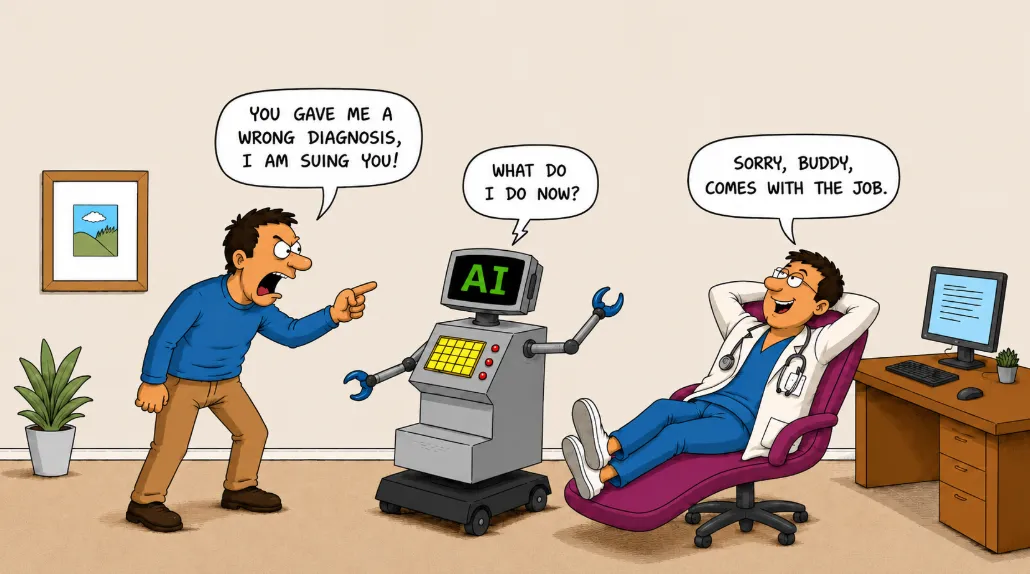

Hospital radiology departments across the United States are currently facing a structural workforce crisis. Medical imaging scan volumes continue to climb at 4% to 6% per year, driven by expanding oncology protocols, aging patient demographics, and faster multi-slice CT scanners. Yet the supply of newly board-certified radiologists has remained flat for over a decade, capped by federal residency caps under Medicare graduate medical education funding.
For five years, venture capital attempted to resolve this supply deficit by funding enterprise SaaS point solutions designed to triage CT scans or draft impression text. However, hospital IT security reviews, PACS integration bottlenecks, and physician resistance created brutal 18-month sales cycles. Epsilon Health's $27.6 million launch out of stealth represents a decisive pivot in healthcare business models: rather than selling AI software to hospitals, the company is deploying its proprietary technology stack inside its own professional radiology medical group.
In this deep dive, we are going to look at:
- Why this matters now: The breakdown of enterprise radiology SaaS
- What actually happened: Epsilon Health's funding parameters and operating structure
- The obvious read versus the deeper signal: Capturing the professional fee schedule
- The Evidence Ladder: From algorithm to autonomous clinical group
- Taxonomy of imaging AI: Pure-play software vendors vs full-stack tech providers
- The HealthTech Investor's Signal: Capital efficiency, CPOM navigation, and M&A dynamics
- Operational counter-thesis: Clinical liability and physician recruitment scaling
- Forward intelligence: 4 observable test milestones across 2026 to 2028
- The Bottom Line for Health System Executives and Digital Health Investors