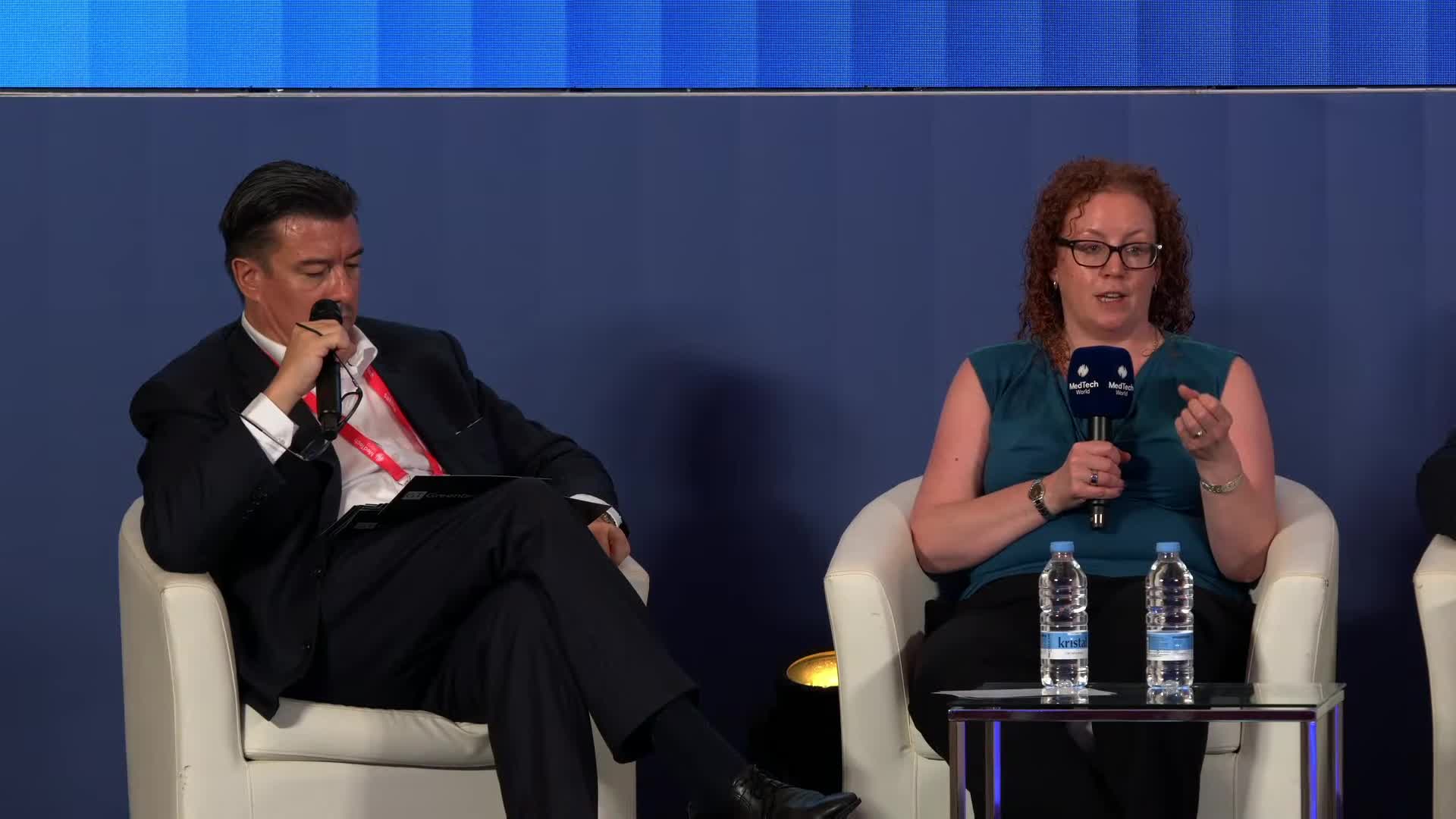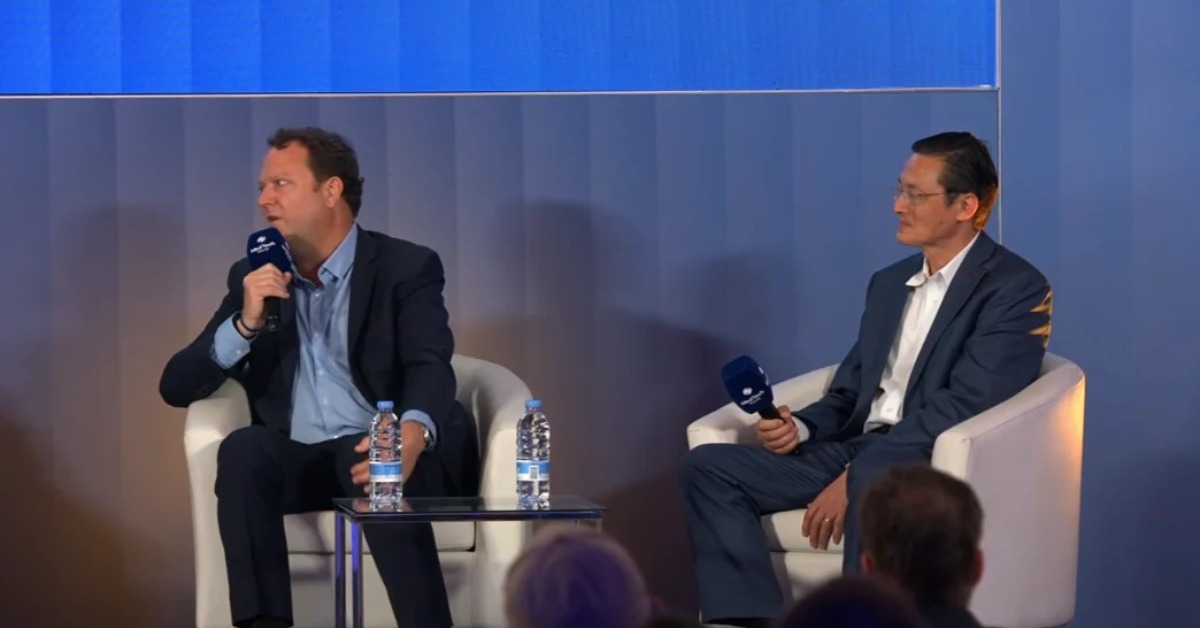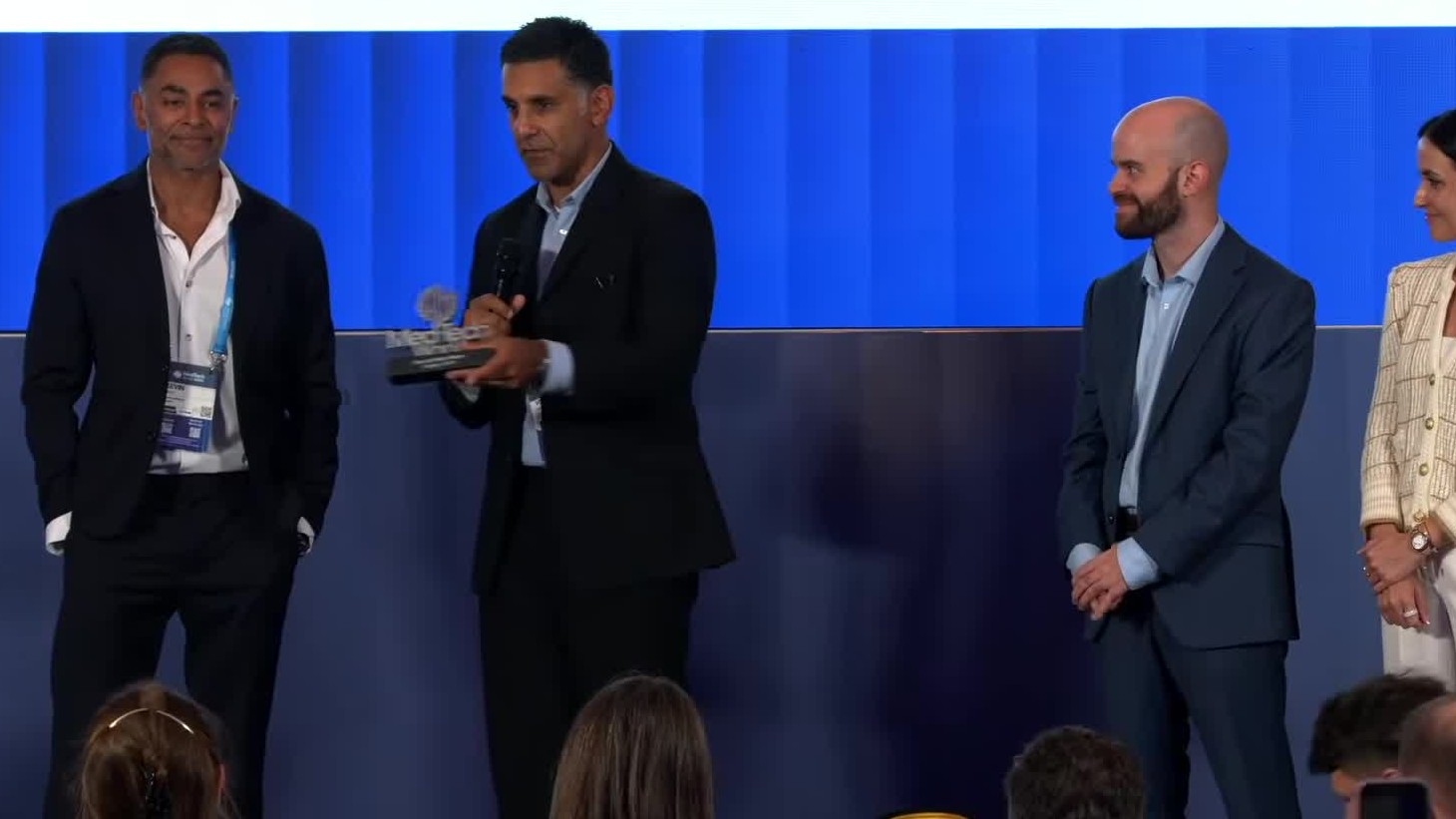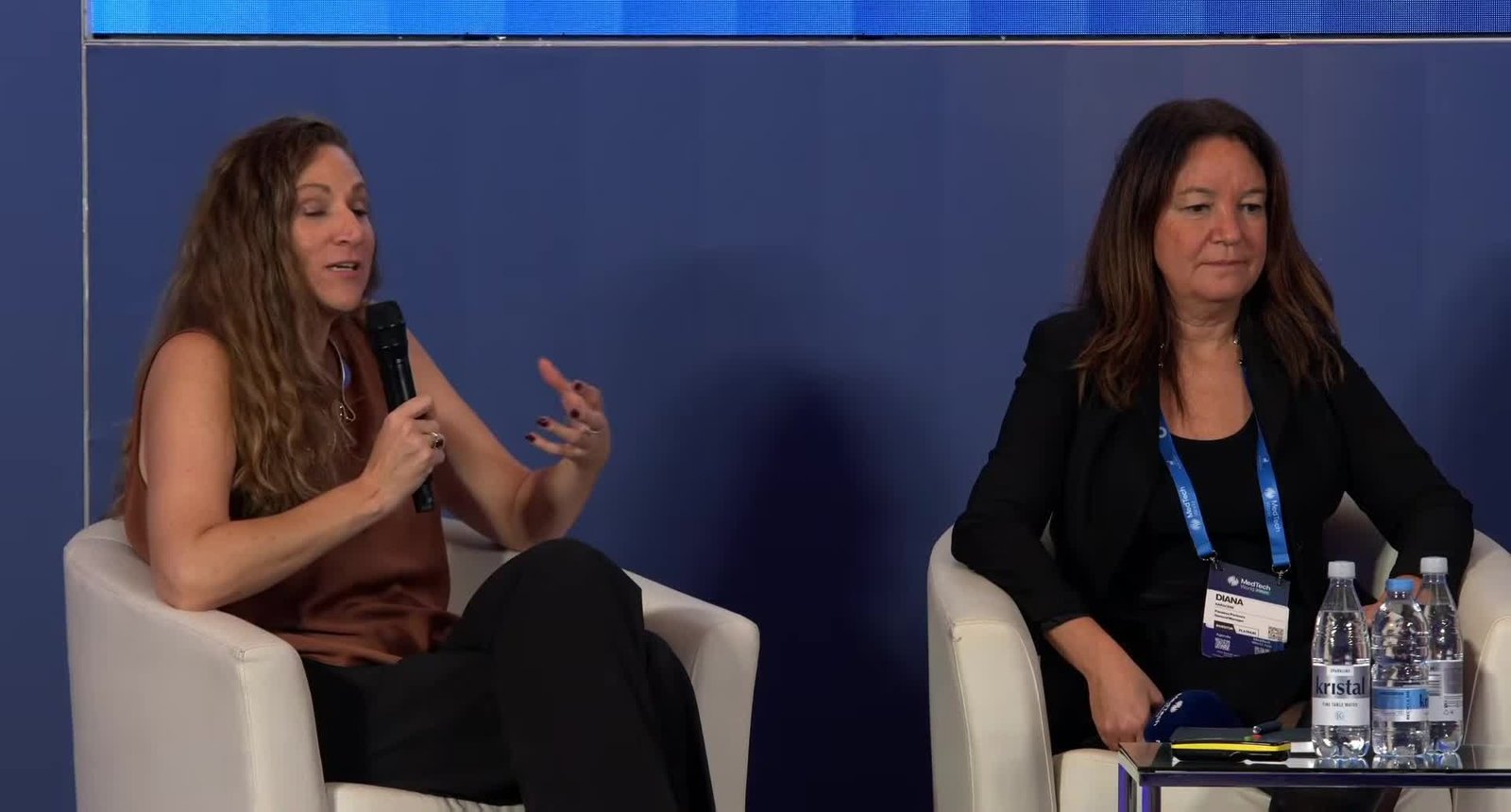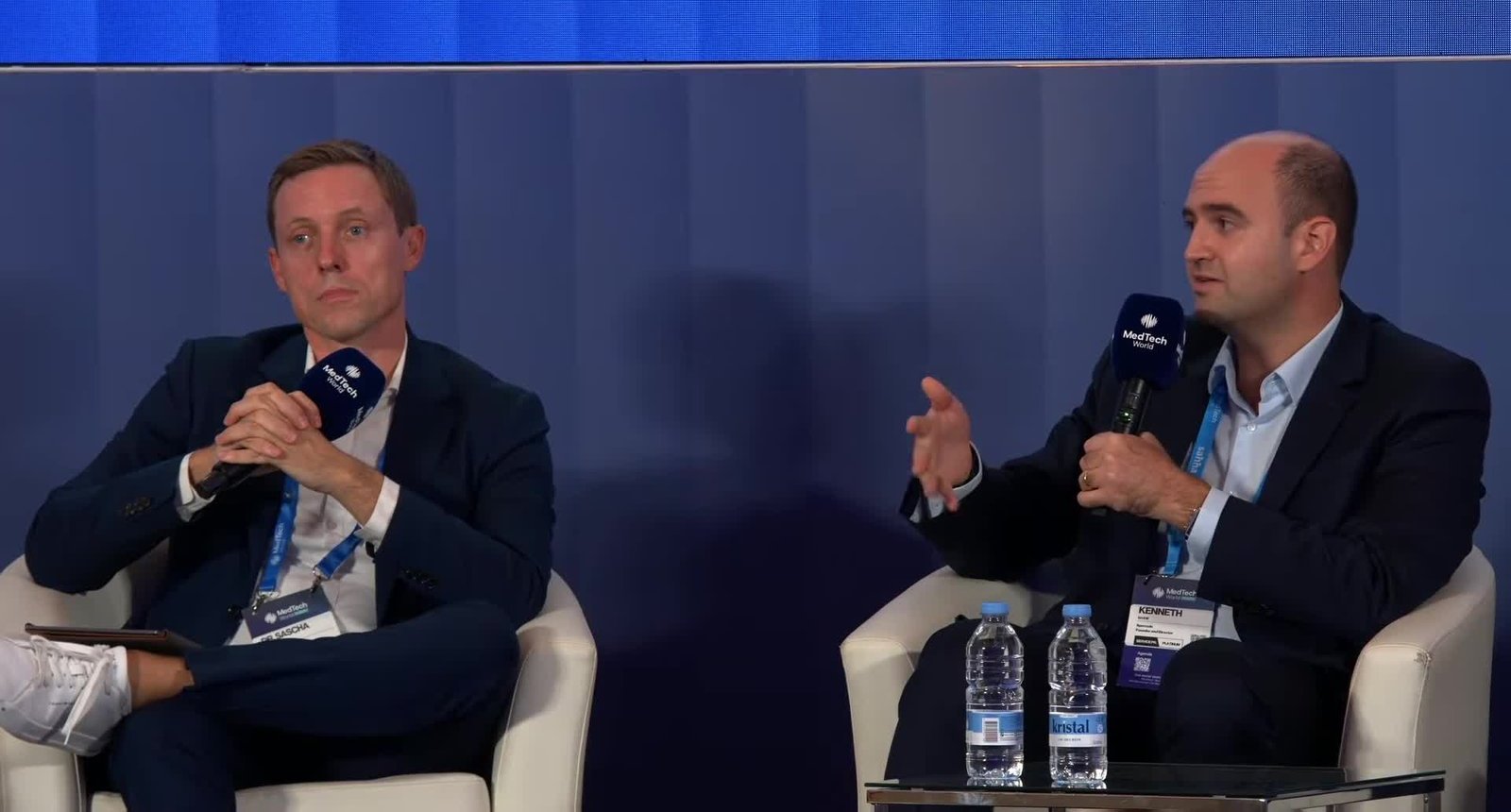
Exit strategy ran through the first afternoon of MedTech World Europe 2026 in Valletta. "Built to be Bought or Built to Last? Operating Decisions That Shape Strategic Value" opened the afternoon on the main stage, and two other sessions that day looked at the same question from the investor and buyer side. Moderator Mihai Diga, a former CTO and board member at ADG Group with more than 25 years in MedTech, said he is often asked whether a founder should build to exit or build to stay. His panel did not give a single answer, but it gave founders a checklist.
| Speaker | Role |
|---|---|
| Chris Japp | Partner, Tramway Ventures; former global CEO of Pentax Medical |
| Aselle Kurmanova | Member, Health Care and Life Sciences practices, Cozen O'Connor |
| Steve Gompertz | Partner, QRx Partners |
| Sandeep Pulim | Physician; LP, Scrub Capital |
| Mihai Diga (moderator) | Former CTO and board member, ADG Group |
Know your customer before the investor asks
Japp has more than 35 years in leadership at companies including GE Healthcare, Boston Scientific and Pentax Medical. He was in Tokyo as global CEO of Pentax Medical when the March 2011 earthquake and tsunami struck. Tramway invests from seed to Series A, and his first diligence question is simple: who is your customer? "You may not be surprised at how many companies we speak with, they don't know who the customer is," he said, or who will pay.
Diligence takes time, sometimes six or eight months, and founders often ask why. At the end, Tramway gives the company its feedback. The smarter ones, he said, come back a month or two later having closed the gaps.
On exits, he said building for one specific buyer is "almost never a good idea". The exception is when a strategic is already on the cap table and has spelled out the milestones it wants. Even then a strategic investor can come with strings, such as a right of first refusal. Still, he wants every founder to have an answer about exit, and it should be a whole space with four or five possible buyers, because corporate business development priorities change with every reorganisation. Timing has to match the investors too. Some of his portfolio companies are long, capital-hungry bets. For others, a two to three times return and a quicker exit is the plan, and founders need to be aligned with that.
Diligence-ready from day one
Kurmanova's advice was to be diligence-ready from the day a company starts operating, not when it starts a sale or financing. She described what goes wrong when it is not:
- IP that was never properly assigned to the company.
- A messy cap table, including someone who "comes out of the woodwork" with a text message in which a founder promised 10% of the company for a service.
- Contracts with large partners that a startup signed quickly, only to find years later that they contain a consent right or a most favoured nation clause that complicates a sale.
A text message may not be binding, she said, but it still creates an issue at the worst possible moment.
A quality system the buyer can absorb
Gompertz said quality and regulatory thinking should start "the moment you have the idea on the back of the napkin", because that idea tells you which controls you will need. "If your name is on the label, you are the manufacturer from a regulatory perspective." Controls should scale with the company, ending with a cross-functional change review board as the company approaches its FDA submission. "Quality is not the opposite of fast," he said.
His most practical point was about who the buyer will be. A small company that plans to stay independent can implement the rules in a lighter way, because regulators understand limited resources. A company that hopes to be bought by a Medtronic or J&J is different. The buyer has to integrate the startup into its own quality system and will not want to rebuild it. "If your plan was to get bought by Medtronic, then you're going to have to put in a Medtronic-sized quality system, because otherwise your value goes down."
Would they complain if you took it away?
Pulim, a physician and adviser to digital health companies, gave a stickiness test that clinicians will recognise. Does the product remove work for the clinician? Does it lead to a clear next action? And would they complain if you took it away?
He told founders to define what happens the day after a pilot succeeds. Problems rarely come from the technology, he said. They come at the 50th or 100th site, when early champions stop masking the extra work the product creates. He also warned software companies to draw clear lanes between clinical decisions and the tool that supports them, because in the US that line decides whether the FDA regulates it.
Asked when a hands-on founder becomes a bottleneck, Japp said the self-aware ones see it first and move into a CTO-style role when it is time to bring in a CEO who is stronger at fundraising and commercialisation.
The buyer's side of the table
The same day, a panel of French investors moderated by Julie Rachline, President of LallianSe, and "The Exit Playbook", moderated by Patrick O'Neil of MedTech Advantage Fund, took the same story to its end.
| Session | Speakers |
|---|---|
| French MedTech investments | Marielle Mailhes (Bpifrance Investment), Leila Nicolas (GO CAPITAL), Eric Garnier (Angels Santé), Bervin Bouani (Turenne Capital) |
| The Exit Playbook | Dr. Kelleny Berchuck (Siemens Healthineers), Fred Ginnebaugh (KCK Medtech, Nutromics, OXOS), Thom Busby (Mirus Capital Advisors), Irene Verheijen (Flying Turtle Ventures) |
The French investors described a funding chain that is complete on paper but has weak spots: fewer funds willing to write the first institutional cheque, later-stage investors who now want clinical proof where preclinical proof of concept used to be enough, and a gap between clinical proof and commercial traction. Their advice was to raise more than feels necessary, hold at least two years of cash and line up follow-on investors early. For device makers, they said, reimbursement is the finish line, not clearance.
They also said the exit conversation starts at the first meeting, even at seed. Founders do not need a buyer's name on day one, but they should be able to list five or six credible acquirers and explain why each would buy.
The Exit Playbook panel described strategics that are narrowing their focus and buying revenue that can ride on their existing sales channels, not only technology. Speakers urged founders to build a company, with a sales team and a CRM that records every physician call, and to read the buyer's investor relations material to see how a product links to promises made to shareholders. Deals slip in diligence, they said, over an undisclosed regulatory gap, untidy board minutes or an unprepared data room.
The founder's checklist
| Question | What the panels said |
|---|---|
| Build for one buyer? | Almost never. Know the four to six who could buy and why |
| When to get diligence-ready | From the first day of operations |
| What delays deals | IP gaps, cap table claims, consent and MFN clauses, untidy records |
| Quality system size | Match it to your likely buyer |
| What buyers pay for | Commercial traction and a fit with their channels |
| Stickiness test | Would clinicians complain if you took it away? |
What buyers are paying for
The exit market the panel described is narrow. EY counted $38.8 billion of medtech M&A across 61 deals in the 12 months to June 2025, down 14% on the year, with an average deal of about $636 million, and only eight medtech IPOs. Venture funding rose 20% to about $8.7 billion, but across 47% fewer rounds. In plain terms, the large companies are buying fewer startups, and they are paying for proven ones.
| Buyer test | What it looks like in diligence |
|---|---|
| Clinical evidence | Peer-reviewed or registry data showing the device works in real patients, not only in the pivotal study |
| Regulatory status | Clearance in the buyer's key markets, with a clean complaint and recall history |
| Quality system | A system the buyer can absorb without rebuilding it |
| Commercial pull | Clinicians who would complain if the product were taken away |
For health systems and payers, consolidation cuts both ways. One large supplier can mean simpler contracts and service, but fewer independent companies also means less competition on price.
For clinicians, the exit question is not abstract. When a strategic buys a startup, the evidence package decides whether the device gets a full launch or is shelved. That is why the panel kept coming back to data. A company that publishes outcomes and builds relationships with the doctors who use its device is easier to buy and harder to shelve.
My take
Pulim's question is the one I would ask of every clinical product. Doctors are polite in pilots and blunt in practice. If nobody complains when a tool disappears, it was never part of the workflow. Gompertz's point deserves more attention than it gets. Founders treat quality as overhead, but for a company that intends to be acquired, a quality system the buyer can absorb is part of the asset being sold.