Inside EchoNext: The ECG Is Only the Beginning

Dr. Dereck Mush, MD, MBAThe Daily SignalOctober 20, 2026
PLUS: Oracle and AstraZeneca Team Up on Clinical Research

Good morning, HealthTech insiders. A routine ECG could flag heart problems that would otherwise go unnoticed. EchoNext’s place on TIME’s Best Inventions list puts fresh attention on an AI tool designed to flag patients for further assessment. Its value depends on whether that warning leads to timely follow-up.
Also today: Oracle and AstraZeneca have announced a collaboration to bring clinical research closer to everyday care, starting with hypertension in Abu Dhabi. And Artisight, also recognized by TIME, is bringing virtual nursing and other clinical services onto shared room technology.
Today’s stories examine how AI can help teams find the next step in care, and what it takes to deliver it. Let’s get into it.
In today's Signal:
EchoNext: A familiar heart test becomes a starting point for AI-assisted screening.
Oracle × AstraZeneca: A new collaboration takes aim at the gap between clinical research and routine care.
Artisight: Virtual nursing and room intelligence share the same hospital infrastructure.
If you have paid time left on an individual Granola plan, we'll match it with a Wispr Flow subscription that includes Notetaker and dictation, and add bonus time, up to 12 months total. Sign in or create a Wispr account and submit proof of your plan to check eligibility.
LATEST DEVELOPMENTS

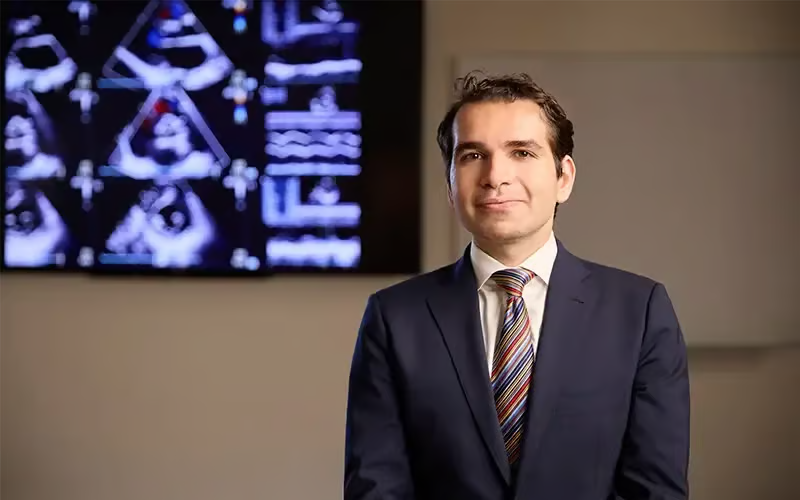
Dr. Pierre Elias, who led the team behind EchoNext. Credit: Courtesy of NewYork-Presbyterian.
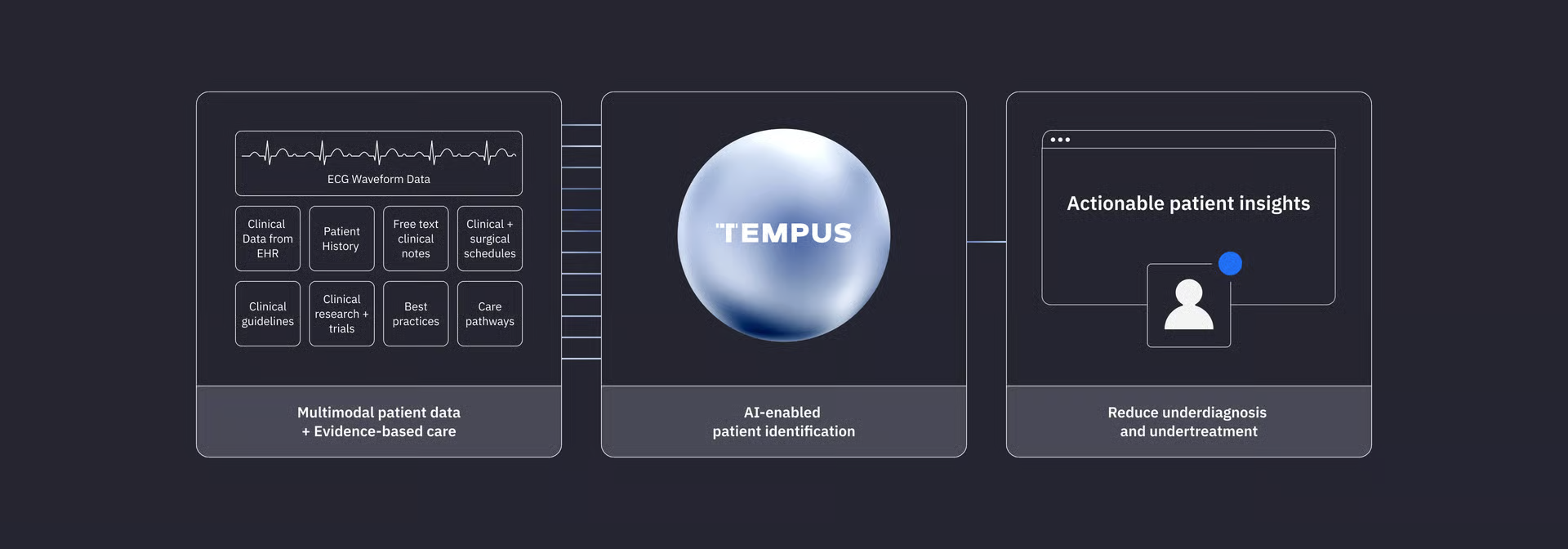
Pathway Labs’ EchoNext has joined TIME’s 2026 Best Inventions list. The FDA-cleared tool analyzes routine 12-lead ECGs to flag signs of structural heart disease that may warrant further evaluation.
The details:
A new spotlight on an existing tool. TIME published the recognition on October 15. FDA clearance came on June 8; Pathway’s public launch, OpenEvidence partnership and $8.5M seed announcement followed on June 23.
The evidence spans different studies. NYP’s account of the 2025 Nature study reports 77% detection in a reader comparison, versus 64% for unassisted cardiologists. Separately, external validation reported in FDA’s summary shows 73.7% sensitivity and 75.2% specificity for the combined structural-heart-disease output. Those figures come from different evaluations.
The result points to a next step. EchoNext supports adult assessment using compatible ECGs and excludes patients with implanted pacemakers. Its notification cannot confirm a diagnosis or rule out the need for follow-up.
The Signal: The opportunity is to help clinicians spot patients who need a closer look using a test already in routine care. The service around the alert matters: someone must review it, reach the patient and arrange the appropriate assessment.

AstraZeneca’s research and development centre in Kendall Square, Cambridge, Massachusetts.
Credit: Aram Boghosian / AstraZeneca.
Oracle and AstraZeneca announced a collaboration on October 20 to explore how AI and real-world data can support research and clinical workflows. The first planned programme, with M42 in Abu Dhabi, focuses on hypertension care and research.
The details:
Trial recruitment is a starting point. The companies want to make it easier to identify potentially eligible patients and bring relevant research insights into care. A suggested match still needs eligibility checks and the patient enrollment process.
Projects will proceed individually. The agreement is non-binding, with financial terms undisclosed. Each proposed project requires separate review and appropriate safeguards before implementation.
Patient information has defined boundaries. AstraZeneca says it will not receive patient-identifiable information. The announcement describes the collaboration’s aims; results will depend on the programmes that follow.
The Signal: A trial opportunity is only useful if a suitable patient can reach it. The first programme gives this partnership a concrete test: make the connection between care teams and research teams easier to act on.

Artisight’s room technology combines sensing, communication and computing to support hospital care workflows. Credit: Courtesy of Artisight.
Artisight’s All-In-One device has also earned a place on TIME’s 2026 list. The company’s October 15 announcement highlights a shared platform for patient rooms and operating rooms, supporting several services through the same infrastructure.
The details:
One platform supports several tasks. Artisight describes virtual nursing, specialty teleconsults, ambient documentation and room workflow coordination among its uses. Hospitals can assess which services fit their teams and existing processes.
Computing happens close to care. The device uses NVIDIA Jetson Orin NX for edge inference. Artisight lists wall, ceiling and clamp mounting, with physical camera and audio controls.
The care model determines the result. The company reports customer efficiency and safety gains. Those results need to be assessed in context; the award does not establish a standard staffing ratio or guarantee fewer falls.
The Signal: Shared technology can simplify the room, but virtual nursing still needs a well-designed service. Clear task ownership and handoffs determine whether remote support makes bedside work easier or gives staff another process to manage.
QUICK HITS
EchoNext follow-up: How many flagged patients complete an assessment, how long it takes and what changes in their care.
The Abu Dhabi programme: Confirmed launch plans and the measures Oracle, AstraZeneca and M42 use to judge progress.
Virtual nursing in practice: Whether room technology reduces repeat work and interruptions for bedside and remote staff.
The deals:
Oracle-AstraZeneca · October 20 · Terms undisclosed. The non-binding collaboration sets out plans for research and care programmes. No investment or contract value was announced.
Artisight-TMG Global · September 14 · Acquisition background. Artisight brought healthcare deployment expertise in-house, covering work from site preparation to clinical handover. The reviewed release did not disclose a price.
Pathway Labs · June 23 · $8.5M seed background. AlleyCorp and Breyer Capital led the financing announced alongside EchoNext’s launch. The capital supported deployment, team growth and development.
The pattern: The commercial work extends well beyond the model. Distribution helps reach clinicians, installation gets technology into rooms, and partnerships connect research with care. These earlier deals provide context for today’s coverage; they are not a total of newly announced funding.
DTD2026 · October 26-27 · Novotel München Messe, Munich. Digital Transformation & Data in Medical Technologies. Dr. Dereck Mush will speak on “Why Good MedTech Fails: The GTM Gap Between Regulatory Approval and Adoption.”
HLTH USA 2026 · November 15-18 · The Venetian Expo, Las Vegas. Healthcare innovation, investment and industry partnerships. Official details
RSNA 2026 · November 29-December 3 · Chicago. Radiology science, education and technology. Technical exhibits run through December 2.
EchoNext · Pathway Labs: Analyzes 12-lead ECGs to identify signs that may warrant further structural heart evaluation.
Oracle Health Data Intelligence: Health data infrastructure that M42 announced plans to adopt in September, providing context for its involvement in today’s collaboration.
Artisight All-In-One: Brings sensing, communication and local computing together to support room-based clinical services.
Pathway Labs: Led by founder and CEO Dr. Pierre Elias, the company is commercializing EchoNext following its June launch and seed financing.
OpenEvidence: The clinical information platform partnered with Pathway in June to bring EchoNext to clinicians through its service.
Artisight: Led by co-founder and CEO Dr. Andrew Gostine, the smart hospital company combines room technology with software and deployment services.
Where does promising clinical information most often get stuck in your organization? |
Healthcare AI can draw attention to information that deserves a closer look. The harder work begins when a team has to decide what to do with that information and help the patient take the next step.
That is the thread through today’s stories. A useful alert, a trial match or a connected room earns its place through the care it helps deliver. Watch what happens after the technology gets someone’s attention.
How did we do today? |
See you tomorrow,
Dr. Dereck Mush, MD, MBA
The HealthTech Signal is independently funded. Sponsorships help us invest in better reporting, research, and a stronger newsletter for our readers. Want to reach HealthTech founders & executives while supporting the Signal? Get in touch.
Was this email forwarded to you? Sign up here.
Until tomorrow,
The HealthTech Signal

Dr. Dereck Mush, MD, MBA
Dr. Dereck Mush, MD, MBAKeep exploring