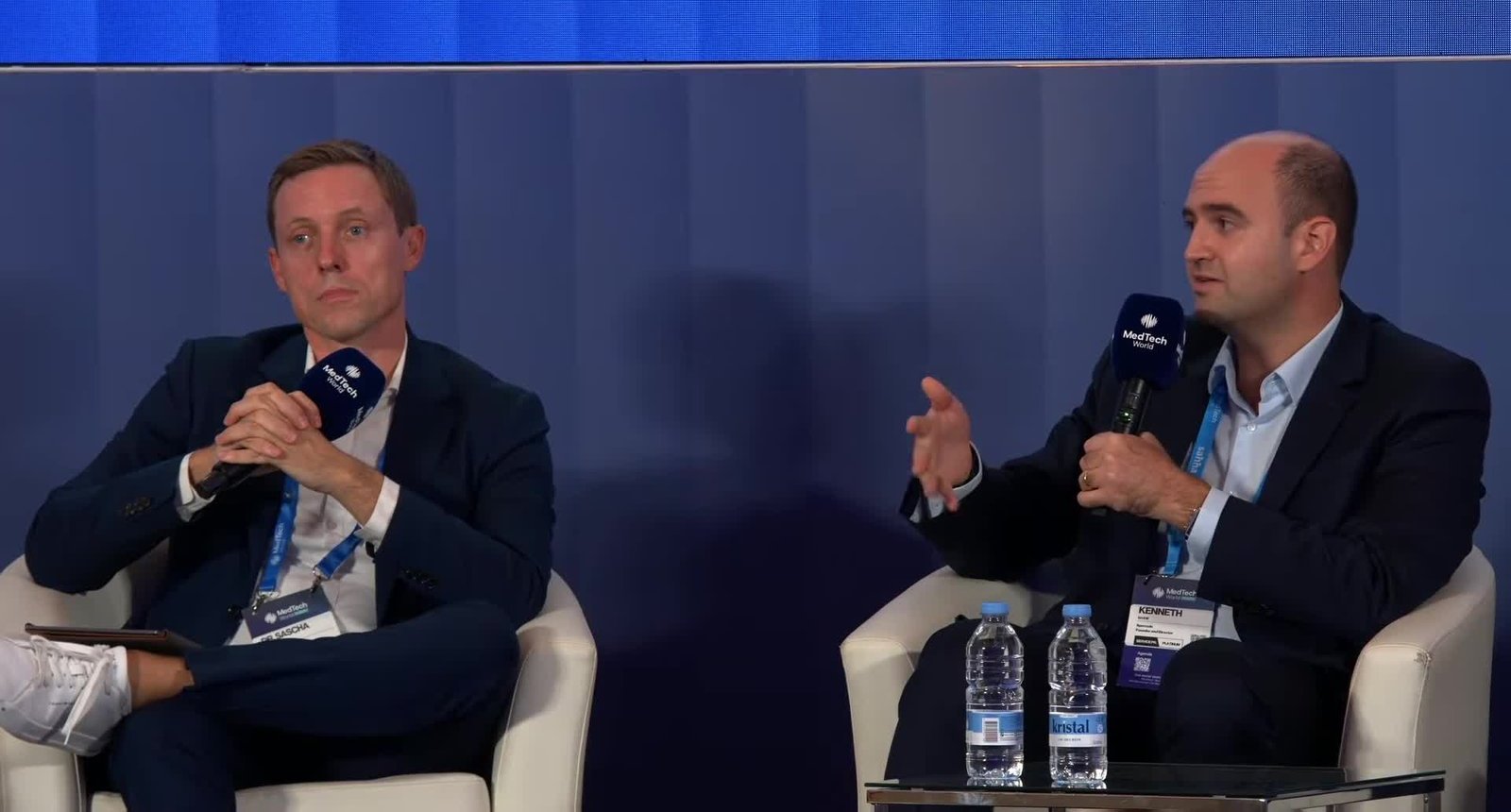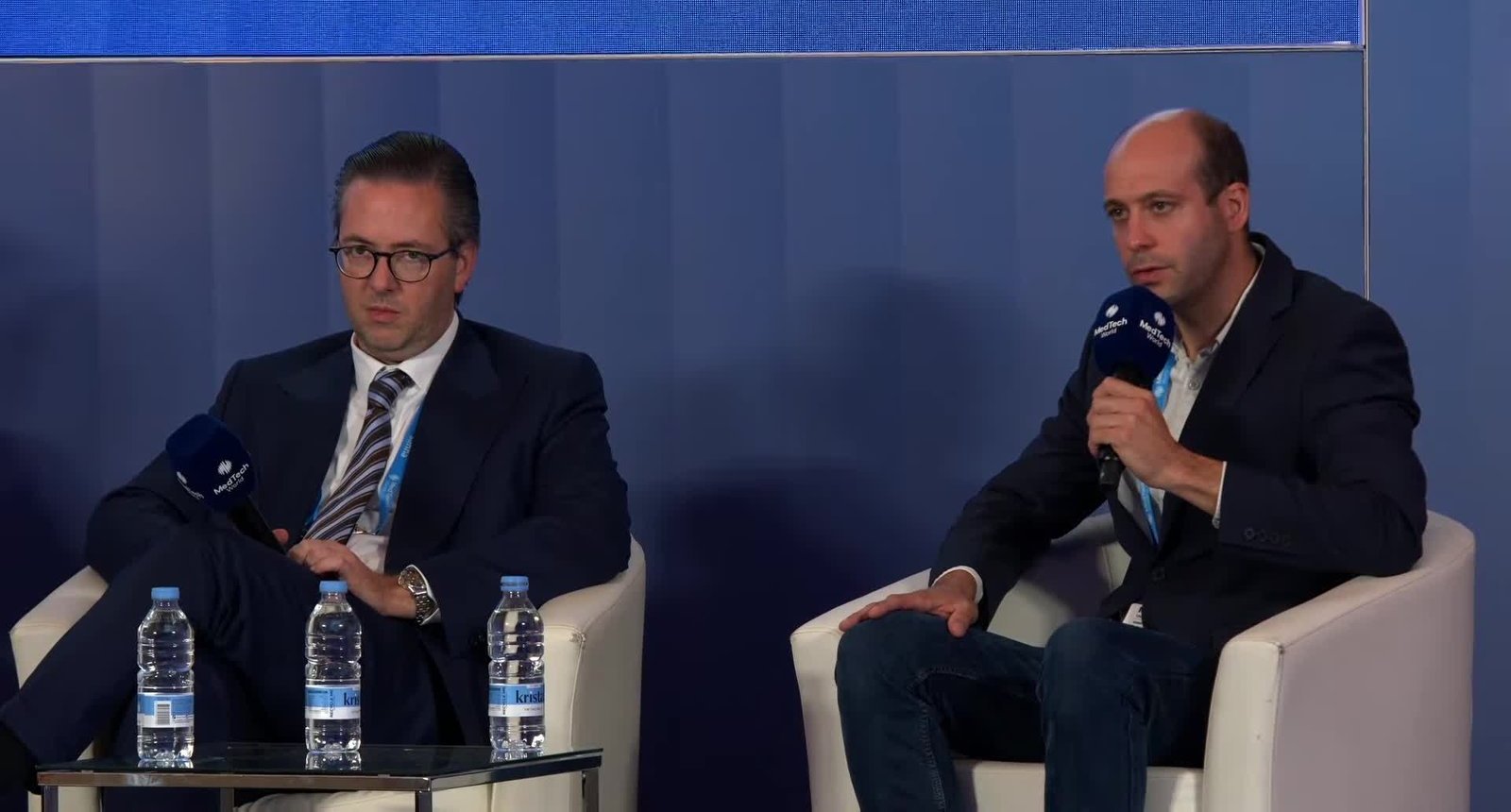
Longevity has moved from wellness trend to investment category, and the afternoon panel "Investing in Longevity: From Biohacking to Clinical Science" at MedTech World Europe 2026 tried to separate what has evidence from what has marketing. It was moderated by Joalin Lim, Founder and Group CEO of Agape-Life Medtech and Healthcare Group, which helps companies bring products into Southeast Asia.
| Speaker | Role |
|---|---|
| Alex Diaconu | Founder, Humans Holdings, a venture studio in health and technology |
| Kris Verburgh | Head of Science, BOLD Longevity Growth fund |
| Lucas Decuypere | CEO, Allegro, developing a treatment for osteoarthritis |
| Martial Trigeaud | Co-founder, 2060 Foundation |
| Joalin Lim (moderator) | Founder and Group CEO, Agape-Life Medtech and Healthcare Group |
The data should stay with the person
Diaconu opened on AI and data. Today, he said, people move their health data onto large platforms and the value moves with it, as happened with social media and now with consumer wellness wearables. His company's view is that data should stay with the individual and the AI should come to the data, with people choosing to contribute their data to research and clinical trials. Europe's GDPR, the European Health Data Space regulation and the AI Act all point the same way, he said.
On what AI can responsibly claim, he was cautious. It is good at spotting risk from ECG signals, glucose patterns and lab trends. It should flag when a person's trends move away from their baseline and prompt a clinical look. It should not be deterministic. "Age clocks is a research insight," he said. It is not something a product should claim to reverse until clinical evidence shows that it matters.
What counts as evidence
Lim asked Verburgh what separates a credible longevity intervention from a compelling biohacking story such as Bryan Johnson's. His criteria were the panel's most useful contribution:
- It acts on one or more of the recognised hallmarks of aging, such as mitochondrial dysfunction or epigenetic dysregulation.
- It extends lifespan in several species, not only worms or fruit flies, which suggests it acts on conserved pathways.
- In humans, it reduces all-cause mortality, and ideally the risk of several age-related diseases.
- It improves well-validated aging clocks, ideally more than one type.
Diaconu pushed back on the last point. Clocks are research instruments, he said, and should not be treated as outcomes. Verburgh, who is a doctor, agreed that functional outcomes such as grip strength and muscle power matter more, but argued that a good epigenetic clock still says more than a standard blood panel, where most people with chronic illness look normal.
The nearest drugs
Verburgh expects the first longevity drugs to be small molecules that reduce inflammation or improve metabolism, "like exercise on a couch". He listed existing medicines that researchers are studying for broader effects, including metformin and acarbose, SGLT2 inhibitors, bisphosphonates and even sildenafil, which has been associated with lower Alzheimer's risk in observational data. Further out he placed combination therapies, epigenetic reprogramming, which has rejuvenated old mice, gene editing inspired by natural mutations that protect against heart attack, and plasma exchange.
He named two structural problems. The field still lacks an accepted way to measure aging, and aging is not an approved indication. Developers must pick a disease such as Alzheimer's or heart disease. One path, he said, could be negotiating with the FDA and EMA over a functional indication that everyone experiences, such as reduced mobility. He also suggested pets as a faster first market.
Delaying a joint replacement
Decuypere brought the discussion back to musculoskeletal health. Living longer means little if you cannot move without pain, he said, and by 2050 the world could have around 1 billion people with osteoarthritis. Today the only definitive treatment is joint replacement, and health systems will not have enough surgeons or prostheses. Allegro's approach starts with the synovial fluid, which he described as the joint's primary shock absorber. In his account, its loss of shock-absorbing capacity comes before cartilage loss, and Allegro aims to restore it.
He was clear about what success means: first pain and function, then structure, and then the measure payers care about, how many years a joint replacement can be delayed. Raising money was hard because osteoarthritis does not kill. Allegro broke the catch-22 of needing data to raise money and money to get data by going to the veterinary market first, with results in sport horses.
How investors underwrite it
Trigeaud said that at pre-seed and seed an investor backs the team more than the technology. Real evidence of success appears after three to five years. The milestones that most raise his confidence are first revenue and then break-even. The 2060 Foundation runs a conference in Aix-en-Provence and a club deal with about 100 members that has put 2.5 million into seven companies, and plans a fund of funds to deploy 100 million over 10 years. He mixes long drug bets of seven to 10 years with device companies that can reach revenue sooner.
Women, and the evidence gap
An investor from Impact Invest, which invests with a gender lens, asked how the field would include women in aging research. Trigeaud said women-focused funds exist in healthcare and will come to longevity as it grows. Verburgh noted that women are at higher risk of Alzheimer's disease and of osteoporosis, live longer on average and could teach the field a great deal, and said menopause care is a major opportunity. Diaconu said the deeper issue is how clinical research is designed, and that each person's response differs: "I'm not Bryan Johnson and you are not either."
The panel's next moves
| Speaker | What longevity needs next |
|---|---|
| Diaconu | Decentralised, clinical-grade diagnostics at home |
| Verburgh | A way to measure aging, and a regulatory indication |
| Decuypere | Stricter science, and therapies accessible to everyone |
| Trigeaud | Democratisation and affordability |
Who is funding longevity
Some of the largest private bets in health are now in this field. Altos Labs launched in 2022 with $3 billion to work on cellular rejuvenation. NewLimit, co-founded by Coinbase CEO Brian Armstrong, raised a $130 million Series B led by Kleiner Perkins in May 2025 for epigenetic reprogramming medicines, starting with the liver. Retro Biosciences, backed by $180 million from Sam Altman, was raising a $1 billion round in 2025.
| Segment | Example | Evidence stage |
|---|---|---|
| Rejuvenation biology | Altos Labs, NewLimit, Retro Biosciences | Preclinical, with first clinical studies planned |
| Repurposed drugs | Metformin, rapamycin, GLP-1 drugs | Human data for other conditions, limited data on ageing itself |
| Clinics and diagnostics | Longevity clinics, biomarker panels, wearables | Mixed, and often consumer-driven rather than trial-driven |
For payers and employers, most longevity services are paid out of pocket today. Coverage will follow clinical outcomes, not biomarkers, which is why the companies planning regulated trials are the ones large investors back.
That split is what the panel was arguing about. The money at the top is going to companies that plan to run regulated trials. The consumer end of the market, from clinics to supplements, is where the evidence is thinnest. For clinicians, the practical test is simple: is there a randomised trial in humans with a clinical outcome, or only a biomarker that moves?
My take
Verburgh's four criteria are a good filter, and I would add one more for any product sold to the public: a clinically meaningful endpoint measured in people, such as function, hospitalisation or survival. Many associations mentioned on stage, including sildenafil and dementia, come from observational studies and need randomised trials before anyone changes a prescription. On menopause, Verburgh argued that doctors underuse hormone therapy because they rely on outdated studies. Guidance has moved since the early Women's Health Initiative results, and for many women around menopause the balance of benefit and risk is better than once thought. That is a conversation for each patient and her doctor, and "bioidentical" compounded products are not better proven than regulated ones. The panel was right that the field needs stricter science. That standard should apply to the claims made on stage as much as to the products.