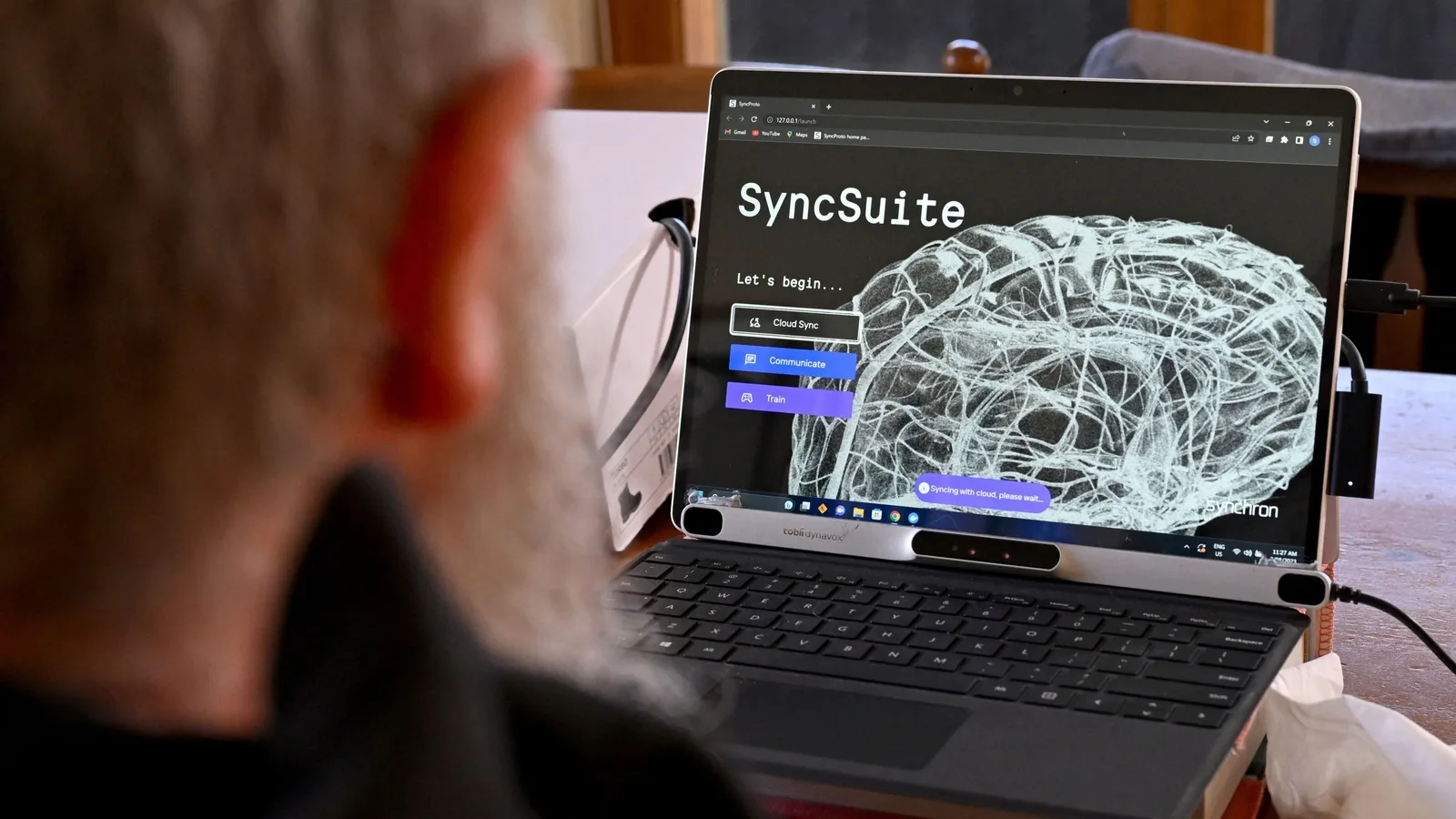
A stroke survivor sits down at a laptop a year and a half after the event. The right arm, the one that used to do the writing, still will not cooperate. The left hand can manage a mouse slowly and can tap out a message one key at a time. Physical therapy has plateaued. For that person, the question a brain-computer interface has to answer is not whether it can restore communication from nothing. It is whether it can do better than the hand that still works.
That is the market Neuralink just stepped toward. On November 10, a new registry entry for a study called PRIME2 opened the company's implant to chronic ischemic stroke for the first time in its registrations, alongside the spinal cord injury and ALS populations it has studied since 2024. It is a small feasibility study, and nothing has been implanted under it yet. But the choice of population says a lot about where implanted interfaces think their scale will come from. Below we cover why this matters now, what actually happened, the obvious read versus the deeper signal, and then, for Signal Plus subscribers, the category map, the Evidence Ladder, regulation and payment, the economics and the evidence boundaries.
For ALS and high spinal cord injury, a brain implant competes with very little. For chronic stroke, it competes with a working hand, a keyboard and a rehabilitation industry. That changes what success has to look like.
In This Deep Dive
- Why this matters now
- What actually happened
- The obvious read versus the deeper signal
- Category map and taxonomy
- Evidence Ladder
- Regulation, payment and international divergence: from feasibility to a care pathway
- Capital flows and bottom-up economics
- The HealthTech Investor's Signal
- Evidence boundaries
- Forward Intelligence
- The Bottom Line for Stroke Program Leaders, Neurotech Strategists and MedTech Investors
Why this matters now
Scale is the first reason. CDC estimates that more than 795,000 people in the United States have a stroke each year and that about 87% are ischemic. Stroke is a leading cause of serious long-term disability, and CDC notes it reduces mobility in more than half of survivors aged 65 and older. Even a narrow slice of chronic survivors with severe upper-limb impairment is a much larger population than the combined pool of people with ALS and high cervical spinal cord injury that brain-computer interfaces have mostly studied.
The second reason is the maturity of the first indications. Neuralink's original PRIME study has been registered since May 2024, and the company has added sites and countries since then, including Canada, the UK and the UAE, and a dedicated speech study, VOICE. A company that has learned how to implant, support and follow participants can begin to test whether the same system works in a population with a different brain injury.
The third reason is that stroke is a different neurological problem. In spinal cord injury and ALS, the motor cortex may be relatively intact while the pathway to the muscles is broken. In ischemic stroke, the injury is often in the brain itself, which means the signals the implant reads may be altered. That makes PRIME2 a scientific test as well as a commercial one: can motor cortex signals in chronic stroke support reliable cursor and keyboard control?
Certainty: (A) CDC figures and Neuralink's registry history are from CDC and ClinicalTrials.gov; (B) the contrast between stroke and spinal cord injury physiology is a general clinical point, and whether stroke cortex supports reliable decoding is exactly what the study is designed to explore.
What actually happened
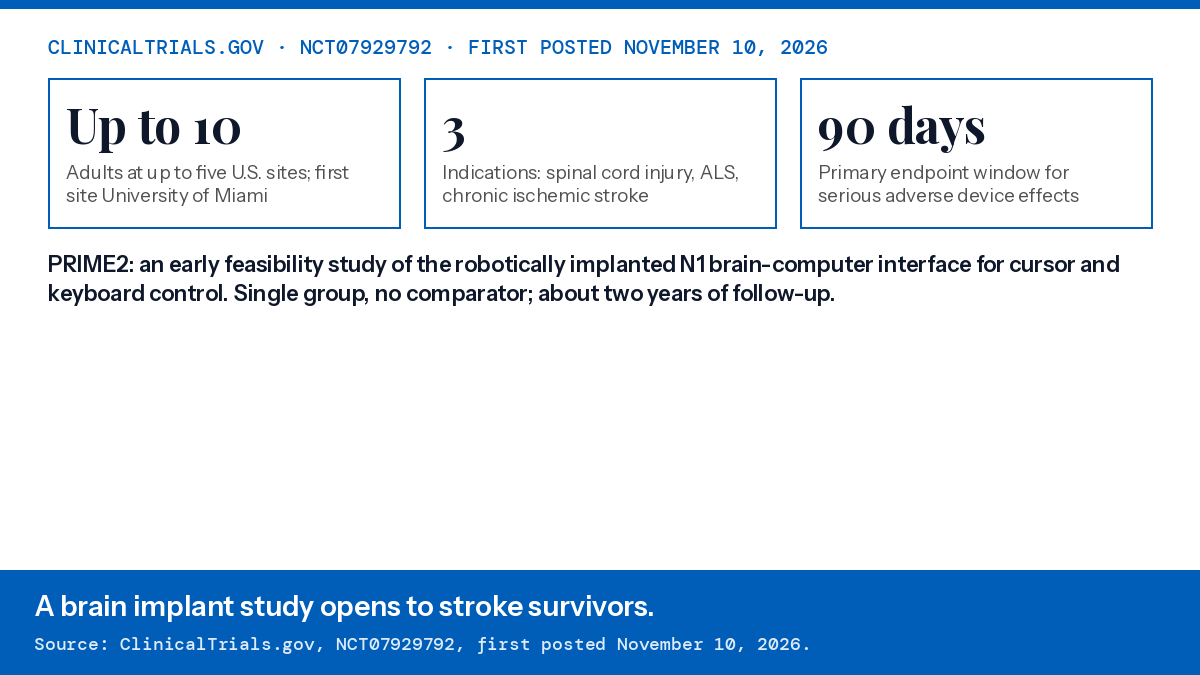
- The record: NCT07929792, acronym PRIME2, sponsor Neuralink Corp, organization study ID N1-EFS-300. Submitted October 28, 2026; quality control completed November 5; first posted November 10, 2026. Status: recruiting.
- The device: the N1 Implant, a fully implanted brain-computer interface placed in the motor cortex, inserted by the R1 Robot, a robotic electrode thread inserter. Participants use neural signals recorded by the implant to control a computer cursor or a virtual keyboard.
- The populations: adults with spinal cord injury for at least 12 months with severe arm and hand weakness; ALS with defined upper-limb weakness; or chronic ischemic stroke at least 12 months before screening with residual hemiparesis of the previously dominant arm and a Nine-Hole Peg Test completion time more than 3 standard deviations above age- and hand-specific norms.
- The design: early feasibility, single group, no masking, up to 10 participants at up to five U.S. sites. Each participant's results are compared with their own baseline. Follow-up is about two years after implantation, or about three years with optional extended follow-up.
- The endpoints: the primary outcome is serious adverse device effects from implantation through the 90-day visit. Other measures cover digital daily activities, computer-control performance, independent use of the system, and participant-, clinician- and caregiver-reported outcomes.
- The site: University of Miami, recruiting, with Jonathan Jagid, MD, as principal investigator. The University of Miami is also listed as a site in the original PRIME study.
- Timing: estimated study start November 2026, primary completion November 2027, study completion November 2031.
- What is new versus earlier entries: PRIME (NCT06429735) lists spinal cord injury and ALS; GB-PRIME and UAE-PRIME list brainstem stroke among their conditions; VOICE lists stroke for a speech-focused study. PRIME2 is the first entry to define chronic ischemic stroke with one-sided arm weakness as an eligible population for motor control.
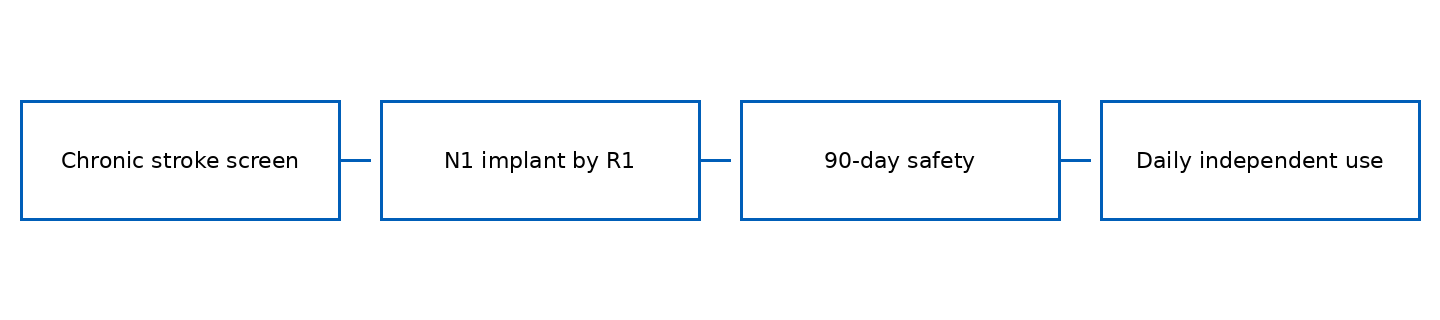
Certainty: (A) all items are from the ClinicalTrials.gov records for NCT07929792 and Neuralink's other registrations, retrieved November 12, 2026. Neuralink has not issued a press release; Tier 3 coverage (Tesla North, Neura BC) was used only for discovery.
The obvious read versus the deeper signal
The obvious read: Neuralink adds another indication to a small trial, a headline that matters mostly to people following Elon Musk's companies.
The deeper signal: Registry entries are where device companies reveal strategy before they announce it. By defining chronic ischemic stroke with dominant-arm weakness as an eligible population, and by measuring independent use and caregiver-reported outcomes, Neuralink is testing whether implanted interfaces can move from rare, catastrophic paralysis into a common chronic disability with an established care pathway. If that works, the competitive set changes: the implant is no longer compared only with other brain-computer interfaces, but with rehabilitation devices, assistive software and the patient's own unaffected hand.
Certainty: (A) eligibility and endpoints from the registry; (B) the strategic reading is our interpretation.
Historical playbook
Neurotechnology has a useful precedent in deep brain stimulation. It moved from a small number of movement disorder patients to a recognized therapy over many years, through careful indication expansion, long-term follow-up and the slow building of surgical centers and referral networks. Expansion worked when each new indication had a clear clinical endpoint and a referral pathway that already existed.
Cochlear implants offer a second lesson. Adoption depended not only on the device but on candidacy criteria, surgical training, audiology support and reimbursement that recognized the full care episode. For brain-computer interfaces in stroke, the equivalents are clear inclusion criteria (PRIME2's Nine-Hole Peg Test threshold is an early version), a network of neurosurgical and rehabilitation centers, and a way to pay for implantation, programming and years of follow-up. The technology has to arrive with a care model, or it stays a research tool.