
In stereotactic neurosurgery, every deep brain stimulation procedure is governed by a strict geometric constraint: conventional surgical frames can only guide rigid metal electrodes along straight-line trajectories. If an optimal therapeutic nucleus lies behind a critical vascular bundle or a delicate ventricular wall, the neurosurgeon must either compromise the entry angle or accept elevated risks of intracerebral hemorrhage.
The successful completion of the European Innovation Council-funded MINIGRAPH project is a pivotal breakthrough at the intersection of nanomaterials and surgical robotics. By pairing INBRAIN Neuroelectronics' ultra-thin graphene neural interfaces with Nanoflex Robotics' remote electromagnetic navigation system, the consortium has validated a platform capable of steering flexible neural probes along curved, non-linear trajectories deep into the brain with submillimeter accuracy.
In This Deep Dive:
- Why this matters now: overcoming straight-line trajectory limits and metal electrode gliosis in neurosurgery.
- What actually happened: the MINIGRAPH consortium results, robotic navigation performance and 10-year biostability data.
- The obvious read versus the deeper signal: beyond academic robotics to scalable community neurosurgical adoption.
- Biophysics and robotics architecture, plus a benchmark against Medtronic, Boston Scientific, Neuralink and Synchron.
- The Evidence Ladder: from 2D nanomaterial physics to first-in-human mapping in Manchester.
- Neurosurgical economics and operating room efficiency.
- The HealthTech Investor's Signal, counter-thesis and four indicators to watch.
Why this matters now
Deep brain stimulation (DBS) is an established therapy for medically refractory Parkinson's disease, essential tremor and dystonia. However, current clinical technology relies on platinum-iridium electrodes that are mechanically rigid and carry high electrical impedance at microscopic dimensions. Implanted into brain tissue, these rigid leads elicit a chronic foreign body response, causing glial scarring that degrades recording quality and increases stimulation voltage requirements over time.
Traditional stereotactic frames also require lengthy awake procedures under local anesthesia with heavy metal frames fixed to the skull. Because these frames enforce rigid linear trajectories, neurosurgeons cannot navigate around complex anatomical obstacles to reach deep subcortical structures. Unlocking next-generation closed-loop neuromodulation requires two simultaneous innovations: flexible, ultra-high-resolution electrode materials that minimize tissue trauma, and robotic navigation that can guide soft interfaces along curved physiological pathways.

What actually happened
The MINIGRAPH consortium, funded with roughly 4 million euros from the European Innovation Council plus additional Swiss government support, unites INBRAIN Neuroelectronics, ETH Zürich, Nanoflex Robotics, the Catalan Institute of Nanoscience and Nanotechnology (ICN2), imec and Fraunhofer. In October 2026 the consortium announced the successful completion and preclinical validation of its integrated neuromodulation platform.
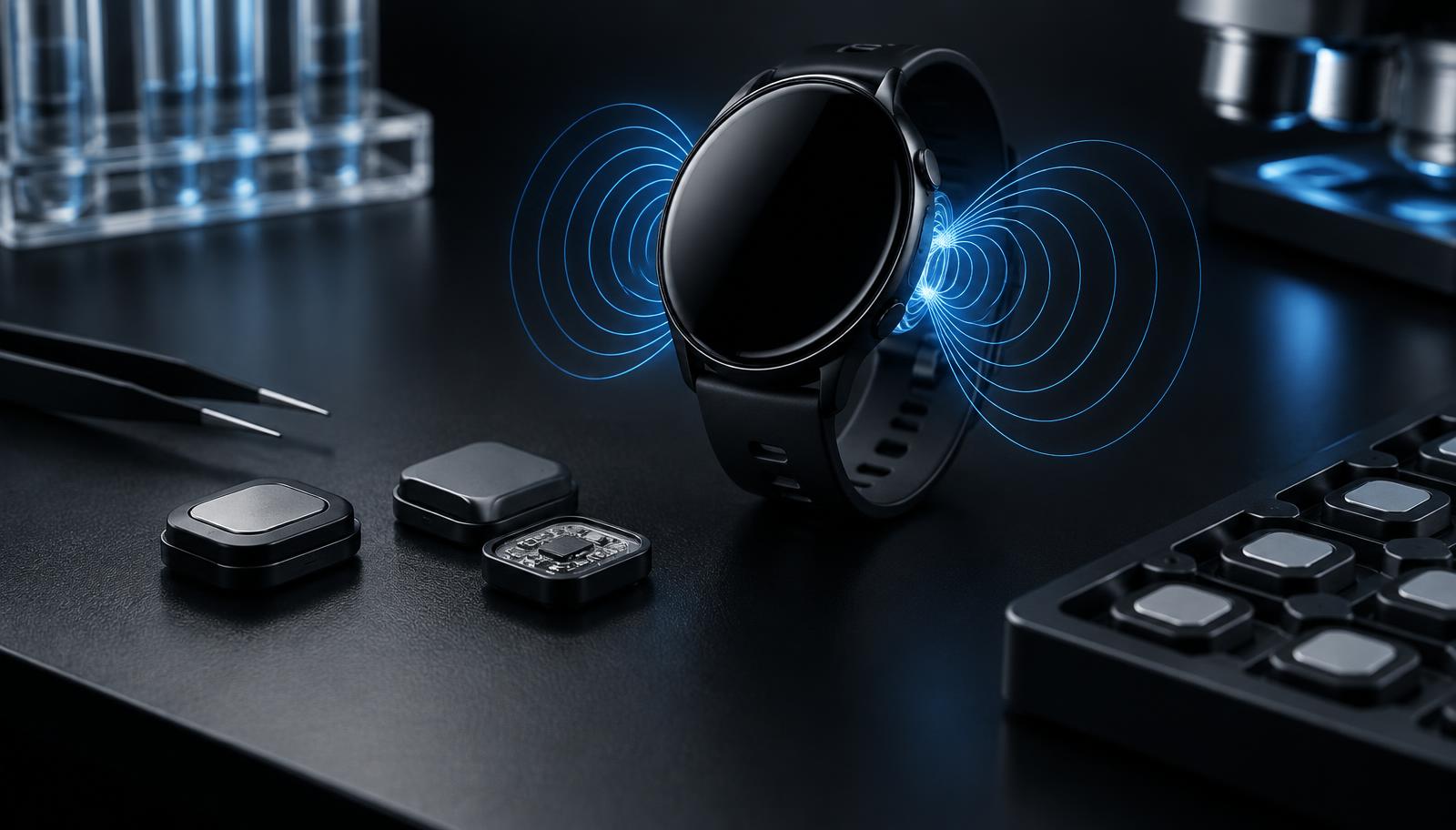
The consortium engineered ultra-thin graphene semiconductor probes that interface with miniaturized implantable electronics capable of decoding neural activity across hundreds of microscopic sites. Nanoflex Robotics and ETH Zürich developed a remote magnetic navigation system that uses external electromagnetic fields to orient and propel the flexible probe tip through brain tissue, achieving submillimeter placement precision along curved trajectories in translational models. Accelerated aging tests project the functional biostability of the graphene thin films to exceed 10 years. The work builds on INBRAIN's 10-patient first-in-human clinical study at the Manchester Centre for Clinical Neurosciences, which completed enrollment in April 2026, and on the FDA Breakthrough Device Designation the company received for its Parkinson's platform in 2023.
The obvious read versus the deeper signal
The conventional narrative frames MINIGRAPH as an exotic materials science achievement, celebrating graphene's transition from theoretical physics into medical devices. The deeper clinical and commercial signal lies in the convergence of robotic delivery with high-density bio-compute.
For decades, brain-computer interface startups focused almost entirely on channel counts and electrode physics while treating neurosurgical implantation as a manual, third-party afterthought. By integrating surgical robotics directly into the neural interface platform, INBRAIN and its partners are addressing the primary commercial bottleneck that has kept advanced BCIs inside elite academic centers: procedure standardization. A magnetically guided robotic system removes surgeon-dependent trajectory variation, shortens operating room times and could enable broader hospital adoption.