
Central nervous system drug development has long been constrained by the fundamental biophysical reality of the blood-brain barrier (BBB). Many small molecules and large biologics have limited penetration across the blood-brain barrier, forcing neuro-oncologists to administer massive systemic doses that cause severe off-target toxicities while achieving negligible concentrations in brain parenchyma.
This week, CraniUS Therapeutics secured its second FDA 510(k) clearance in six weeks for its NeuroPASS 2 patient-specific cranial implant, alongside the issuance of U.S. Patent No. 12,752,051 protecting its fully implantable NeuroPASS 3 direct-to-brain infusion system. By embedding microfluidic pumps, refillable drug reservoirs, and convection-enhanced delivery (CED) catheters directly within the temporal bone skull space, CraniUS aims to build a chronic delivery gateway; the cleared cranial plate and the investigational active infusion system are distinct products.
In This Deep Dive:
- Why this matters now: The biophysical limits of systemic CNS drug delivery and the blood-brain barrier bottleneck.
- What actually happened: FDA 510(k) clearance K262874 for CraniUS Plate and core patent protection for NeuroPASS 3.
- The obvious read versus the deeper signal: Simple cranial prosthetic clearance versus creating permanent therapeutic infrastructure.
- Competitive taxonomy & clinical maturity: Invasive and non-invasive blood-brain barrier bypass platforms.
- The Evidence Ladder: From acute Ommaya reservoirs to chronic skull-embedded convection delivery.
- The HealthTech Investor's Signal: Neurotech device-biopharma co-development, Class II regulatory beachheads, and IP moats.
- Counter-thesis: Catheter occlusion risks, surgical revision burdens, and neurosurgical adoption inertia.
- Forward intelligence: 4 observable test indicators for the upcoming 12 to 24 months.
- The bottom line for neurosurgeons, neuro-oncologists, and medical device investors.
Why this matters now
Glioblastoma multiforme (GBM) remains one of the most lethal solid tumors in oncology, with a median survival of just 15 to 18 months despite maximal surgical resection, radiation, and temozolomide chemotherapy. Decades of clinical trials testing targeted tyrosine kinase inhibitors, immune checkpoint blockers, and antibody-drug conjugates (ADCs) have failed to improve survival, for multiple biological and delivery reasons, including heterogeneous tissue exposure.
Traditional methods of direct CNS administration suffer from severe physical shortcomings. Intraventricular Ommaya reservoirs rely on passive cerebrospinal fluid diffusion, which fails to penetrate more than a few millimeters into deep brain parenchyma. Meanwhile, acute convection-enhanced delivery requires externalized skull catheters and prolonged hospital stays, creating unacceptable risks of bacterial meningitis and cerebrospinal fluid leaks. By engineering an active, wireless, fully internal skull-embedded platform, CraniUS aims to create a chronic pathway to infuse therapeutic agents directly into brain tissue under positive pressure gradients over months and years.
What actually happened
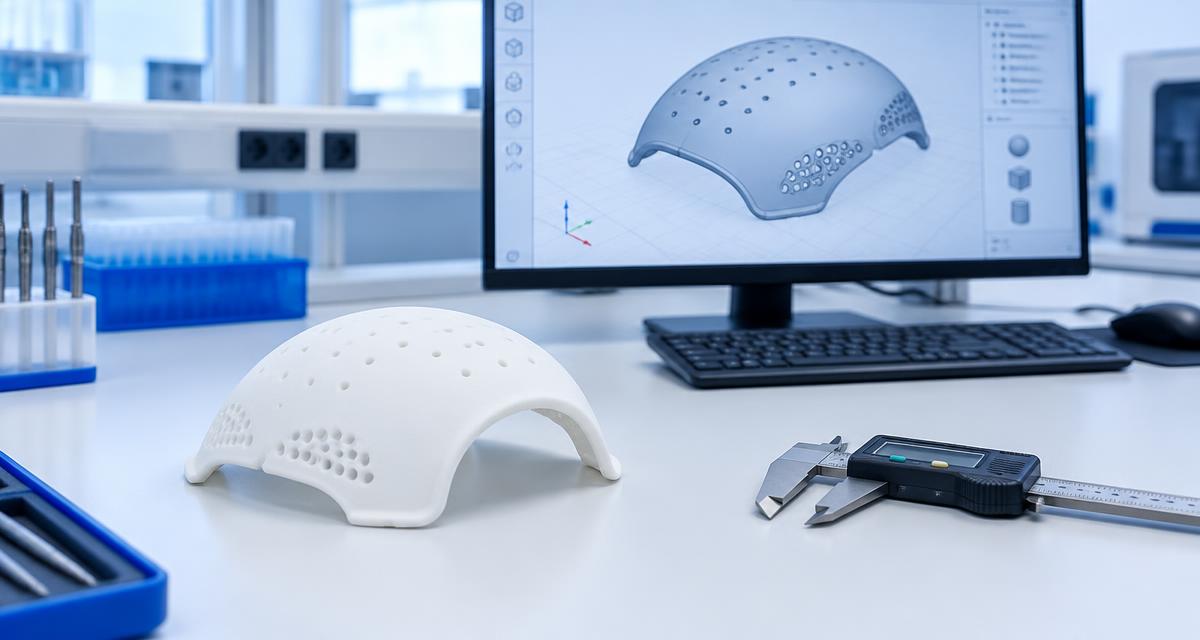
The company announced a second FDA 510(k) clearance, K262874, for CraniUS Plate, its NeuroPASS 2 cranial reconstruction configuration, after an earlier clearance. The regulatory milestone concerns the cranial prosthesis and its cleared indications. It is not clearance of NeuroPASS 3 for chronic drug delivery, approval of a drug-device combination, or evidence of clinical benefit in glioblastoma.
In parallel, the United States Patent and Trademark Office (USPTO) issued U.S. Patent No. 12,752,051, entitled "Cranial Drug Delivery System." The patent establishes broad claims protecting CraniUS's next-generation NeuroPASS 3 platform: an implant system fully embedded within a temporal skull bone defect comprising a transcutaneously refillable drug reservoir, a regulated micro-infusion pump, wireless recharging telemetry, and micro-catheters configured for chronic convection-enhanced delivery directly into targeted intracranial structures. With $40 million in backing, including NIH Blueprint MedTech funding and a $20 million Series B round, CraniUS is advancing toward a first-in-human clinical trial in recurrent glioblastoma targeted by the company for Q2 2027, subject to regulatory and development progress.
The obvious read versus the deeper signal
The standard medtech read categorizes CraniUS as an early-stage cranioplasty device company leveraging 510(k) clearances to sell patient-specific bone plates. The deeper strategic signal is that CraniUS is executing a staged development strategy: securing commercial beachheads in Class II cranial reconstructive implants before deploying a high-margin biopharma delivery platform.
By clearing the physical cranial housing under the established 510(k) pathway, CraniUS establishes surgical familiarization among neurosurgeons who already perform decompressive craniectomies and tumor resections. Once the passive cranial implant is standard in operating rooms, upgrading the plate with the embedded NeuroPASS 3 active pump and reservoir would require its own clinical validation, training and regulatory authorization. This transforms the skull from a passive anatomical barrier into an active, programmable drug-delivery interface, creating a potential partnership interface for pharmaceutical companies seeking to rescue CNS drug pipelines.