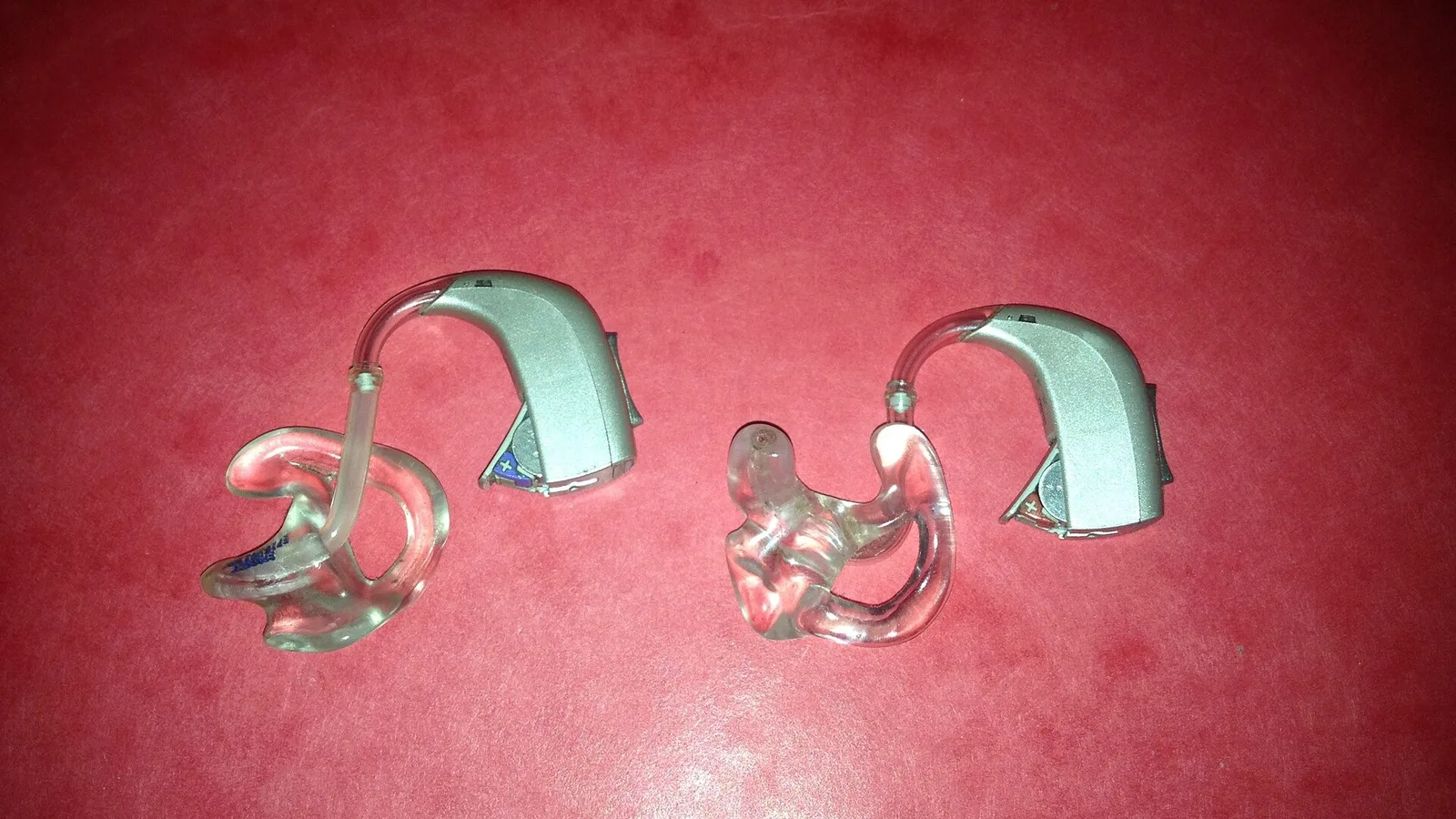
The FDA's over-the-counter hearing aid rule took effect in October 2022, removing the requirement for a medical exam, prescription or fitting by an audiologist for adults with perceived mild to moderate hearing loss. Four years on, the category is commercially real: the U.S. OTC hearing aid market was valued at roughly $3.8 billion in 2026 and is forecast to reach $17.64 billion by 2035, an 18.6 percent compound annual growth rate. MarkWide Research A separate global estimate puts the broader OTC category at $1.24 billion in 2025 growing to $1.34 billion in 2026, illustrating how differently research firms scope the market depending on geography and product definition. Research and Markets
The FDA's own numbers explain why this category exists at all: close to 30 million adults in the U.S. have some degree of hearing loss, and only about one fifth of those who could benefit from a hearing aid actually seek one. FDA That gap, not technology, has always been the core problem in this category, and it is worth asking honestly whether OTC access has actually closed it.
Why did the market open up, and who moved fastest?
Removing the audiologist gatekeeping requirement let consumer electronics companies enter a category previously dominated by a handful of specialized device makers. Sony, Bose and other established audio brands launched OTC products alongside newer entrants like Eargo, competing largely on price and app-based fitting rather than clinical customization.
Price compression is the single biggest structural change. Prescription hearing aids historically ran $2,000 to $7,000 per pair including the audiologist visit and fitting. OTC devices routinely sell in the low hundreds of dollars, an order of magnitude difference that opens the category to patients who were previously priced out entirely, particularly Medicare beneficiaries whose plans still do not broadly cover hearing aids.
Where does OTC actually fall short clinically?
The FDA rule specifically limits OTC devices to adults who perceive their hearing loss as mild to moderate. It does not cover:
- Children under 18
- Adults with severe to profound hearing loss
- Anyone with sudden hearing loss, ear pain, drainage or asymmetric hearing loss, all of which warrant a medical workup, not a self-fitted device
- Complex cases requiring custom acoustic coupling that self-fitting algorithms cannot replicate
A regulatory guide published in mid-2026 notes that FDA continues to actively track MAUDE adverse event reports specific to the OTC product codes created by the rule, watching for signals that self-selection is leading patients with more complex hearing loss into a category not designed for them. MedDeviceGuide
Why adoption still lags the addressable population
| Factor | Effect on adoption |
|---|---|
| Price drop from $2,000+ to low hundreds | Positive, removes cost barrier |
| No audiologist fitting required | Positive, removes access barrier |
| Stigma around visible hearing devices | Still negative, largely unchanged |
| Consumer uncertainty about self-diagnosis | Negative, some patients unsure if they qualify for OTC |
| Retail and online distribution expansion | Positive, still building out |
Stigma, not price or access, appears to be the more durable barrier. Studies on hearing aid non-adoption before the OTC rule consistently found that perceived social stigma and denial of hearing loss severity outweighed cost as reasons for non-use, and neither of those barriers is solved by regulatory or retail changes.
The takeaway
The OTC hearing aid rule did exactly what it was designed to do: it created a real, fast-growing consumer market and collapsed price as a barrier. It did not, on its own, close the gap between the 30 million Americans with hearing loss and the fraction who seek treatment, because the larger barriers were always behavioral and social, not regulatory. The next wave of growth in this category will come from companies that treat hearing health like a screening and awareness problem, not just a distribution problem.
Key Signals
The U.S. OTC hearing aid category is worth roughly $3.8B in 2026 and growing near 19% a year. Only about a fifth of the 30 million Americans with hearing loss ever seek a device, OTC or not. Price fell from $2,000+ per pair to low hundreds of dollars, but stigma remains the bigger unsolved barrier. FDA is actively watching adverse event data for patients with more complex hearing loss self-selecting into OTC.