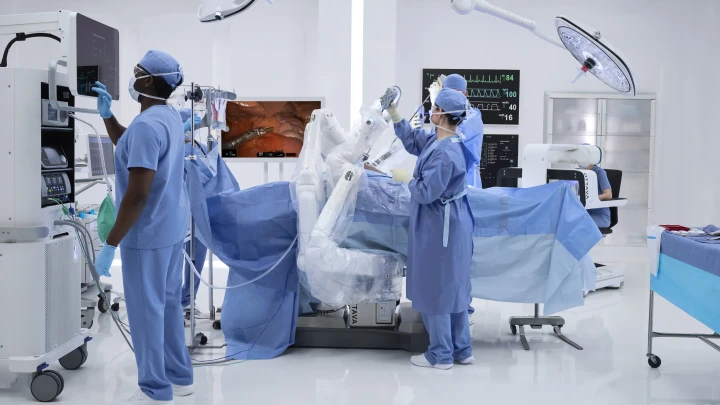
Operating rooms in busy surgical centers are experiencing severe spatial crowding. Between laparoscopic towers, anesthesia consoles, imaging monitors and freestanding robotic patient carts weighing several hundred pounds, surgical teams often find themselves navigating obstacle courses around the patient.
Johnson & Johnson's OTTAVA Robotic Surgical System, which received FDA De Novo market authorization in July 2026 and was highlighted as a signature innovation in the company's third-quarter earnings on October 13, 2026, marks the most consequential architectural challenge to Intuitive Surgical in over two decades. By engineering four robotic arms directly beneath a standard surgical table, J&J is eliminating the standalone patient cart and testing whether table-integrated robotics can unlock faster room turnover and lower hospital installation barriers.
In This Deep Dive:
- Why this matters now: hospital robotic adoption is constrained by room footprint and capital cost.
- What actually happened: the De Novo authorization, covered procedures and system architecture.
- The obvious read versus the deeper signal: an attack on total operating room throughput.
- Taxonomy of soft-tissue surgical robotics architectures.
- The mechanical engineering breakthrough of table-integrated arms.
- Capital flows, incentives and bottom-up economics.
- The HealthTech Investor's Signal, counter-thesis and four indicators to watch.
Why this matters now
For more than twenty years, Intuitive Surgical maintained near-total dominance over soft-tissue robotic surgery with its da Vinci ecosystem. While Medtronic entered international markets with Hugo, hospital robotic adoption has been constrained by physical room footprint and heavy capital expenditures exceeding $1.5 million to $2.5 million per system.
Many community hospitals and ambulatory surgery centers operate older, smaller surgical suites that cannot easily accommodate massive freestanding robotic carts without expensive structural renovations. J&J's OTTAVA system addresses this spatial bottleneck by building the robotic mechanics into the operating table itself, allowing the same operating room to transition between manual laparoscopic, open and robotic cases without wheeling heavy equipment across hallways.
What actually happened
The FDA granted De Novo market authorization for the OTTAVA Robotic Surgical System on July 22, 2026, a milestone Johnson & Johnson (NYSE: JNJ) and Chairman and CEO Joaquin Duato spotlighted during the company's third-quarter 2026 financial disclosure on October 13. The authorization covers 10 general surgery procedures in the upper abdomen, including Roux-en-Y gastric bypass, sleeve gastrectomy, cholecystectomy, splenectomy, small bowel resection, appendectomy, lysis of adhesions, fundoplication and hiatal hernia repair.
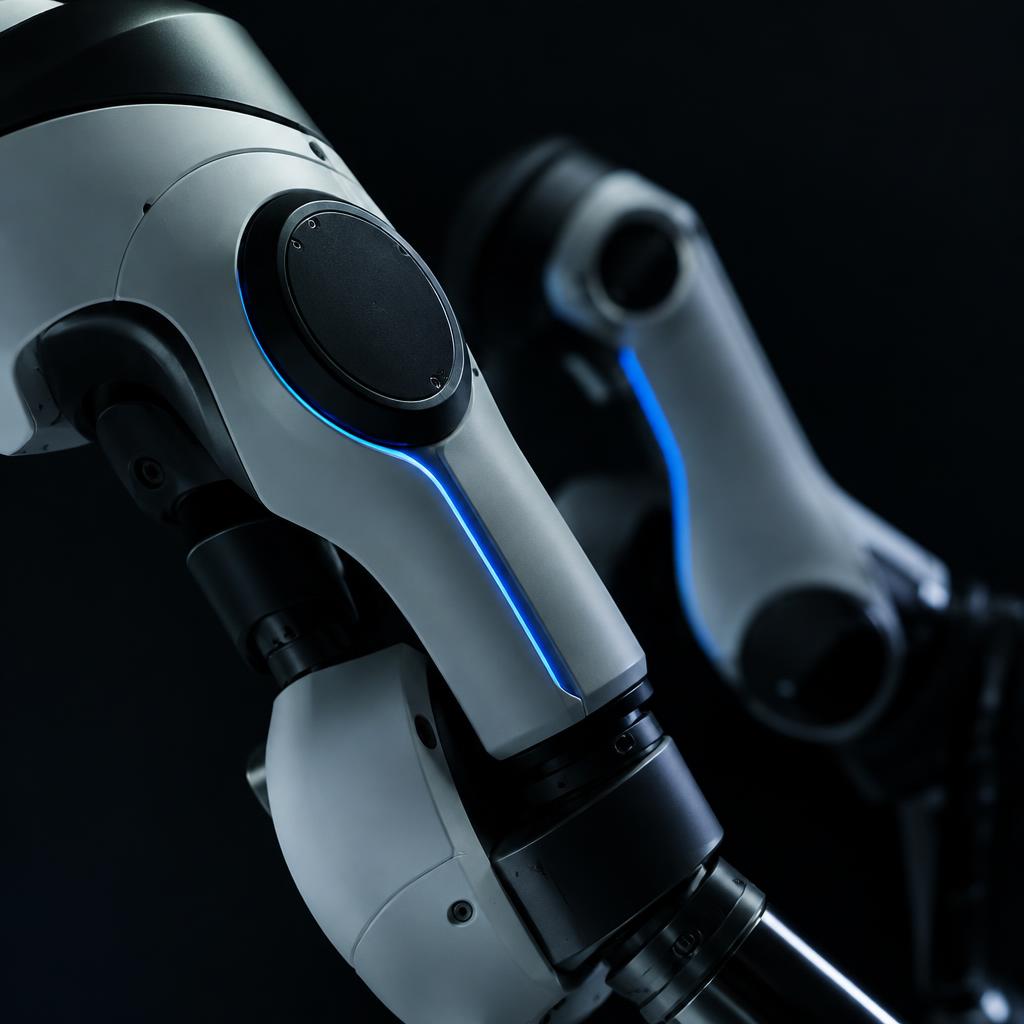
The regulatory authorization validates J&J's complete redesign of its soft-tissue robotics program following its 2019 acquisition of Auris Health. OTTAVA incorporates four low-profile robotic arms stored underneath the patient table that deploy upwards only when needed during the procedure, preserving full 360-degree patient access for surgical assistants and anesthesiologists.
The obvious read versus the deeper signal
The surface read is that J&J has finally launched a direct competitor to Intuitive Surgical's da Vinci 5, entering a head-to-head hardware sales battle for hospital surgical suites.
The deeper strategic signal is an attack on total operating room throughput. Hospital financial margins depend heavily on surgical suite utilization rates and turnover times between cases. Standalone robotic systems often add 15 to 30 minutes of setup and draping time per procedure. By embedding the robotic arms into the table and allowing standard bed articulation during surgery, OTTAVA aims to compress room turnover times, making robotic general surgery economically viable for high-volume community hospitals and outpatient surgery centers.