In hematologic oncology clinics, the emergence of Bruton tyrosine kinase (BTK) inhibitors fundamentally transformed chronic lymphocytic leukemia (CLL) from a disease managed with toxic cytotoxic chemotherapy into a manageable chronic condition. However, first- and second-generation covalent BTK inhibitors (such as ibrutinib and acalabrutinib) carry a built-in biochemical vulnerability: they rely on forming a permanent covalent bond with the cysteine-481 (C481) residue in the ATP-binding pocket of BTK. Over time, malignant B cells mutate this residue to serine (C481S), causing drug resistance, rapid clinical relapse, and difficult salvage options.
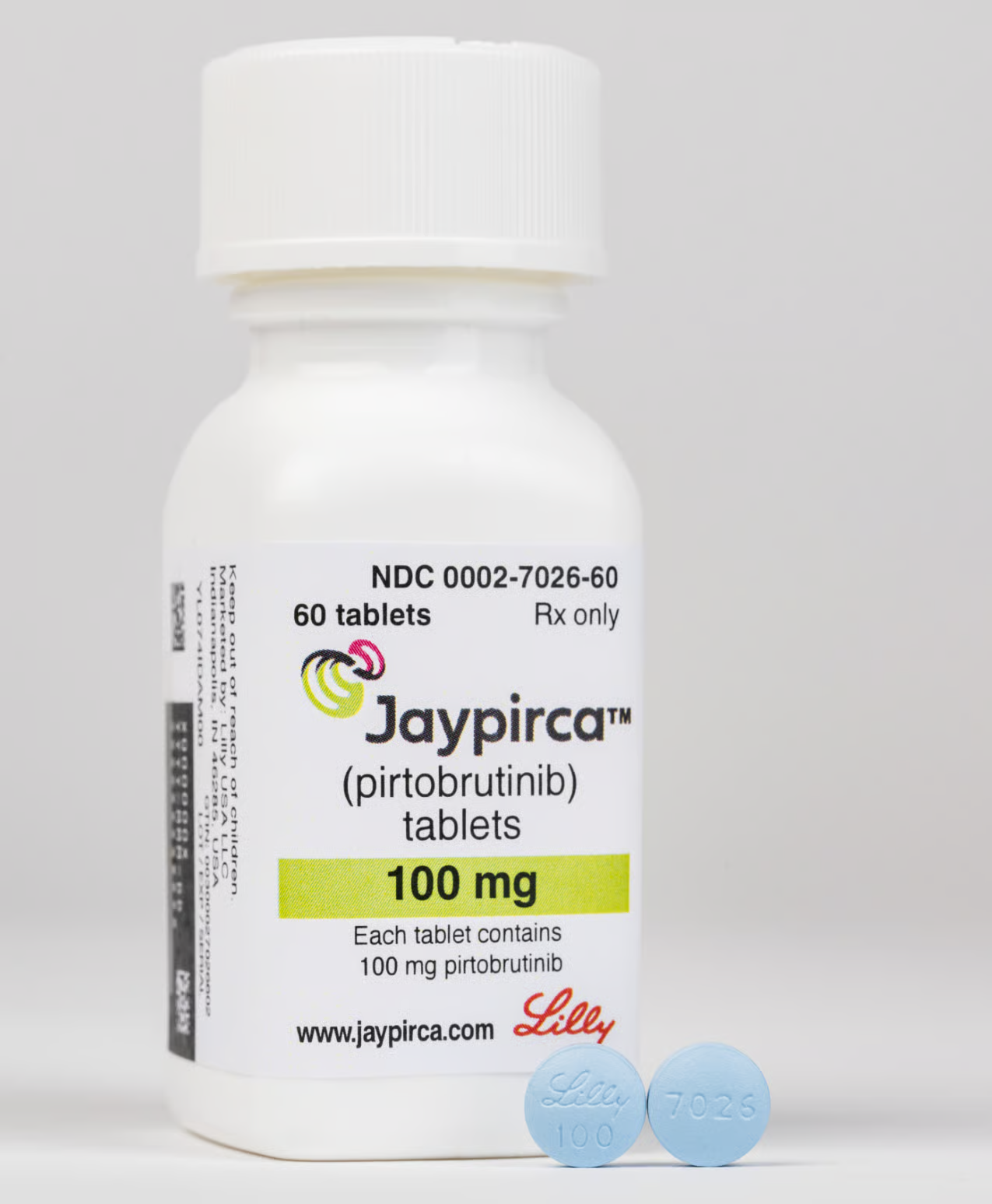
On October 2, 2026, the US Food and Drug Administration approved an expanded frontline indication for Eli Lilly's Jaypirca (pirtobrutinib) for adult patients with untreated CLL or small lymphocytic lymphoma (SLL) lacking chromosome 17p deletions. As the first non-covalent (reversible) BTK inhibitor approved in the frontline setting, pirtobrutinib establishes potent kinase inhibition regardless of C481 mutation status, challenging the established sequencing paradigm across global oncology.
In this deep dive
- Why this matters now: The molecular biology of C481 resistance mutations
- What actually happened: Analyzing the Phase 3 BRUIN CLL-313 trial outcomes
- The obvious read versus the deeper signal
- The Evidence Ladder: From reversible binding kinetics to frontline clinical guidelines
- BTK inhibitor class taxonomy: Covalent vs non-covalent vs BTK degraders (PROTACs)
- Oncology commercial economics: Pricing power, duration of therapy, and market share shifts
- The HealthTech Investor's Signal: Capital reallocation in hematologic oncology
- The Counter-Thesis: Second-generation covalent loyalty and non-C481 gatekeeper mutations
- Forward Intelligence: Four observable clinical and regulatory milestones
- The Bottom Line for Cancer Center Directors and Oncology Strategists
Why This Matters Now: The C481 Resistance Bottleneck
CLL is the most common leukemia in adults in Western countries, with over 20,000 new US cases diagnosed annually. While covalent BTK inhibitors established unprecedented disease control, C481-site mutations are an important, but not universal, resistance mechanism after covalent therapy. Once covalent binding is disrupted, patients historically faced poor prognoses, limited salvage options, and heightened risk of Richter transformation into aggressive diffuse large B-cell lymphoma.
By securing approval in previously untreated patients, Lilly allows oncologists to deploy non-covalent inhibition before selective clonal pressure drives C481 mutation expansion, but how frontline use affects future treatment sequencing remains to be tested.
What Actually Happened: Phase 3 BRUIN CLL-313 Trial Breakdown
The FDA approval was grounded in the randomized, open-label, active-controlled Phase 3 BRUIN CLL-313 study (NCT05023980), enrolling 282 patients with untreated CLL/SLL without 17p deletions, randomized 1:1 to pirtobrutinib (200 mg once daily) or bendamustine plus rituximab (BR) chemoimmunotherapy:
- Progression-Free Survival Benefit: Pirtobrutinib demonstrated an 80% reduction in the risk of disease progression or death (Hazard Ratio 0.20, p < 0.0001). Median PFS was not estimable in the pirtobrutinib arm versus 33.5 months for chemoimmunotherapy at 28 months median follow-up.
- Response Rate: Overall response rate (ORR) was 94% for pirtobrutinib versus 81% for BR chemoimmunotherapy; complete response rates favored BR (21% versus 13%).
- Safety Profile: Pirtobrutinib demonstrated selectivity in laboratory testing, with safety findings that should not be read as a head-to-head comparison against covalent BTK inhibitors.
The Obvious Read Versus the Deeper Signal
The standard market view is that Jaypirca merely provides another first-line pill to compete against chemoimmunotherapy, a regimen already fading from modern practice. The deeper strategic signal is that Lilly is systematically executing a commercial squeeze on market leaders Imbruvica (AbbVie/J&J), Calquence (AstraZeneca), and Brukinsa (BeiGene). With the upcoming readout of the head-to-head BRUIN CLL-314 trial comparing Jaypirca directly against ibrutinib, Lilly aims to prove that non-covalent chemistry should replace covalent inhibitors as the standard first-line choice, shifting the multi-billion-dollar frontline market.

🔒 HEALTHTECH SIGNAL PLUS · EXCLUSIVE SUBSCRIBER INTELLIGENCE