Immune checkpoint inhibitors targeting PD-1 and PD-L1 have transformed the survival landscape for patients with advanced non-small cell lung cancer over the past decade. Yet across broad clinical populations, fewer than 30% to 40% of patients achieve long-term, durable remissions, while the remaining majority endure high financial toxicity, severe immune-related adverse events, and rapid disease progression.
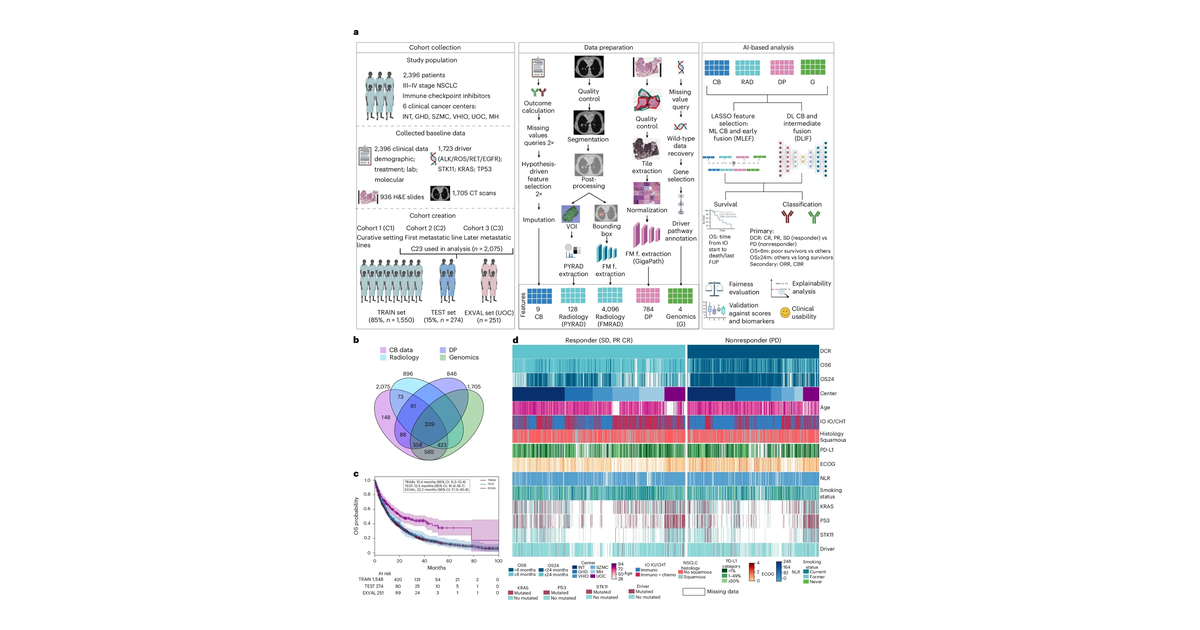
For years, oncologists have relied almost exclusively on programmed death-ligand 1 (PD-L1) immunohistochemistry tumor proportion scores and tumor mutational burden (TMB) to select candidates for immunotherapy. In Nature Medicine, Dr. Arsela Prelaj and the international I3LUNG consortium demonstrated that fusing clinical EHR data, CT imaging radiomics, tumor genomics, and digital pathology into an explainable AI framework outperforms traditional single-biomarker testing across 2,365 patients.
In this deep dive, we are going to look at:
- Why this matters now: The clinical ceiling of single-analyte precision oncology
- What actually happened: The 2,365-patient international I3LUNG cohort architecture
- The obvious read versus the deeper signal: Explainable AI as a regulatory prerequisite
- The Evidence Ladder: From retrospective multi-omics to prospective SaMD trials
- Biomarker taxonomy: Single IHC assays vs multimodal foundation models
- The HealthTech Investor's Signal: Diagnostic monetization and biopharma partnership economics
- Technical counter-thesis: Data harmonization across international health systems
- Forward intelligence: 4 observable test milestones across 2026 to 2028
- The Bottom Line for Cancer Center Leaders and Precision Medicine Investors