For more than a decade, non-opioid post-surgical analgesics have confronted a punishing structural paradox in American healthcare: while clinical evidence clearly demonstrated that long-acting local anesthetics reduced reliance on addictive systemic opioids, outpatient reimbursement mechanics disincentivized their adoption.
Under legacy Medicare Prospective Payment Systems, ambulatory surgery centers (ASCs) and hospital outpatient departments (HOPDs) received a fixed, bundled facility fee for surgical procedures. Utilizing premium long-acting analgesics like Exparel (liposomal bupivacaine) reduced hospital operating margins dollar-for-dollar because the drug cost had to be absorbed entirely out of the fixed surgical bundle. The October 8 agreement for an approximately $1.65 billion equity-value cash acquisition of Pacira BioSciences by global pharmaceutical giant Viatris represents a strategic move within the existing, time-limited federal separate-payment framework.
In This Deep Dive:
- Why this matters now: The historic reimbursement friction capping non-opioid surgical adoption.
- What actually happened: Viatris $1.65B cash acquisition of Pacira BioSciences at $36.50/share (45% premium).
- The obvious read versus the deeper signal: Generics diversification versus NOPAIN Act policy monetization.
- Competitive taxonomy & commercial landscape: Post-operative non-opioid analgesic formulations.
- The Evidence Ladder: Liposomal formulation engineering to federal reimbursement unbundling.
- The HealthTech Investor's Signal: Outpatient surgical margin arbitrage, liposomal manufacturing moats, and ASC commercial scaling.
- Counter-thesis: Manufacturing and formulation comparability, Vertex Nav1.8 small-molecule competition, and surgeon infiltration technique variability.
- Forward intelligence: 4 observable test indicators for the upcoming 12 to 24 months.
- The bottom line for surgical hospital administrators, anesthesiology chairs, and healthcare private equity sponsors.
Why this matters now
Post-operative pain management is entering a transformational regulatory inflection. Signed into law to combat the synthetic opioid epidemic, the Non-Opioids Prevent Addiction in the Nation (NOPAIN) Act mandates that from January 1, 2025, Medicare must provide separate, unbundled reimbursement for qualifying non-opioid post-surgical analgesics in both hospital outpatient departments and ambulatory surgery centers.
The NOPAIN Act provides temporary additional payments for qualifying products from 2025 through 2027, with CMS eligibility and annual payment rules. This reduces the facility-level economic penalty that historically restricted Exparel to inpatient admissions or select private payer contracts. Anesthesiologists and orthopedic surgeons can consider multi-day local anesthetic infiltration with product-specific payment support; acquisition costs, eligibility and clinical protocols still determine the financial outcome.

What actually happened
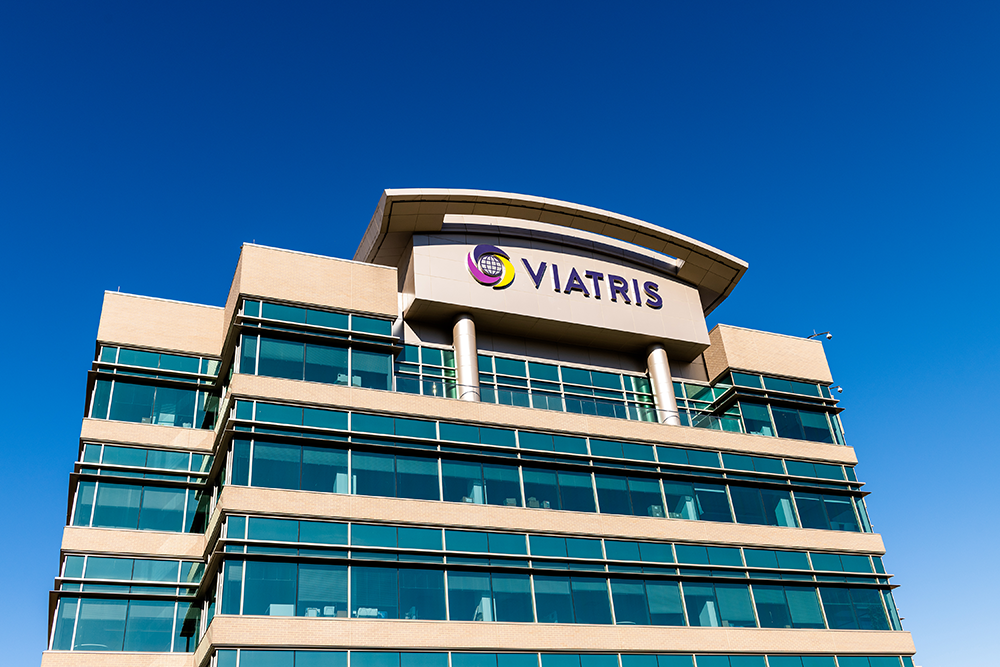
Viatris Inc. (NASDAQ: VTRS) entered into a definitive agreement to acquire Pacira BioSciences, Inc. (NASDAQ: PCRX) for $36.50 per share in cash, implying an aggregate equity value of approximately $1.65 billion. The purchase price represents a 45% premium over Pacira's prior-day closing price.
The transaction consolidates Pacira's commercial portfolio into Viatris' institutional hospital business, centered on Exparel (bupivacaine liposome injectable suspension, a sustained-release local anesthetic), Zilretta (extended-release triamcinolone acetonide for knee osteoarthritis pain), and the iovera cold-therapy cryoablation system. The companies expect closing by the end of 2026, subject to customary conditions. The portfolio remains Pacira’s until the transaction closes.
The obvious read versus the deeper signal
The conventional Wall Street interpretation is that Viatris is deploying generic drug cash flows to buy revenue growth and offset generic pricing erosion. The deeper clinical and macroeconomic signal is the capture of scaled liposomal manufacturing infrastructure within an established separate-payment framework.
Formulating multi-vesicular liposomes (DepoFoam technology) is one of the most notoriously complex, capital-intensive manufacturing processes in pharmaceutical chemistry. Formulation consistency, manufacturing controls and comparability are important technical considerations. By purchasing Pacira outright, Viatris secures a dominant commercial footprint, proprietary GMP manufacturing suites in San Diego and Swindon, and a direct sales force already embedded in thousands of US surgical suites during the existing NOPAIN payment window.